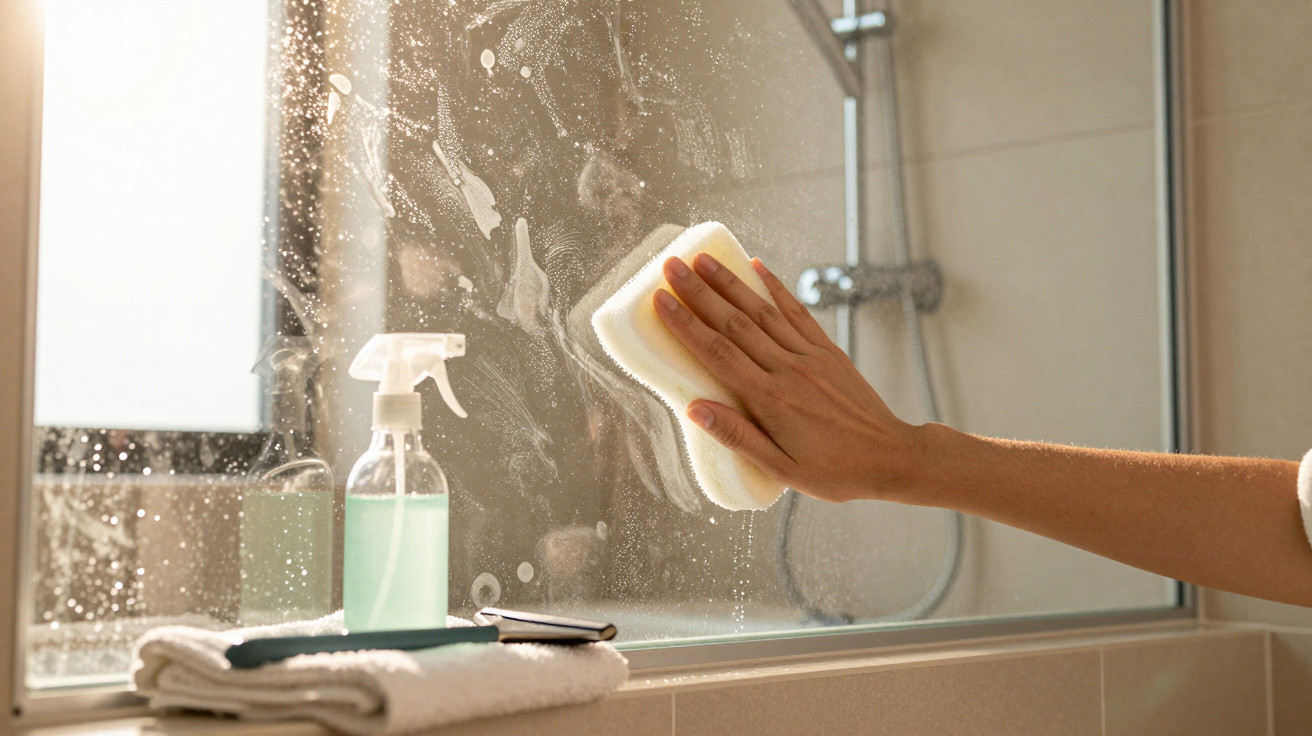
Step into an impeccably gleaming hotel bathroom and it is easy to wonder why the shower enclosure at home never looks quite the same.
A bathroom glass panel that is dull and covered in limescale streaks is a familiar sight. In hotels, by contrast, shower screens often appear as though they have just been installed. The difference is not an expensive miracle product, but a straightforward professional technique centred on an often-overlooked tool that can easily be copied at home.
Why shower screens at home turn cloudy so quickly
Limescale: the stubborn main culprit
Limescale is the biggest issue affecting bathroom glass. Depending on the area, tap water contains high levels of minerals. When water evaporates from a shower screen, tiny crystals remain behind, particularly calcium and magnesium compounds. Every shower adds another layer.
What begins as a light haze gradually becomes a proper deposit: white, rough and seemingly baked into the glass. Many household cleaners have only limited effect, especially where the build-up has been allowed to develop for months or years.
Soap residue: the invisible adhesive
There are also residues from shower gel, shampoo, conditioner and body oils. These fats and surfactants combine with limescale crystals to form a greasy grey layer. Professionals refer to this as a type of “lime soap”.
This mixture clings firmly to the surface, leaves the panel looking dull and creates an ideal base for fresh limescale deposits. That is how the familiar milky film develops, which many people can remove only with heavy-duty chemicals-or cannot remove at all.
| Characteristic | Limescale deposit | Soap residue |
|---|---|---|
| Appearance | White, chalky, hard | Grey, greasy, slightly oily |
| Source | Minerals in tap water | Shower gel, shampoo, body oils |
| Response | Dissolves well in acid (for example, vinegar) | Dissolves well in degreasers / surfactants |
The difficulty is that a vinegar-based cleaner may dissolve limescale but simply slide over the greasy layer. A degreaser tackles soap residue, yet struggles with the minerals. It is precisely this combination that makes shower screens so difficult to clean.
The typical white haze on glass is not “a little dirt”, but a two-layer fortress of limescale and soap residue.
What hotels do differently from private households
A flawless finish in minimal time
Every minute matters in hotels. Cleaning teams do not have time for sprays that need lengthy contact periods or for multi-stage trials. After a short treatment, the shower screen needs to look as though it has been newly fitted.
There is another consideration: excessively harsh chemicals can eventually damage grout, silicone and taps. For this reason, many hotels use a technique based mainly on mechanical action-friction-and requiring only a small amount of cleaner.
The inconspicuous professional tool: the melamine sponge
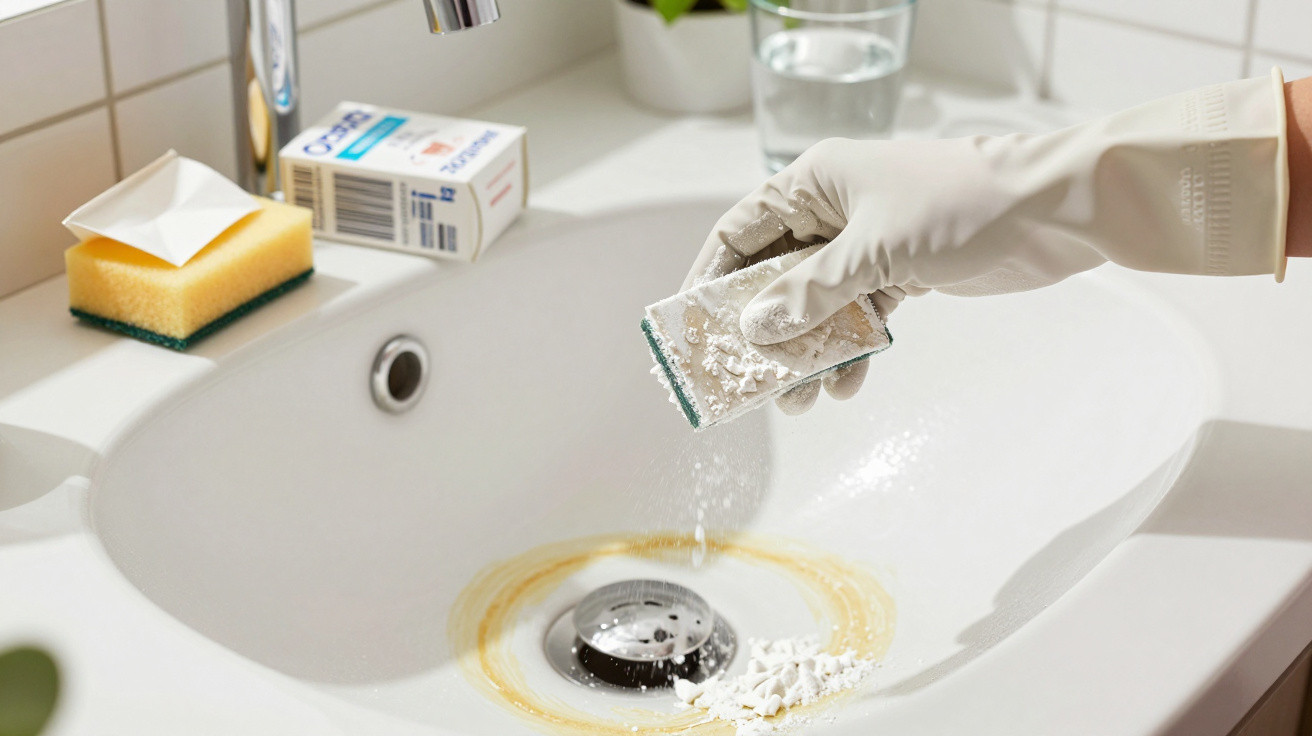
The real star on a hotel cleaning trolley is not an exotic specialist product, but an unremarkable white block: a melamine resin sponge, better known to many as a “magic sponge” or “magic eraser”.
Its unusual structure works rather like extremely fine sandpaper. Under magnification, it is a hard yet very fine foam with countless microscopic edges. This micro-abrasive effect lifts deposits from the glass without leaving visible scratches.
The melamine sponge works like ultra-fine sandpaper: it shaves away deposits rather than dissolving them chemically.
How hotels use a melamine sponge correctly
Always dampen it-never scrub dry
One point is crucial: the sponge must not be rubbed over glass while dry. Professionals dip it in clean water and squeeze it out only lightly. This helps it glide more smoothly and makes it wear down more slowly.
Gentle pressure is entirely sufficient
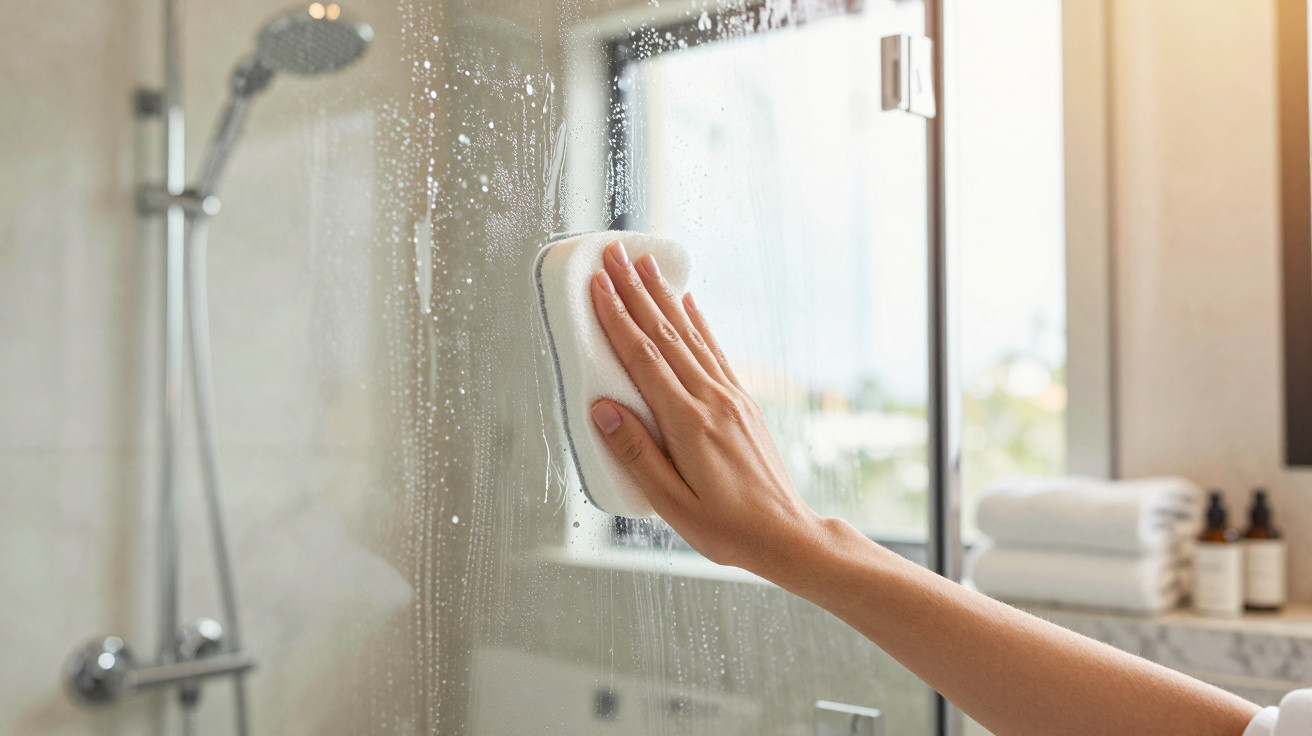
A common mistake is scrubbing with maximum force. There is no need to do so. Cleaners apply only light, even pressure, working across the surface in small circular movements.
- Wet the sponge and squeeze it out.
- Work over the glass in lines or circles.
- Spend a little longer on heavily coated areas.
- Rinse the sponge briefly from time to time.
The sponge slowly wears away as it is used, much like an eraser. This is normal and part of how it works: its structure abrades and removes the deposit with it.
Thorough rinsing is essential
Once the treatment is complete, a fine film of loosened residue and tiny sponge particles remains on the screen. Hotels then rinse the entire surface thoroughly with clean water.
The final professional step is a squeegee. Pull it from top to bottom, strip by strip. At the edges, teams quickly wipe with a microfibre cloth-leaving a crystal-clear shower screen.
How the hotel trick works in your own bathroom
Where to buy melamine sponges
These sponges are widely available from chemists, supermarkets, DIY shops and online retailers. They are often stocked with household cleaning products or sponges. Brand names vary; the important wording is melamine resin or “magic sponge”.
Step-by-step instructions for home
- Remove loose dirt and hair from the shower enclosure.
- Briefly rinse the glass panel with warm water.
- Dampen the melamine sponge and squeeze it out.
- Treat the whole surface using light pressure.
- Focus on especially cloudy sections for slightly longer.
- Rinse everything thoroughly with water.
- Use a squeegee, then buff with a microfibre cloth.
Depending on how severe the build-up is, the first clean may take a little time. Anyone who keeps on top of it regularly will need only a few minutes of work each week in future.
Where care is needed
Although the sponge seems very gentle, it is still a fine abrasive. On high-gloss plastics, acrylic baths, coated taps or sensitive surfaces, test it first in an inconspicuous spot.
The professionals’ basic rule: test on an inconspicuous area first, then use it over a larger surface-especially on plastic and specialist coatings.
Professional tips for keeping the shine longer
The 30-second squeegee routine
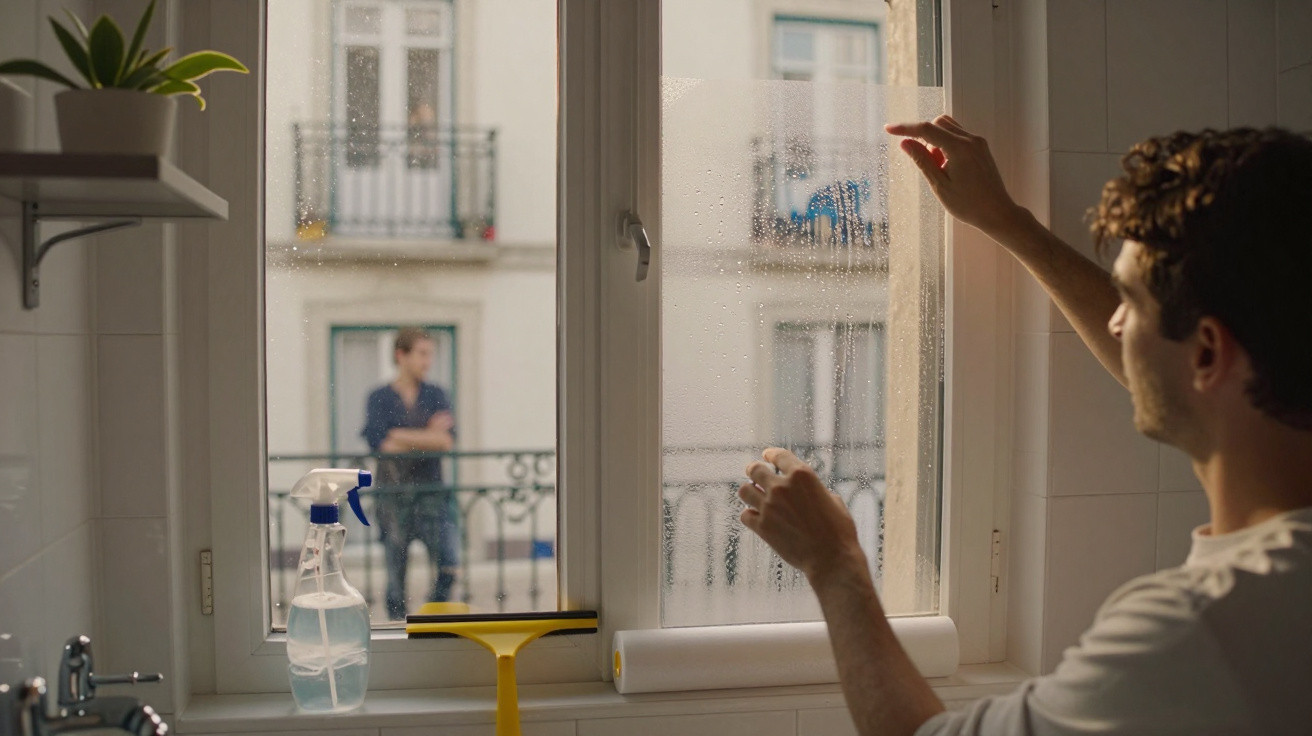
Hotel teams rely consistently on prevention. The most important step is surprisingly simple: after every shower, run a squeegee over the glass surfaces. It takes less than half a minute.
This leaves very little water on the glass, and therefore far less material from which limescale can later form. Turn this into a habit and intensive cleaning will be needed only rarely.
Vinegar water instead of a chemical cocktail
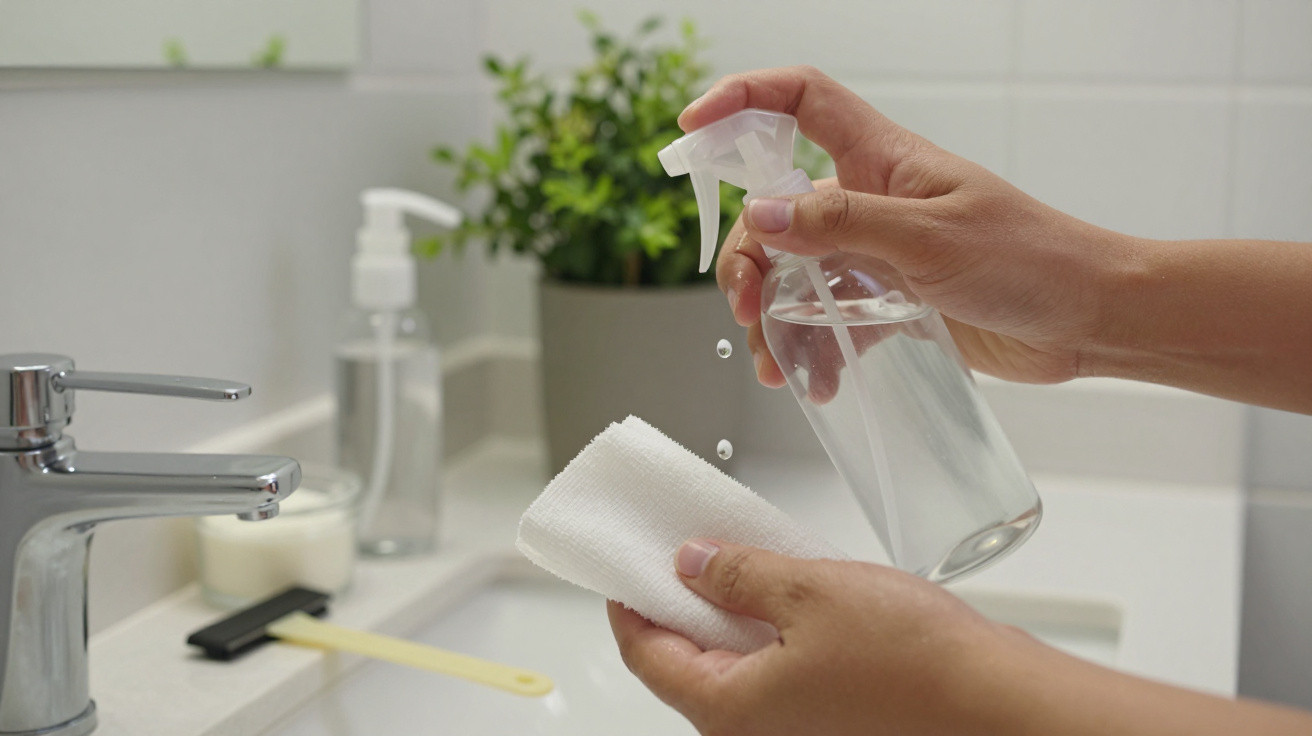
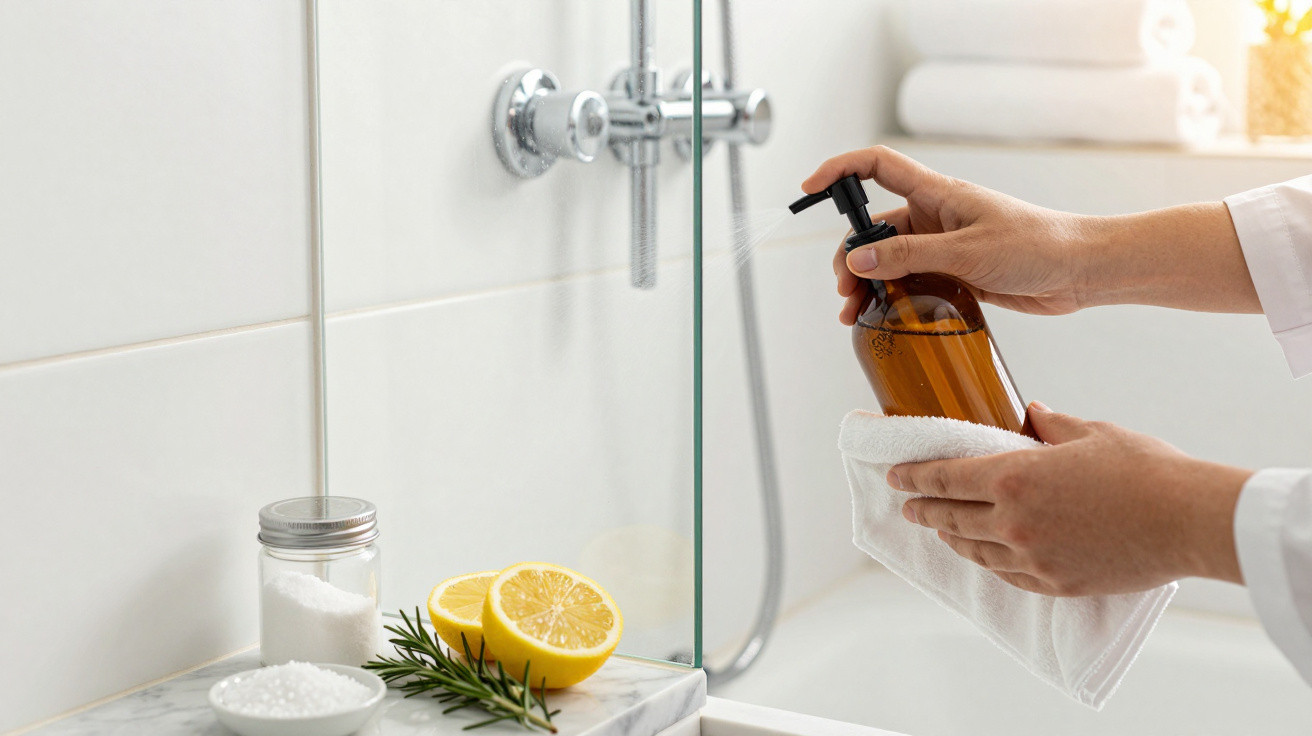
Many professionals use a simple spray-bottle mix of equal parts water and clear distilled vinegar. After using the squeegee, lightly mist the damp surface, leave it briefly to work, then squeegee again or rinse it off. The mild acid removes emerging limescale marks before they can properly set.
Proper ventilation slows mould and limescale
Leaving the bathroom door open after showering, putting the window on the latch or switching on extraction reduces humidity. The final droplets dry faster, grout stays clean for longer, and less stubborn build-up develops on glass and tiles.
How sustainable is the hotel trick really?
Melamine sponges are made from plastic and will eventually end up in the bin. At the same time, they significantly reduce the need for aggressive specialist cleaners. For many households, this offers a clear benefit: fewer chemicals in wastewater and fewer different products in the cleaning cupboard.
Those who reserve the sponge for heavily soiled areas, while relying on a squeegee, microfibre cloth and vinegar water for day-to-day care, can strike a sensible balance between convenience, appearance and environmental awareness.
There is one further consideration: in areas with very hard water, it is worth checking the water hardness and perhaps even considering a water softener. Less limescale in the water automatically means less work on the shower screen-and turns the melamine sponge from an emergency tool into an occasional helper.




Comments
No comments yet. Be the first to comment!
Leave a Comment