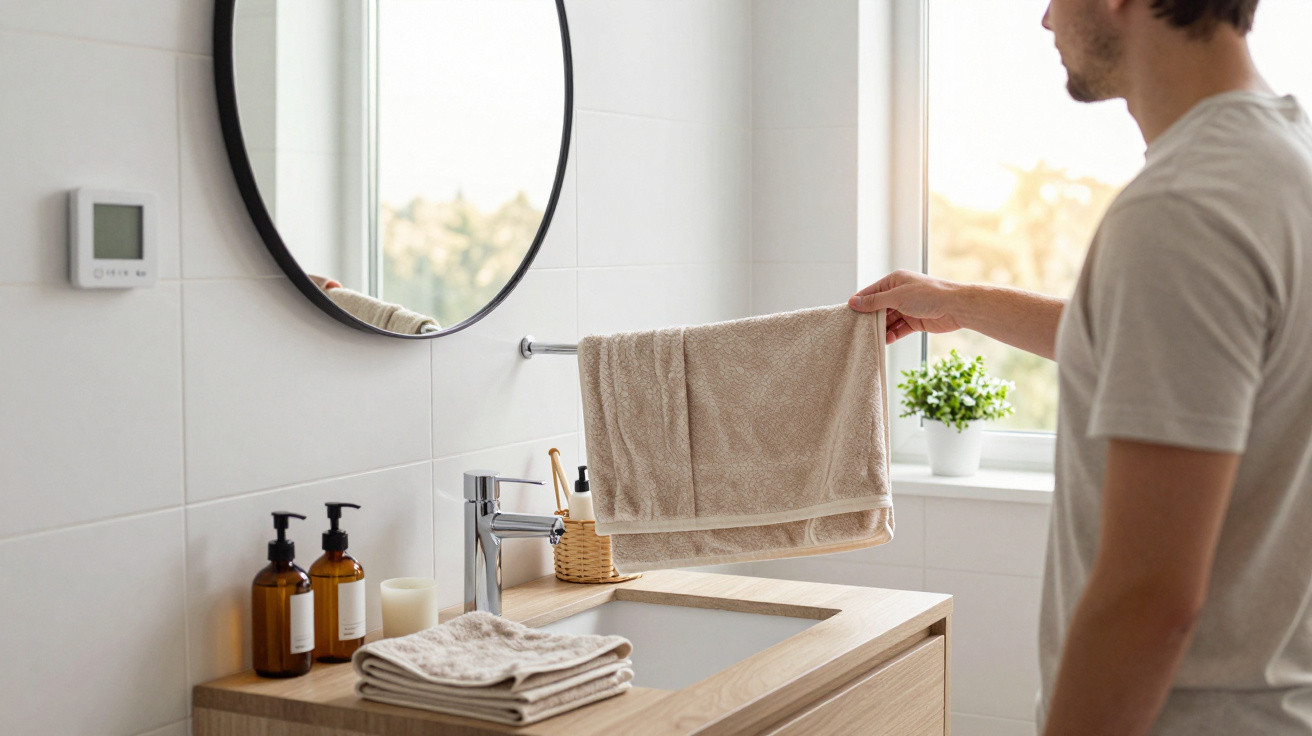
When people picture a beautiful bathroom, they often immediately think of luxury hotels, brand-new tiles and four-figure bills. So everything stays as it is: overcrowded, chilly and somehow lacking care. Yet a few smart changes can make a big difference – with no tradespeople, no dust and no large budget.
Why it is worth taking a proper look at your own bathroom
Bathrooms are among the rooms we use daily while neglecting most. We clean the basin, add more products, cram already-full cupboards shut and gradually get used to the clutter. Energy costs, stale air and an unsettled overall look can easily slip down the priority list in everyday life.
“Five targeted changes can improve an ordinary bathroom visually and in terms of energy use – on a budget of between £0 and around £20.”
This is not really about “decoration”, but about organisation, light, warmth, air and comfort. Focusing on these areas can create a noticeable before-and-after result, often within a single weekend.
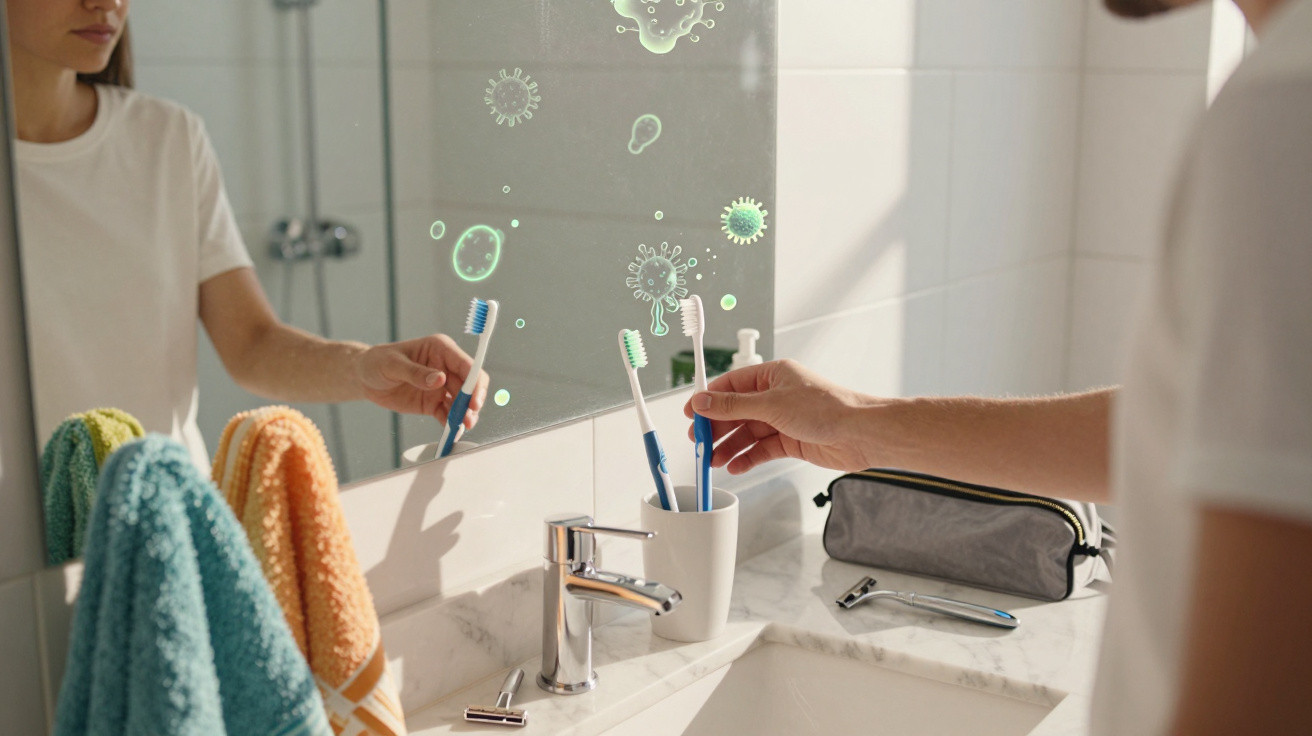
1. Declutter ruthlessly: fewer things, more calm
The most effective change costs nothing: thorough decluttering. Take absolutely everything out of the shower, cupboards and off the vanity unit. For a moment, the room may look as though you are moving house – and that is exactly the useful shock you need.
Three straightforward steps to a clearer bathroom
- Sort products into groups: face & make-up, body & hair, medicine & first aid.
- Dispose of anything out of date, duplicated or unused for months.
- Keep only products used every day on display.
Put everything else into boxes, baskets or simple plastic trays you already have at home. If you wish, pick up two or three inexpensive baskets from a discount shop. This step alone makes the bathroom feel larger, calmer and noticeably better maintained.
Hide unattractive everyday essentials
The next visual improvement comes from putting away items nobody wants to see: the toilet brush, cleaning products, drain cleaner and spare toilet rolls. They belong in a cupboard, closed shelving unit or, at the very least, an opaque basket.
Even a small pedal bin with a lid can change the feel of the room – usually for less than £10. By consistently clearing away anything unattractive, you can bring a “hotel effect” into your home in just a few minutes.
2. Upgrade the bathroom with lighting and mirrors
Many bathrooms look dated even when the tiles are still perfectly sound. Dull mirrors and yellowish lighting are often the reason. Both can be transformed on a very modest budget.
“A clean mirror and the right LED make the room feel bigger, brighter and more modern – without using a single tile adhesive.”
Checklist for a fresher lighting scheme
- Clean the mirror and light fittings thoroughly.
- Wipe down switches and surrounds – an astonishing amount of dirt collects there.
- Replace old incandescent or halogen bulbs with a warm-white LED bulb, usually 2700–3000 Kelvin.
Warm-white lighting feels cosier than cold office-style light while still showing your face realistically. The mirror reflects the brightness more effectively, and the whole room immediately looks several levels more refined.
Coordinate accessories instead of collecting “random décor”
Filling a bathroom with objects does not give it character; it creates visual unrest. It is better to choose a few pieces that work together. A small set comprising a soap dispenser, tumbler and tray, matched in colour to the taps or tiles, brings order to the overall picture.
The same approach works for towels:
- Remove old, frayed towels or those in completely unrelated colours.
- Hang up only two or three coordinated colours where they can be seen.
- Fold dry spare towels and stack them in a cupboard or on a shelf.
Coordinating the bath mat, towels and, where applicable, shower curtain creates a considered look – even when using discount products.
3. Control the temperature wisely and save money
Warmth has a dual role in the bathroom: it provides comfort, but it can also drive up energy costs quickly if left unmanaged. With prices rising, it can be worthwhile to check the thermostat.
“Each additional degree of room temperature costs roughly 7 per cent more heating energy.”
Practical guide temperatures for comfort
| Room | Recommended temperature | Note |
|---|---|---|
| Living areas | approx. 19 °C | heated consistently |
| Bedroom | approx. 16 °C | a cooler temperature supports sleep |
| Bathroom – in use | approx. 22 °C | shortly before and during showering/bathing |
| Bathroom – otherwise | approx. 17 °C | for the rest of the day |
Keep the bathroom door closed while warming the room and while showering, so the heat remains inside. The temperature can then be lowered again afterwards. A soft bath mat also reduces the shock of cold tiles underfoot – and makes the space instantly feel more luxurious.
4. Better air: prevent mould and create a pleasant indoor climate
Moisture is the enemy of every bathroom. Leaving it sitting in the room risks not only mould patches, but also musty smells and long-term damage to the building.
Use the extractor fan and window correctly
- Dust and wipe extractor grilles and blades regularly.
- Listen for unusual noises – they can indicate dirty or worn parts.
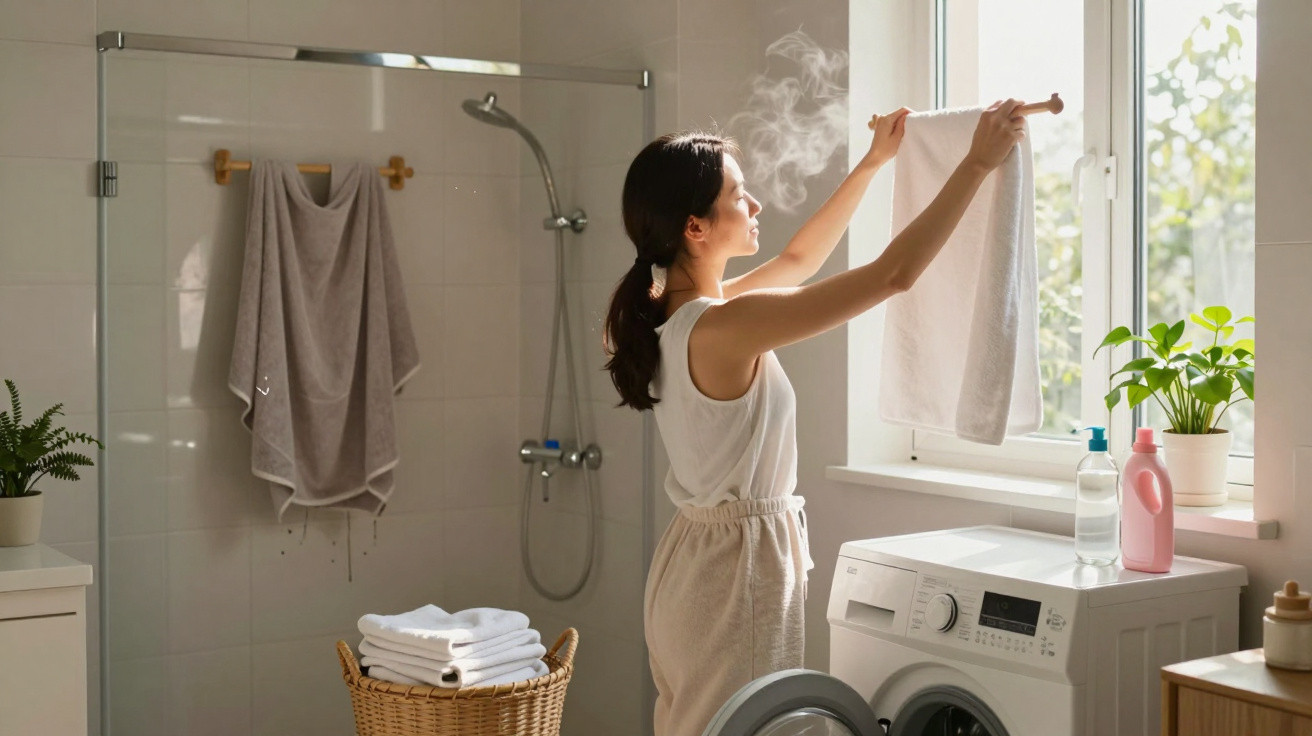
- Open the window wide for 5–10 minutes after showering.
Brief, wide-open ventilation removes humid air without cooling down the walls. In small bathrooms especially, a short exchange of air is enough to make the room dry and pleasant again.
If your bathroom has no window, check whether the extraction duct is clear and whether the fan continues running for long enough. Consult the operating manual or carry out a quick test using a sheet of paper, which should be visibly drawn towards the vent.
5. Small comfort details with a big impact
Alongside the major improvements of lighting, warmth and organisation, small touches often separate a room that is merely “functional” from one where “I enjoy being here”. These include soft textiles, products kept within easy reach and a logical layout.
Examples of mini upgrades
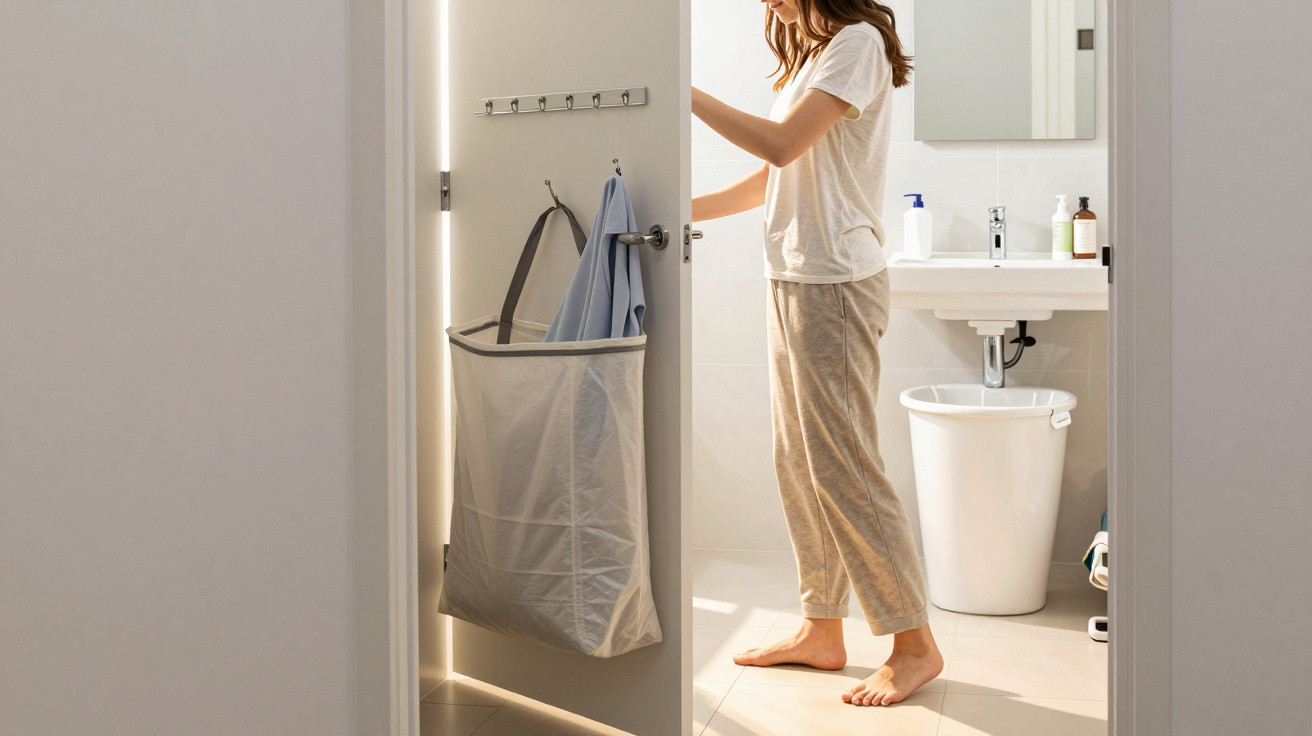
- A second hook for a towel right beside the shower.
- A small stool or basket for placing clothes while showering.
- One clearly labelled compartment solely for first-aid items, so you do not have to search in an emergency.
- A fragrance, for example through soap, shower gel or a subtle room scent.
These details cost little but reduce day-to-day stress: you find what you need more quickly, nothing ends up on the floor, and the bathroom feels less like a “workstation” and more like a small comfort zone.
What these bathroom tricks do – and where else they work
Psychologically, all these changes have a simple effect: the brain receives fewer stimuli at once, can identify where everything belongs more quickly and begins associating the room with order rather than chaos. This unconsciously lowers stress levels, especially in the morning.
Many of the measures described work just as well in the kitchen, hallway or utility room: clear visible surfaces, hide unattractive items, use a small number of matching colours, choose lighting deliberately, air rooms briefly and manage temperatures thoughtfully. Starting with the bathroom often provides that first motivating success, which can then be applied to the rest of the home.
If you are worried about throwing away too much, use a “trial box”: anything you do not miss for three months can go for good. Cosmetics, old medicines and partly used bottles quickly reveal what is genuinely used – and what is merely taking up valuable space in the bathroom.

Comments
No comments yet. Be the first to comment!
Leave a Comment