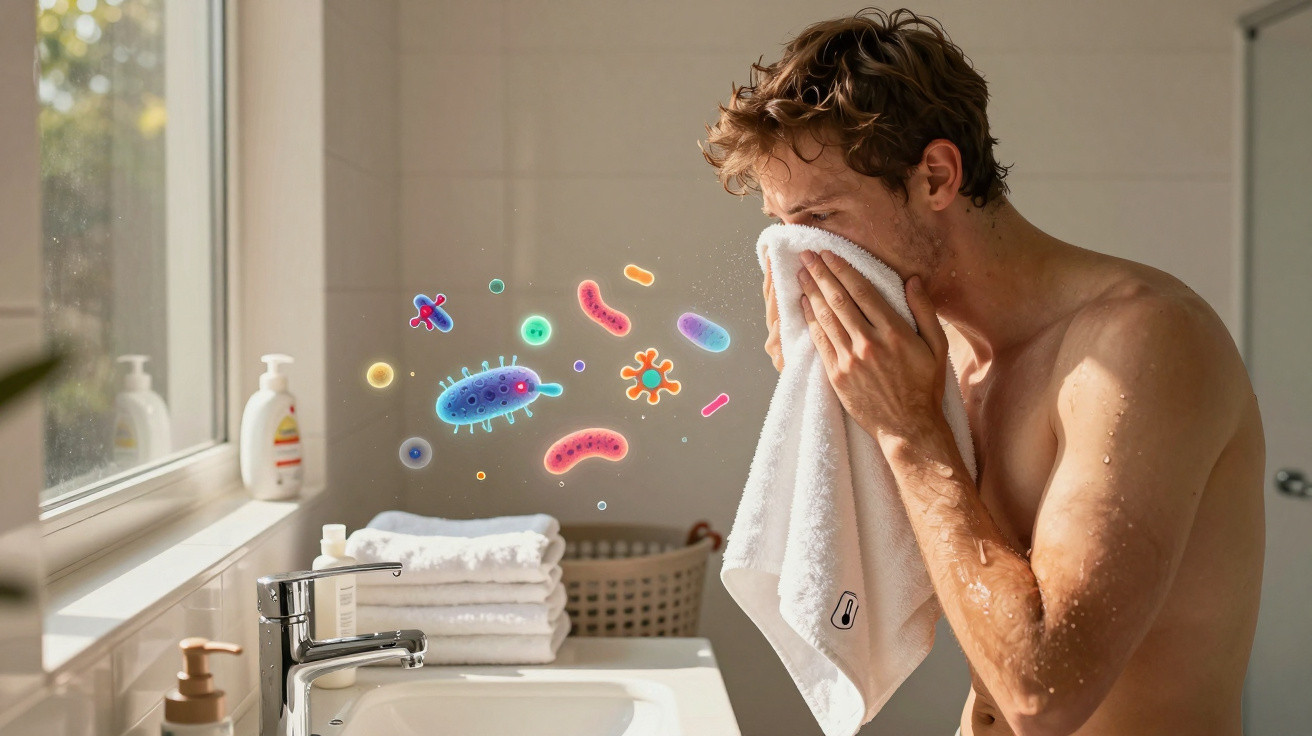
In the bathroom, smell is often the deciding factor: if a towel still smells fine, it stays in use. A Japanese research team has now measured in detail what is really happening inside these seemingly fresh fabrics – and reached a clear threshold: after roughly two months of continual use, a resilient bacterial colony develops that ordinary washing can barely remove.
Everyday bathroom use: why towels are ideal homes for germs
A towel can appear clean because it is used after showering, on freshly washed skin. That is precisely why many people do not regard the fabric as a likely source of contamination. Yet every time it is used for drying, a mixture of skin bacteria, dead cells, skin oils, soap residue and moisture is transferred into the fibres.
The bathroom itself provides near-perfect conditions: warmth, humidity and limited air circulation. If the towel is then scrunched up over a radiator or thrown onto a hook, that moisture is trapped much like it would be in a miniature greenhouse. Microorganisms do not need long to take advantage of these conditions – they simply begin multiplying.
“After just a few weeks, a dense, organised layer of bacteria forms on the fabric, and it is considerably more resilient than individual germs.”
Japanese study: 26 households, six months and thousands of germ samples
The team led by researcher Kato monitored towels in 26 Japanese households over six months. Residents used them as they normally would in everyday life, while scientists collected samples at set intervals and measured the number of germs on the fabric surface.
The data revealed a clear pattern: levels were comparatively low at first, but bacterial numbers rose week by week. What matters is not only the quantity of bacteria, but also the way in which they colonise the material.
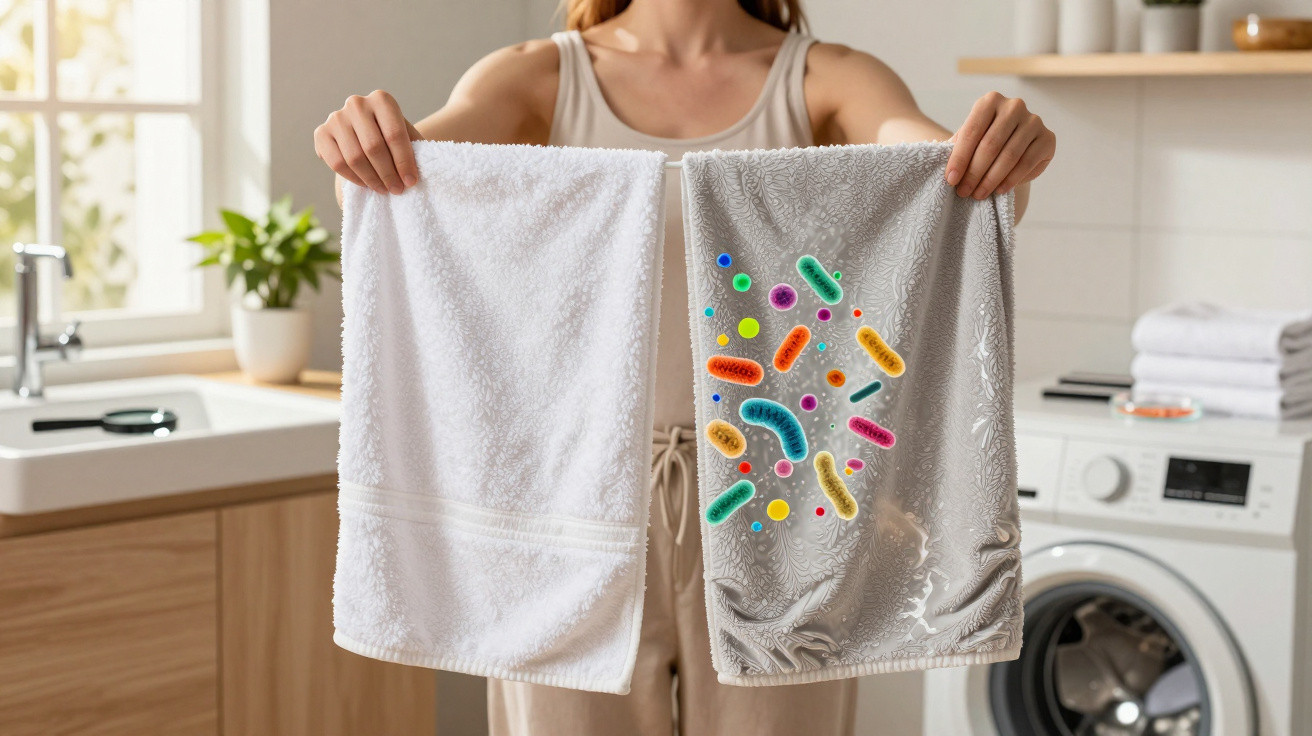
At around week eight, the situation changed: scattered microorganisms became stable bacterial communities known as biofilms. These effectively adhere to the fibres, exchange substances with one another and produce a protective layer of slime and protein fragments. Within this community, they withstand washing cycles much more effectively.
Biofilm: when bacteria become stronger as a team
A biofilm resembles a multi-storey miniature city made up of microbes. Its outer layers protect those within from heat, detergent and mechanical stress. Researchers are familiar with such structures from dental plaque, shower drains and contact lens cases – and it now appears that towels can become part of this group when used for long enough.
According to the study’s findings, towels reach a critical point after around two months: by then, bacteria are present in this interconnected form and are only partly affected by a standard 40°C wash.
164,000 bacteria per square centimetre – what that means in practice
The highest measured figure is striking: up to 164,000 bacteria per square centimetre of fabric after two months of use. By comparison, our skin naturally carries many microorganisms, although most belong to the normal skin flora and remain in balance. On a towel, however, germs from different sources become mixed together.
Particularly unpleasantly, other studies have repeatedly found faecally contaminated bacteria on towels, including variants of Escherichia coli. They usually come from hands that have not been washed thoroughly enough after using the toilet, before being transferred to the fabric during drying. In individual samples, as many as nine out of ten towels were affected.
Germ levels can rise sharply after only a few uses. In his own experiments, an environmental microbiologist found that colonies grew significantly faster after just three uses without washing, especially in areas that regularly come into contact with the face and hands.
“The areas used to dry your face are often among the most heavily contaminated surfaces on the entire towel.”
Why ordinary washing is no longer enough once the window has been missed
Once a dense biofilm has formed, many household wash programmes reach their limits. A gentle 30°C or 40°C cycle may remove dirt and odour, but it can leave part of the organised bacterial layer behind. These surviving germs can then heavily recolonise the fabric as soon as it is used again.
The Japanese researchers observed that after approximately 60 days of continuous use, even regular washing became increasingly ineffective at reducing biofilms. At this stage, replacing the towel is usually the only option for anyone who values a hygienic bathroom microbiome.
How often you should really wash towels
From a microbiological perspective, the sensible limit is well below what many people follow in daily life. Experts recommend using a towel for no more than two to three consecutive days before putting it in the wash.
For results with as few germs as possible, the following basic rules apply:
- Change bath and shower towels every two to three days
- Ideally choose a wash temperature of 60°C or higher
- Use heavy-duty detergent containing bleaching agents, rather than only detergent for delicates
- Allow towels to dry completely after washing
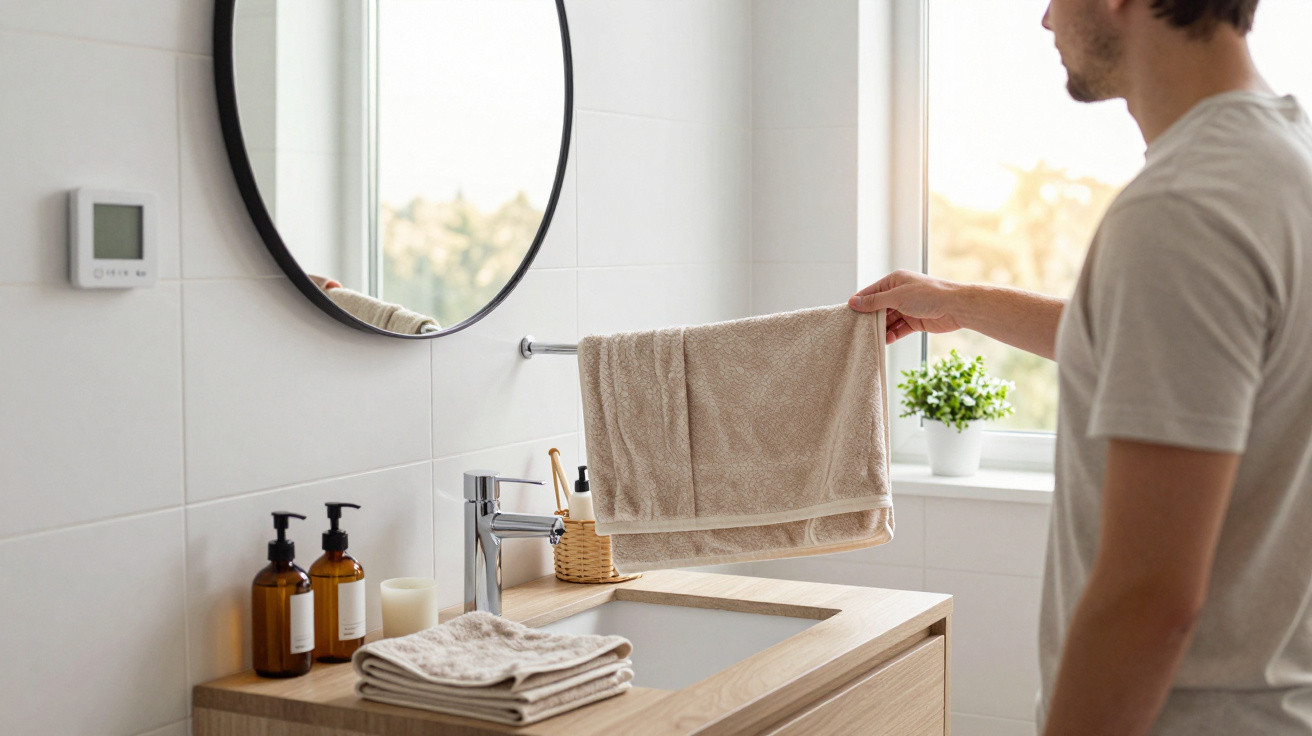
- Hang fabrics spread out, rather than rolling them up and throwing them over a hook
Anyone who sweats heavily, has young children at home or is prone to skin problems will benefit from washing even more frequently. Guest towels should always go into the laundry basket after a visit – even if they appear unused.
Proper storage: small habits can slow the spread of germs
Drying plays a crucial role between washes. When a towel is hung fully spread out, for example on a wide towel rail, its remaining moisture disappears far more quickly. As a result, bacteria lose part of the conditions they need to grow.
If the fabric remains damp for hours, germs can multiply almost unchecked. Moisture and warm air build up especially in poorly ventilated bathrooms where several showers are taken each day. In these situations, it is worth opening the window more often or using a ventilation solution.
“Anyone who shares towels also shares their personal microbial profile – including the less pleasant inhabitants.”
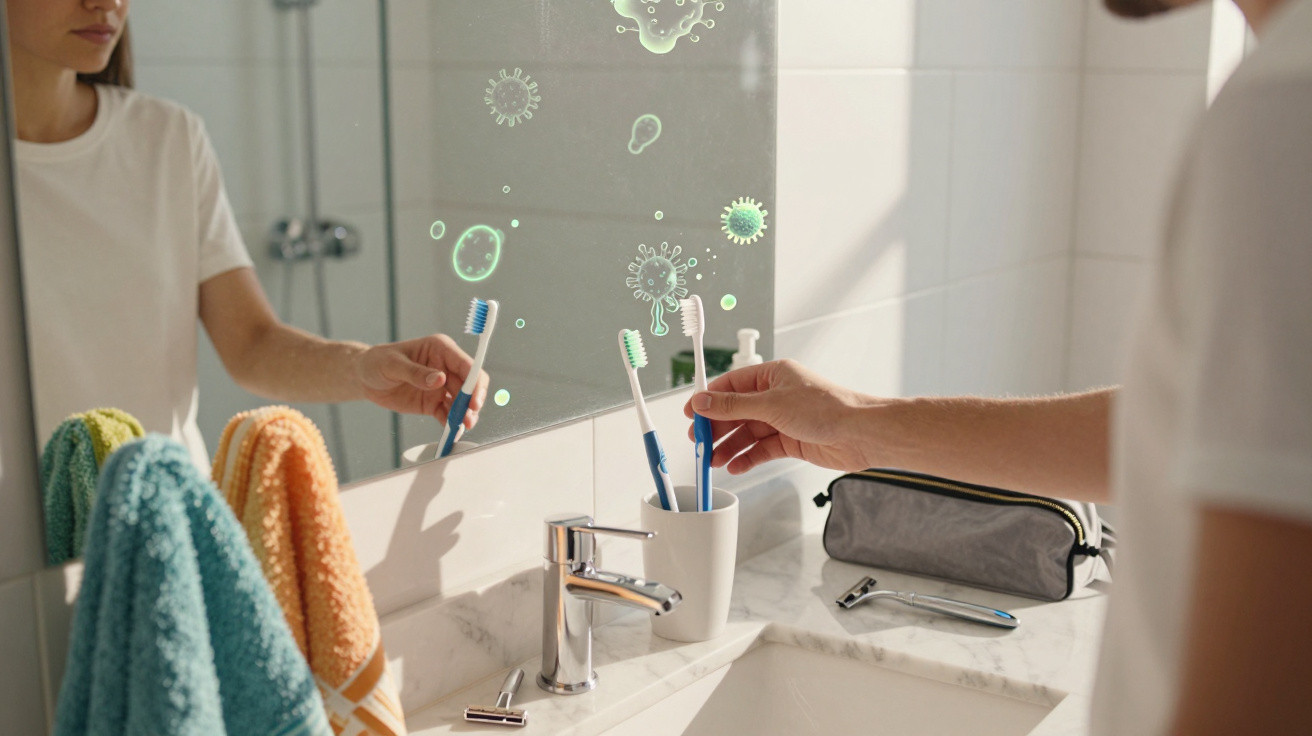
Sharing a bath towel within a family substantially increases the variety of bacteria present. This also raises the risk of passing on pathogens or diarrhoea-causing germs, even if nobody appears to be acutely unwell. Separate towels for each family member noticeably reduce that risk.
How dangerous are towel germs really?
For healthy people with a robust immune system, a heavily colonised towel does not automatically lead to illness. Our immune systems encounter countless microorganisms every day and can generally deal with them without difficulty. The concern increases when several factors occur together.
Greater care is worthwhile in situations including:
- Households with babies, older people or individuals with weakened immune systems
- Existing skin conditions such as eczema, acne or open wounds
- Recurring infections affecting the throat or gastrointestinal tract
- Shared accommodation or house shares with closely used bathrooms
In these cases, a contaminated towel can act as an amplifier, allowing pathogens to remain in the environment for longer. Washing regularly and establishing clear rules about who uses which towel significantly reduces these risks.
Practical tips: when to throw towels away and when to wash them hotter
Many people are attached to their soft favourite towels and want to keep them for as long as possible. The fabric itself can often last for years, but that is not always hygienically advisable. As a general rule, if towels still smell musty after washing or retain grey shadows in the fabric, a stable biofilm has often formed inside them.
As a first step, an intensive wash can help: 60°C or 90°C, heavy-duty detergent, no overloaded washing machine drum, followed by complete drying in a tumble dryer or in the air. If the smell remains or the material feels “dull”, it is time to replace the towel.
When buying new towels, it is best to establish good habits from the outset: wash them once before first use, then plan for short periods of use and sufficient drying from the beginning. This prevents the conditions in which billion-strong bacterial cities can settle on your favourite towel from developing in the first place.


Comments
No comments yet. Be the first to comment!
Leave a Comment