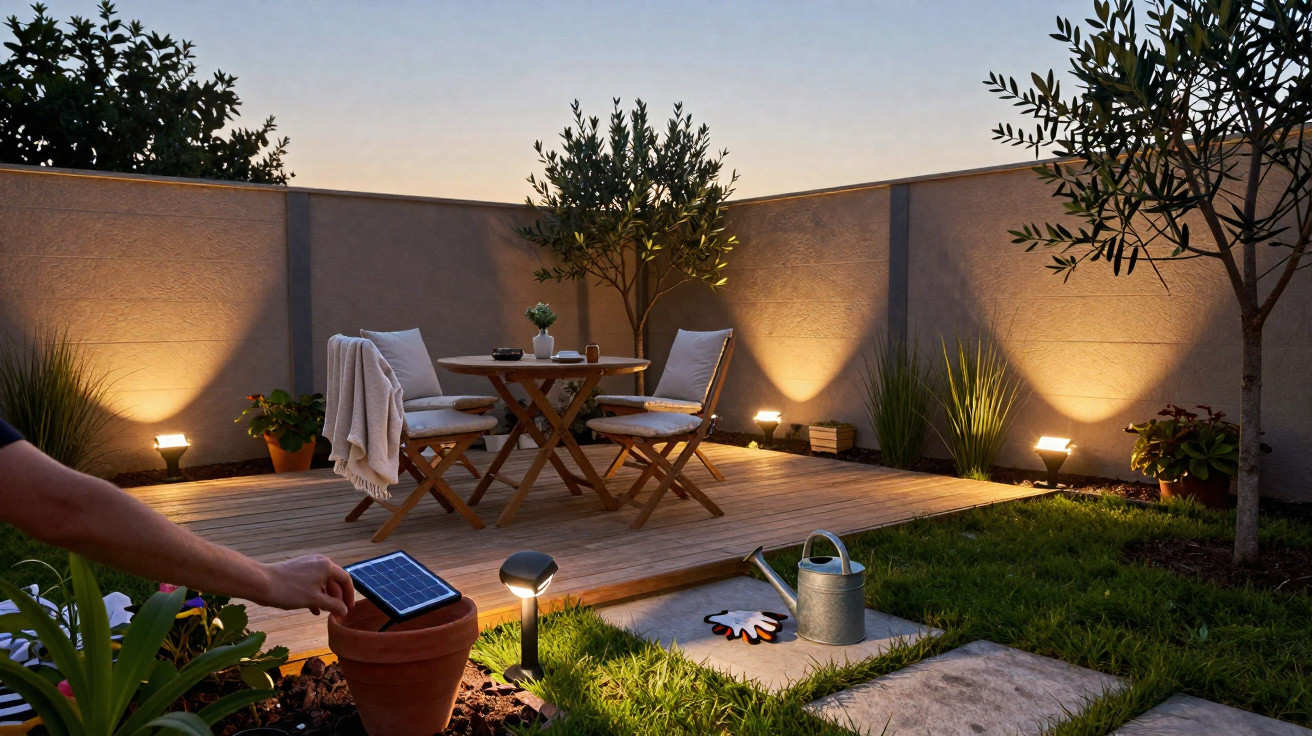
Anyone wanting to stay on the patio after work or let the children play in the garden for longer needs lighting – but it should be affordable, practical and require no major installation work. That is exactly where Aldi’s new offer comes in: the “Garden Bright Solar Uplighter” is designed to illuminate paths, flowerbeds and seating areas without adding to electricity bills.
What Aldi’s new Solar Uplighter offers
The Garden Bright Solar Uplighter is a solar-powered outdoor light that can be positioned directly in the ground or among flowerbeds. It costs £9.99, placing it in the same price bracket as many budget garden accessories. It goes on sale as a Specialbuy on a specified Thursday in March – and Aldi shoppers know what that means: once stock has gone, it has gone.
“The Solar Uplighter charges in sunlight during the day and switches on automatically after dark – with no socket and no cables.”
It is therefore aimed chiefly at households that want to improve their outdoor areas quickly, without hiring a tradesperson. For compact terraced-house gardens, rented homes with patios, or families planning an impromptu barbecue, this type of light can make a real difference.
How the technology works: simple yet effective
A small solar panel is fitted to the top section of the uplighter. During the day, it captures solar energy and stores it in an integrated battery. When darkness falls, a light sensor detects the fading daylight and activates the LEDs.
- during the day: the solar panel charges the battery using sunlight
- at dusk: the sensor automatically switches on the light
- no mains electricity required: it operates entirely independently
- no switch needed: set it up once, then leave it to do its job
As no cables need to be installed, there is also no risk of tripping over wires while playing in the garden or mowing the lawn. Anyone who has tried to add an outdoor socket will know how costly and frustrating that can be. Solar lighting eliminates that work altogether.
Where a Solar Uplighter makes most sense in the garden
The uplighter is primarily intended to highlight particular features or make areas safer. Here are several everyday examples.
Paths and entrances
Placed along garden paths, the light marks out the route and helps reduce the risk of trips. This is particularly useful around uneven paving slabs or steps when visitors arrive, or when children need to fetch something from the shed in the evening.
Patio and seating area
Around a patio seating area, the light creates a warm, pleasant atmosphere without shining directly into people’s eyes. Those who often sit outside in the evening with tea or wine can use just a few spots to form a kind of “island of light”, which feels much cosier than relying solely on a harsh exterior lamp fixed to the wall.
Flowerbeds, planters and decorative features
The uplighter can also be used to draw attention to individual features: a specimen shrub, a large planter, a wall, a sculpture or even a small tree. Upward-facing illumination can make these objects look considerably more refined in the evening than the price of the lamp might suggest.
| Location | Benefit |
|---|---|
| Garden path | greater safety, easier orientation |
| Patio | a cosy mood while sitting outside |
| Flowerbeds / planters | highlights plants and structures |
| House wall / fence | visual depth, a modern look |
Design: understated, modern and available in two colours
Visually, the Garden Bright Solar Uplighter takes a fairly restrained approach. Aldi offers it in two colour options: black and silver. This allows the light to suit both clean-lined contemporary gardens and more traditional outdoor spaces.
Black works well with anthracite patio slabs, dark fencing and modern outdoor furniture. Silver has a slightly more technical appearance and complements pale gravel areas, stainless-steel railings and minimalist designs.
One practical detail is that, according to the promotional material, the manufacturer provides a two-year guarantee for the product. That is not a given at this price point and should reassure many buyers concerned that inexpensive solar lights may fail after their first season.
Costs, electricity savings and environmental considerations
At roughly £10 each, the uplighter sits among the more affordable options. Conventional 230-volt garden spotlights are not only more expensive to buy, but also consume electricity continuously; the calculation here remains simple: pay for the purchase, and that is it.
“Every hour of garden lighting with a Solar Uplighter costs not a penny in electricity – the sun does the work.”
That is a compelling point for families on a limited budget and households deliberately looking to reduce energy use. There is also an environmental aspect: using solar energy lowers the need for mains power, which may still partly come from fossil-fuel sources depending on the region.
Who will benefit most from buying it
The Garden Bright Solar Uplighter is clearly targeted at people with little time but high expectations of convenience. Typical users include:
- families wanting to spend longer outdoors in the evening
- tenants without access to outdoor sockets
- working people who do not want complicated installation
- beginner gardeners starting on a small budget
Children enjoy it when the garden glows “magically” after dark. Parents can keep a better eye on paths and steps. And anyone who likes inviting guests at short notice can create atmosphere quickly with a few illuminated accents, without first planning a lighting scheme.
Placement tips: getting more from the lights
For solar lights to work reliably, they should receive sufficient sunlight during the day. Partial shade is usually not a problem, but dense shade is. A few practical pointers are worth keeping in mind:
- do not position them directly beneath densely leafed trees
- clean dust and pollen from the solar panel regularly
- angle the lights slightly to prevent reflections
- test the spacing between lights – fewer, well-positioned spots often look better than a “string of lights”
Those in a rented flat with a balcony or small patio can also place the lights in large planters. This creates a sort of compact “lighting studio” directly around the seating area with minimal effort.
Key terms explained briefly
What does “uplighter” mean?
Uplighters are lights that project illumination upwards, shining from below towards an object or surface. This creates an emphasised cone of light that reveals shape and texture. In gardens, they are often used for trees, shrubs and walls.
Why do so many people choose solar instead of a fixed installation?
Solar lights avoid the need for an electrician, create no electricity costs and can be moved at any time. Anyone who enjoys redesigning their garden or uses it only in the summer season remains much more flexible as a result. One drawback can arise in very shaded locations: the battery may not always charge fully, so the lighting duration can be shorter.
Solar lighting as an introduction to garden design
Anyone who has so far had only a plain lawn and a patio with a standard lamp can take their first steps towards a “designed garden” with uplighters like these. It is often only after dark that people realise how strongly lighting changes the appearance of a property. Many owners start with two or three lamps, then add more later when they discover which corners can be showcased especially well.
Combined with other solar products – such as string lights or small ground spotlights – they can create a lighting scheme for relatively little money that would otherwise be reserved for a professional. Aldi’s new light is aimed precisely at this gap: quick to buy, quick to install, an immediately visible effect – all without a new electricity bill.












Comments
No comments yet. Be the first to comment!
Leave a Comment