I realised there was a problem with my mirrors on a morning when I was already running late.
It was the usual rush: toothbrush in one hand, phone in the other, while my bathroom mirror looked as though someone had thrown a latte at it. There were spots, halos and strange rainbow streaks flashing in the light.
I had cleaned it the previous evening. I could still recall the scent of the glass cleaner, the blue liquid and the careful circular wiping.
Even so, there it was at 7:32 a.m., seemingly laughing at me.
I narrowed my eyes and rubbed it with my forearm - a major error - and the smear immediately became twice as large.
That was when it clicked: I was not simply bad at cleaning.
I was using the wrong cleaning method.
And the cause was one small but persistent habit.
The bathroom mirror that never stayed clean for more than a day
My bathroom mirror had become a regular feature of my weekly routine.
Every other day, I would stand before it with a spray bottle, looking like I was starring in a bargain-bin advert.
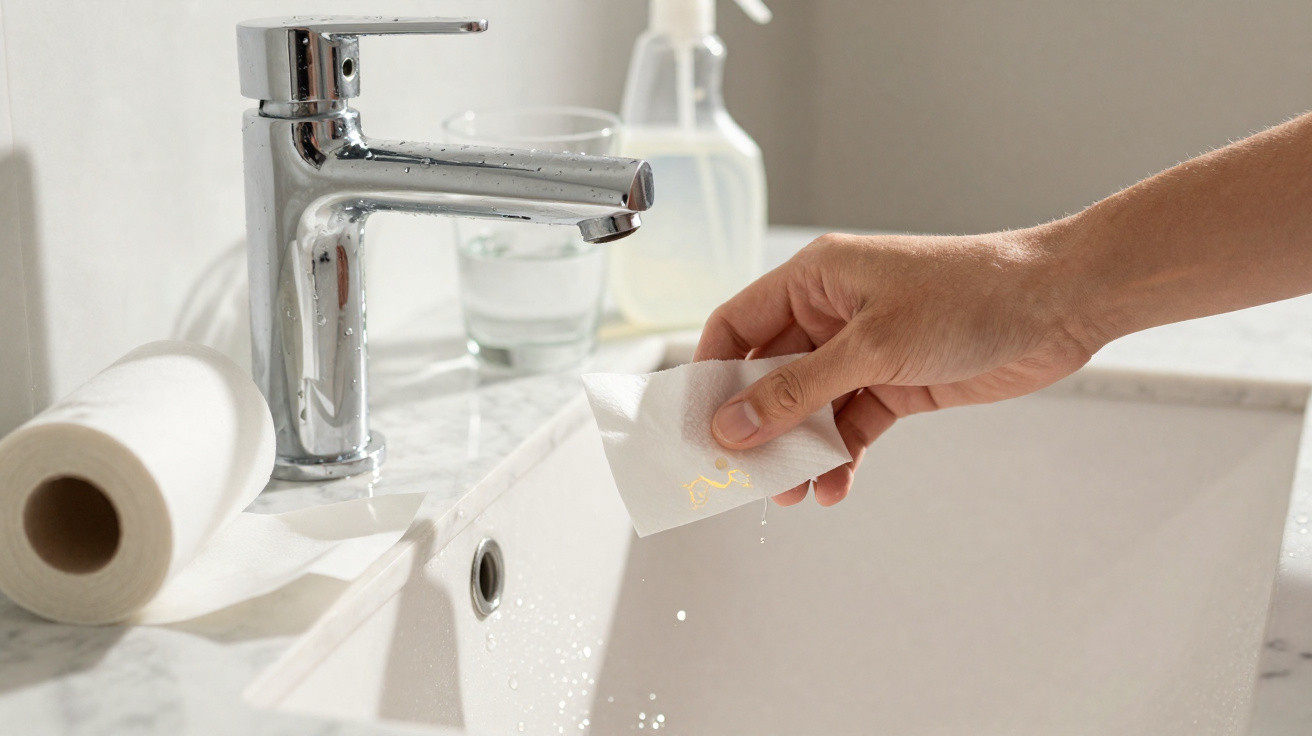
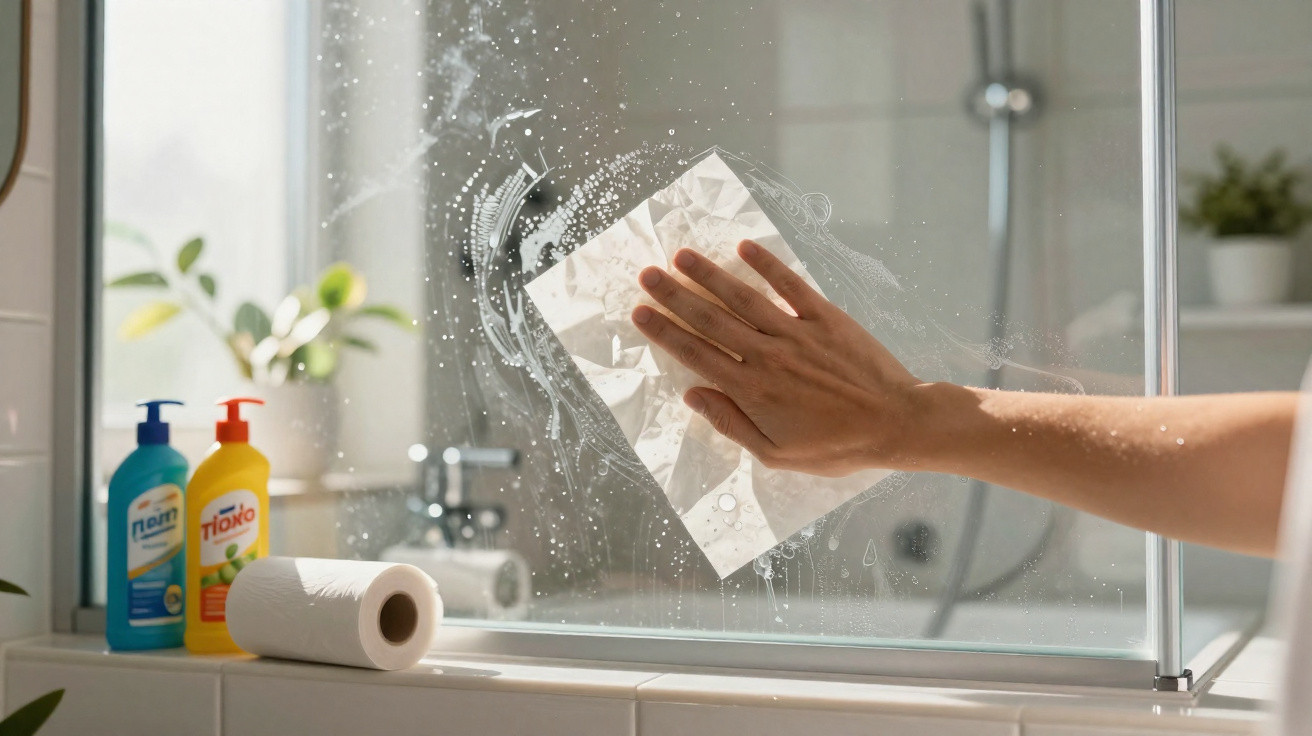
I would drench the glass until it shone, then go at it with a paper towel, applying more and more pressure.
Initially, it appeared acceptable: glossy, reflective and almost self-satisfied.
But as soon as sunlight from the window struck it at an awkward angle, it exposed a whole army of streaks I had somehow “polished” onto the surface.
The more vigorously I wiped, the worse the streaks became.
Technically, the mirror was clean.
In reality, it never looked properly clean.
One evening, I noticed that I was removing the same tiny toothpaste mark for the third time that week.
After a long day, I wanted only to wash my face and collapse on the sofa, but instead I was once again fighting a splash pattern in a kind of domestic Groundhog Day.
We have all experienced that point when a household task quietly shifts from “normal” to “why is this taking over my life?”.
Frustrated, I picked up my phone and began browsing cleaning forums and strangely satisfying TikToks.
That was where I saw a professional cleaner wiping an enormous hotel mirror.
There was no blue spray and no paper towel.
She used only a damp microfibre cloth and calm, straight strokes.
Her mirror remained clear; mine never did.
The issue was not actually dirt.
Residue was the true culprit.
I had been applying layer upon layer of product: glass spray, more spray the following day, and whatever fabric softener residue was lingering in the bathroom air.
The paper towels also deposited invisible lint and fibres, which held on to moisture and dust.
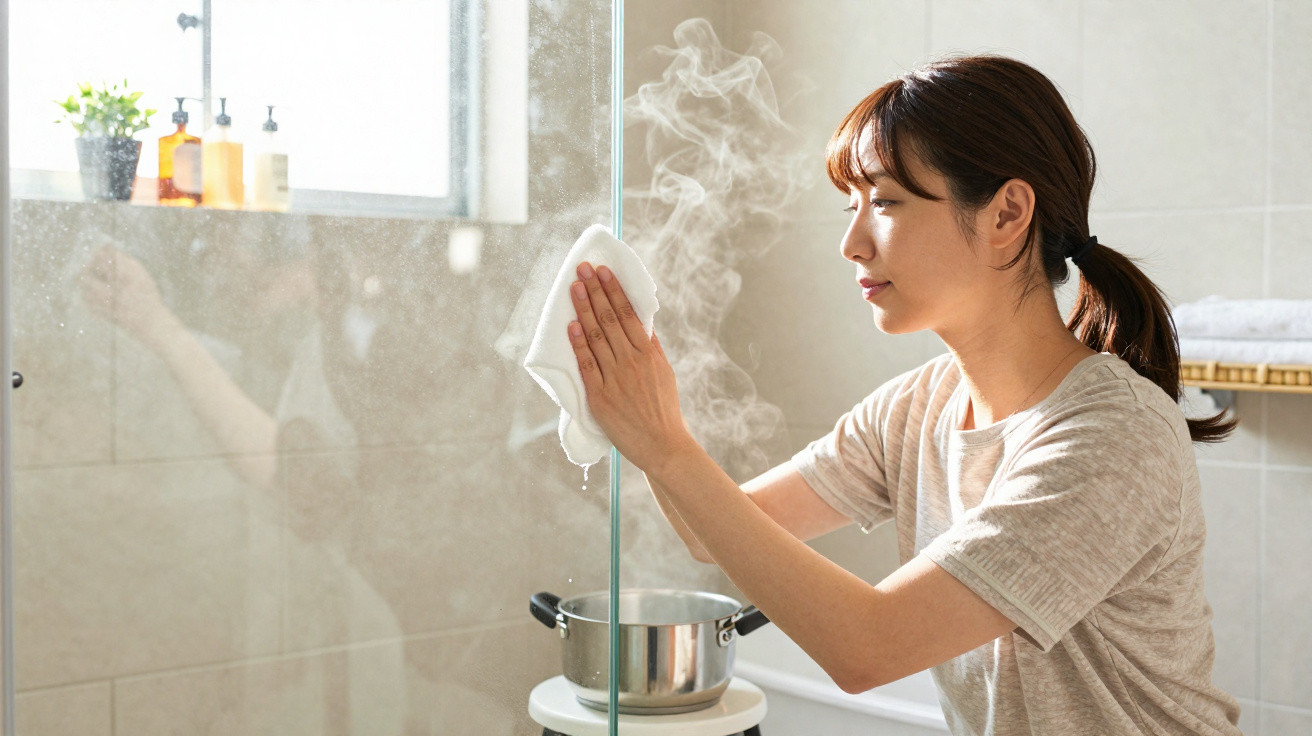
For an hour, the mirror appeared “clean”. Then the steam from my shower dried over that residue and became streaks.
Each fresh clean simply disturbed the build-up already beneath it.
Once I grasped that, it was nearly amusing.
I had assumed my mirror was dirty.
What I actually had was a chemical lasagne covering the glass.
The simple mirror-cleaning adjustment that changed everything
The solution was absurdly straightforward: use less product, choose a better cloth and wipe differently.
I stopped spraying directly onto the mirror.
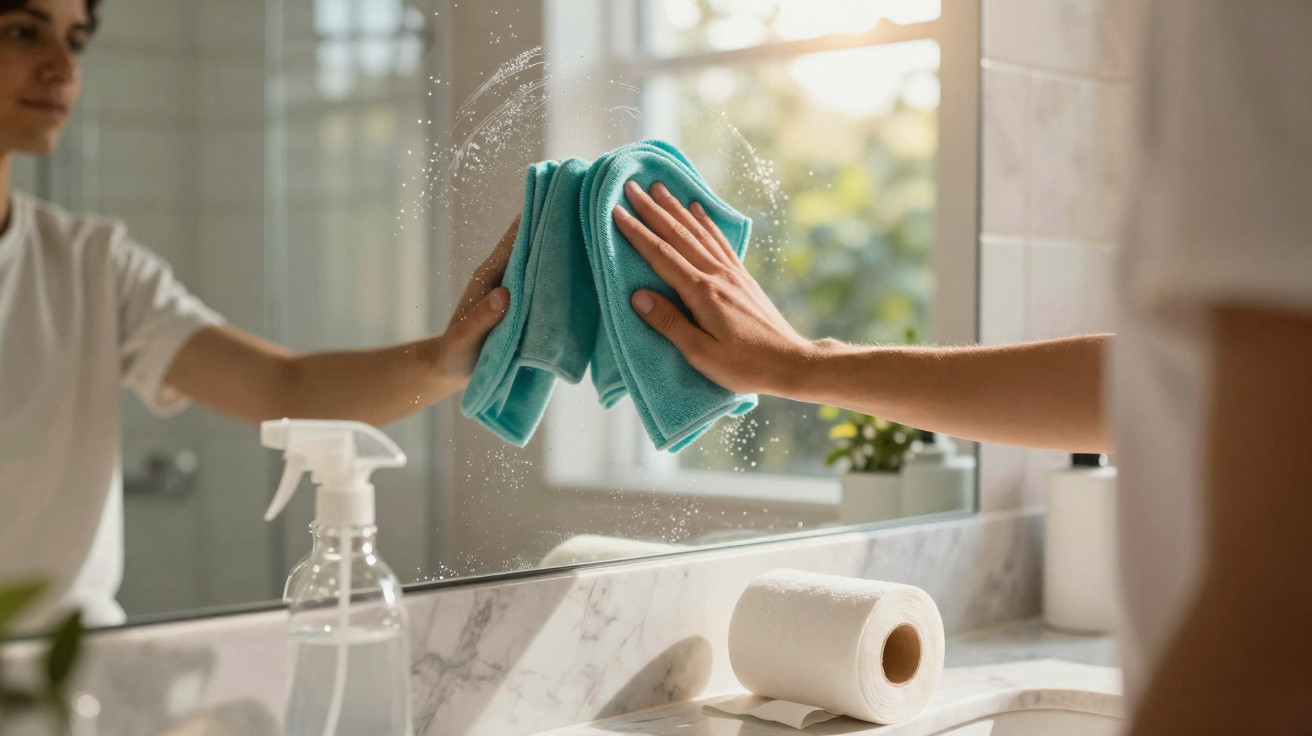
Instead, I gently dampened a clean microfibre cloth with plain water.
It was not saturated, merely damp enough to feel cool.
Next, I folded it into quarters to create a flat, even surface.
I cleaned from top to bottom in long, straight strokes, overlapping each pass slightly.
Then I used a second, dry microfibre cloth to buff and dry the mirror using the same pattern.
It took two minutes: no blue spray and no aggressive scrubbing.
The following morning, the mirror looked… exactly as it had the evening before.
It was still bright and clear, with no unexpected streaks under harsh daylight.
I expected the familiar let-down, much like waiting for a delayed train that you know will eventually arrive.
But nothing happened.
On day two, it was still fine.
By day three, a small toothpaste spot vanished with one quick wipe and left no trace behind.
Honestly, nobody follows this routine every day.
Life becomes hectic, steam builds up, children splash water everywhere, and partners shave as though they are filming a slow-motion commercial.
Yet the mirror somehow stayed “neutral” for longer, as if it had stopped bearing a grudge.
Once the build-up had gone, my effort finally produced results that lasted.
“The secret isn’t scrubbing harder, it’s giving the glass fewer reasons to betray you in daylight.”
Switch to microfibre
Soft, densely woven microfibre holds grease and dust rather than spreading them across the surface.
One quality cloth replaces the endless succession of paper towels.Use less product
If you prefer glass cleaner, spray it onto the cloth rather than the mirror.
A few spritzes will cover the entire surface.Alter your wiping pattern
Straight, overlapping strokes are simpler to manage and inspect than frantic circular movements.
You can immediately tell which areas you have already cleaned.Finish with a dry pass
A second dry cloth lifts away the final traces of moisture and product.
This prevents new streaks forming as the mirror dries.Work from top to bottom
Gravity is working against you if you begin in the middle.
Start at the top so that drips do not run through an area you have just cleaned.
Living with a mirror that finally minds its own business
Once the mirror stopped requiring my attention every 48 hours, something subtle changed around the house.
The bathroom felt more peaceful.
I was no longer arranging my evenings around that irritating “quick clean” that inevitably became ten frustrating minutes.
When friends visited, I stopped doing a last-minute panic wipe with toilet paper that only made matters worse.
The glass appeared effortlessly clean, as though it had joined the household team rather than opposing it.
The amusing thing was that I did not need any new products, just a different habit.
A different cloth, a gentler hand and one additional dry pass.
That was all.
| Key point | Detail | Value for the reader |
|---|---|---|
| Use microfibre instead of paper towels | Microfibre traps dust and oils without leaving lint or fibres | Cleaner mirror that stays clear longer, with less effort |
| Apply product to the cloth, not the glass | Limits residue build-up and avoids runs and drips | Fewer streaks appearing when light hits the mirror |
| Finish with a dry, straight-line wipe | Removes remaining moisture and invisible film | Professional-looking result in a couple of minutes |
FAQ:
- Question 1: Can mirrors be cleaned using only water and a microfibre cloth?
- Question 2: Why does a mirror look clean at night but become streaky in the morning?
- Question 3: Is newspaper genuinely better than paper towels for cleaning mirrors?
- Question 4: How frequently should you deep-clean a bathroom mirror?
- Question 5: What should you do if a mirror has old, cloudy stains that will not disappear?







Comments
No comments yet. Be the first to comment!
Leave a Comment