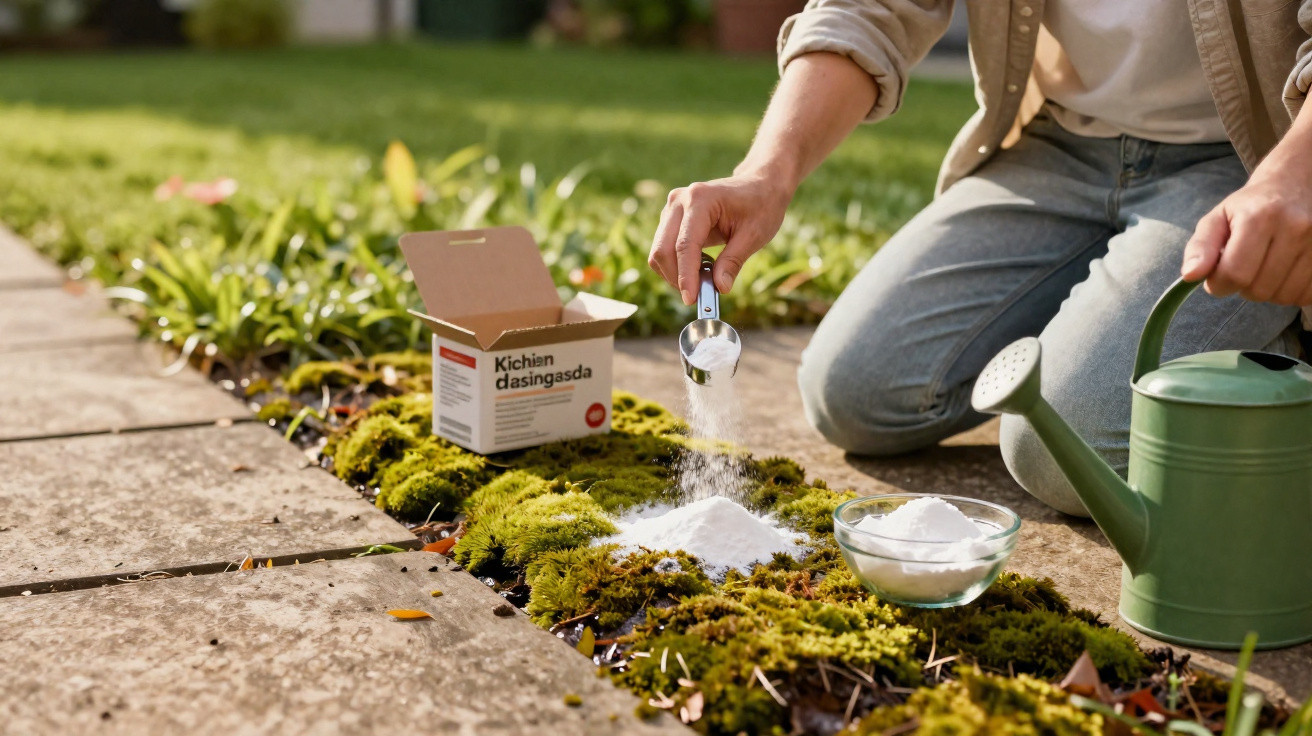
Earlier chemical treatments have disappeared from the market, and environmentally conscious gardeners are reluctant to use harsh products. That has brought a familiar household helper into focus: a straightforward kitchen powder. Used correctly, it deprives moss on lawns, paths and patios of the conditions it needs, without leaving toxic residues behind.
Why moss persists so stubbornly on lawns and paths
Moss is not there by chance; it signals that garden conditions are unsuitable for grass and many other plants, yet almost perfect for moss.
On the lawn: when grass weakens, moss takes over
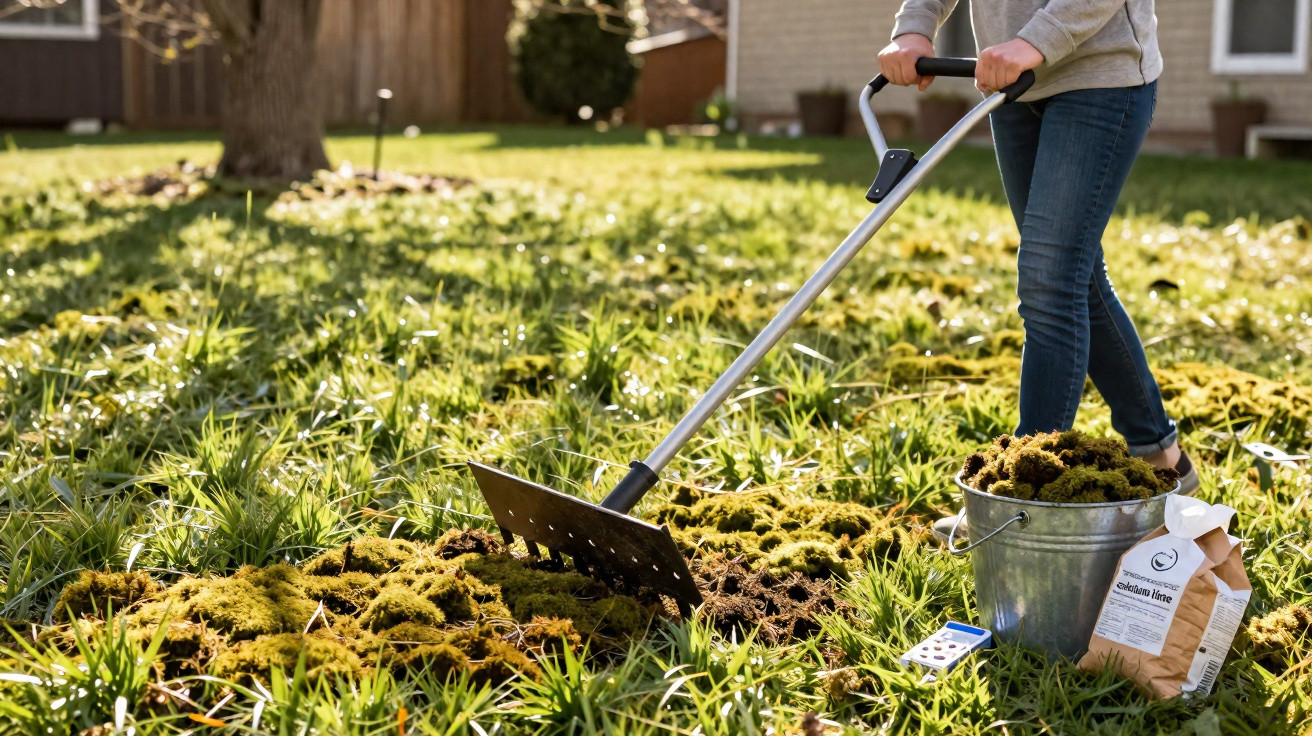
Moss thrives in acidic, compacted soil that drains poorly and is often shaded. Once grass loses strength, moss moves in.
- pH value below 6: the soil is clearly acidic
- compacted ground: water collects and air is lacking
- lots of shade: limited light and a damp microclimate
- standing water: puddles after rain and permanently wet patches
Grasses require air in the soil, nutrients and light. When too much of any of these is missing, bare patches appear. Moss spreads precisely in these gaps, intercepting light and moisture while pushing the lawn back even further.
“Where moss spreads, the lawn is fighting for survival – the kitchen powder helps only when the underlying causes are tackled as well.”
On slabs and paving: a path becomes a slip hazard
On driveways, pavements and patios, a shaded position, some moisture and fine dirt in the joints are often all it takes. Moss exploits every crevice.
Over time, a previously firm, clean surface can turn into a green strip that quickly becomes slippery in wet weather. Since many synthetic pesticides were banned for private use, more homeowners have turned to alternatives – not only for legal reasons, but also because they do not want to burden their gardens with unnecessary chemicals.
The kitchen powder that dries out and removes moss
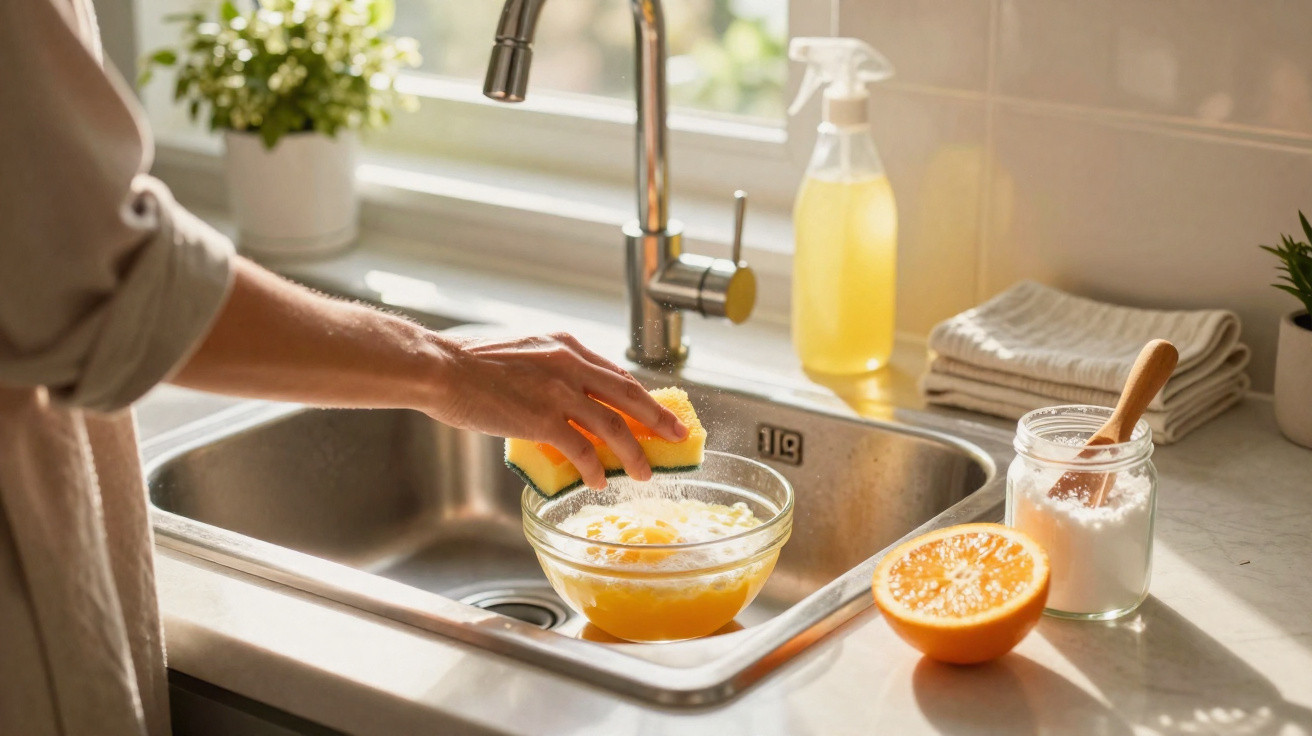
The product increasingly discussed by gardening professionals is bicarbonate of soda, commonly sold as baking soda or household bicarbonate in supermarkets. Many people already keep the small cardboard tub, often costing well under €1, in a cupboard for baking or cleaning.
Bicarbonate of soda raises the pH level locally on the surface it contacts. At the same time, it draws water from the delicate moss plants. Their cells dry out, the cushions turn brown within a few days, and they can then be removed mechanically.
“Bicarbonate of soda works not through poison, but by changing conditions: moss dries out while the surrounding area is largely protected – provided the dosage is right.”
How to use bicarbonate of soda correctly on the lawn
Anyone using bicarbonate of soda for the first time should start cautiously and observe the results closely. The aim is to target moss patches only, rather than treating the entire garden.
Step-by-step guide for the lawn
- Check the area: Treat only the spots where moss cushions are actually present; do not apply it across the whole lawn.
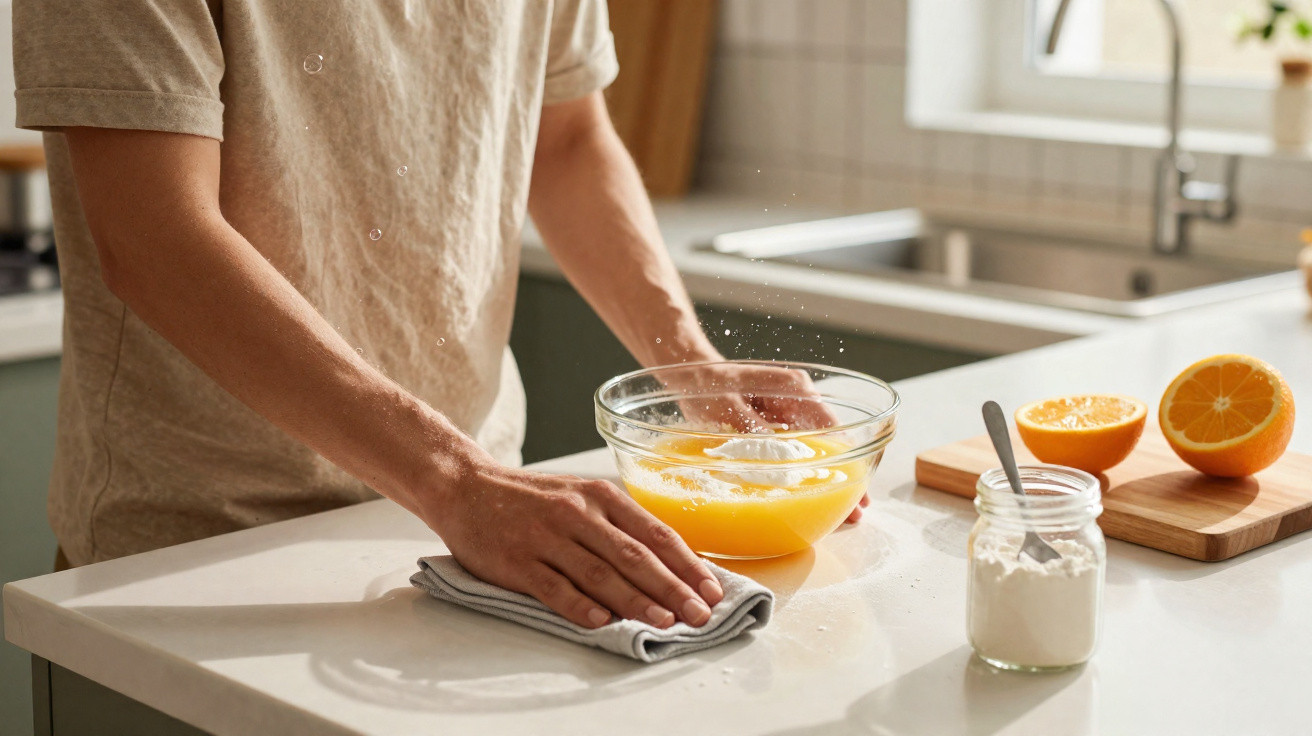
- Mix the solution: Dissolve 2 to 3 tablespoons of bicarbonate of soda in about 1 litre of water and stir thoroughly.
- Wait for suitable weather: A dry day with no rain forecast for the following 24 to 48 hours is best.
- Spray precisely: Apply the solution directly to the moss using a spray bottle or pressure sprayer, wetting as little surrounding grass as possible.
- Allow it to work: After 2 to 3 days, the moss should turn yellow to brown.
- Remove it: Pull out the dead layer with a lawn rake or scarifier.
- Reseed: Lightly rake the resulting gaps and sow fresh lawn seed.
If you suspect the soil is very acidic, test the mixture first in a small, inconspicuous area. Should the grass react strongly with yellow patches, reduce the concentration or choose another method.
Adjust lawn care so moss does not return
Bicarbonate of soda alone will not solve the issue. Without addressing the causes, the problem is likely to return the following winter.
- Scarify regularly: Rake thatch and moss residues out of the lawn in spring and autumn.
- Aerate the soil: Use lawn aerators or a garden fork to make holes so air and water can circulate more effectively.
- Prevent waterlogging: Reduce standing water with drainage, sand or a slight gradient.
- Create more light: Where possible, thin trees or cut back shrubs to let more sunlight reach the lawn.
- Test the soil: A simple pH soil test from a garden centre will show whether lime would be useful.
Using bicarbonate of soda on paths, driveways and patios
On hard surfaces, bicarbonate of soda is used slightly differently. The main task is treating the joints without affecting adjacent beds or a pond.
Dry application for slab and paving joints
For light to moderate moss growth, the dry method is often sufficient.
- Clean the surface: Sweep away coarse debris and loose moss with a broom or joint scraper.
- Scatter bicarbonate of soda: Put the powder directly into the joints; around 20 grams per linear metre of joint is a useful guide.
- Brush it in: Work the powder into the gaps with a stiff broom or joint brush.
- Use moisture: Dew or light rain gradually dissolves the powder and carries it into the moss.
- Finish the job: After a few days, sweep or brush away the brown remains.
Liquid application for very slippery surfaces
If a driveway or path has already become extremely slippery, a solution applied by watering can or sprayer produces faster results.
- Use 2 to 3 tablespoons of bicarbonate of soda per litre of water again.
- Apply it to the affected areas with a watering can or sprayer.
- Leave it to act for 1 to 2 days.
- Then rinse lightly with water to remove loose moss debris.
Important: keep an eye on drains and prevent larger amounts of solution from running straight into beds, onto vegetables or into a garden pond.
Limits, risks and sensible dosage
Although bicarbonate of soda can be useful in the garden, it is not entirely risk-free. The dosage determines whether it is helpful or causes problems.
“More is not better here: anyone who scatters or pours too generously risks dead joints or yellowed lawn.”
How often should you treat each year?
Garden experts recommend treating the same area with bicarbonate of soda no more than once or twice a year. In between, the lawn should be allowed to recover, while paths should receive another application only when needed.
On paving joints, too much bicarbonate of soda can alter the narrow layer of soil so severely that almost nothing will grow there. That may sound tempting, but it also means joint material can wash away more easily and the surface may become less stable.
Where bicarbonate of soda should not be used
- directly beside vegetable gardens or herb beds
- close to garden ponds and streams
- on surfaces that drain into the sewer system without filtration
- on very young or newly seeded lawns
If you have pets, monitor treated areas at first. Bicarbonate of soda is considered comparatively harmless, but powdery residue on paws or fur is not ideal. Briefly rinsing the surface after the treatment time removes this concern.
What pH means – and why moss reacts to it
Many tips for tackling moss focus on pH, meaning how acidic or alkaline a soil or surface is. Moss copes remarkably well with acidic conditions, whereas many grasses become weak there.
Bicarbonate of soda is alkaline. When it reaches the upper soil layer or a damp joint, it shifts the pH level for a period into a range in which moss grows less successfully. As already described, it also dries out the delicate plants. This combination is what makes the powder so effective.
Anyone wanting permanently less moss in the garden should therefore work on several factors: loosen the soil, direct water away, provide more light and use bicarbonate of soda selectively as an aid, rather than as a permanent solution from the cupboard.
When applied properly, this unassuming kitchen staple becomes a practical tool against slippery paths and matted lawns. The alternative to the chemical treatments of the past is often already in the store cupboard – you simply need to know how to use it sensibly.


Comments
No comments yet. Be the first to comment!
Leave a Comment