There is a uniquely embarrassing sort of shame attached to shower glass. You know it: cloudy white streaks, chalky specks, and marks that refuse to budge however casually you wipe at them. The rest of the bathroom may be spotless, with towels stacked like they belong in a boutique hotel and a candle burning for “vibes”… yet the moment you slide back the shower door, it resembles the inside of a kettle. Whenever the light picks out those hard water stains, you feel that small pang of, “I really should deal with this.” Then you think of the costly cleaners beneath the sink, all smelling like a swimming pool, and suddenly checking your phone seems terribly important.
This began on one such day, when my excuses had run out - along with my limescale spray. What I did have was a roll of parchment paper: the sort used to line baking trays. I reached for it out of irritation, not expectation. What followed was a little like seeing a magic trick performed in my own bathroom.
The day I abandoned “proper” cleaners
We have all looked into the cleaning cupboard and wondered, “How did I end up with so many bottles that don’t really work?” My moment came on a dreary Tuesday after doing that thing where you rinse the shower “just quickly” and act as though it qualifies as cleaning. The familiar hard water marks remained: milky curves where water hits the glass, persistent dots around its edges, and a dull coating that made the whole thing seem weary. I picked up my regular limescale spray, squeezed the trigger and… hiss, splutter, nothing. It was empty. Naturally.
Honestly, nobody scrubs the shower after every use as cleaning guides insist they should. Life intervenes. Children need feeding, emails continue arriving, and your back is already sore from leaning over the bath earlier that week. Gradually, the glass goes from “a bit streaky” to “oh my god, how did I let it get this bad?” Standing there in an old T-shirt, with cold feet on the tiles, I felt that usual mix of irritation and resignation. I could ignore it yet again, or make do with something else.
I had a quick search through the mess under the sink: a half-dried sponge, furniture polish, and an unidentified spray whose label had peeled away. Nothing remotely helpful. Then I opened the kitchen drawer and spotted the parchment paper roll. It was that beige, faintly waxy paper normally reserved for biscuits and roasted vegetables. No chemicals or claims of “extra strong descaling power”. Only paper. Since I had nothing to lose, I tore off a sheet.
Parchment paper and hard water stains: the first wipe
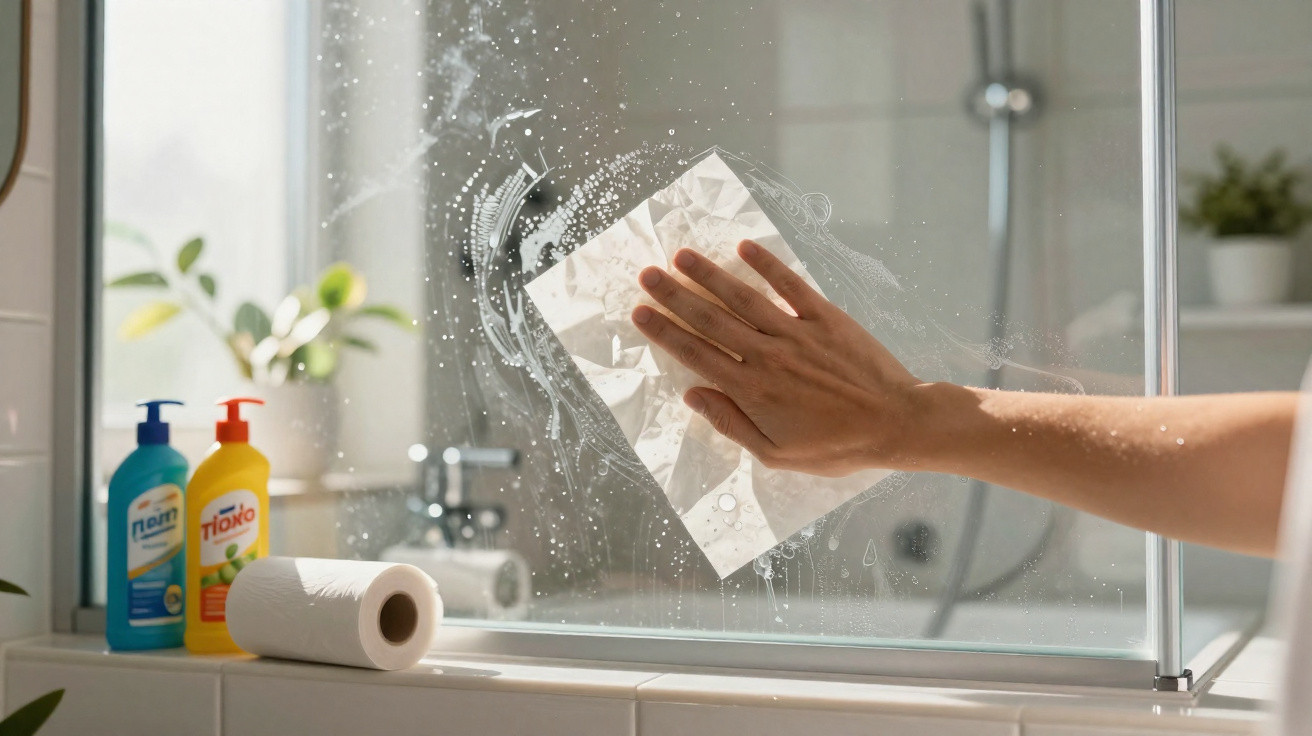
There was no strategy and no TikTok cleaning hack open on my phone, only a hazy recollection of someone saying to use something “slightly rough but not scratchy”. Parchment paper seemed to fit the bill. It feels soft against your fingers, though it has a subtle texture - like exceptionally gentle sand that never made it to the beach. I folded one sheet in half and then in half once more, creating a small crinkled pad that fitted comfortably in my hand. The shower glass was still a little damp from my earlier “fake clean”, which proved more significant than I realised.
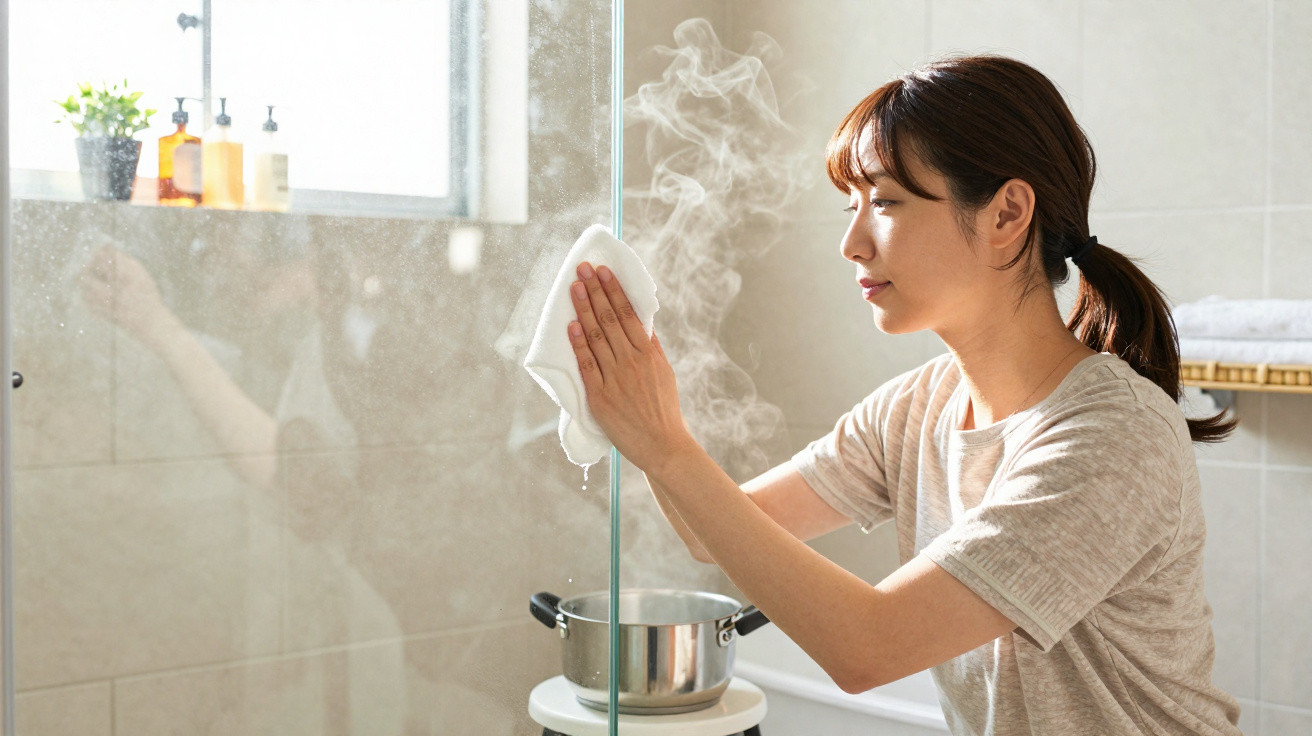
I held the parchment against the glass and rubbed it in a casual circle, fully expecting no result at all. Yet there was one. A slim clear patch emerged from the foggy white film. It was not flawlessly gleaming or Instagram-bright, but it was unquestionably cleaner. I blinked, moved closer and made another slow circle. More of the chalky layer came away, revealing a shine I had not seen for months. I actually said “no way” out loud, to an empty bathroom.
My curiosity soon took over. I worked across the worst section, the central area where the water strikes the glass during every shower. As it moved, the parchment made a quiet papery squeak, rather like someone softly crumpling a crisp packet in the next room. Pass by pass, the surface changed from matte to gently glossy. It was not a one-swipe miracle, but a subtle, steady improvement. The feeling was oddly satisfying, like peeling away an old sticker to uncover the clean surface below.
Why does parchment paper work on hard water stains?
Hard water staining is essentially made up of tiny mineral deposits - chiefly calcium and magnesium - left stuck to the glass after water repeatedly evaporates. Each time the water dries, another layer remains. Cleaning sprays tackle this through chemicals. Parchment paper, as it turns out, works more quietly. Its finish is smooth enough to avoid scratching glass, while textured enough to behave like an extremely gentle scouring pad. It eases the chalky build-up away, particularly when the glass is damp.
Its waxy coating contributes as well. It provides a very slight glide between your hand and the glass, allowing you to apply a little more pressure without that unpleasant dragging friction. It is similar to the difference between rubbing your face with a dry flannel and massaging it with cleanser: the same hand, but less resistance. Moisture on the glass softens the mineral layer just enough for the parchment to shift it. There is no foam or dramatic fizzing - simply quiet, low-tech friction at work.
There is a psychological element too. When you use a harsh spray, you naturally wait for it to “do the work”, just as the advert promised. With parchment paper, you know the work is yours. You can feel the slight resistance giving under your hand, see the area you have cleared and hear the delicate rustle as the paper moves. It changes cleaning from a chemical experiment into a simple physical task. Strangely, that makes the process seem more honest.
Step-by-step: an oddly satisfying ritual
Preparing your small bathroom experiment
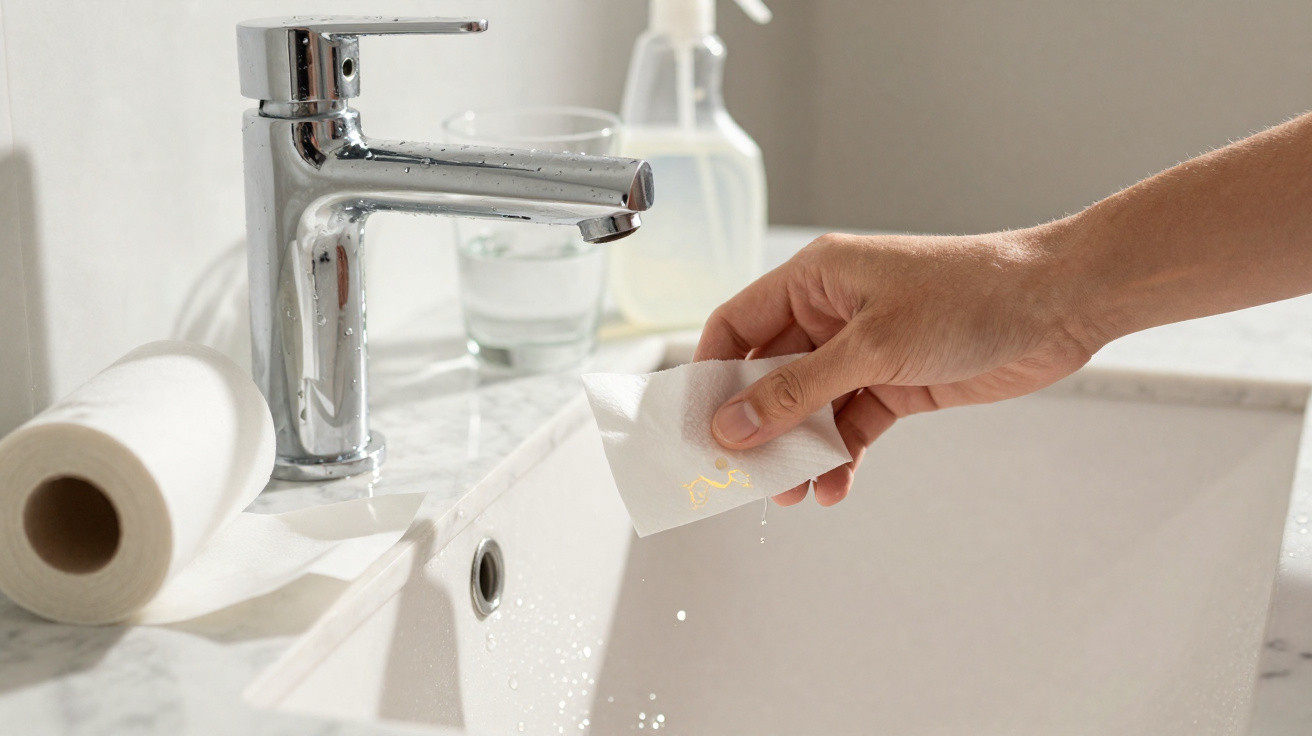
You need very little: one or two sheets of parchment paper, some warm water and perhaps a dry cloth to finish. I began by letting the shower run for a minute, long enough to mist the glass and leave it evenly damp. To avoid using extra water, a quick wipe with a wet cloth works just as well. The important thing is for the surface not to be dripping, but also not completely dry. I then turned off the shower, badly tied up my hair and started cleaning.
Fold the parchment into a pad that feels comfortable. If it is too large, it will flop about; too small, and your fingers will come through it. Aim for roughly palm-sized. Next, choose an area of glass - ideally an eye-level “before and after” strip - and work with small overlapping circles. Do not be aggressive; firm pressure is enough. Think “polishing your phone screen” energy, rather than “scrubbing a burnt pan at midnight” rage.
Stop after a few seconds and inspect it. At first, you will likely notice only a slight change, such as a clearer line appearing through the mist. Let that encourage you. Continue section by section. I found myself zoning out, much as you do when you start peeling off old nail varnish and suddenly discover it has all gone. There is a mindlessly calming quality to watching each dull area become a little more transparent beneath your hand.
The finishing touches that make it seem miraculous
Once you have covered a reasonable area, step back. That is when the difference between the rubbed and untouched glass really becomes obvious. The cleaned section catches the light in another way, almost as if someone has switched it on. I took a dry microfibre cloth and quickly buffed the entire panel using the same circular motion. That final pass appeared to remove the last trace of haze, like breathing onto a window and polishing it until clear.
The outcome was not showroom-perfect, and I will not claim that every old water mark disappeared immediately. The thickest deposits near the lower edge required another attempt and a little more elbow grease. Still, the glass looked normal again. Presentable. It was the sort of shower you could allow a guest to use without apologising. One of the most surprising things was how much you could achieve without a single chemical smell filling the room.
I ended up standing there, slightly warm-faced, holding a crumpled piece of parchment and feeling both foolish and unexpectedly proud. This was no glamorous cleaning trick involving expensive products, only me and a piece of baking paper. The very paper that had sat quietly in my kitchen drawer, doing nothing more than lining trays, had suddenly become a bathroom hero. It was like discovering that your shyest friend can secretly sing like Adele.
Why this small trick feels surprisingly emotional
Cleaning hacks are everywhere, and most promise to rescue your life, marriage and Saturday morning. This one does not. What it can offer is one small, visible success in a room that often feels caught in an endless cycle of mess. There is something deeply rewarding about sorting out an issue that has bothered you daily with something so ordinary. There is no planning involved, no special trip to the shops and no excuse of “I’ll sort it at the weekend”.
There is also the pleasure of not inhaling chemical fumes for a change. Standard limescale sprays tend to leave a harsh artificial scent hanging in the room, like the lingering smell of a public swimming-pool changing area. With parchment paper, the bathroom still smelled like… your bathroom. Perhaps there was warm water and a faint trace of old shampoo from the shower tray, but nothing more. It somehow felt gentler, both for the room and for my lungs.
Then there is the “truth moment”: for most of us, home is not a glossy magazine spread. It is partly dry laundry, coffee rings on the table and, yes, cloudy shower screens. Finding a trick that genuinely improves something in under ten minutes, using what you already own, does more than clean the glass. It removes a small layer of guilt. You walk out of the bathroom feeling like you’ve won, just a little, against the chaos.
Will parchment paper replace every cleaner?
No, and that is absolutely fine. It is not a miracle solution for all stains or surfaces, nor does it need to be. If the glass is covered in years of heavy limescale, you may still require a stronger product once to bring it back to a manageable state. For everyday “please don’t look too closely at my shower” grime, though, parchment paper is remarkably effective. It occupies that useful middle ground between effort and results: enough work to feel productive, but not enough to make starting feel dreadful.
You may find it useful as a maintenance routine once the worst build-up has gone. Every week or so, give the glass a quick wipe with a leftover scrap of parchment from cooking. There is no faff, no gloves and no choking fumes. It is simply a small, regular kindness to your bathroom that prevents it ever reaching the “oh no, guests are coming” stage of panic. It is one of those understated habits for which future-you will sincerely thank past-you.
And if it does not work? You have wasted one sheet of paper and five minutes, rather than half a bottle of expensive cleaner and your sense of smell. There is something wonderfully low-risk in that. Sometimes the best tricks are the ones that ask almost nothing of you, except a bit of curiosity and a willingness to look slightly silly for a moment. You may feel absurd rubbing a shower with baking paper. Then you will spot your reflection in the clearer glass and realise it was worthwhile.
The little roll of paper that changes how you view your home
Since that first accidental test, I cannot forget what parchment paper can do to hard water stains. Whenever I line a baking tray, I now tear off a slightly larger sheet and discreetly keep the spare piece in the bathroom. There is a quiet, almost secret pleasure in knowing I have a concealed weapon against those chalky ghosts on the glass. No labels or branding, just an unassuming sheet that promises nothing and accomplishes plenty.
The next time you open your shower door and wince at the cloudy mess looking back at you, stop before grabbing another bottle. Head to the kitchen instead. Tear off a sheet, fold it and try it on one corner of the glass. Watch what happens in that small square, and take note of how it makes you feel: a little surprised, a little pleased with yourself and perhaps even a little lighter.
Because change does not always come in an expensive spray with a promise printed on its label. Sometimes it arrives as a quiet, crinkly sheet of parchment paper, and the real surprise is how simple it was all along.

Comments
No comments yet. Be the first to comment!
Leave a Comment