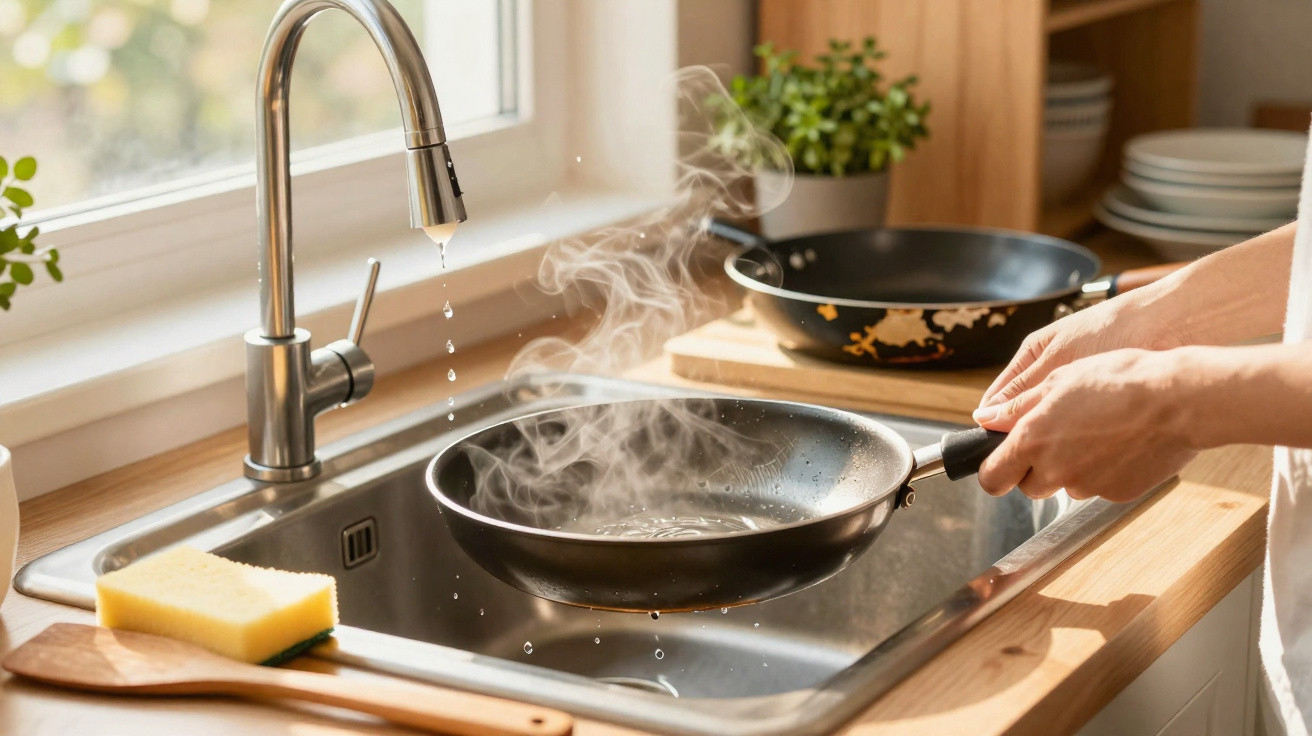
Pans taken off the heat may look ready for the sink, but this everyday habit comes at a high cost in the kitchen. Immediate contact with water, especially cold water, causes thermal shock, warps the base, wears down the coating and undermines even heating - all of which are essential for sautéing, searing and frying properly.
Why does water in a hot pan cause so many problems?
The issue arises because the metal is still expanded by the heat. If water is added immediately after cooking, its temperature drops sharply, causing different areas of the pan to contract at different speeds. Cookware manufacturers and care guides warn that this can warp the base and make the pan less stable on the hob, including models with reinforced bottoms.
In practice, the pan no longer sits evenly on a gas flame, electric hob or induction surface. This can alter cooking times, create hotter spots and lead to premature signs of wear. In everyday cooking, the change is noticeable when oil runs to one side or food browns unevenly.
What happens to the non-stick coating during sudden cooling?
The non-stick coating does not act independently. It is bonded to a metal base that expands and contracts during use. Taking a pan straight from the heat to the tap increases the difference in behaviour between the coating and the structure, raising the risk of microcracks, reduced adhesion and earlier-than-expected wear.
This does not mean every pan will be ruined the first time it happens, but repeating the habit speeds up the loss of performance. Rather than food sliding around with little oil, dull patches, rough areas and stuck-on residue can begin to appear, particularly on frying pans used for eggs, pancakes and sugary sauces.
Which signs show that the pan is already worn?
Some warning signs appear before more obvious damage develops. Watching for them helps distinguish cookware that can still be used from pieces that have already lost cooking efficiency.
- An uneven base, causing fat to run towards one edge.
- Food sticking more than usual in particular areas.
- Crackling when liquid is added, even after the heat has been switched off.
- A dull surface with scratches or peeling coating.
- Uneven heating, where one area browns while another remains pale.
In the kitchen, these details matter more than appearance alone. A warped base changes how heat is conducted, while a worn coating requires more fat, more scraping with a spatula and more time spent cleaning, creating an ongoing cycle of wear.
How should you wash pans properly without wasting time?
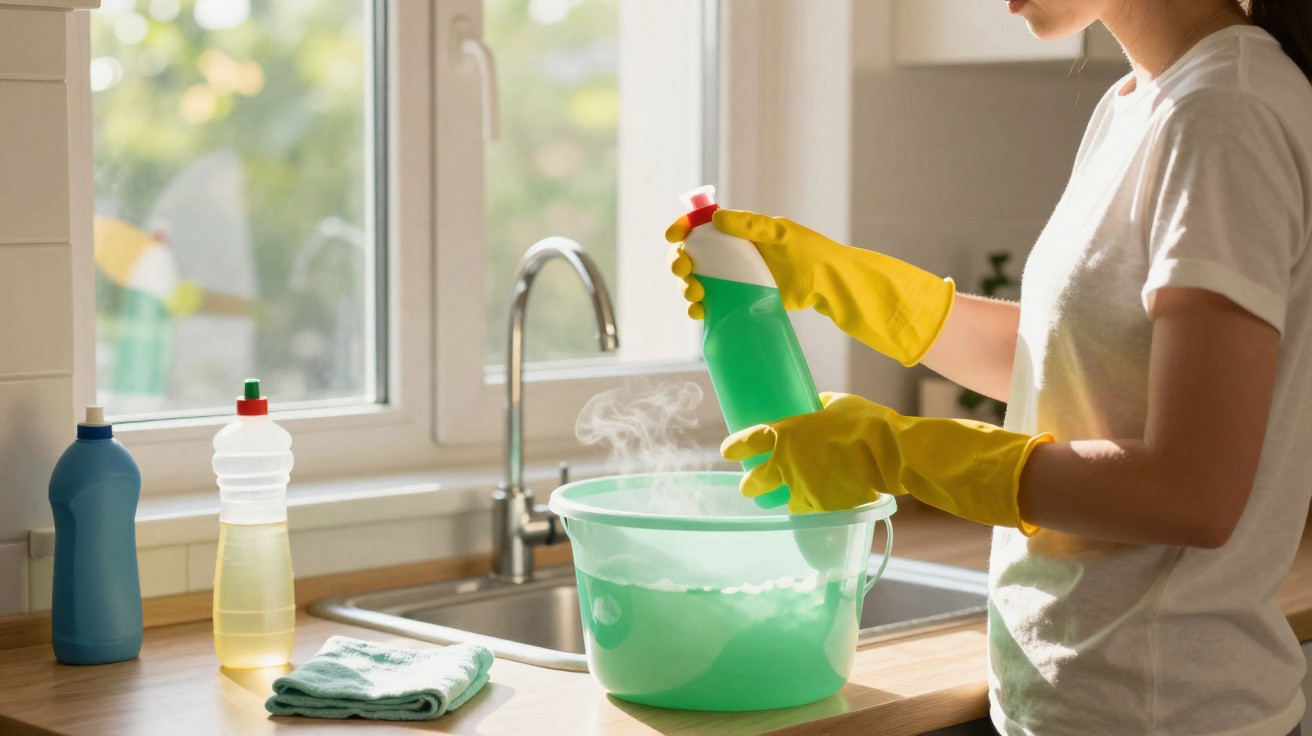
Waiting a few minutes does not mean leaving a pile of washing-up behind. The right method limits damage and also makes it easier to remove grease and residue without excessive scrubbing.
- Take the pan off the heat and let it rest away from the hot hob.
- Once it is no longer giving off heavy steam, use lukewarm or room-temperature water.
- Choose a soft sponge and mild washing-up liquid.
- Avoid steel wool, abrasive powder and sudden exposure to cold water.
- If a crust has formed, soak it briefly before scrubbing.
In a home kitchen, this short pause is usually enough to protect aluminium, stainless steel and coated cookware. The benefit becomes clear the next time you use it: steadier heating, less sticking and less likelihood of having to replace pans too soon.
Is it worth changing this habit in your routine?
Well-maintained pans respond better to heat, retain it more consistently and make cooking results more predictable. This affects the texture of rice, the sear on meat, the sautéing of garlic and onions, and even oil control in quick everyday recipes.
In the kitchen, durability depends on more than brand or price. It also relies on the time between the hob and the sink, the washing method and respect for the material of each piece. Avoiding thermal shock preserves the base, protects the non-stick coating and maintains the performance expected from pans over many uses.

Comments
No comments yet. Be the first to comment!
Leave a Comment