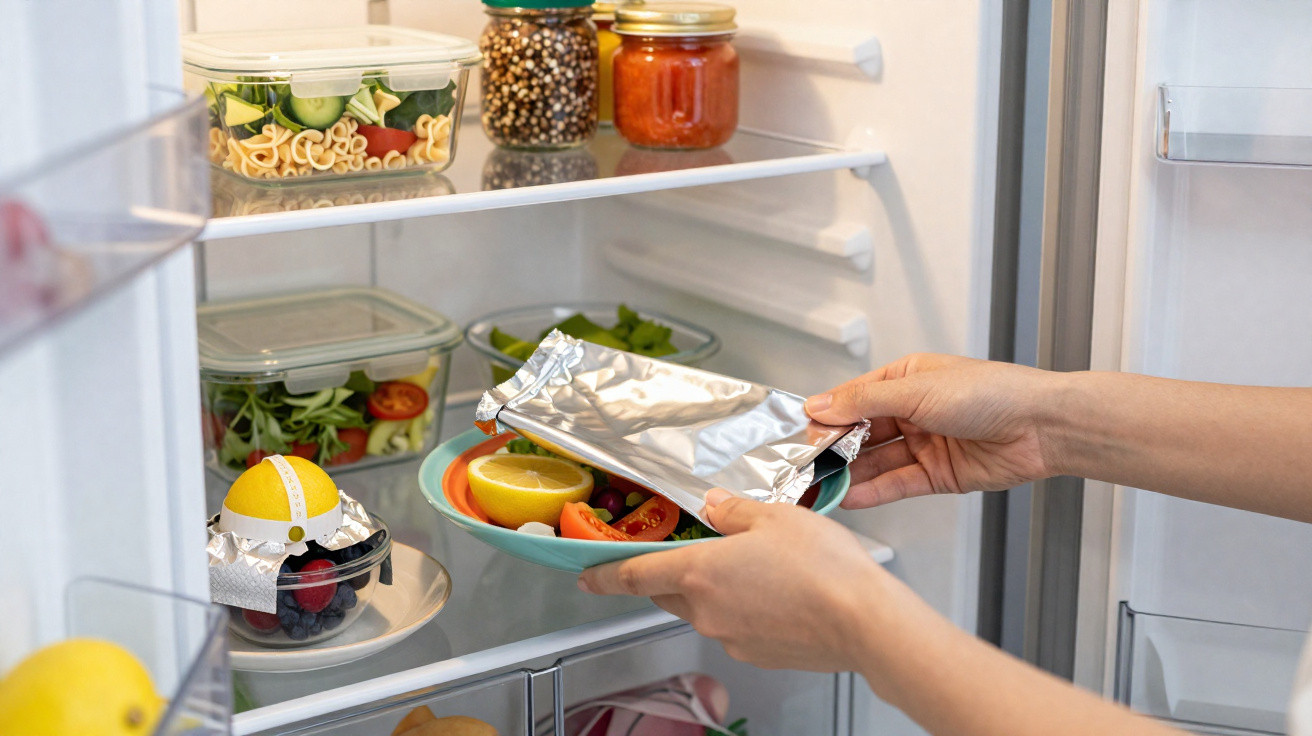
Among common kitchen habits, using aluminium foil in the fridge is one that often raises questions. It may be placed over dishes, used to cover shelves or wrapped directly around food. Because it concerns food storage, this practice prompts concerns about safety, hygiene and its actual everyday value, all of which are directly linked to health and making proper use of stored items.
What does using aluminium foil in the fridge involve?
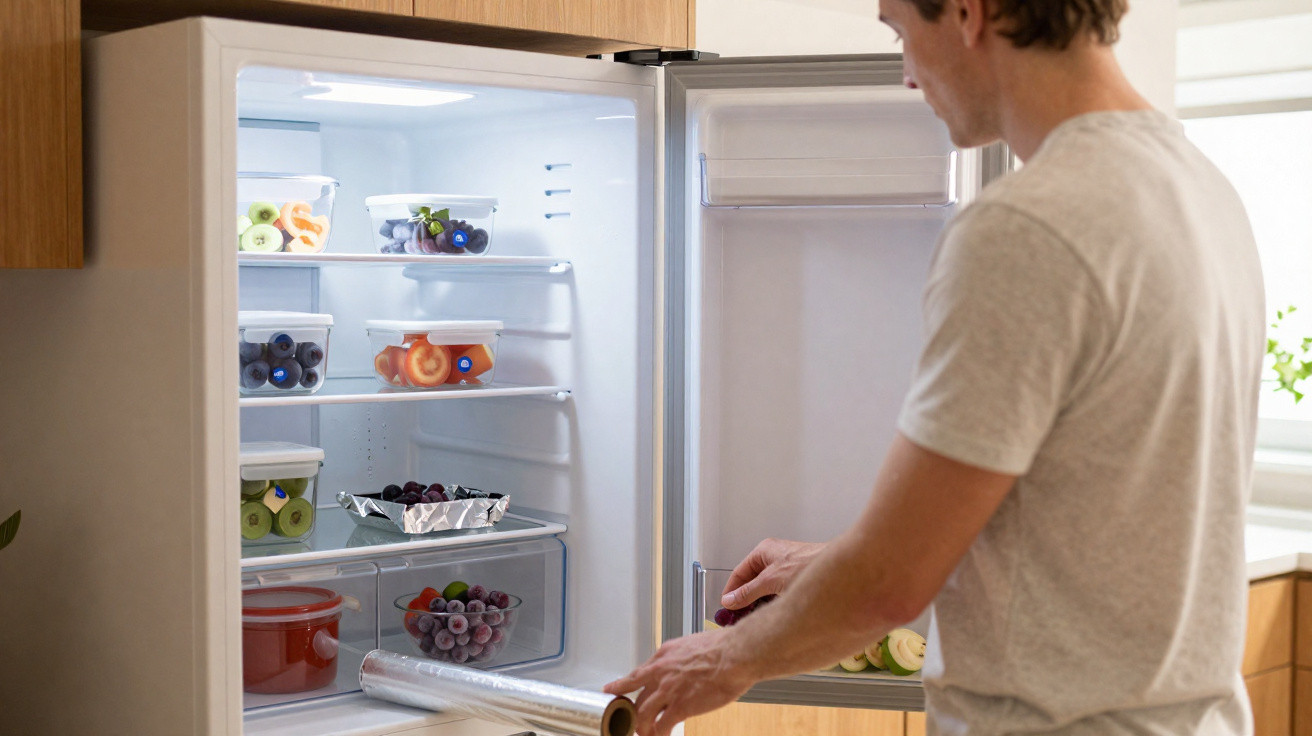
In the fridge, aluminium foil is generally used as a physical barrier, shielding food from direct exposure to cold air, moisture and internal odours. It may cover serving dishes, wrap pieces of meat or cut fruit, and can even be used to line areas inside the refrigerator.
In effect, it acts as a cover that limits the food's exposure to the fridge environment, helping to prevent drying out and the transfer of strong smells. However, it can have drawbacks when it replaces suitable containers or comes into direct contact with certain foods.
What is aluminium foil in the fridge used for?
Aluminium foil in the fridge is mainly used to wrap and protect food from rapid oxidation, strong odours and cross-contamination. It can help preserve the texture of roasted foods, hard cheeses and cooked meal leftovers for short periods.
It works best when fitted closely around the food or container, as this reduces air exposure. Even so, food safety specialists advise giving priority to lidded glass or plastic containers, with aluminium foil used as an additional measure rather than the only solution.
How can aluminium foil be used safely in the fridge?
Safe use depends on both the food type and the storage period. As a general rule, wrapping prepared, chilled food for a short time is acceptable, provided prolonged contact with very acidic or salty foods is avoided, including tomato sauces and dishes containing large amounts of vinegar or salt.
To minimise risks, a few straightforward kitchen practices are important, particularly for anyone who uses aluminium foil regularly.
- Choose sealed containers and use foil only as an outer covering when needed.
- Prevent direct contact with acidic or very salty foods, and never cover food while it is still hot.
- Do not reuse aluminium foil that has already touched food; dispose of any foil that is torn or dirty.
- Do not line the entire fridge with foil, as it may restrict air circulation and affect the appliance's performance.
When should aluminium foil in the fridge be avoided?
Aluminium is not the most suitable option for storing food for several days. In such cases, airtight containers labelled with the date offer better organisation and make it easier to monitor storage time. Lining shelves and drawers with the material may also obstruct cold-air circulation and conceal spills, encouraging odours and dirt.
Fruit, vegetables and leafy greens are generally better kept in produce bags, ventilated containers or perforated packaging, which helps maintain suitable moisture levels. Aluminium foil should therefore be treated as an occasional, targeted option, used only when it genuinely offers extra protection and supports a more practical, hygienic and efficient fridge routine.






Comments
No comments yet. Be the first to comment!
Leave a Comment