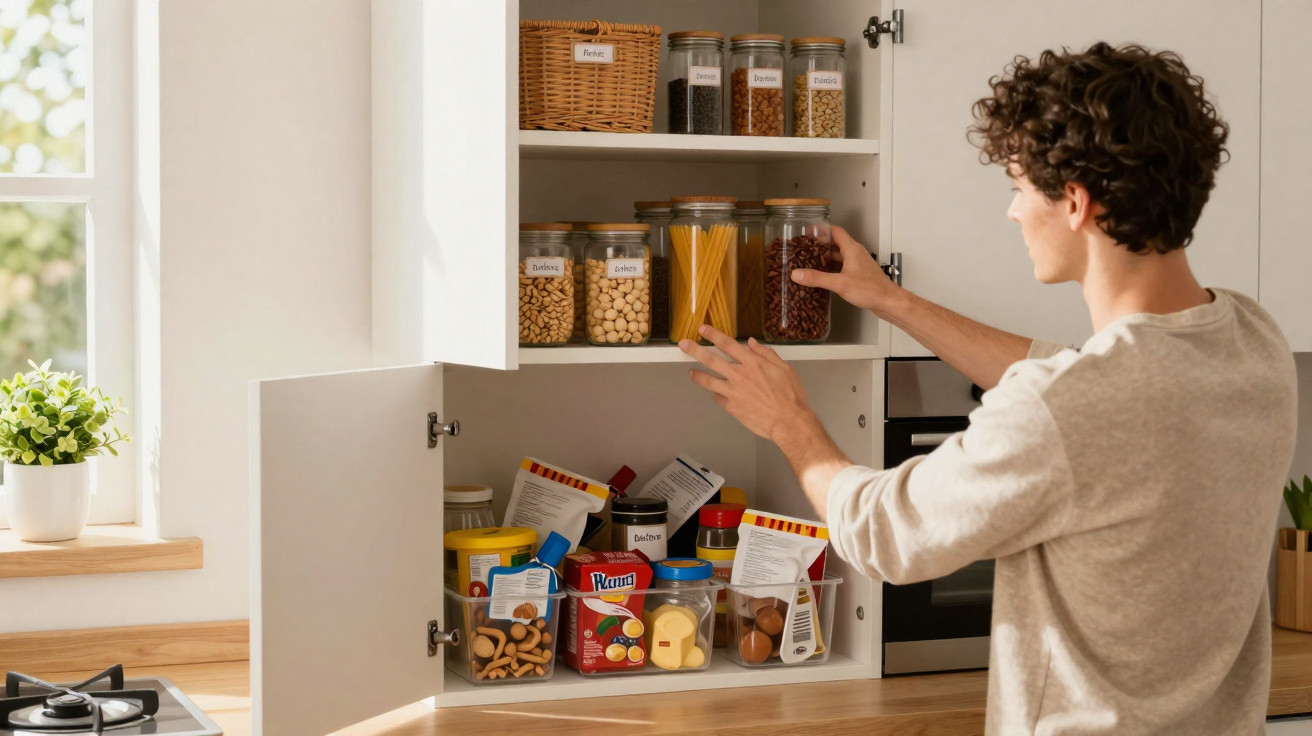
At 19:12, the pasta is already cooking and the kitchen suddenly feels like an absurd treasure hunt. The packet of lentils was there yesterday, the spices have vanished behind three boxes of tea, and nobody knows what happened to the sachets of baking powder. We all know the moment when making a simple dinner turns into an archaeological dig through an overfilled cupboard. The issue is not always a lack of space: it is often what can no longer be seen. Between supplies bought “just in case”, opened packets and products put away in a hurry, every shelf ends up telling its own small story of tiredness. It is a story that can be rewritten, more easily than you might think.
The kitchen cupboard is not too small: it has become impossible to read
A cluttered cupboard feels narrower than it actually is. Packets are piled one in front of another, a tin is pushed to the back, then forgotten until it reappears two years past its use-by date. The real turning point comes when you stop organising around the available space and start organising around everyday actions. Morning coffee, snacks and quick evening meals: each of these moments deserves a clearly defined place. A well-planned cupboard does not need to look perfect in a photograph. It needs to work when your hands are full.
For Clara, a mother of two, the food cupboard once held four partly used packets of rice and a collection of sauces whose opening dates nobody knew. One Saturday morning, she put everything on the kitchen table. In under an hour, she found 18 duplicate items, including three jars of paprika. This is far from unusual: according to a study by the Too Good To Go app, a significant share of household waste simply comes from food forgotten at the back of storage spaces. Seeing what you already have immediately changes the way you shop.
The brain responds well to fixed reference points. When pasta is always in the same place and tins are kept together, you no longer have to search: you simply recognise where things are. That is what makes an organisation system last, even in a family where everyone opens cupboard doors in their own way. A good cupboard does not require military discipline, only visible logic. Let us be honest: nobody really does this every day. The system therefore needs to withstand a rushed grocery shop, a hungry teenager or an evening when you are cooking with no desire to think.
The simplest kitchen cupboard method: see, group and keep within reach
Start by emptying one area only, rather than the entire kitchen. The breakfast cupboard or the shelf for starchy foods is enough to build confidence without turning the room into a building site. Wipe down the shelf, check the dates, then group items into practical categories: breakfast, everyday meals, baking, aperitif snacks and reserves. Food used every week should be placed at the front, at eye or hand level. Extra supplies can go on the top shelf. The rule may seem almost too straightforward, but it stops you moving five things just to reach a tin of tomatoes. The best organisation is the one that takes the least effort.
Clear containers can be useful, particularly for flour, rice, cereal or dried fruit, but they are not essential. Buying fifteen matching jars before sorting anything is a common mistake, and an expensive one that can deliver disappointing results. Keep packaging where it is practical, and add only a few baskets or open boxes to hold sachets that otherwise slide everywhere. Labels help when they remain simple and easy to read. One word is enough: “baking”, “snacks”, “stock cubes”. The aim is not to create a luxury deli, but to find the cumin before the onions burn.
A small routine makes the whole system surprisingly resilient: new shopping goes at the back, items already opened stay at the front, and every category keeps its own territory. This “first in, first used” rule reduces forgotten food without requiring complicated calculations. As one professional organiser puts it:
“Organisation stops being a chore when every object can go home without asking a question.”
- Keep heavy items on lower shelves.
- Set aside one basket for opened packets that need using up.
- Use the cupboard door for spices or smaller items.
- Create a visible area for supplies that need to be used soon.
A kitchen cupboard that stays organised reflects how you really cook
The best outcome is not flawless rows, even if they are satisfying for two days. It is the morning when you find your tea without moving the biscuits, or the evening when you make dinner without buying an ingredient already hidden at home. An organised cupboard saves a few minutes, but it also eases that lingering feeling that you are always short of something. Habits change, children grow up and cooking preferences develop: your organisation can move with them. Useful order is never fixed. It can be adjusted in small ways, at the pace of the household and according to what is genuinely eaten there.
| Key point | Detail | Added value for the reader |
|---|---|---|
| Organise by use | Create areas for breakfast, meals, baking and reserves. | Find every item without opening every cupboard. |
| Keep everyday food at the front | Put frequently used food at eye and hand level. | Save time when cooking. |
| Rotate supplies | Place recent purchases behind products that are already open. | Reduce forgotten food and food waste. |

Comments
No comments yet. Be the first to comment!
Leave a Comment