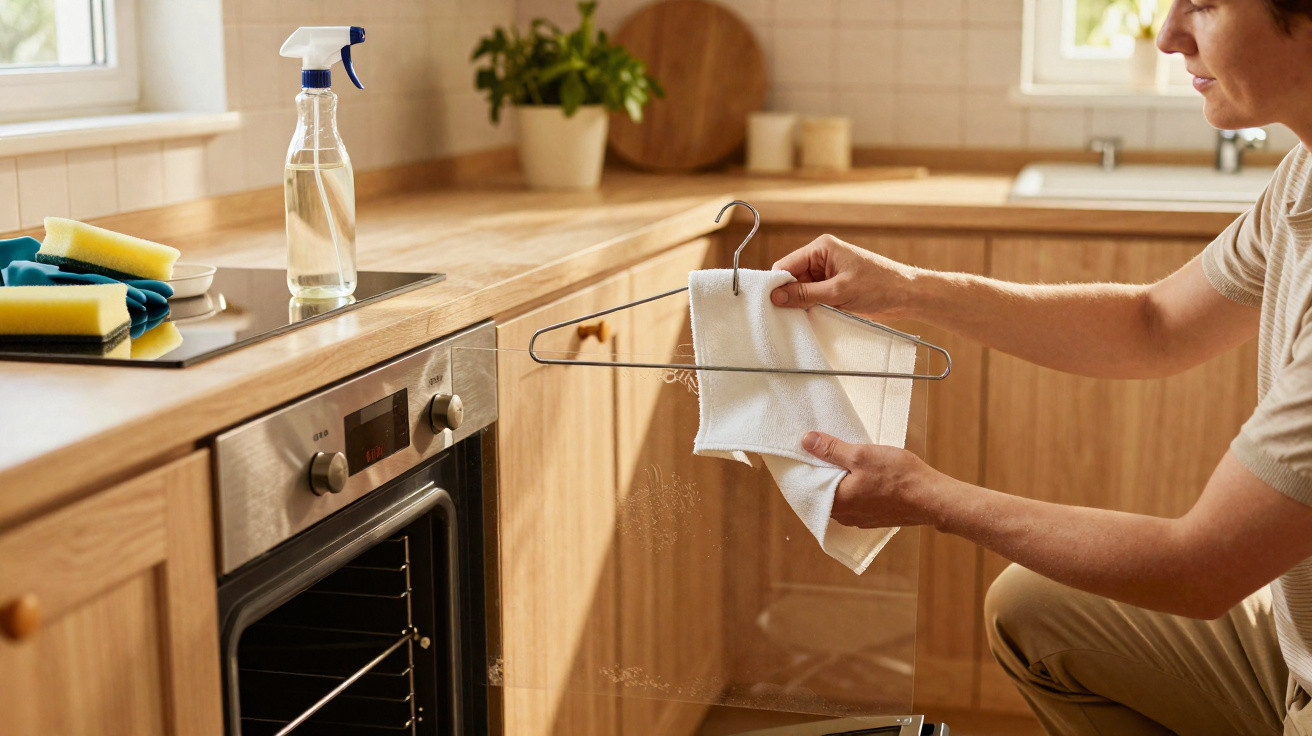
If you use your oven regularly, you will know the issue: the outer glass panel looks reasonably clean, a bake is bubbling away inside – yet a grey, brown and slightly sticky layer of grease, crumbs and streaks builds up in the hidden gap between the door’s glass panes. A professional chef has adopted a surprisingly straightforward trick that many households now use, permanently changing their cleaning routine.
Why dirt clings so stubbornly between oven door glass panes
Modern ovens generally have doors made up of two or even three glass panels. The narrow cavity between them insulates the outer pane from heat and helps save energy. However, grease splashes, steam and crumbs can also make their way into this space.
Cloths, sponges and kitchen roll can barely reach the area. As a result, many people clean only the inner and outer surfaces of the glass, leaving the gap untouched. Over time, unsightly streaks appear and remain visible, even when the oven seems to have been cleaned thoroughly.
Some premium ovens are designed for easy dismantling: the door can be removed and the glass panels taken out in just a few steps. In reality, this is seldom done because:
- the instructions are unclear;
- people worry about breaking something;
- suitable tools are not available;
- there is no time for lengthy dismantling.
Many users eventually resign themselves to the dirty strip as “patina”. A chef who works with heavily soiled ovens every day was unwilling to accept that – and has used a household item that almost everyone already owns for years.
The basic solution: a vinegar and water household cleaning mix
Before tackling the concealed areas, you need a simple but effective cleaning solution. Rather than relying on specialist chemicals, the professional chef uses a classic cupboard pairing.
The mix for streak-free oven glass
- 1 spray bottle
- 1 part water
- 1 part clear household vinegar (white vinegar)
- 1 microfibre cloth or a thin, absorbent cotton cloth
Pour equal parts water and vinegar into the spray bottle. Give it a quick shake and it is ready to use. Vinegar cuts through grease, softens baked-on splashes and helps prevent limescale marks. It is also safe for glass and enamel, provided it is not left to work for hours.
“The vinegar-and-water mix cleans glass surfaces thoroughly, is inexpensive, quick to prepare and prevents greasy residues.”
If anyone in the household is sensitive to smells, wipe over afterwards with clean water. Most odours disappear within a few minutes, particularly while the oven cools with its door open.
The chef’s trick: turning a coat hanger into a cleaning tool
At the centre of this method is an ordinary item from the wardrobe: a traditional wire coat hanger. In a professional kitchen, it is unlikely to be hanging in a cupboard; instead, it belongs in the drawer for “special cleaning tasks”.
Preparation: finding access to the oven door
For this trick to work, first locate a small opening underneath the oven door. Many appliances have a drawer or tray compartment below the door for baking trays.
- Pull the lower drawer out completely.
- Look for narrow slots or openings in the now-visible underside of the oven door.
- Use a torch to check whether the gap between the glass panels sits directly behind them.
If you cannot find an opening, consult the manual to see whether the manufacturer provides another access route. Some models have openings at the sides, while a small number are fully sealed. In those cases, the only option is dismantling the door in line with the manufacturer’s instructions.
How to make a glass cleaner from a coat hanger
The professional chef reshapes the wire hanger into a long, flexible cleaning rod. It only takes a few steps:
- Straighten the coat hanger fully to create a wire rod that is as straight as possible.
- Cut a thin microfibre cloth or an old lint-free tea towel to size.
- Wrap the cloth securely around one end of the wire rod.
- Fasten it with strong tape or a tight elastic band so that it cannot slip.
- Thoroughly dampen the cloth tip with the vinegar-and-water mix, without making it dripping wet.
“The wrapped coat hanger works like an extended arm: it slides into the door gap and reaches surfaces that ordinary cleaning tools can never get to.”
Cleaning between the glass panels step by step
This is the part that can genuinely become satisfying in everyday kitchen cleaning, as the dark strip between the panes visibly disappears.
- Carefully insert the wire rod, cloth end first, into the slot on the underside of the oven door.
- Use slow, even wiping movements from one side to the other.
- Pull the rod partly back out from time to time to inspect the dirty side of the cloth.
- If the dirt is heavy, rinse the cloth, dampen it again with the vinegar solution and continue wiping.
- Finish by going over the area with a freshly dampened, clean cloth to remove the final streaks.
Switching on the oven light makes it easy to see which sections are already clean. Stubborn, old grease marks may need several passes. The chef recommends shorter, more frequent cleaning sessions rather than one hours-long battle with baked-on residue.
How often the space between the oven glass should be cleaned
In professional kitchens, where ovens are in constant daily use, the coat hanger trick is used roughly once a month. For domestic households, cleaning two or three times a year is sufficient in many cases.
Anyone who often cooks cheese-topped bakes, roasts with fatty sauces or dishes that splatter heavily should inspect the gap more regularly. A quick look through the glass panels after the oven has cooled is enough: if streaks are visible, it is worth reaching for the wire hanger.
| Usage pattern | Recommended cleaning between the glass panels |
|---|---|
| Infrequent baking, mainly reheating | 1–2 times a year |
| Regular baking, bakes, pizza | 3–4 times a year |
| Heavy use, frequent fatty roasting | Every 1–2 months |
Common mistakes and risks when cleaning oven glass
The trick is simple, but there are still a few pitfalls. The professional chef highlights three issues repeatedly seen in kitchens:
- Tools that are too abrasive: Metal scouring pads and harsh scrub sponges scratch the glass and leave it permanently dull.
- Cleaners that are too aggressive: Strongly alkaline oven sprays can gradually damage seals and coatings.
- Too much liquid: If the cloth drips, moisture can seep into seals or electronics, which may contribute to long-term damage.
Using the coat hanger with a cloth that is only lightly damp and choosing soft materials keeps the process safe. The basic rule is simple: anything that would be too harsh for spectacles or a smartphone screen does not belong on oven glass.
Why vinegar is so popular in professional kitchens
Vinegar may appear unremarkable at first, yet many restaurant kitchens return to it again and again. Its acidity breaks down greasy layers, loosens dried splashes and helps stop dirt from sticking again so quickly. It can also be measured out easily and rinsed away with hot water without difficulty.
There is a useful additional benefit: if you are already mixing vinegar cleaner for the oven, you can use it on refrigerator surfaces, tile grout around the hob or the glass front of the extractor hood as well. This considerably reduces the number of cleaning products needed in the cupboard.
When the trick does not work: when you need to use a screwdriver
Some oven models have a completely sealed space between the panes. In these cases, there is no usable access point underneath or at the sides. If you still want to clean it, check the instruction manual.
Many manufacturers explain a dismantling process that looks complicated at first but actually involves only a few steps. Often, the complete door can be lifted off, placed on a soft blanket and opened by removing a few screws from the outer panel. Anyone who works methodically and keeps the screws organised can achieve the same result, although it takes more time.
If you are unsure, you can instead ask customer support or an appliance service engineer whether cleaning the space between the panes can be carried out during maintenance. This is especially worthwhile for older appliances that are already due for an inspection.
A thought experiment: how your view of the oven changes
Many people accept a dirty space between the glass panels because it seems to be “just how it is”. Once the coat hanger trick has worked successfully, they tend to see the oven differently. Suddenly, every small streak stands out, and reaching for the homemade cleaning tool becomes almost as routine as wiping out a baking tray.
The effect is interesting psychologically, too: a clear, transparent oven door conveys cleanliness, even if there are still a few baked-on marks inside the tray. Particularly in open-plan kitchens, where guests can see the hob, this small task creates a noticeably more well-kept overall impression.
Practical additions for easier oven care
To keep the overall effort low, combine the coat hanger hack with a few further habits:
- After particularly greasy dishes, quickly wipe the still-warm oven with the vinegar spray.
- Line baking trays with baking parchment to reduce splashes.
- Bake greasy bakes in the lower third of the oven to prevent fewer direct splashes from reaching the glass.
- Once a month, inspect the oven door with the light on from both inside and outside so that you can act early.
This keeps the glass front clear over time, while cleaning between the panes becomes a manageable, planned task rather than an irritating major job every few years.











Comments
No comments yet. Be the first to comment!
Leave a Comment