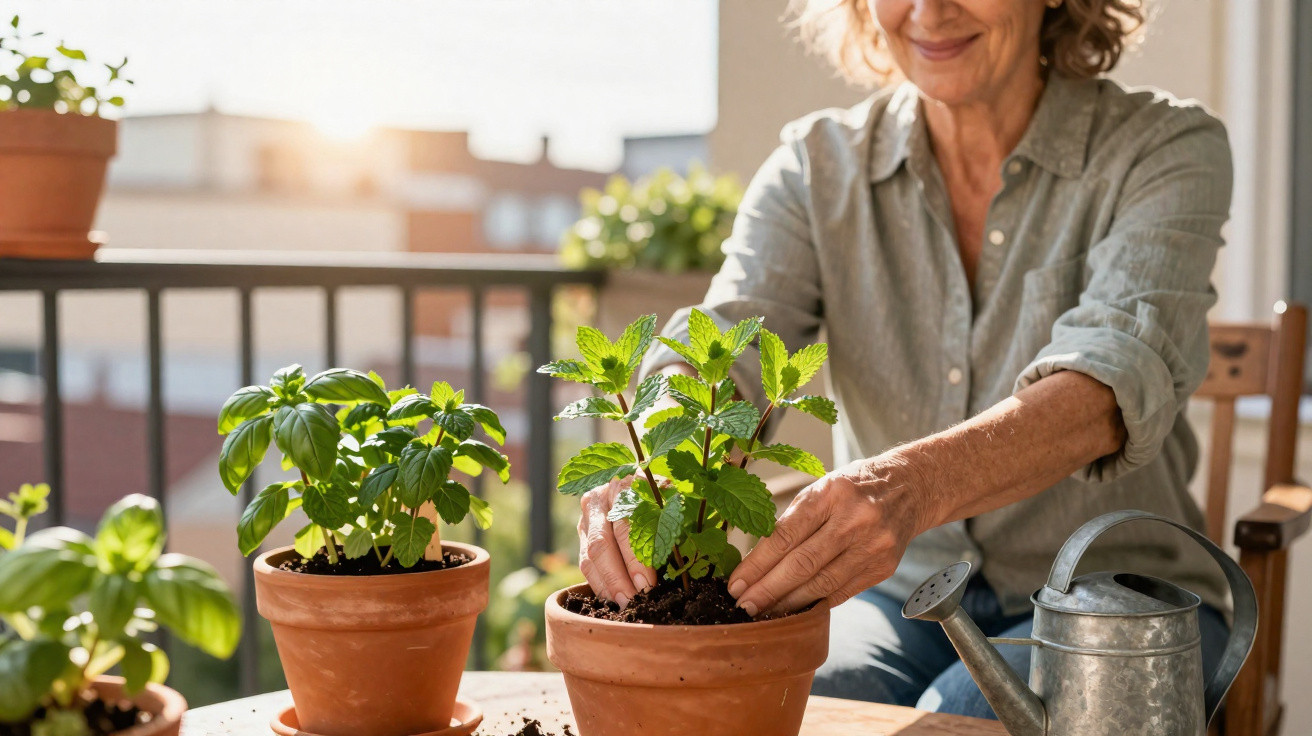
Mint is among the easiest herbs to grow, yet it can be one of the hardest to manage once it takes hold in the wrong spot. People tending traditional kitchen gardens understood this long before there was any technical explanation: mint should not share space with more delicate herbs. Keeping it productive for years depends on more than loose soil, watering or sunshine; it needs to grow alone, either in its own pot or in a separate area of the bed.
Why should mint be kept separate?
Mint spreads very readily through its stems and roots. It does not stay confined to the place where it was originally planted. Gradually, it moves through the soil, fills empty gaps and starts competing with nearby plants for water, nutrients and light.
This habit is ideal if you want a dense, hardy mint plant, but it is far less suitable when mint is planted beside smaller herbs such as basil, parsley, coriander, thyme or oregano. Over time, those plants may be crowded out and become weaker.
What did grandmothers do differently in their kitchen gardens?
The traditional approach was to grow mint in its own corner, in a tin, pot, basin, separate bed or another area where it could spread without disrupting the rest of the kitchen garden. This gave the plant freedom to grow while stopping it from smothering other herbs.
In practical terms, it was a straightforward and highly effective solution. Mint had enough room to develop strong clumps, while the other plants were protected from below-ground competition. As a result, many plants lasted for years, growing back after pruning and rest periods.
How to plant mint properly
The best option is to use a pot exclusively for mint. The container should have drainage holes, fertile growing medium and effective drainage. Mint prefers moist soil, but it must not become waterlogged. When water remains trapped, the roots may rot and the plant loses its strength.
- choose a medium or large pot;
- use fertile, light growing medium;
- keep the soil moist without soaking it;
- place it somewhere with good light, but not in intense heat all day;
- prune the stems often to encourage fresh growth.
If you intend to grow it in the ground, a useful alternative is to bury mint inside a bottomless pot or install side barriers. This helps restrict root spread and prevents it from taking over the entire bed.
Which herbs should not share a pot with mint?
Mint is not a suitable companion for most culinary herbs. Basil, rosemary, thyme, parsley, chives, coriander and oregano grow at different rates and have different requirements. Some prefer drier soil, while others have less vigorous roots and eventually lose their space.
Rosemary and thyme, for instance, favour drier, well-drained soil, whereas mint needs more moisture. Parsley and coriander, meanwhile, can be overwhelmed by mint’s rapid growth. Putting everything in the same pot may seem convenient at first, but it usually causes problems over time.
How to keep a mint plant strong for years
For mint to last well, the key is to harvest and prune it regularly. Cutting back the stems encourages new growth and stops the plant becoming tall, weak and covered with small leaves. It is also worth refreshing some of the growing medium from time to time, especially in older pots.
Mint thrives when it has both space and control. It needs room to grow without competing with other herbs, but it should not be left unchecked to invade everything. When it has its own pot, good light, balanced watering and regular pruning, it can last for years and continue adding fragrance to teas, juices, seasonings and recipes, just as it did in our grandmothers’ kitchen gardens.






Comments
No comments yet. Be the first to comment!
Leave a Comment