Drawers full of hand creams yet your knuckles are still cracked: one simple change to your daily routine can achieve more than the most expensive balm.
Anyone who keeps reaching for new hand creams but still struggles with dry, brittle hands is usually overlooking the real trigger: their own washing and care routine. The issue is not a lack of cream, but what happens to the skin beforehand. This is where a newly simplified approach begins – with surprisingly clear results.
The skincare mistake almost everyone makes
The pattern is the same everywhere: one tube sits in a handbag, another on the bedside table and a third at work. After every hand wash, a dab of cream is applied almost automatically. Yet the skin still feels tight, the knuckles split and hands become rough again in spring.
The cause is not “too little care”, but a misunderstanding of how the skin works. The outermost layer, the stratum corneum, is covered by a natural protective coating: the hydrolipid film, made up of water and fats. This layer protects against moisture loss and external irritants.
“Anyone who damages their skin every time they wash cannot repair it in the long term with any cream in the world.”
Trying to solve the problem solely by using ever-richer hand creams creates a vicious circle. The skin becomes “accustomed” to extra lipids from outside, while water that is too hot, harsh soaps and rough drying repeatedly damage the protective film. As a result, hands soon feel bare and unprotected without cream.
What researchers advise: the crucial adjustment at the tap
Water temperature has a key role that is often underestimated. In winter, many people turn the tap almost fully hot so that they feel “properly clean”, while others use icy water to save energy. Both extremes are problematic for the skin.
Skin research specialists recommend washing hands at around 30 to 35 degrees – in other words, comfortably lukewarm water.
“Water that is too hot dissolves the protective fats in the stratum corneum, while water that is too cold forces you to rub more – both harm the skin barrier.”
At temperatures significantly above 35 degrees, the upper layers of skin swell more, lipids are released and the barrier becomes permeable. The skin then loses water more quickly and feels rough and thin. Although icy water strips away less oil, soap emulsifies less effectively in it. This leads people to rub for longer and more firmly, increasing mechanical irritation.
The unremarkable yet effective measure is to deliberately set the mixer tap to a comfortably lukewarm range and keep it there. This adjustment alone noticeably reduces the daily damage to the skin barrier.
Less shower gel, a better soap bar: choosing a cleanser
The type of cleansing product matters at least as much as water temperature. Traditional soaps and highly foaming gels often have an alkaline pH and powerful surfactants. They clean effectively, but also thoroughly remove the skin’s natural oils.
Dermatologists therefore often recommend so-called super-fatted soaps. These contain replenishing substances that leave a fine protective film behind during washing.
- Choose a mild, super-fatted soap instead of a strongly foaming gel.
- Wash briefly but thoroughly rather than scrubbing for a long time.
- Check ingredients and avoid harsh surfactants where possible.
When checking ingredients, look particularly for names such as “Sodium Lauryl Sulfate” – a common but relatively harsh surfactant. Plant oils, glycerin and shea butter, by contrast, are considered kinder to the skin barrier.
“You can recognise a good soap because hands feel clean after rinsing, but not squeaky-dry.”
If your hands retain a lightly conditioned feel after washing, that is generally a positive sign. This residual feeling protects the skin from the familiar dryness that can occur immediately after drying.
The overlooked step: patting dry rather than rubbing
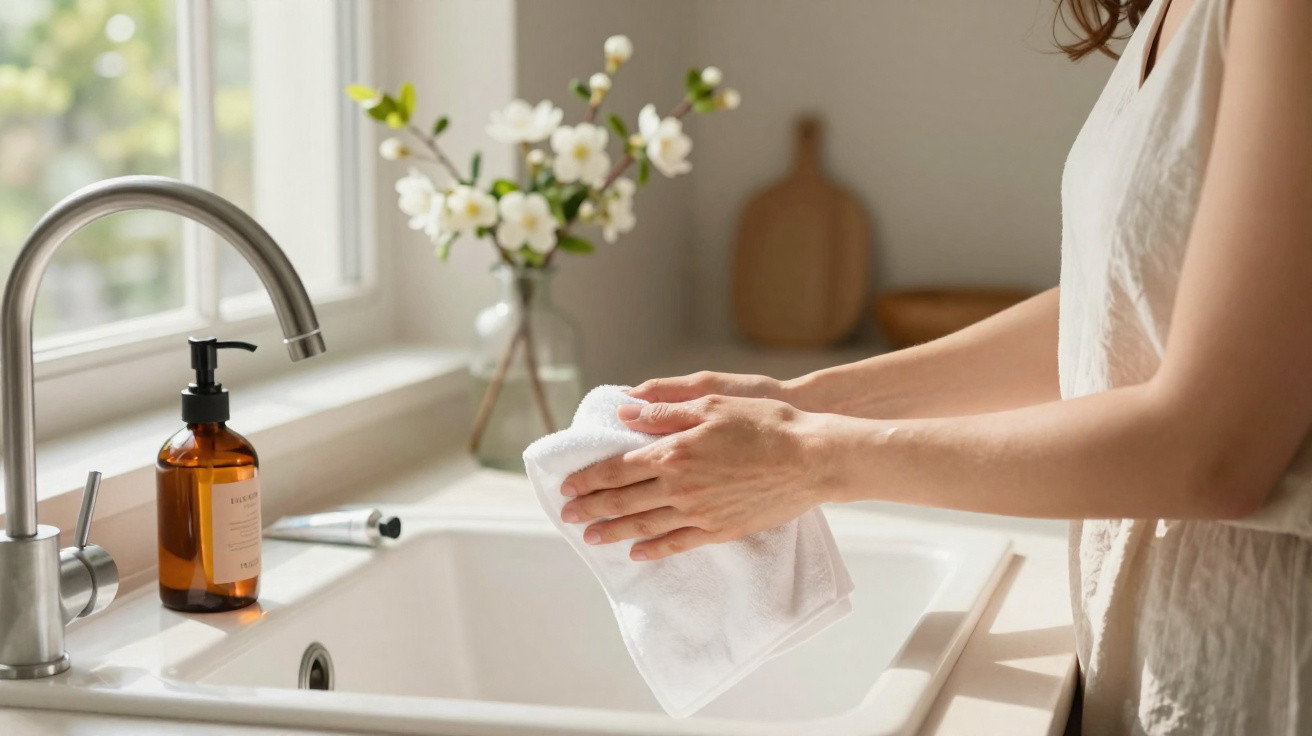
Hardly anyone consciously considers how they dry their hands. Many rub vigorously with a towel or use rough paper towels in public toilets. For a stratum corneum that is already wet and swollen, this is pure stress.
The gentler method is straightforward: pat rather than rub.
- Take your hands out of the water and allow them to drip briefly.
- Place a clean towel over them.
- Absorb the moisture with gentle pressure, without moving the towel back and forth.
This produces fewer micro-injuries, keeps the scales of the stratum corneum lying more smoothly together and makes redness and small cracks less likely.
“People who pat their hands dry gently often avoid having to reach for emergency cream later.”
It is also important to dry carefully between the fingers. Moisture left there softens the skin, making it prone to cracks and, in the worst cases, small areas of eczema or fungal infections.
Why spring puts particular strain on hands
Many people associate cracked hands with winter, dry central-heating air and cold temperatures. However, spring brings its own challenges. Mornings are still cool, afternoons are pleasantly warm, and there is gardening, cycling and longer walks.
Wind, soil, tools and pollen all mean that hands suddenly get more use during this period. The skin has to adapt rapidly to changing conditions. Anyone who continues to use water that is too hot, the wrong soap and vigorous rubbing will often notice their hands worsening precisely in spring.
In one clinical observation, most participants reported noticeably softer, more resilient hands after changing just three things: lukewarm water, a mild cleanser and gentle drying – before introducing any new cream at all. The message is clear: technique and temperature outperform chemistry.
Minimalist routine: one good hand cream a day is enough
Those who protect their skin barrier need considerably less product. Rather than frantically applying cream after every hand wash, one deliberate application each day is often sufficient – ideally in the evening.
Products containing glycerin have proved useful. This ingredient binds water in the upper layers of the skin and helps keep them supple for longer.
“On intact skin, a good glycerin cream in the evening is often enough for the whole of the following day.”
The routine can look like this:
- Clean hands with lukewarm water and super-fatted soap.
- Pat them carefully dry with a soft towel.
- Massage in a small amount of glycerin-containing hand cream in the evening.
Combining gentle cleansing with targeted care reduces the need for a constant supply of new tubes in daily life. Many people report that one tube suddenly lasts several months rather than only a few weeks.
When more care is useful – and when less is better
Despite this minimalist approach, there are situations in which extra care makes sense: frequent exposure to disinfectants or cleaning products, or certain skin conditions. People who must wash their hands often for work, such as those in healthcare or hospitality, benefit from protective creams applied before their shift begins.
On the other hand, an excess of constantly changing products can often harm the skin. Fragrances, preservatives and exotic plant extracts raise the risk of irritation or allergies. For sensitive hands, a short, clear INCI list containing only a few tried-and-tested active ingredients is usually the better option.
Anyone who is unsure can try a greatly simplified routine for two to three weeks: mild soap, controlled water temperature, careful drying and a simple cream in the evening. This alone can reveal how much of the previous problem was actually caused by over-care and unsuitable habits.
What terms such as “hydrolipid film” mean in everyday life
The frequently mentioned hydrolipid film is not an abstract technical term. It is exactly what you notice when skin feels “normal” – neither greasy nor dry, simply calm. It works like an ultra-thin protective shield that prevents water from evaporating uncontrollably from the skin.
If this film is destroyed several times a day, the body must continually produce it again. When it cannot do so quickly enough, or when aggressive cleansing removes the necessary building blocks, tightness, redness and fine cracks occur. An intelligent routine addresses this precise point: it aims to disrupt the film as little as possible and support it with mild fats and glycerin, instead of first destroying it and then laboriously trying to “repair” it.
So if you feel unable to manage without hand cream, shift your focus away from the tube and towards the tap, the soap and the towel. This change alone is often enough to allow hands to stabilise themselves step by step – without a collection of creams throughout the house.












Comments
No comments yet. Be the first to comment!
Leave a Comment