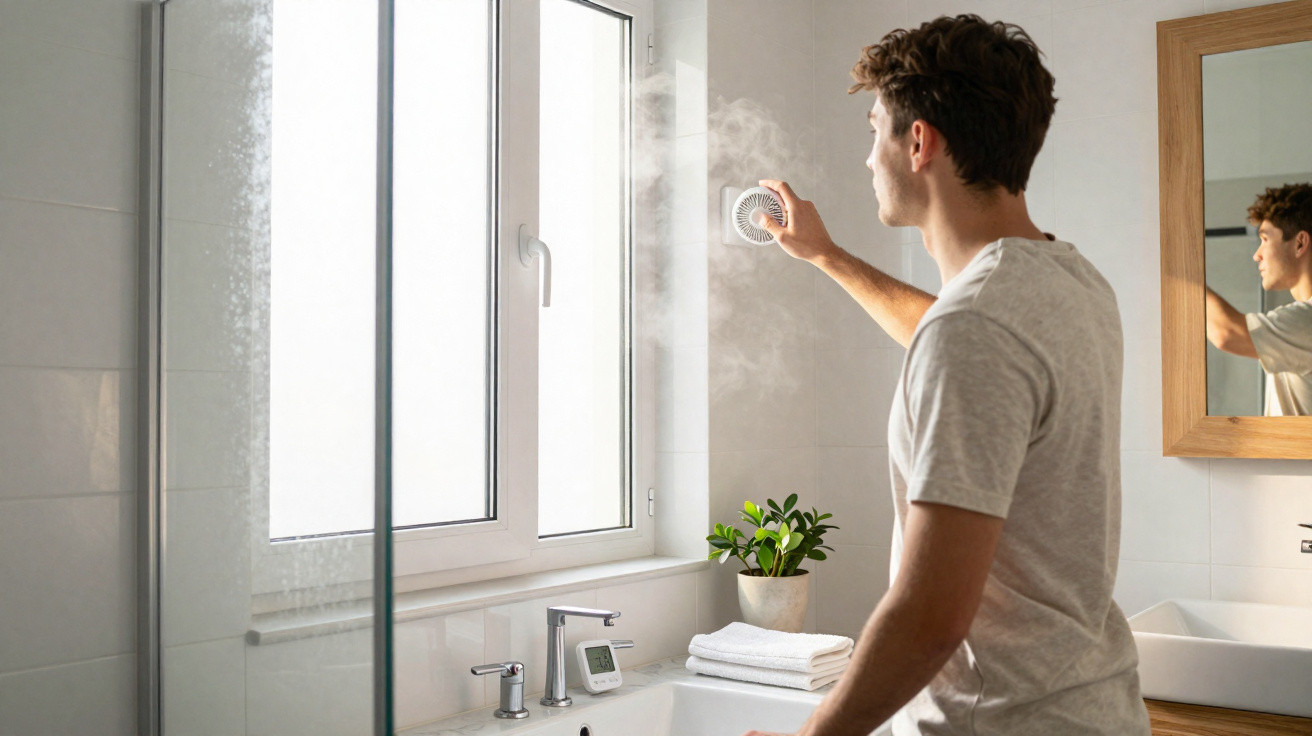
The windows have steamed up, the towels are damp to the touch, and the room carries that thick, slightly sweet odour that often arrives before mould. You open the window a little, turn the radiator up, perhaps clear a patch on the mirror with your palm. Ten minutes on, the glass is still covered in moisture and the walls seem almost alive with damp.
Many people assume the answer is simply more heat: a larger heated towel rail, a hotter radiator or an additional fan. But some bathrooms remain persistently cold and damp even when the heating is working perfectly well. Steam hangs about, grout begins to darken, and you hope your landlord does not spot the black mark behind the shampoo bottles.
Oddly enough, the proper answer often has nothing to do with adjusting a thermostat. It is a quiet, overlooked habit that alters how your bathroom deals with moisture. Once you understand it, it is impossible to ignore.
Why your bathroom still feels like a wet cave
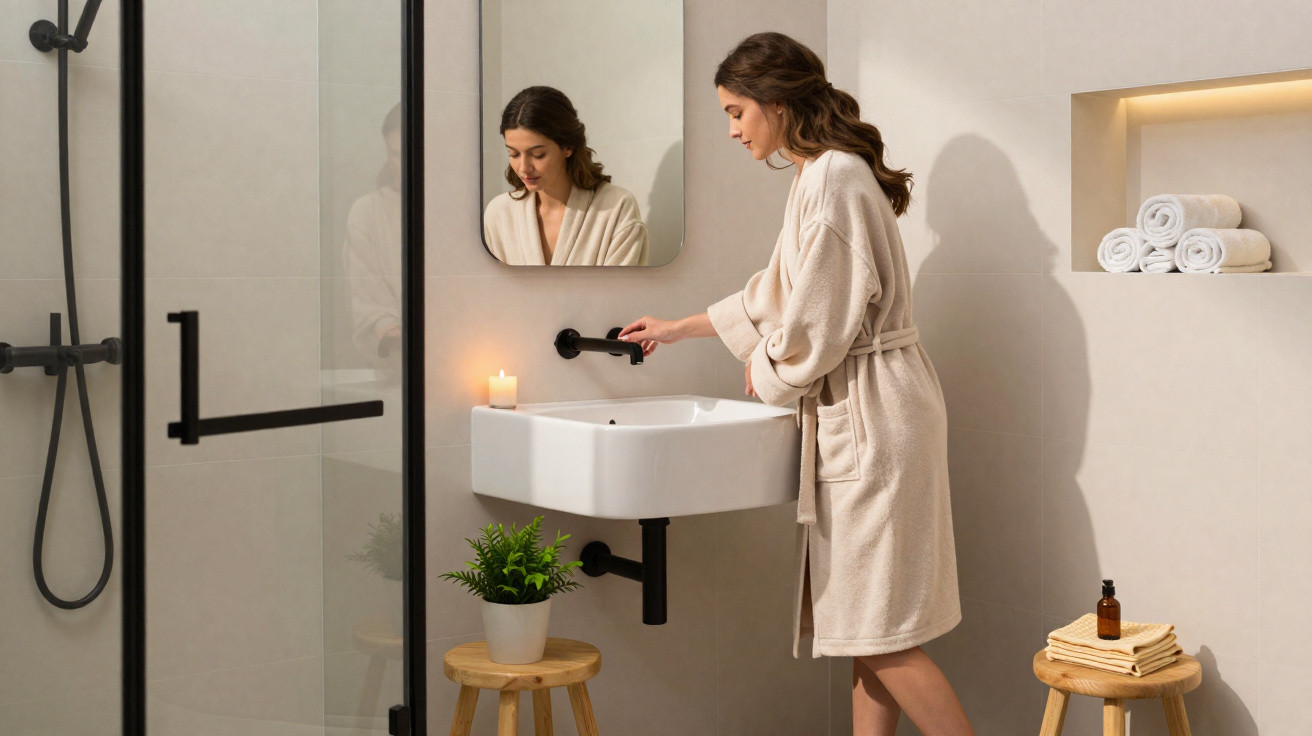
Visit ten typical homes on a winter evening and the pattern is familiar. The lounge is warm, the kitchen is inviting, and then there is a bathroom that feels like a fridge lined with tiles. The air has a sharp chill, despite the shower having filled the room with steam only half an hour earlier. The floor feels icy, the upper shower corners have a faint grey tint, and the ceiling paint appears ready to blister.
This is not merely a matter of comfort. A cold, humid room is an ideal breeding ground for mould spores, which can drift in from outdoors or arrive on clothing. When they land on a chilly, damp surface, they take hold. A few months later, they can be embedded in the silicone, concealed behind the mirror cabinet and spreading through the grout lines like an invading army.
A tenant in Manchester monitored the humidity in his bathroom for a month using an inexpensive digital meter. Following every shower, humidity climbed to 90% and remained above 80% for three hours, despite opening the window slightly. By winter's end, mould had appeared behind the toilet, on the ceiling and at the bottom of the door. The radiator came on twice daily, but the air never had the opportunity to “reset” to a healthy level.
The same scenario occurs in older properties without windows, compact urban flats with internal bathrooms and even newly built homes with gleaming fittings. Mould does not care whether your tiles date from 1998 or a showroom visit last September. It responds to moisture that remains airborne for too long, settles on cold surfaces and has no route out. Repeat that cycle every day and the appearance of tiny black spots is only a matter of time.
The underlying physics is harshly straightforward. Warm air holds more water than cold air. When steam-filled shower air reaches a cold mirror or wall, it releases the surplus as condensation. If surfaces remain cold while the air stays humid, droplets become runs, then damp areas that never quite dry. A radiator may raise the room temperature slightly, but without a managed route for moisture to escape, the result is warm, wet air rather than warmth and dryness.
That is why a bathroom can feel both clammy and cold. The heating is battling moisture, but on the wrong front. The crucial difference is not extra power; it is where humid air travels and how rapidly it leaves once you have showered.
The forgotten step: managing the “after-shower hour”
The true difference-maker is unglamorous, quiet and largely unnoticed: how you treat the room during the hour after showering. Think of it as an “after-shower hour routine”. This is the period when mould either gets the conditions it needs or loses them completely. It can have a far greater effect than turning the radiator up to maximum.
The central principle is controlled airflow rather than aggressive draughts. You need a small, steady outlet for damp air, alongside a gentle route for drier air to enter. The most effective low-tech approach is to leave the bathroom door nearly shut, while allowing a purposeful gap beneath it, and provide one way for air to exit: either an extractor fan or a window opened just a little, rather than fully wide.
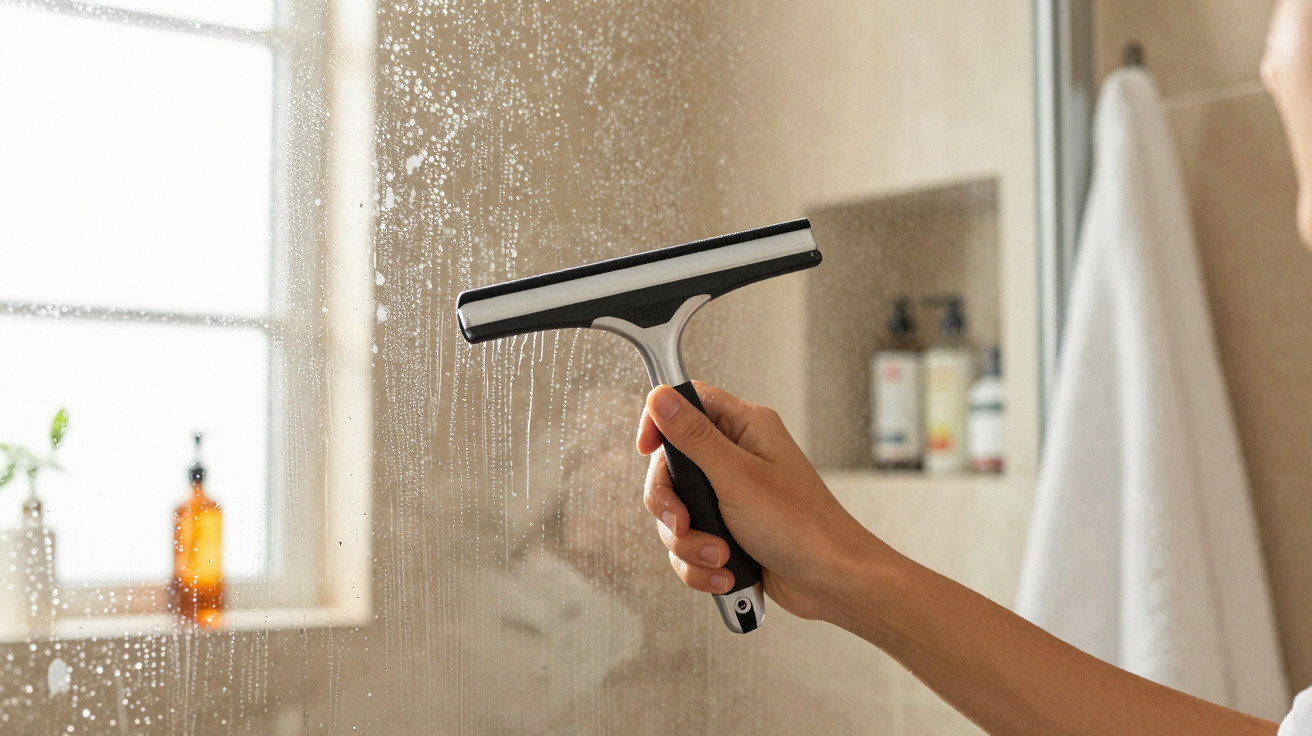
For that hour, pull the shower curtain or screen almost completely open so that air reaches the tiles. Flick pooled water from the curtain and use a squeegee to remove the largest drops from the glass and tiles in under 60 seconds. Let us be honest: hardly anyone genuinely does this every day. Even doing it on alternate days, however, reduces the amount of moisture your walls must handle. Perfection is not the aim. The aim is to take the bathroom from “wet cave” to “only slightly damp” within 60 minutes.
The common mistake is assuming that more ventilation is always better. In the depths of winter, people throw the window fully open, prop the door wide and run the fan at full force. For ten minutes the bathroom becomes freezing, the mirror clears and the issue appears resolved. They then close the window and door, leaving behind cold, heavy air that still has a high moisture content. Surfaces cool too fast, water remains clinging to them, and the walls never fully dry.
An extractor fan with a timer that continues for 15–30 minutes after a shower is more effective than an intense five-minute burst. The same applies to windows: a modest opening for longer is better than a wide opening for a brief blast of icy air. The objective is gradual, ongoing air exchange, not forceful purging. Your walls can dry without the sauna-to-freezer swing that leaves bathrooms uncomfortable and vulnerable to condensation.
One housing inspector I spoke to described it this way:
“People think the shower ends when they turn off the water. For the building, the shower ends an hour later, when the last bit of moisture has either left the room or fully dried.”
That “forgotten hour” is where prevention happens. Ignoring it is like brushing your teeth but never spitting or rinsing.
Several straightforward habits can quietly improve that period:
- Run the fan or leave the window open for 20–30 minutes after showering, rather than only while you shower.
- Keep the door nearly closed, leaving a gap at the top or bottom for airflow.
- Leave shower curtains or screens open, and space towels apart instead of leaving them in a damp bundle.
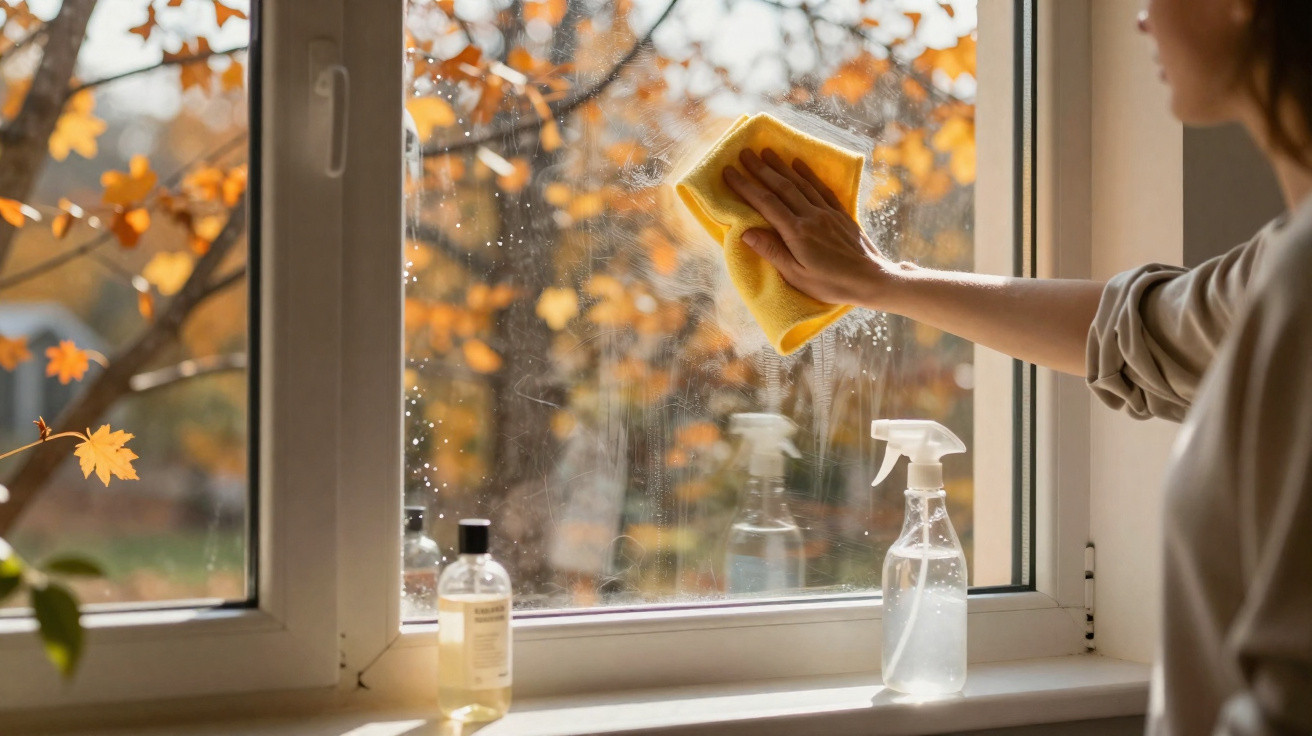
- Wipe or squeegee the main wet areas - walls, screen and window sill - in under two minutes.
- In a bathroom without a window, use the fan alongside a slightly open door leading to the driest nearby room.
This is not about becoming an immaculate housekeeping machine. It is about selecting one or two manageable actions that you can maintain, even after an exhausting weekday. On a cold evening, stepping into a bathroom that smells fresh rather than swampy eases your shoulders before your eyes have even registered why.
What happens when you finally break the damp cycle
When the bathroom begins drying properly between showers, subtle improvements follow. The mirror does not mist up as heavily. By the second day, towels smell less sour. The shadow above the tiles stops growing. Existing mould stains may remain - marks do not disappear by magic - but new ones develop more slowly or fail to appear altogether.
Your relationship with the room changes as well. If it no longer resembles a cold cellar, you are less likely to turn the radiator up full simply to make it tolerable. You may be able to use a lower setting or a shorter heating period because the air is already less clammy. Particularly in older homes, this can make a meaningful difference to energy bills without reducing comfort.
At a more personal level, a dry bathroom is simply a more pleasant space. Nobody enjoys brushing their teeth while looking at flaking paint and grey silicone. When a room feels fresh, you are more inclined to wipe the basin occasionally or replace the shower curtain before its lower edge turns orange. On a small level, it improves everyday habits. More significantly, it protects the fabric of the home: plaster, frames and hidden spaces where damp can quietly cause damage for years before anyone sees it.
There are, naturally, limits. In a basement flat with no window and an extractor fan that barely turns, an “after-shower hour” routine alone will not perform miracles. Even then, small measures add up: running a basic dehumidifier for an hour each day, replacing an ineffective fan with one that works properly, or reducing clutter that holds moisture against the walls. On a crowded planet with increasing energy costs, drying air intelligently rather than through brute force seems less like a lifestyle preference and more like common sense.
We have all faced that uncomfortable moment when visitors ask to use the bathroom and you suddenly remember the black line around the sealant you have tried to overlook. Exchanging stories, advice or even small failures about these issues can be surprisingly reassuring. It reminds us that a home need not resemble a showroom to be healthy; it simply needs some attention during those unseen hours after the shower has stopped.
| Key point | Detail | Benefit for the reader |
|---|---|---|
| Manage the “after-shower hour” | Gentle but continuous ventilation for 20–30 minutes after every shower | Reduces condensation before it settles on walls and seals |
| Create a controlled airflow route | Door left slightly ajar, with a window or extractor fan as the single exit point | Removes moisture faster without turning the room into a fridge |
| Reduce water on surfaces | Quick squeegee, open curtain and spaced-out towels | Cuts down the space available for mould to thrive |






Comments
No comments yet. Be the first to comment!
Leave a Comment