You slide open the shower door, step out and drape a towel around your shoulders… while leaving a slow-moving problem behind. Those droplets on the clear glass seem harmless, even attractive, at first. Within a few hours, though, they dry into a faint milky coating. Leave them for several weeks and that coating becomes a stubborn, cloudy crust that will have you scrubbing until your arms ache. Most people spot the issue only once it has taken hold. That is precisely the problem.
Why shower glass becomes cloudy sooner than expected
The first time a previously clear shower door turns misty, it can seem baffling. You know you cleaned it, and you probably remember buying an expensive bathroom spray. Still, the glass appears to be covered by a grimy veil. Behind it is a quiet chemical process involving hot water, minerals and soap. Every droplet left to dry deposits residue on the glass. At first, it is barely noticeable. Then, one morning, it suddenly is.
One Tuesday morning in a small London flat, I saw a couple disagree about their bathroom door. She insisted she had cleaned it “just the other day.” He thought they needed a pressure washer. Both were telling the truth. Their glass was marked with a dense, patchy layer of white streaks and spots. A UK cleaning survey found shower screens rank among the three household jobs people dread most, largely because this build-up never seems to disappear completely. By the time people deal with it, they are often already weeks too late.
What is commonly called “soap scum” combines soap, body oils, skin cells and hard-water minerals, which adhere together on the glass. Once the water evaporates, this residue grips ever more firmly. Add heat, time and repeated exposure, and it starts to set like a fine layer of cement. The longer it remains, the more it interacts with the glass and catches in microscopic pores. This is why, after a certain stage, no miracle spray performs as promised. You are no longer wiping away a film; you are tackling a crust.
The small habit that prevents soap scum from setting
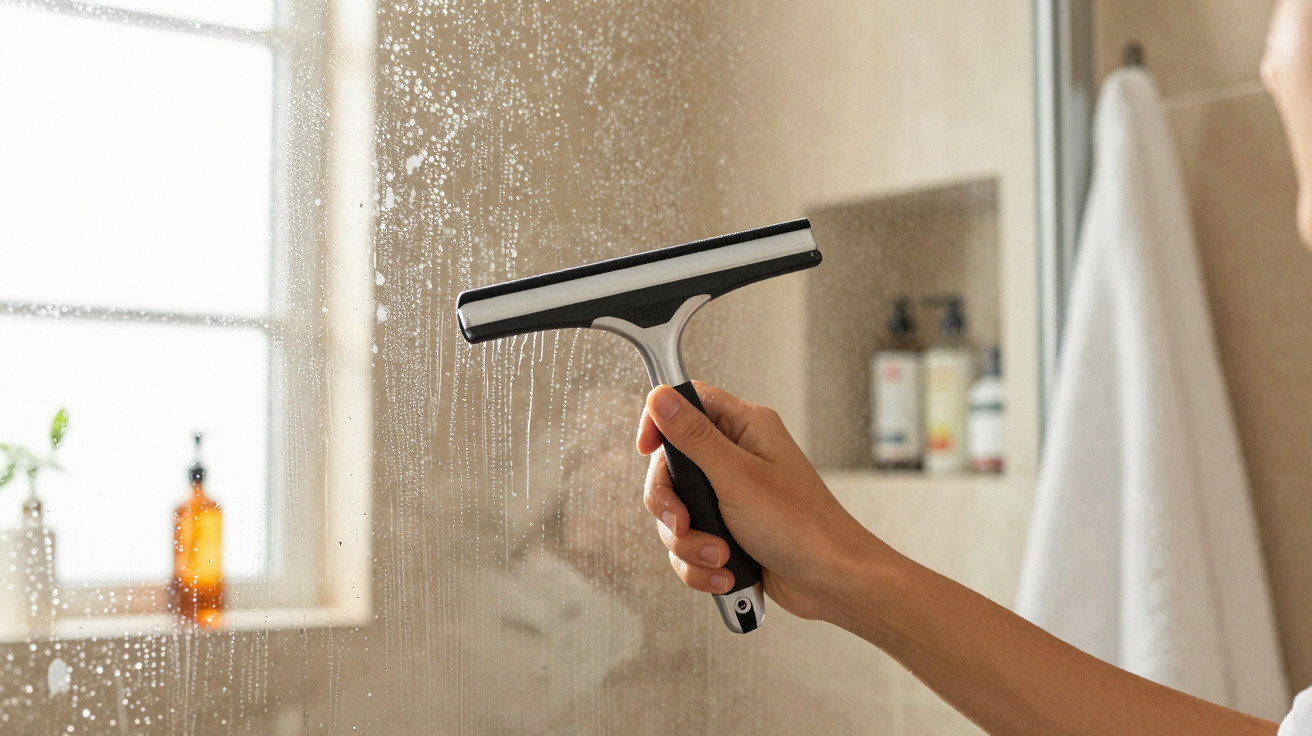
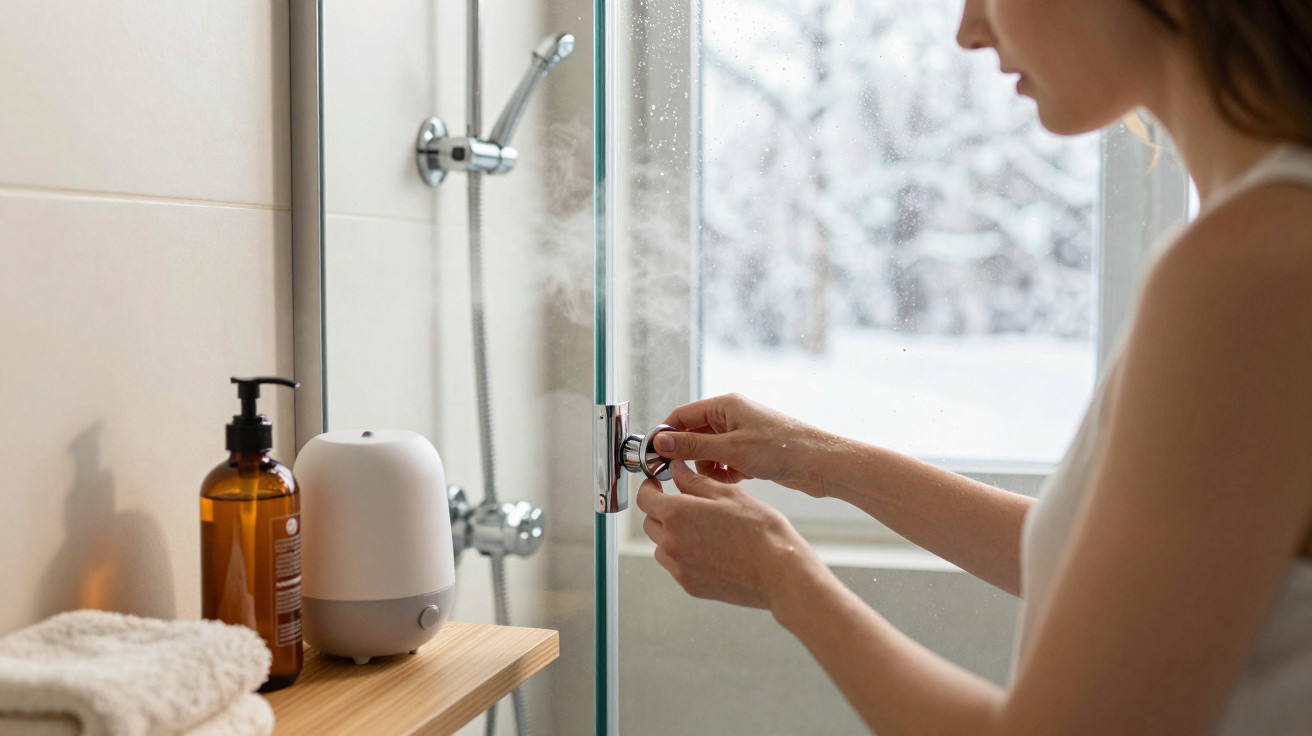
The best time to “clean” shower glass is rarely mentioned: while you are still in the shower, the water has just been turned off and the glass remains wet. Before stepping out, take a small squeegee or microfibre cloth and sweep it across the glass in quick, long strokes. There are no chemicals or rubber gloves required. It takes 30 to 40 seconds at most. You are not trying to buff the glass to a shine, but to clear away droplets before they dry and leave behind their mineral-and-soap mixture.
Let’s be honest: hardly anyone does this every day. You feel cold, your phone goes off, someone knocks at the door, and that quick wipe seems unnecessary. Before long, several weeks have gone by and the soap scum has won. The key is to make this small action so effortless that it needs no thought. Hang an inexpensive squeegee inside the shower door, using a small hook placed where your hand naturally reaches. Some people even keep a dedicated shower cloth on a suction hook. The less you need to reach for or remember, the more likely you are to wipe the glass automatically.
A woman I interviewed about her cleaning routine said something that stayed with me:
“The game changer wasn’t a new product. It was deciding that if I had time to shampoo my hair, I had time to swipe the glass once.”
- Store a squeegee inside the shower rather than beneath the sink.
- Wipe the glass when it is still warm and wet, before you get out.
- Use fast vertical or horizontal movements; it does not need to be perfect.
- Link the action to a fixed moment, such as turning off the water.
- Recognise that you will miss some days. The aim is most days, not every day.
How clear shower glass changes the feel of your bathroom
Most of us have experienced a guest asking to use the bathroom, making us suddenly view the shower as they might. You notice the cloudy glass, streaks and dull areas that never quite seem clean. Wiping the glass before leaving the shower is not about achieving perfection. It helps close the gap between how you want the room to feel and what you face each morning. A clear screen makes the entire bathroom look brighter. Tiles appear newer, and even a small rented flat can feel less temporary.
There is a subtle psychological benefit too. Taking those final seconds to wipe the glass while under the water is surprisingly rewarding. You watch droplets collect and vanish. You leave the shower having genuinely completed something, rather than hurrying away from a task you are putting off. That small sense of completion bleeds gently into the rest of the day. Instead of spending Sunday battling baked-on scum with harsh chemicals, you are simply tipping things slightly in your favour each morning.
Practically speaking, every quick wipe can spare you hours of intensive scrubbing later. Hard-water marks and soap scum that never get time to set do not require specialist removers or lengthy soaking. Silicone seals last longer because you are not coating them with aggressive cleaning products every month. Your glass is less likely to become etched by minerals sitting on it day after day. This is not about believing a magic spray can undo years of neglect. It is a quietly radical choice: refusing to let the mess harden in the first place.
| Key point | Detail | Benefit for the reader |
|---|---|---|
| Act while the glass is still wet | Run a squeegee or cloth over it before getting out | Prevents limescale and soap from becoming embedded and hardening |
| Make the action extremely accessible | Keep a squeegee hanging in the shower and link the routine to turning off the water | Turns an occasional chore into a quick, almost automatic reflex |
| Save time, products and stress | Fewer major cleans, fewer harsh products and more durable glass | A lighter daily routine, a brighter bathroom and less guilt |





Comments
No comments yet. Be the first to comment!
Leave a Comment