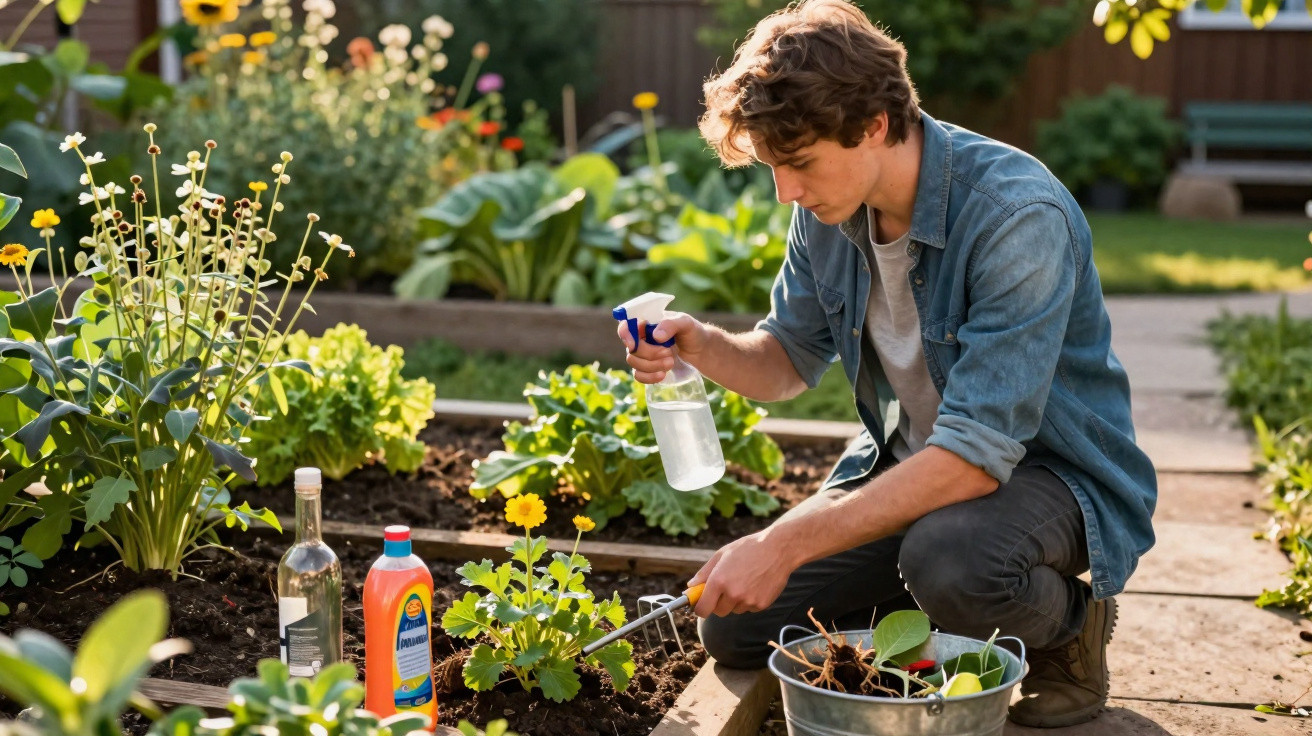
In spring, weeds shoot up at record speed between paving stones, along gravel paths and through patio joints. Chemical sprays are unwelcome or prohibited in many places, so plenty of people turn to household remedies. Alongside vinegar, another apparently harmless everyday product is now attracting attention: ordinary washing-up liquid. It may sound like a clever solution, but the reality is more complicated than it first appears.
Why vinegar often only appears to remove weeds
For years, vinegar was widely seen as the ultimate secret weapon against weeds. Its acidity quickly turns leaves brown, making plants look scorched within hours. Many people are pleased by this “instant effect” and assume the issue has been dealt with.
Below ground, however, the situation is often different. The roots commonly remain largely unharmed, while only the visible parts of the plant die back. After days or weeks, plants can grow again from below – sometimes even more vigorously than before.
“Vinegar mainly burns the surface of the plant; the root system often survives and produces new shoots.”
There is another consideration, too: in some countries and local authorities, vinegar is not approved for weed control on paths and driveways because it is classed as a plant protection product that must not be used there. Anyone pouring litres of household vinegar over a yard or driveway can quickly enter a legal grey area.
What washing-up liquid actually does in a weed mixture
Against this backdrop, many amateur gardeners began adding another kitchen staple: washing-up liquid. The idea is currently generating plenty of discussion on social media, and experts have not responded positively across the board.
Washing-up liquid contains surfactants. These substances dissolve grease and lower the surface tension of water. In the garden, this creates a side effect: a mixture of water, vinegar and washing-up liquid clings more effectively to plant leaves instead of quickly beading off.
This can have two effects:
- The liquid coating stays on the leaf for longer.
- The mixture penetrates the plant’s outer layers more effectively.
As a result, the visible parts of weeds dry out more quickly. In this context, washing-up liquid primarily acts as a sticking and wetting agent, rather than as a genuine weedkiller. It intensifies an effect that vinegar or concentrated salt water would already have; it does not create a new miracle result.
“Washing-up liquid is not an independent weed treatment in the garden, but rather an enhancer that helps the mixture adhere better to leaves.”
Common household recipes – and why they are not as harmless as they seem
Many forums are currently sharing almost identical mixtures. One frequently suggested recipe contains:
- 1 litre of water
- 1 cup of vinegar
- 1 tablespoon of washing-up liquid
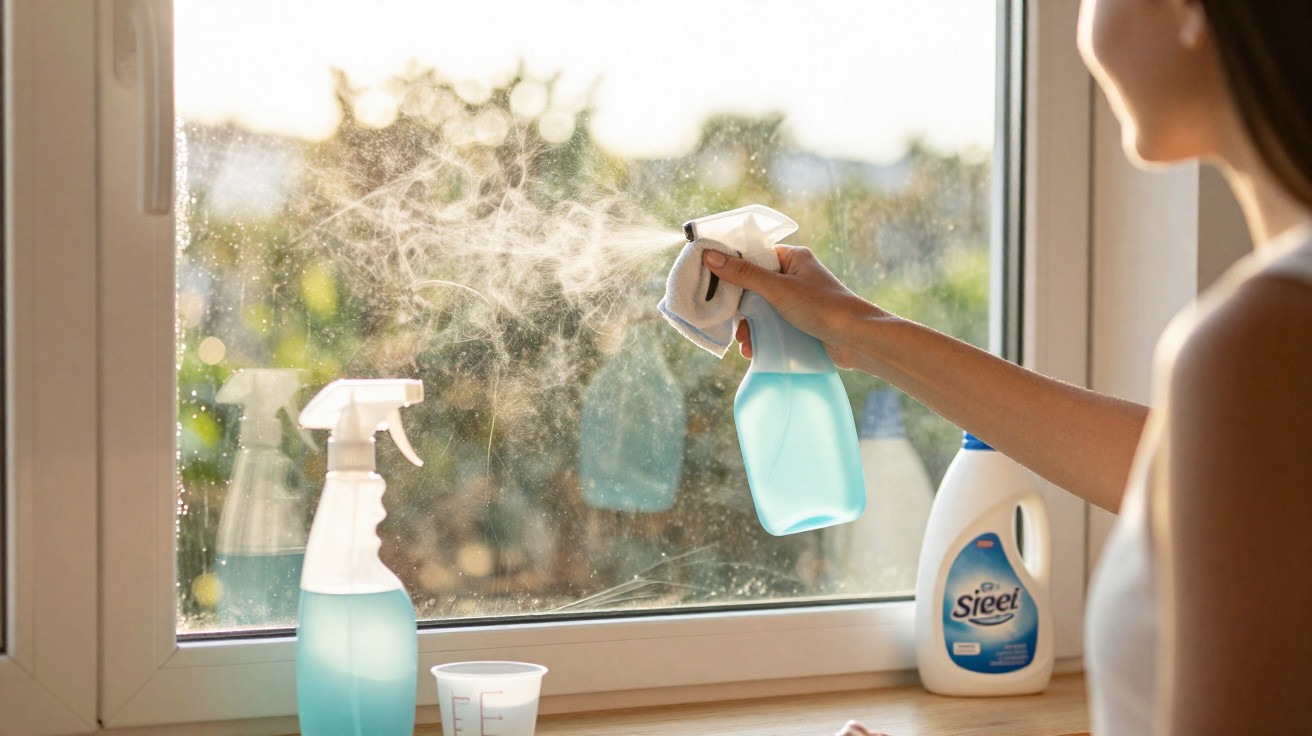
The solution is poured into a spray bottle or pressure sprayer and then applied directly to paving joints, gravelled areas or edging stones. Many users swear that visible growth noticeably retreats after one or two sunny days.
Experienced gardeners still urge caution, for several reasons:
- Damage to plants beyond the target: If the mixture reaches ornamental plants, perennials or lawns, it can scorch leaves and cause yellow patches.
- Harm to the soil: Recipes containing added table salt in particular can damage soil and soil life over the long term.
- A recurring issue: The roots of deeply rooted plants are usually not reached completely, so the task repeatedly starts again.
For this reason, many experts advise using such mixtures, if at all, only in isolated spots and only on surfaces where active soil life is not wanted – such as between concrete slabs or on purely gravel paths.
Where the washing-up liquid trick can help – and where it cannot
There are situations in which a blend of water, vinegar and a dash of washing-up liquid can genuinely be practical, for example:
- in narrow paving joints where a hoe or joint scraper can barely be used
- on small, contained trouble spots by the front door or beside steps
- for one-off jobs, such as improving the appearance quickly before a garden party
In these circumstances, the mixture can temporarily reduce the visible green growth. However, anyone treating large areas, entire driveways or yards regularly with household remedies will allow some of the substances to wash into the soil or drainage system whenever it rains.
“The larger the treated area, the more of the washing-up liquid and vinegar mixture ends up in the soil, groundwater or rainwater drainage.”
Better alternatives: mechanical removal, heat and prevention
Many gardening experts recommend moving away from “chemicals from the kitchen cupboard” and towards other approaches. They may require more manual work, but generally lead to fewer problems in the long term. Options include:
- Mechanical removal: joint scrapers, narrow knives, specialist brush attachments for cordless tools, or wire-bristle joint brushes.
- Thermal methods: equipment using a gas flame or hot air to damage above-ground plant growth. Plants do not always die immediately, but they are significantly weakened.
- Preventative measures: well-compacted base layers, alternative joint materials, gravel chippings instead of sand, or robust low-growing planting in joints that crowds out unwanted species.
The final point in particular is often underestimated. Designing paving so that weeds struggle to establish themselves avoids many arguments about household remedies. A little more planning at the outset can substantially reduce the later need for aggressive mixtures from the kitchen and cleaning cupboard.
What the environment “says” about washing-up liquid for weeds
Washing-up liquid is intended for the sink, not for widespread use on garden paths. Although its surfactants are usually biodegradable, they can still affect aquatic organisms at high concentrations. Combined with acetic acid and potentially salt, the result is a mixture that has little in common with a wildlife-friendly garden.
Anyone who values insects, soil organisms and healthy plants should bear one point in mind: any product that reliably harms plants also has some chance of affecting other organisms nearby. This is especially relevant on paths close to beds or lawns, where spray drift may reach them.
Practical tips for anyone who still wants to try the trick
Many amateur gardeners are curious and want to form their own view. Anyone wishing to test the washing-up liquid mixture despite these objections should at least follow a few basic rules:
- Treat only small test areas and watch the results.
- Do not spray in windy conditions, to protect neighbouring plants.
- Leave salt out of the mixture to avoid permanently damaging the soil.
- Never apply it directly beside vegetable beds or herbs.
- Wear protective gloves, particularly if you have sensitive skin.
Experience reports show that people who use the mixture regularly often end up returning to a scraper, brush or weed burner anyway, simply because the weeds keep coming back. What appears to be a shortcut can soon become an additional job.
Why “weeds” are not always the enemy
One final point is often overlooked in heated gardening debates: not every plant growing in an unintended spot is automatically a problem. Small patches of low-growing vegetation between stones can provide food for insects and can also look appealing.
Some garden owners therefore take a different approach. They consistently remove plants only where safety or the structure itself may suffer – for instance, on slippery steps or in wall cracks – while deliberately allowing a degree of “untidiness” elsewhere. This greatly reduces the pressure to chemically tackle every single green paving joint.
Anyone considering washing-up liquid in the garden should therefore see the trend not as a miracle cure, but at most as one small final element within a strategy that is far more sustainable through more hands-on work, better surface design and a more relaxed attitude towards weeds.





Comments
No comments yet. Be the first to comment!
Leave a Comment