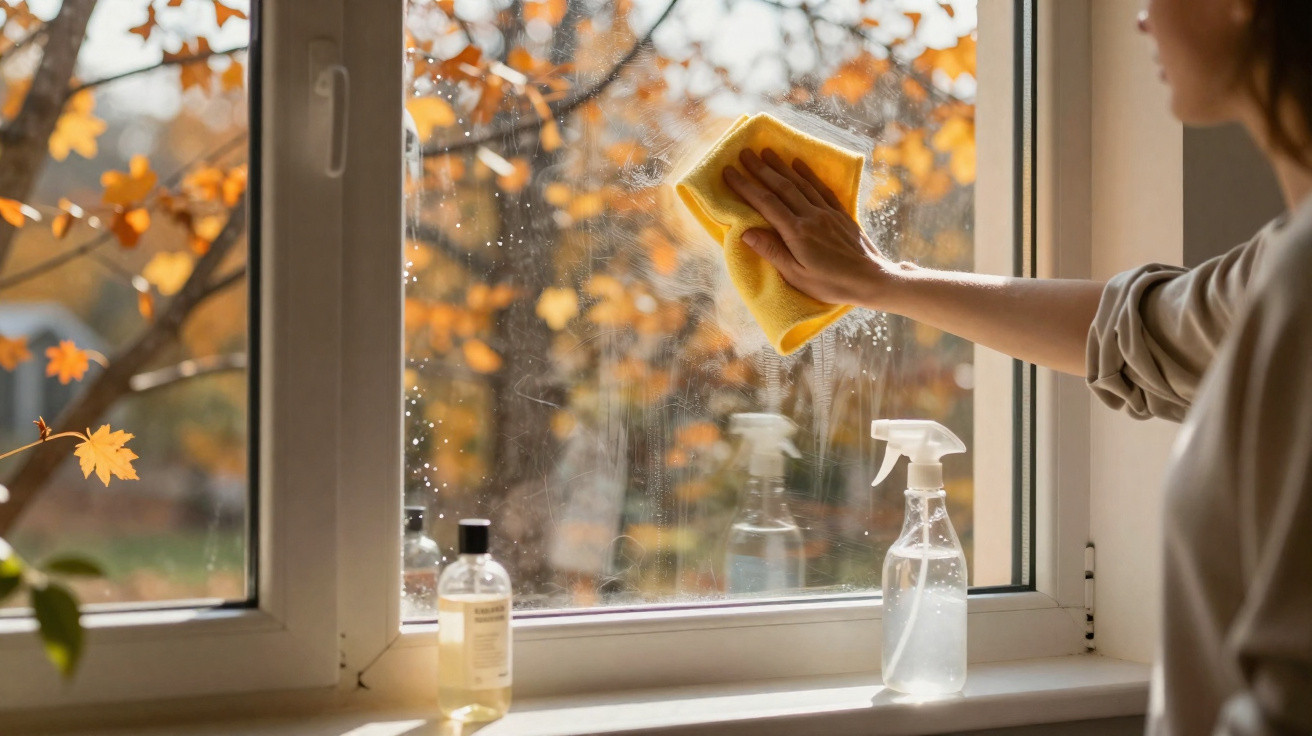
If you give your windows a quick clean in autumn, you will usually hope they remain reasonably spotless until Christmas at least. Rather than relying on costly specialist cleaners, an unexpectedly inexpensive household remedy can keep glass noticeably clearer for longer, giving dirt, rain marks and dust very little chance to cling on.
Why a few drops keep windows clean for weeks
The key ingredient is one many people associate more readily with skincare: glycerin. It sits inconspicuously on pharmacy and chemist shelves in small bottles, but on glass it acts rather like an invisible protective layer.
Glycerin leaves an ultra-thin, almost imperceptible coating on the surface. This makes it harder for dirt particles to bond to the pane. Raindrops run off more easily, while salt deposits and dull grey film build up much more slowly.
"When used in the right amount, glycerin means windows take longer to get dirty again, rather than merely looking clean for a short time."
Ordinary glass cleaners remove the dirt already present, but they do not alter the glass surface itself. At a microscopic level, glass is not as smooth as it appears: tiny irregularities create ideal gripping points for dust and grime. Glycerin fills these minute grooves and smooths the surface, making it more difficult for fresh particles to stick.
As a result, anyone who cleans thoroughly in autumn before applying the glycerin solution can often keep their windows clear well into late winter, needing no more than one or two minor top-ups.
Cheaper than glass cleaner - and far longer-lasting
From a cost perspective, this method is hard to beat. A standard bottle containing roughly 250 millilitres of glycerin costs only a few pounds. Just a few drops are needed each time for all the windows in an entire house.
- Extremely low dosage: 2–3 drops per litre of water
- One bottle is enough for many cleaning sessions
- Less cleaning product, fewer plastic bottles and less to carry home
- Windows stay clearer for longer than with many ready-made products
How long the protective layer lasts depends on where the house is located. In quiet residential areas, one application can keep windows clear for a good one to two months. Properties on main roads or in industrial areas face greater exposure to soot and fine particulate matter, so the effect does not last as long - although the difference compared with conventional cleaning remains clearly noticeable.
How to mix the solution - mistakes that spoil the effect
Getting the dosage right is the main challenge. Too much glycerin can leave the glass streaky and slightly sticky, while too little offers barely any noticeable protection. The basic rule is:
"Add just 2 to 3 drops of glycerin to one litre of lukewarm water - no more."
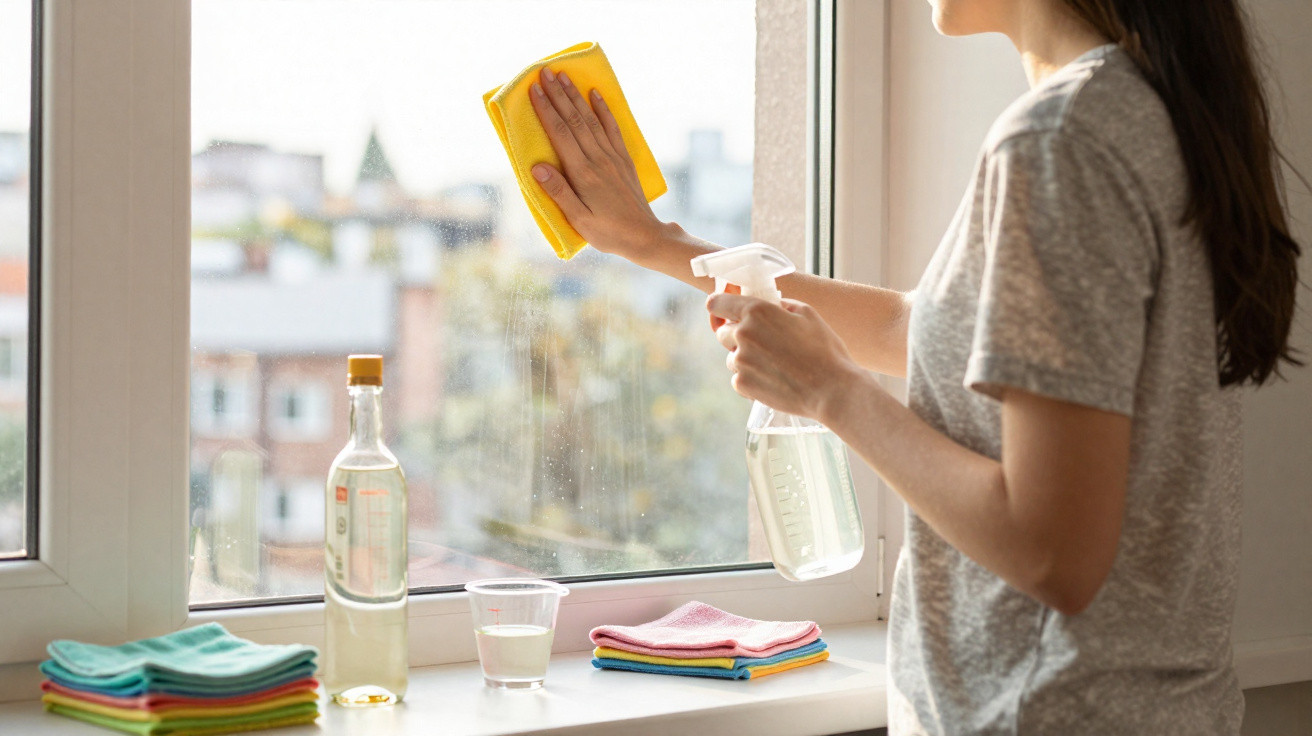
A spray bottle is the simplest way to apply it. You will need:
- 1 litre of lukewarm water
- 2–3 drops of vegetable glycerin
- 1 empty spray bottle
- 1 slightly damp microfibre cloth
- 1 completely dry microfibre cloth
Step-by-step instructions for streak-free windows
- Pour the water into the spray bottle, add the glycerin drops and swirl it briefly.
- Spray the solution evenly over the glass, without using too much.
- Work from top to bottom, allowing each pass to overlap slightly.
- Leave it for no longer than 30 seconds so that a film can form.
- Buff firmly with the dry microfibre cloth until the pane is clear.
- Finally, inspect the window from indoors and outdoors in daylight.
The 30-second limit is crucial. If the liquid remains on the glass for too long, the surface may become greasy-looking and harder to buff clear. Sticking to this short timeframe produces an even, invisible coating.
Preparation for heavily soiled windows
If the panes are very dirty - from cooking fumes, nicotine or old product residue, for instance - the glycerin mixture alone will not be enough. In that case, a two-stage approach is worthwhile:
- First, degrease thoroughly using ordinary cleaner or washing-up water.
- Then use clean water to remove every trace of residue.
- Allow the glass to dry completely.
- Only then apply the glycerin solution.
The fine protective film adheres evenly only to clean glass. Skipping the initial clean sacrifices a large part of the long-lasting effect.
Why autumn is the ideal time for the glycerin trick
Everyone knows the problem with cleaning windows in high summer: cleaner dries in the sun within seconds, making streaks almost inevitable. In autumn, however, the temperature and light work in your favour.
"Cool air, little direct sunlight and often overcast skies - that combination delivers the best cleaning result."
Lower temperatures slow down water evaporation. This gives you sufficient time to spread the solution properly and buff it out. With no intense sunshine, there are fewer drying marks.
Overcast skies offer a further benefit that professionals know well: every speck and streak is much more visible than it is in bright sunshine. Cleaning in this light makes missed patches immediately apparent, allowing you to go back over them precisely.
There is another factor too: dirt left on glass throughout winter can cause minor damage. Salts, soot and moisture attack the surface. Clean windows also let in more daylight, which is especially valuable when December sunshine is scarce anyway.
How long the protection lasts - and when to reapply it
In average conditions, one autumn treatment will often last deep into winter. For most households, that means a thorough clean in October or November, followed by a quick refresh in January if needed.
A few examples:
| Location | Typical duration of the effect |
|---|---|
| Quiet residential area | Clear windows for 6–8 weeks |
| Town centre / heavy traffic | 4–6 weeks, then a light refresh is worthwhile |
| Coastal area with salty air | 3–5 weeks, depending on wind and weather |
Refreshing nearly always takes less effort than the first treatment. A quick spray and polish is often sufficient, without needing a full deep clean.
Practical tips, risks and useful additions
Although glycerin is generally well tolerated, it is not suitable for every surface. On wooden frames or unpainted window sills, the liquid may leave unattractive marks. It is therefore best to cover these areas or wipe away any spray mist immediately.
- Treat glass only, and dry window frames if they come into contact with the solution
- Do not mix it with strongly perfumed cleaners
- Test an inconspicuous corner before the first full application
- Wash microfibre cloths regularly so they remain lint-free
Anyone wanting to enhance the result further should also consider the indoor climate. Windows mist up faster in very humid rooms, and condensation attracts dirt. Regular burst ventilation and gently heated rooms reduce this issue considerably.
It is also useful to set a regular ‘window day’ in the diary - for example, a weekend in October. The same session can cover other small maintenance tasks, such as checking seals, cleaning roller-shutter tracks and oiling fittings. This keeps window care under control instead of becoming a source of constant guilt.
Once you have seen your windows remain as clear in January as they were straight after the autumn cleaning marathon, you will probably not want to go without this few-drops trick again. What was once a disliked chore becomes a manageable routine, with a visible result every time you look outside.









Comments
No comments yet. Be the first to comment!
Leave a Comment