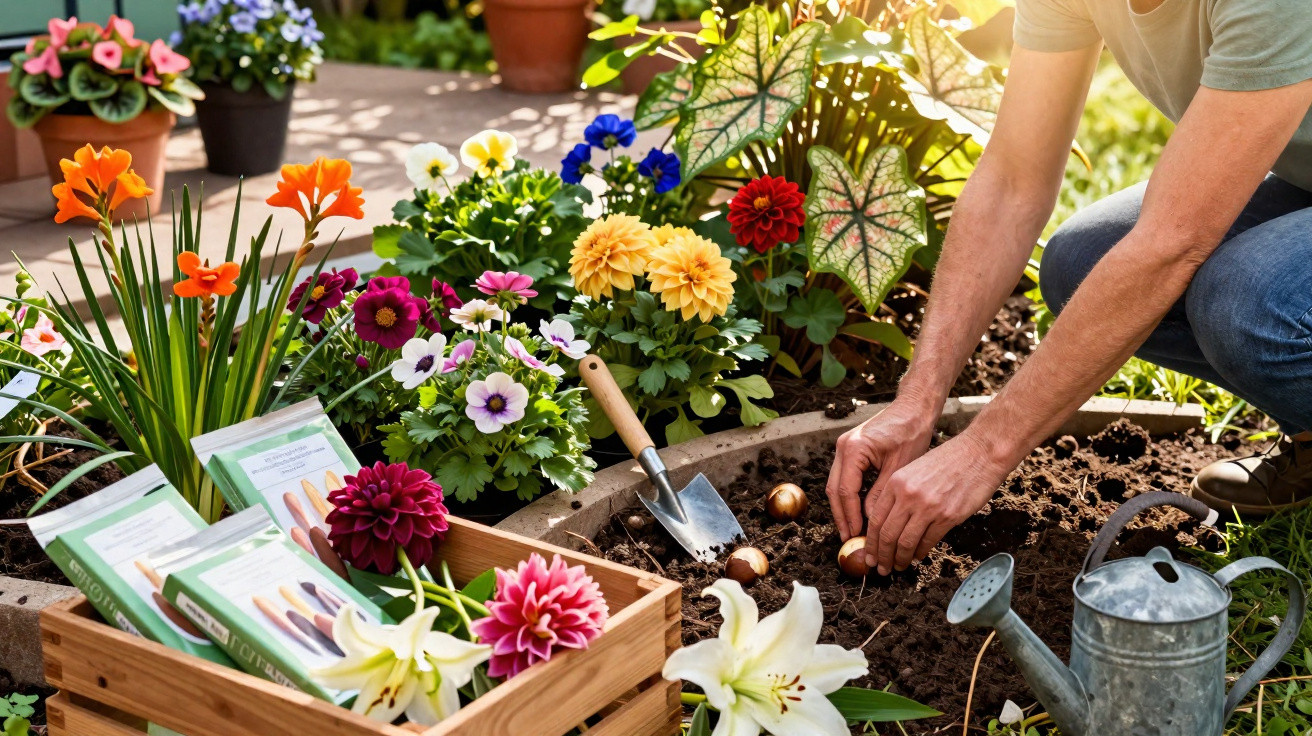
Choose the right tubers and bulbs in spring and your garden will be awash with colour by summer. Many of these striking plants do not perform for just one season: handled properly, they return year after year. Here are the key care tips and most exciting varieties for anyone wanting to transform their outdoor space without a huge amount of effort.
Why perennial flowering tubers are the ideal choice now
Bulb flowers often bring tulips and daffodils to mind, planted in autumn for spring displays. Yet for a spectacular summer garden, there are far more exciting options: perennial tubers that can be planted from February to May and flower in their first year.
“The major advantage is that these plants store energy in their tubers or bulbs and, with a little care, can produce new growth for several seasons in succession.”
By the time you buy them, most of these plants have already had the cold period they need. Once frost is no longer expected, they are ready to go into the ground. They then get growing quickly, providing large summer flowers, exotic colours and, in many cases, an intense fragrance.
The 10 essential tubers for a summer garden with real wow factor
1. Amaryllis for huge tropical-style flowers in borders
Amaryllis is usually associated with Christmas displays in pots. It can look even more dramatic in a summer border or a large container. Give the bulbs a warm, sunny position and free-draining soil.
Do not plant them deeply: the upper half of each bulb may sit just beneath the soil surface. With a little fertiliser and regular watering, they will produce impressive stems topped by enormous trumpet-shaped flowers in summer.
2. Anemones: airy clouds of flowers for border edges and containers
Plant several anemone tubers close together and they will create generous drifts of flowers. They are ideal for border fronts, rock gardens and shallow bowls on a balcony.
Soak the small tubers in lukewarm water for a few hours beforehand to help them establish more quickly. In a bright spot with moist but never waterlogged soil, they will flower for weeks in blue, pink, white or red.
3. Tuberous begonias: specialists for shade
Tuberous begonias are an excellent choice for a darker courtyard, north-facing balcony or a site beneath shrubs. They tolerate little direct sun, but reward partial shade or shade with almost continuous flowering.
Plant the tubers shallowly with the hollow side facing upwards. Lift them in late autumn, allow them to dry, then store them somewhere frost-free. This lets you enjoy them for many years.
4. Caladium: foliage plants that look almost painted
Caladiums are not traditional flowering plants; their appeal lies in their spectacular leaves, coloured white, pink and red, with green veining. They look especially elegant in pots or as underplanting beneath shrubs.
Their tubers require warmth and only begin to grow strongly once temperatures remain consistently high. Starting them indoors above 20 °C is worthwhile, as they can then go outdoors as sturdy plants in early summer.
5. Canna: tropical character with little effort
Cannas develop substantial, rhizome-like tubers and tall stems with large leaves. Depending on the variety, they resemble banana plants, though they are considerably tougher. Their yellow, orange or red flowers bring a jungle-like feel to borders.
They need full sun, plentiful water and regular feeding. In mild areas they can remain outdoors beneath a thick mulch layer; elsewhere, lift the rhizomes in autumn and overwinter them frost-free.
6. Crocosmia: fiery fountains in orange and red
Crocosmia grows from small tubers, producing narrow, graceful foliage and arching flower stems. Its vivid orange or red summer flowers also attract bees and butterflies.
In sheltered spots, it often survives winter in the ground, especially when covered with leaves or bark mulch. It works well in herbaceous borders and alongside patios.
7. Dahlias: classics for lavish summer borders
Dahlias are among the best-loved summer-flowering plants. Their tuberous root clumps produce plants up to a metre tall, with double, single, rounded or cactus-like blooms.
- Choose a sunny site that is sheltered from strong winds.
- Use rich, loose soil.
- Remember to support tall varieties.
- Remove faded blooms regularly to encourage fresh buds.
Lift the tubers in autumn, let them dry off slightly, and store them in a dark, dry place at 1 to 7 °C. Over time, this makes it easy to build an impressive collection.
8. Gladioli for spectacular cut flowers
Gladioli grow from corms and produce long, upright flower spikes that are perfect for vases. Plant fresh corms every two weeks for a staggered display from high summer into early autumn.
They prefer full sun, whether planted in rows in borders or in deep containers. After flowering, allow the corms to dry and store them safely in a cellar or other frost-free place, particularly in colder areas.
9. Lilies: long-lasting fragrant stars of summer
Lilies form true bulbs and are among the most enduring plants in this group. Once positioned correctly, they can stay in place for years and often improve from one season to the next.
Many varieties have a powerful scent, making them ideal near a patio, entrance or seating area. Soil should be loose and humus-rich, as waterlogged positions quickly cause rot.
10. Tuberose: intense evening fragrance for patios and balconies
Tuberose remains something of an insider’s choice. Its tuber-like roots produce long, slender stems of white flowers with an especially strong evening perfume.
It is superb in containers beside a seating area. The tubers need warmth and a free-draining growing medium, and must be lifted and stored frost-free before the first frosts.
The right position: sun, shade, balcony or border?
Many summer tubers thrive in warmth and sunshine, while others brighten shadier areas. Understanding each plant’s needs helps avoid disappointment.
| Plant | Position | Winter hardiness |
|---|---|---|
| Dahlias | Full sun | Lift tubers and store frost-free |
| Canna | Full sun | Mulch in mild areas; otherwise lift |
| Tuberous begonias | Partial shade to shade | Store tubers frost-free |
| Caladium | Warm partial shade | Needs substantial warmth; only reliably safe indoors |
| Lilies | Sun to light partial shade | Usually able to remain in the ground permanently |
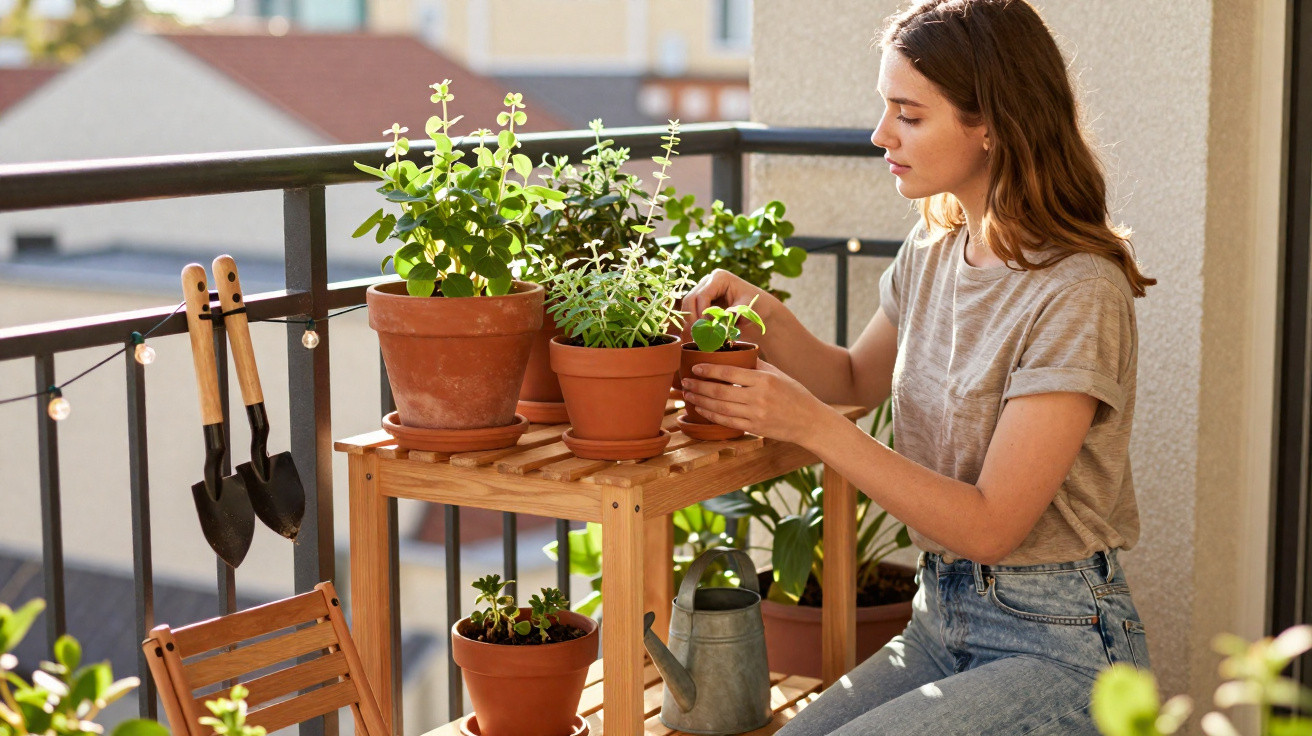
For south-facing balconies, canna, dahlias, crocosmia, gladioli, lilies and tuberose are all suitable and grow well in large containers. Every tall variety needs support so that wind does not snap or flatten the stems.
Shadier courtyards and north-facing spaces benefit from tuberous begonias, caladiums and anemones. These plants can brighten dreary urban corners without requiring hours of watering every day.
How to plant tubers and bulbs: depth, spacing and watering
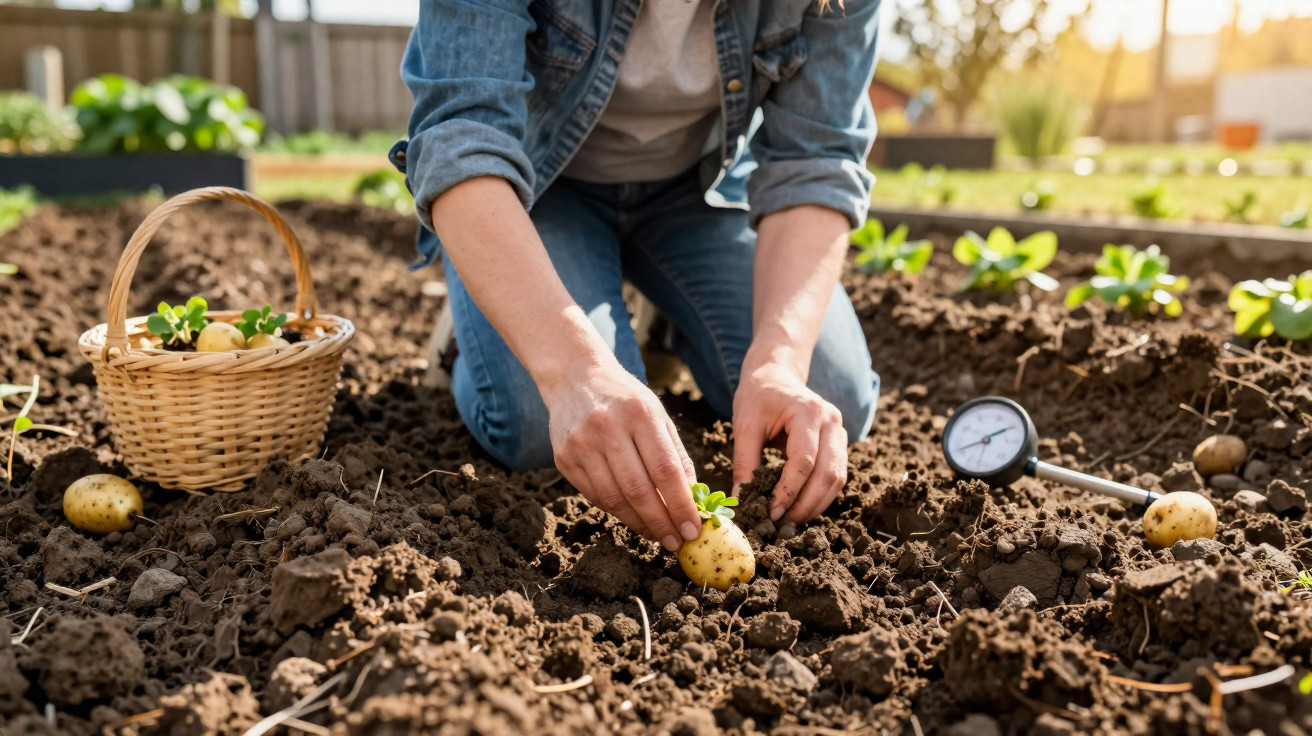
The basic rule is to plant tubers and bulbs in free-draining soil that does not remain wet throughout winter. Excess moisture soon leads to rot.
- Set tubers roughly two to three times as deep as their height, except for varieties such as amaryllis, which should be planted more shallowly.
- Position the pointed end or emerging shoot upwards.
- Firm the soil lightly to eliminate air pockets.
- Water thoroughly after planting, then water as needed.
For containers, place a layer of expanded clay pellets or gravel at the base to aid drainage. Good-quality, lightly fertilised compost promotes vigorous growth. During summer, a liquid feed in the watering can every two weeks is usually sufficient.
What to do in autumn: easy overwintering
For these plants, the term “perennial” does not automatically mean “straightforwardly winter-hardy”. Many originate from warm climates and cannot withstand frost.
As foliage turns yellow in autumn, cut it back and lift sensitive tubers such as dahlias, tuberous begonias, caladiums, cannas and tuberose. Leave them to dry in an airy location, then place them in boxes with a little dry growing medium in a cool, frost-free room.
Hardier plants, including certain lilies and crocosmias, can often stay in borders beneath a protective covering of leaves or bark mulch. If you are unsure, trial a few specimens in the ground and store the rest conventionally in a cellar.
Practical combinations and a few extra tips
Many of these tubers can be combined imaginatively. Low anemones or tuberous begonias can form a carpet beneath taller lilies or gladioli. In containers, a canna in the centre surrounded by trailing begonias creates a particularly striking arrangement.
One benefit that is often overlooked is their value as cut flowers. Dahlias and gladioli provide a free supply for vases all summer if you cut them regularly. This stimulates fresh buds and keeps the plants vigorous.
Those new to gardening should begin with three “beginner-friendly varieties”: dahlias, tuberous begonias and lilies. They forgive minor care mistakes and quickly show just how great the difference can be between an “empty” summer garden and one that has been carefully planned. From there, the selection can be expanded year after year - the tubers simply come with you.














Comments
No comments yet. Be the first to comment!
Leave a Comment