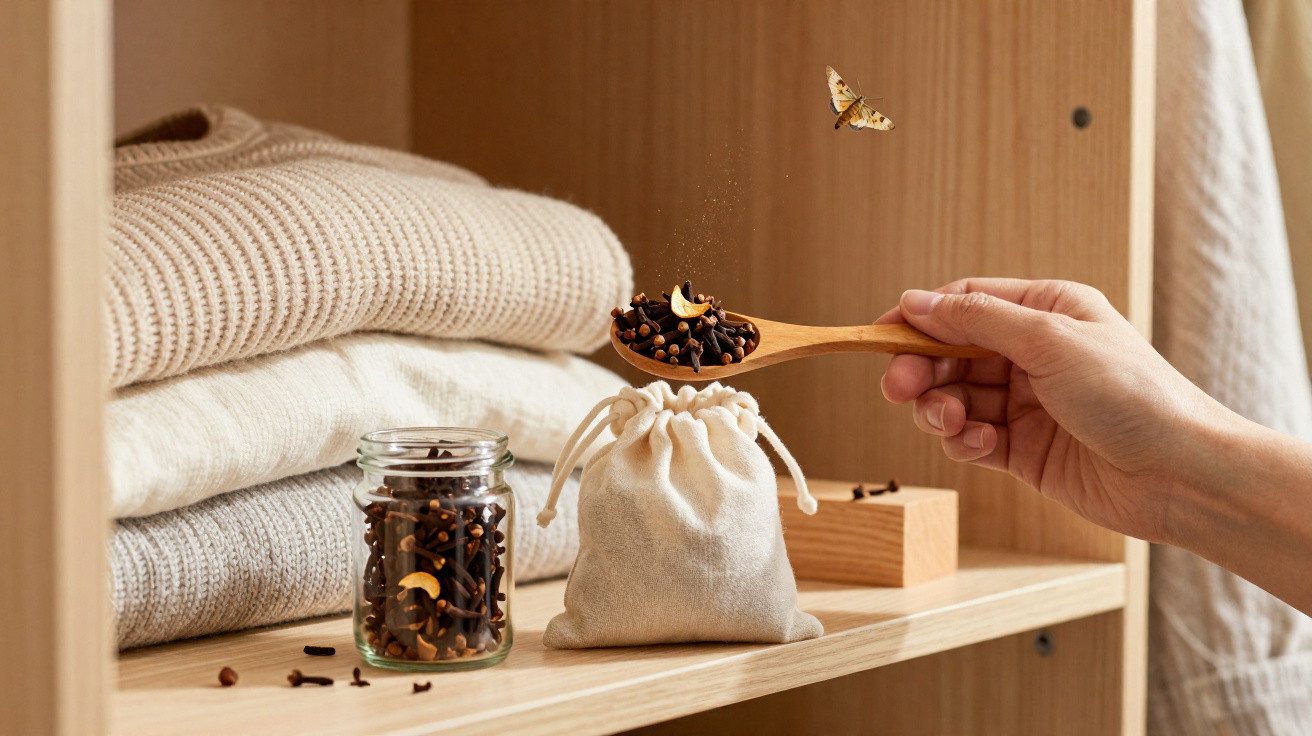
Tiny wings, major trouble, and the problem can escalate quickly.
Households need a solution that works without filling rooms with harsh fumes. A well-known culinary herb is now attracting attention, supported by practical advice and a useful measure of fragrance science.
Why moths can turn minor clutter into major damage
Moths favour stagnant air, dim corners and piles of fabric left untouched. Pantry moths settle in unsealed bags of flour, while clothes moths conceal themselves in wool, cashmere, silk and even dirty cotton. A single female can lay dozens of eggs, after which the larvae feed unnoticed. Damage remains concealed in drawers until holes and worn seams eventually become visible.
Their rapid development makes matters worse. In mild temperatures, eggs can hatch within days. This brief cycle can turn a handful of adult moths into a broader infestation before it is spotted. In the kitchen, food may become contaminated. In wardrobes, treasured knitwear can be ruined. A stale, musty smell may also remain.
Warm, dark, and undisturbed. Break that trio and moths struggle to gain ground.
Bay leaves: a kitchen staple with a strong record
Bay leaves are useful for more than flavouring stews. They contain volatile compounds including eucalyptol and eugenol. At low concentrations, people generally find these scents pleasant, whereas moths and various other insects usually avoid them. This makes bay leaves a useful low-toxicity deterrent for confined indoor areas.
The approach is both straightforward and inexpensive. Gently crushing dried bay leaves exposes more of their surface and releases extra fragrance. The scent forms a small aromatic “halo” around stored food and fabrics. Adult moths are more likely to stay away, and females have fewer calm places in which to lay eggs.
How to use one tablespoon effectively
Begin with the useful rule often repeated in headlines: use one tablespoon for each compartment. Then make it part of a regular routine.
- Lightly crush 1 tablespoon of dried bay leaves and place them in a breathable sachet or coffee filter.
- Put one sachet in every drawer, jumper box or wardrobe shelf. Place another close to each jar of flour, rice or pulses.
- Renew the leaves every 6–8 weeks, or earlier when the smell weakens. Change them after a thorough clean.
- Vacuum gaps and crevices before positioning the sachets. Fragrance is most effective once lint and crumbs have been removed.
One tablespoon of crushed bay leaves per drawer or shelf sets a scented barrier that moths tend to avoid.
Smart combinations that strengthen the effect
Bay leaves work effectively alongside other strongly scented botanicals. Citrus peel provides limonene, a sharp and fresh fragrance that many insects dislike. Whole cloves contribute a spicy, phenolic scent because they contain eugenol. Used together, these ingredients create a broader scent profile that lasts longer in enclosed spaces.
A simple sachet recipe
- 1 tablespoon crushed bay leaves
- 5–7 whole cloves
- 1 strip of dried orange or lemon peel
- Mix the ingredients in a small cloth pouch. Add the date, then replace it every two months.
In the kitchen, keep the sachet close to food containers rather than inside them. In wardrobes, position it between folded jumpers instead of directly against delicate silk.
A spray for awkward-to-reach areas
A light spray can help with skirting boards, shelf edges and the rear of deep cupboards. Put a few drops of bay essential oil into warm water in a clean spray bottle. Shake thoroughly before every use, apply sparingly to hard surfaces and wipe away any spray that lands on finished surfaces.
Do not allow oils to come into direct contact with clothes or uncooked food. Always test the mixture first in a hidden area. Owners of pets should take particular care, as cats may react badly to some concentrated botanical oils.
Moths are a concern beyond the home
Europe’s agricultural sector monitors moth threats carefully. One invasive species, the Guatemalan potato tuber moth (Tecia solanivora), has reduced harvests in some parts of the continent. It tunnels into potato tubers, increasing growers’ costs and adding to storage losses. This demonstrates how tiny moths can cause disproportionate harm when the right conditions occur.
Household moths are not the same as agricultural pests, but both have fast life cycles and are skilled at staying hidden. In either situation, detecting them early is important.
Prevention that stops repeat infestations
Wardrobe habits that prevent larvae
- Wash or dry-clean woollens before putting them away. Body oils can attract egg-laying females.
- Keep out-of-season clothing in airtight bags or containers, with bay sachets included.
- Vacuum wardrobe floors, corners and beneath skirting boards. Empty the vacuum cleaner outdoors.
- Rearrange clothing stacks each month. Air and light disturb larvae hidden within fabrics.
Pantry steps that protect grains
- Transfer dry staples to glass jars or robust plastic containers with secure lids. Label each jar with a date.
- Freeze flour for 72 hours before storing it to destroy any eggs that may have arrived with it.
- Clean shelves using warm water with a small amount of vinegar. Allow them to dry completely before restocking.
- Buy and store smaller quantities. Follow a first-in, first-out system to avoid food sitting in cupboards for long periods.
Recognise the signs and respond quickly
Use this quick guide when inspecting cupboards and wardrobes.
| Sign | Immediate action |
|---|---|
| Silky webbing in flour or rice | Throw away the batch, clean the jar and check nearby products |
| Tiny beige moths at dusk near the kitchen | Put out bay sachets, seal every grain container and add a pheromone trap |
| Small holes in wool or cashmere | Wash at a high temperature if the fabric permits, or freeze for 72 hours, then add bay |
| Fine, sand-like grit in drawer corners | Vacuum seams, wipe thoroughly, renew sachets and repeat after two weeks |
When natural methods are insufficient
Pheromone traps can identify problem areas by drawing in male moths. Heat and cold treatments can deal with persistent pockets: use a hot wash or 60 minutes in a hot tumble dryer for fabrics that can tolerate it, or freeze delicate items for several days. Where activity continues, contact a professional who uses precise, low-residue treatments instead of widespread indoor fogging.
Additional context to make the solution last
Identify the type of moth
Clothes moths stay away from light and run when they are disturbed. Pantry moths are more likely to fly openly in kitchens around dusk. Their behaviour should shape the response. Dark, quiet wardrobes benefit from regular rearranging and sachets, while kitchens require sealed storage and frequent shelf inspections.
Why fragrance helps in this situation
Scented plants do not “poison” moths. Instead, they alter the surroundings so adult moths avoid resting and laying eggs there. This creates time for cleaning and storage measures to remove the food sources that larvae need. The combined approach matters more than any individual measure.
Cost and coverage
One small jar of dried bay leaves will normally treat a typical flat for several months. Using one tablespoon for each drawer or shelf means a small handful can cover an entire wardrobe. Replace the leaves according to an easy-to-remember schedule, such as the first weekend of every second month.
Clean first, seal food, then scent the space. That order turns bay leaves from a nice idea into a reliable routine.
Safety note
Take sensible precautions when using botanicals. Store sachets where children cannot reach them. Prevent essential oils from touching fabrics or pet bedding directly. If skin or breathing irritation occurs, stop using the product and air the room.










Comments
No comments yet. Be the first to comment!
Leave a Comment