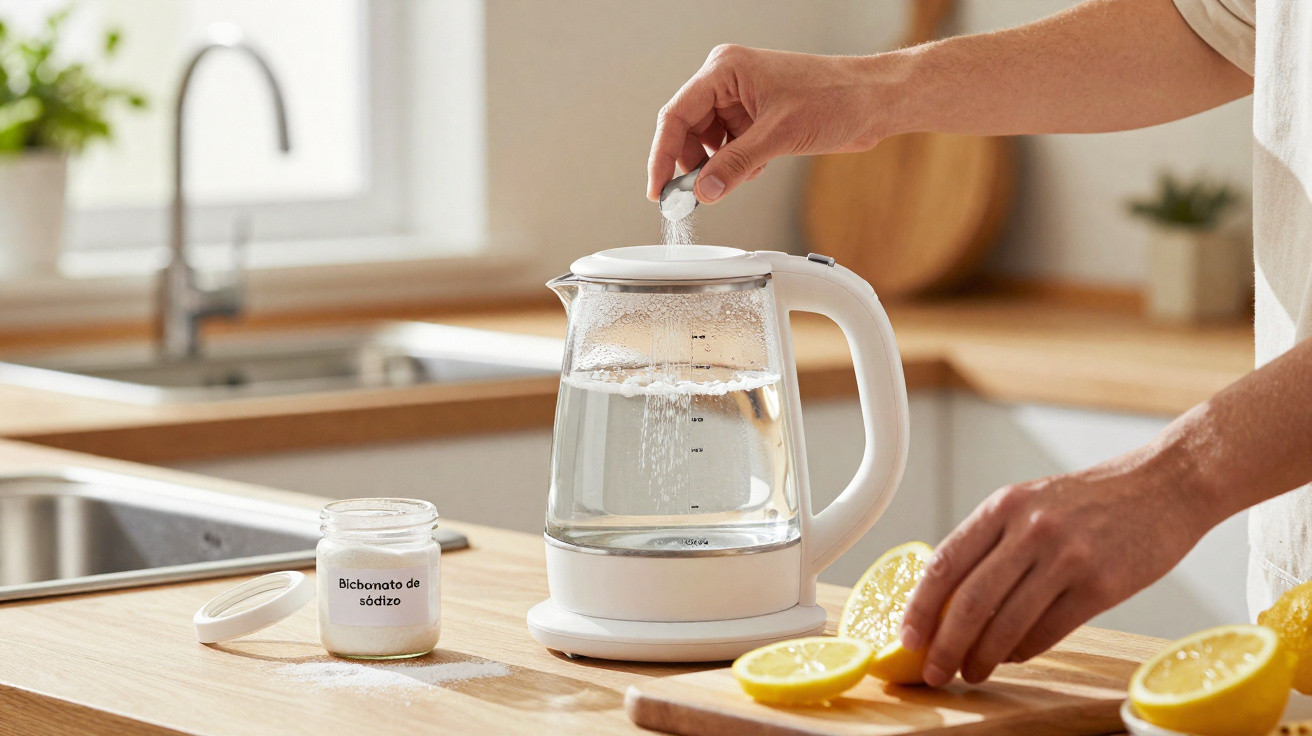
If you make coffee, tea or instant soup every day, you will eventually notice the signs: your kettle takes longer to boil, the water tastes dull, and white chalk-like marks appear on the base. Many people then reach for harsh descalers or vinegar, only to be met with a pungent smell or damaged seals. There is, however, a far more pleasant option.
Why limescale in a kettle is more than a cosmetic issue
Limescale comes from minerals in tap water, chiefly calcium and magnesium. When water is heated, these substances settle out and form a solid deposit. Over time, this layer coats the base and heating elements of the kettle.
This causes several noticeable problems:
- Water takes longer to reach boiling point.
- The appliance uses more electricity for the same amount of water.
- Heating elements may overheat and fail sooner.
- Tiny white particles float in tea.
- Tea or coffee can taste flat or slightly “chalky”.
“Regular descaling reduces electricity use, extends the kettle’s lifespan and noticeably improves the flavour of drinks.”
Especially in hard-water areas, an overlooked kettle can become a genuine electricity drain. The limescale coating acts as insulation: the heating element transfers heat to the water less effectively, so it runs for longer and uses a few extra watt-hours every time.
The unexpected solution: no vinegar, no soap
Many guides recommend vinegar or ready-made descaling products. Although vinegar works, its smell is persistent and, over time, it can leave marks on rubber seals and metal components. Anyone who is sensitive to odours, or simply does not want their kitchen smelling of cleaning products for hours, may prefer another option.
This is where two ingredients that many people already have in the cupboard, but rarely use together, come in: bicarbonate of soda (baking soda, or sodium bicarbonate) and lemon.
Bicarbonate of soda and lemon: a gentle but effective kettle descaling duo
Bicarbonate of soda is mildly alkaline and gently loosens grease and limescale residues. Lemon provides acid, which chemically attacks limescale, as well as essential oils from the peel that leave a fresh scent. Together, they work on the limescale layer without damaging the kettle or producing harsh fumes.
“Bicarbonate of soda and lemon reliably remove limescale, leave a fresh smell and are kind to materials, hands and noses.”
Step-by-step guide to a limescale-free kettle
This method works with almost all standard electric kettles, whether they are made from stainless steel, glass or plastic.
- Unplug the kettle and empty it completely.
- Place three to four fresh lemon slices in the kettle.
- Add around one tablespoon of bicarbonate of soda.
- Fill with tap water up to the maximum fill line.
- Heat the water until it reaches boiling point.
- Switch off the appliance and leave the mixture to stand for around 20 minutes.
- Pour away the liquid and wipe the inside walls with a soft sponge.
- Rinse once or twice with clean water, then briefly boil a fresh kettleful of water.
The citric acid breaks down the limescale, while the bicarbonate of soda supports the chemical process and helps lift light discolouration. Most deposits can then be rubbed away easily using the soft side of a washing-up sponge.
How often should you descale your kettle?
The right frequency depends mainly on water hardness. Anyone living in Munich, Vienna or across much of the Ruhr area will be very familiar with hard water. In such places, descaling every 4 to 6 weeks is beneficial, or more often if the kettle is used heavily.
| Water hardness | Typical area | Recommended descaling schedule |
|---|---|---|
| Soft | Parts of southern Germany, Alpine regions | Every 2–3 months |
| Medium | Many large cities in German-speaking countries | Every 4–6 weeks |
| Hard | Urban areas, limestone regions | Every 2–4 weeks |
There is also a simple free indicator: if the water is taking noticeably longer to boil or a visible white crust forms on the base, it is time for the next treatment.
Care tips to help your kettle last for years longer
The real secret is not descaling alone, but everyday use. A few small habits can considerably lengthen the time between cleaning sessions.
- Do not leave water sitting in the kettle for hours after heating it.
- Fill only the amount of water you actually need.
- Occasionally leave the lid open while it dries, so that no film can build up.
- Wipe the outside only with a lightly damp cloth; never immerse it in water.
If you wish, you can occasionally run a “refresh boil” using only lemon slices and water, without bicarbonate of soda. This removes thin deposits before they turn into a hard crust.
What if you have no bicarbonate of soda or lemon at home?
On days when the limescale is already causing problems but the cupboard seems bare, there is another option: household vinegar or vinegar essence diluted with water. Boil a mixture of two parts water and one part vinegar, leave it for 20 minutes, then rinse thoroughly.
Unlike the bicarbonate of soda and lemon method, this will leave the kitchen smelling much stronger. It is worth boiling an additional kettleful of plain water afterwards to rinse it through. Occasional use usually keeps material wear manageable, but rubber components should still be monitored.
Why hot tap water is not a good idea
Many people instinctively turn the tap to “hot” in order to save time. It sounds practical, but it presents two issues. First, warm pipes can harbour more germs and biofilms than cold-water pipes. Second, higher temperatures make it easier for metals or other substances to leach from pipes and fittings.
“For drinks, always use cold tap water and heat it in the kettle, rather than taking hot water straight from the tap.”
Particularly in homes with older plumbing, this reduces the risk of pouring unwanted accompanying substances into your tea.
What limescale means for flavour and health
Many people wonder whether limescale-rich water is unhealthy. The short answer is that the white deposit itself is primarily a visual and technical issue. The minerals it contains are already present in tap water, and normal quantities do no harm.
The flavour is more interesting. High-quality teas, such as green tea or fine oolong varieties, respond noticeably to water quality. Water that is too hard makes flavours seem flatter and brings bitterness more to the foreground. A clean, limescale-free kettle, and possibly a jug filter, can make a noticeable difference here.
A real-life scenario: the “Sunday evening shock”
It is a familiar picture: it is Sunday evening, visitors have been over, and three pots of tea have been made. The following morning, you fill the kettle, look inside and find that the base is milky white. It is tempting to ignore it and decide to “give it a proper clean later”.
This is exactly when the bicarbonate of soda and lemon method saves Monday morning. While you are getting ready, the mixture boils once and then sits. By the second coffee, the kettle is clear again, with no specialist cleaner and no trip to the DIY shop. After using this routine a few times, it almost becomes part of everyday life automatically.
How to combine this trick with other routines
Many people pair cleaning rituals like this with regular tasks that are already fixed in their schedule: laundry day, a Sunday evening kitchen tidy, or the time when the dishwasher is running. The kettle descales quietly alongside everything else, without taking up extra time.
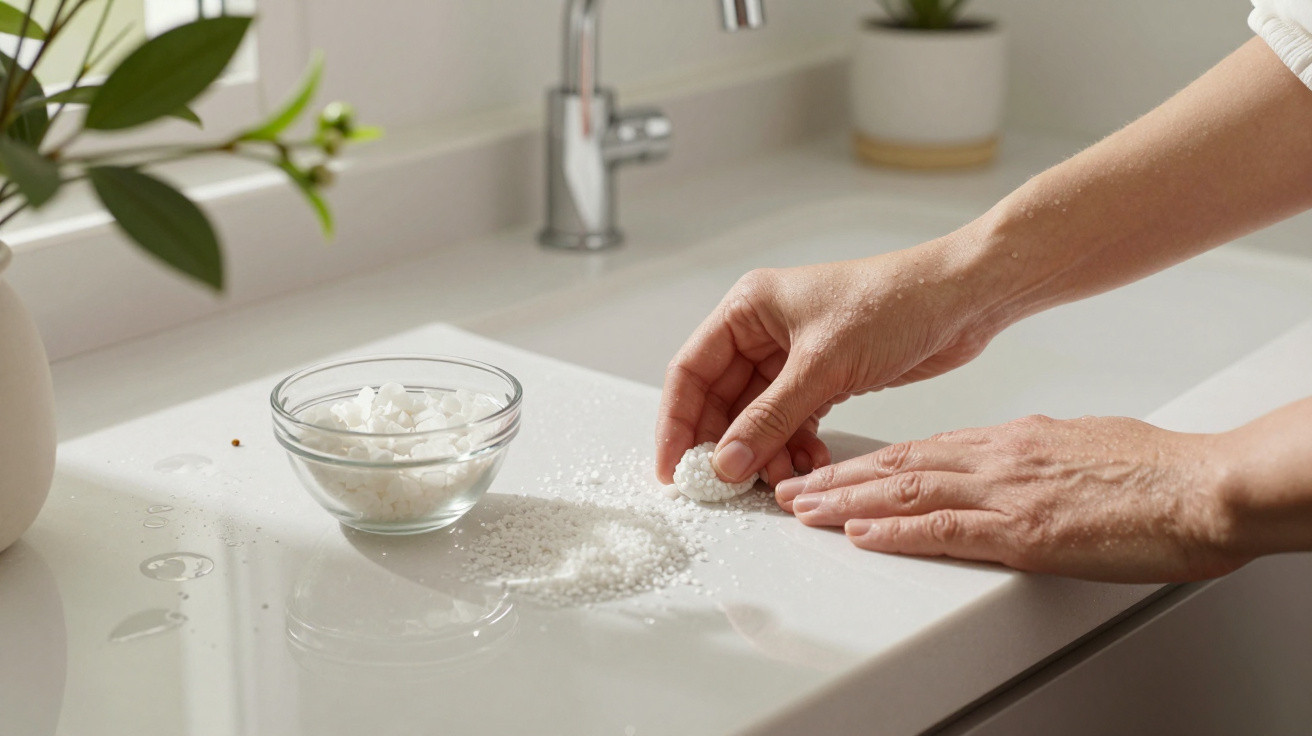
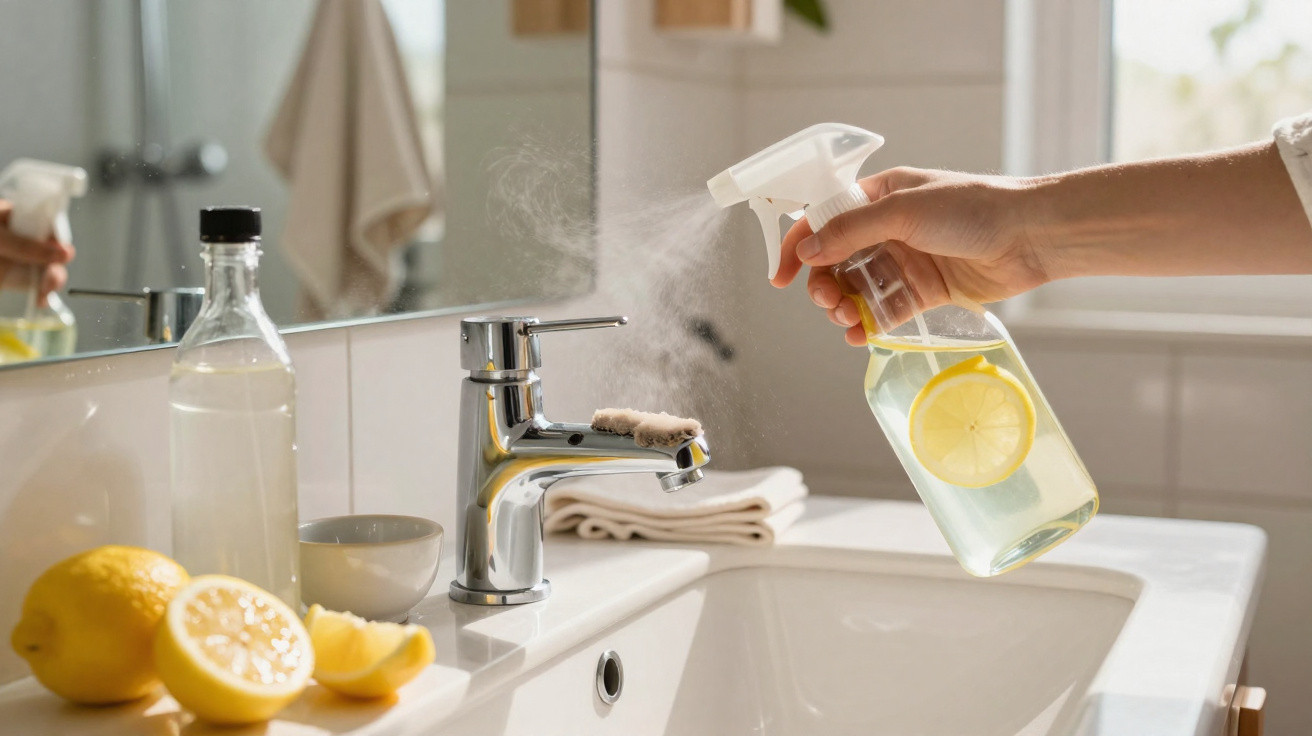
If limescale marks also tend to appear on taps and in the shower, the same ingredients can be used there as well. Bicarbonate of soda and lemon can help in these areas too: apply lemon juice to the tap, allow it to work briefly, rub gently with bicarbonate of soda, then rinse. This lets the household rely on a small number of well-tolerated helpers rather than a whole arsenal of specialist products.


Comments
No comments yet. Be the first to comment!
Leave a Comment