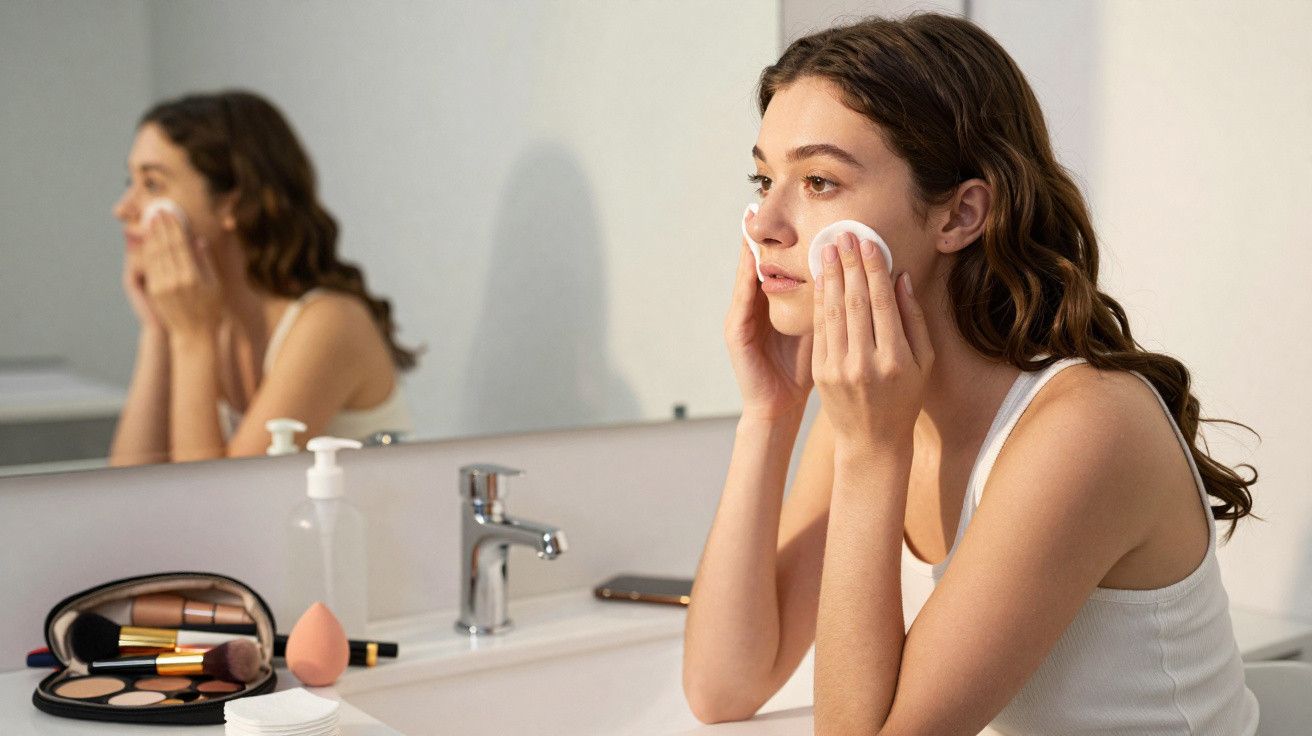
Yet the daily layers of foundation, concealer and powder come at a cost that often only becomes apparent later.
People who wear make-up every day often feel more confident, well groomed and “ready” for daily life. The skin beneath it does not always cooperate. Dermatologists are increasingly seeing patients whose skin problems occur chiefly when make-up is part of their everyday routine - and disappear again when they take breaks from it.
Why daily make-up can disrupt the skin’s balance
Skin is not simply a neutral surface for colour: it works around the clock. It produces sebum, renews cells, fights germs and maintains its own highly delicate protective barrier. Each additional layer of product alters these processes to some extent.
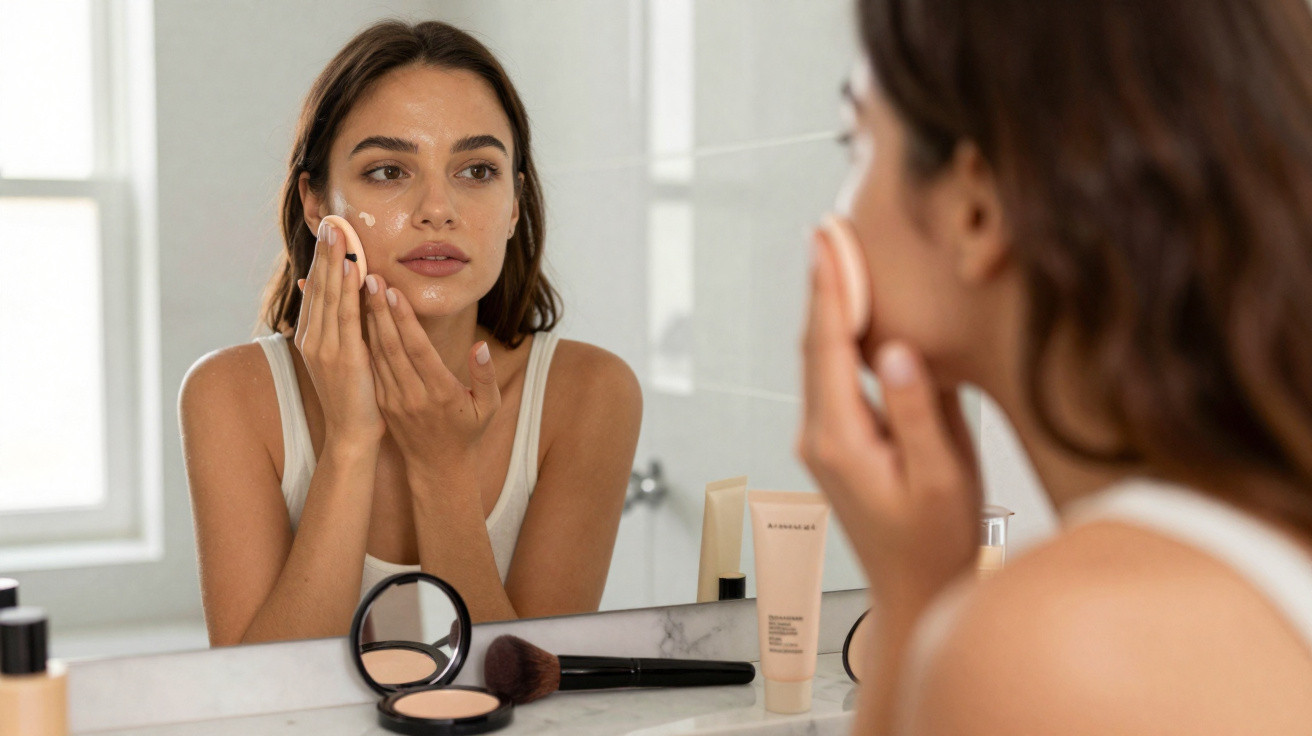
In particular, high-coverage, long-wearing foundations act like a film across the surface. Dermatologists refer to this as an occlusive effect: skin does not literally “breathe”, but this layer can affect how sebum and moisture are able to escape.
When pores are continually covered by several layers of product, the conditions are ideal for blocked pores, spots and irritation.
Sebum can build up more easily, pores become narrower and bacteria find a more favourable breeding ground. The consequences frequently only become visible weeks later:
- a sudden increase in blemishes despite an apparently careful skincare routine
- small inflamed spots repeatedly appearing in the same areas
- an overall more uneven, blotchy-looking complexion
This does not affect only people with naturally oily or acne-prone skin. Dry or mature skin can also suffer under the weight of heavily covering products, resulting in redness, tightness or flaking, for example.
Hidden irritants: when skin is under quiet stress
Not every issue immediately appears as a large spot. Many make-up products contain fragrances, preservatives or particular colour pigments that can irritate skin very gradually. There may be no obvious allergic reaction, yet a low-level inflammatory process can be continuously happening in the background.
Typical signs include:
- frequently reddened cheeks or areas around the nose and mouth
- skin that quickly stings when a new product is applied
- rough-feeling patches despite using rich skincare
- the sense that the skin is “constantly offended”
The more sensitive the skin appears, the more likely people are to reach for even more make-up - and the cycle continues.
This is where a psychological vicious circle begins: skin looks more unsettled, going without make-up feels uncomfortable, and high-coverage products are used even more often - further aggravating the problem.
Removing make-up: the overlooked evening skin protection
One crucial step neglected in many bathrooms is make-up removal. After a long day, it can seem like an annoying chore rather than a skincare highlight. From a dermatological perspective, however, it is one of the most important steps of all.
Over the course of the day, the following collect on the skin:
- make-up and powder residue
- fine dust and airborne dirt particles
- sweat and oxidised sebum
If this mixture remains on the face overnight, the skin cannot regenerate as effectively. The complexion can look dull, pores may appear larger and fine lines become more noticeable. In the long term, this may even encourage premature skin ageing.
Anyone who wears make-up should remove it as consistently as they apply it in the morning - otherwise the balance can quickly turn negative.
What a skin-friendly make-up removal routine looks like
For many people, one quick wipe with cleansing wipes is not enough. Useful steps include, for example:
- Gentle make-up remover for the face and eyes to dissolve foundation and mascara.
- Mild cleansing with a gel, foam or cleansing milk suited to the skin type.
- Lukewarm water for rinsing, rather than hot water that can damage the protective barrier.
- A clean towel, changed regularly to reduce germs.
Those who enjoy “double cleansing” should take care not to combine products that are too harsh, as this can lead to dry tightness and fresh irritation.
How often should you wear make-up? Dermatologists recommend make-up breaks
Giving up make-up permanently does not fit into many people’s lives. Dermatologists therefore tend to advocate more mindful use rather than a strict ban.
| Habit | Possible alternative for healthier skin |
|---|---|
| full coverage and several layers every day | light foundation or tinted moisturiser on everyday days |
| make-up from early morning until late at night | remove make-up after work in the evening and remain make-up-free at home |
| not a single day without make-up | plan 1–2 make-up-free days each week |
| opaque, heavy, non-breathable textures | non-comedogenic, breathable products with fewer fragrances |
Such breaks give the skin room to regulate itself. After a few weeks, many people report less shine, finer-looking pores and less tightness - without any expensive new skincare range.
Hygiene: brushes, sponges and phones as bacterial breeding grounds
One aspect many people underestimate is this: even the best make-up and the most thorough make-up removal routine offer little benefit if brushes and sponges are cleaned too rarely. They collect sebum, product residue and flakes of skin - an ideal breeding ground for bacteria.
Useful rules of thumb include:
- thoroughly clean liquid-foundation brushes at least once a week
- wash beauty sponges even more frequently and replace them regularly
- clean powder brushes every one to two weeks with mild shampoo
Smartphones also matter. Anyone who frequently makes calls during the day presses their phone directly against their cheek and chin. Combined with make-up, this leaves behind dirt and germs. Quickly wiping the screen with a suitable cleaning wipe can make a considerable difference.
When skin says “no”: take warning signs seriously
Skin gives clear signals when an everyday make-up routine becomes too much. These signs should not be ignored:
- blemishes occur mainly in make-up areas, such as the cheeks, chin and forehead
- spots develop despite there being no major hormonal fluctuations otherwise
- skin looks dull and tired despite rich skincare
- make-up “settles” into fine lines and emphasises them more than it did previously
People who take these signals seriously and give their skin time off often find that their perceived “need for make-up” gradually decreases on its own.
How to make your own make-up routine more skin-friendly
For many readers, the aim is not to eliminate make-up altogether, but to use it more responsibly. Some practical approaches include:
- Check product ingredients: The shorter and more understandable the list, the better. Products low in fragrance and free from alcohol are often more tolerable for sensitive skin.
- Choose non-comedogenic products: These are formulated to be less likely to block pores.
- Adjust coverage: Rather than using full coverage, apply concealer only where needed and let the rest of the skin breathe.
- Skincare before make-up: Well-matched skincare often reduces the need for heavy coverage.
Anyone unsure whether particular products are worsening their problems can reduce their routine to a minimum for two to three weeks as a trial. If skin remains calmer during this period, it is reasonable to suspect that individual make-up products are involved.
Self-image, perfection and the confidence to show real skin
The question of wearing make-up every day also involves social pressure. Filters, retouching and perfection on social media create an image of poreless, flawless skin that hardly anyone can sustain in real life.
Many people feel “not ready” without make-up - even at home or with close friends. Taking it slowly, perhaps with a make-up-free Sunday or a “mascara only” day at the office, often reveals that most people pay far less attention to individual pigmentation marks or redness than we imagine they do.
In the long run, a more relaxed approach pays off: skin that is regularly allowed to breathe needs considerably fewer concealing products. Small irregularities then simply become part of the face, rather than belonging in the category of “flaws” that must be hidden beneath thick layers.













Comments
No comments yet. Be the first to comment!
Leave a Comment