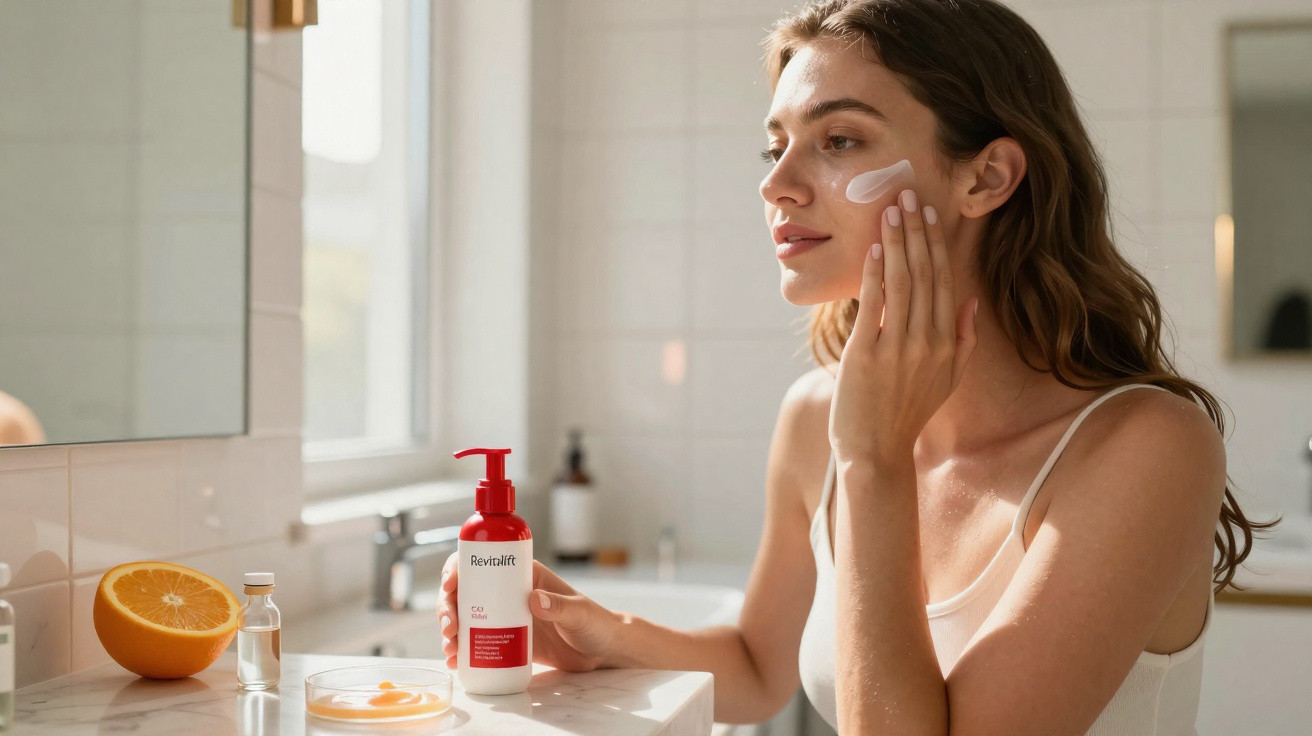
L’Oréal Paris has positioned its new anti-ageing product precisely for this purpose. The “Revitalift Laser Serum-Creme” is intended to soften wrinkles, diminish pigmentation marks and visibly brighten tired-looking skin - with the brand stating that results can be seen in as little as one week. Its formula takes its cue from the outcomes of professional laser treatments while aiming to deliver them through an uncomplicated at-home skincare routine.
The idea behind L’Oréal’s new serum
For several years, cosmetics brands have increasingly drawn on technologies inspired by dermatological practice. The aim is to achieve visible improvements without immediately turning to medical procedures. With Revitalift Laser Serum-Creme, L’Oréal Paris is following this same trend.
The product is primarily aimed at people looking to address three common signs of more mature skin:
- fine lines and more pronounced wrinkles
- unwanted pigmentation marks and an uneven complexion
- dull, tired-looking skin lacking radiance
The brand promises a visible triple effect: smoother skin, more even colour and greater luminosity - in a texture that sits between a serum and a cream.
The formula is designed to absorb quickly without leaving a greasy layer, while still providing enough nourishment to avoid making a skincare regime unnecessarily complicated.
Melasyl: the targeted ingredient for pigmentation marks
At the heart of the formula is Melasyl, a relatively new branded ingredient. According to L’Oréal, it was developed following around 18 years of laboratory research. Its purpose is to tackle hyperpigmentation before it becomes visible.
More specifically, Melasyl is intended to intervene in the process that causes dark marks. It aims to capture excess melanin production before it settles permanently in the skin and appears as a mark on its surface.
The ingredient therefore takes two approaches at once:
- prevent new pigmentation marks wherever possible
- gradually make existing marks look less noticeable
People who have already noticed differences between areas of their skin or sun-related discolouration may particularly benefit from this mechanism. Those prone to dark marks are increasingly seeking products that do more than brighten temporarily, instead targeting the process behind their formation.
Vitamin C and niacinamide: powerful partners for more glow
The serum does not rely on Melasyl alone. L’Oréal pairs the ingredient with two popular skincare favourites:
- Vitamin C: widely regarded as a potent antioxidant, it helps protect against free radicals, offers a mild brightening effect and can make dull skin appear fresher.
- Niacinamide (vitamin B3): supports a more even skin texture, helps with enlarged pores and may reduce the visibility of pigmentation irregularities.
Bringing these three ingredients together is intended to target several concerns in one step. Anyone who currently layers several serums may be able to use one product instead - at least, that is the principle behind the concept.
Anti-pigmentation, anti-wrinkle, more radiance: the active-ingredient blend addresses several skin needs at the same time.
Hybrid texture: where serum meets cream
One notable feature is the so-called serum-cream texture. It is designed to combine the high concentration of active ingredients associated with a serum with the nourishing feel of a day cream. L’Oréal says the product hydrates skin for up to 100 hours.
The texture is fairly light, spreads easily and sinks in quickly. This makes it suitable both for a morning routine beneath make-up and for use in the evening. Depending on skin type and the season, it can be applied on its own or before a richer cream.
Which skin types is the product intended for?
The manufacturer says the formula was developed for every skin type and skin tone. This matters particularly when dealing with pigmentation, as different skin types can be more or less prone to discolouration.
Those with very dry skin may prefer to use the serum as a base and follow with a richer moisturiser. For normal or slightly oily skin, it will probably be sufficient as the main moisturising step, especially during the day.
Can the serum genuinely replace laser treatment?
The product messaging clearly references the results of laser treatments, which naturally creates high expectations. Dermatological lasers, however, use concentrated energy in deeper layers of the skin and generally produce far stronger, sometimes more dramatic effects.
Lasers performed in a clinic remain considerably more intensive. A serum can mimic certain effects, but it cannot serve as a complete replacement.
L’Oréal itself makes clear that the product cannot replace professional treatment. It pursues similar aims - a more even complexion, refined skin texture and fewer fine lines - but seeks to achieve them more gradually and gently through skincare.
For people who do not want downtime, are concerned about side effects or simply cannot justify the cost of regular laser sessions, this type of serum can be an accessible alternative - although the results are realistically likely to be more modest.
When can the first results be expected?
According to the brand, the first effects on wrinkles and radiance can appear after seven days of consistent use. This does not mean overnight miracles, but rather visible yet still subtle improvements.
Skincare experience suggests that pigmentation marks in particular take noticeably longer to improve. Anyone dealing with discolouration should expect to wait several weeks before a more even-looking complexion becomes apparent.
A realistic timescale would be:
- after around 1 week: skin appears smoother and fresher
- after several weeks: initial changes in marks and uneven areas of the complexion
- after several months: more stable results, provided application remains consistent
How to apply Revitalift Laser Serum-Creme
Use follows standard skincare principles. L’Oréal advises applying the product to the face and neck in the morning and evening after cleansing.
| Step | What to do |
|---|---|
| 1 | Cleanse the face gently, then carefully pat it dry with a towel. |
| 2 | Put a small amount of the serum-cream onto your fingertips. |
| 3 | Work it in from the centre of the face outwards, including the neck. |
| 4 | In the morning, follow with sunscreen. |
Sunscreen is particularly vital when pigmentation is a concern: without UV protection, even the most effective active ingredients can do little to prevent new marks in the long term. Many dermatologists consider sun protection the true foundation of any anti-ageing routine.
Is the product suitable for sensitive skin?
L’Oréal has formulated the product to suit most skin types, including more sensitive skin. However, every person’s skin reacts differently. As with any new product, anyone prone to redness or irritation should first test it on a small area, such as the cheek or behind the ear.
If burning, pronounced dryness or itching occurs after a few days, it is sensible to pause use and, if uncertain, speak to a dermatologist. Skin often needs time to adjust, particularly when other active ingredients such as retinol or fruit acids are being used at the same time.
What “laser effect” really means in cosmetics
When cosmetics claim laser-like results, this usually refers to the visible goals resembling those of medical treatments: smoother skin, finer-looking pores and fewer marks. The intensity of the effect, however, remains well below that of a clinic procedure.
Put differently, skincare alone will not completely “erase” deep acne scars or very pronounced pigmentation issues. For many people, though, smaller wrinkles and mild marks are already enough to affect their confidence - and that is exactly where a product such as Revitalift Laser Serum-Creme comes in.
The wider trend is also noteworthy: more high-tech innovation in the bathroom, inspired by clinical methods but presented in textures designed for everyday use. It gives users access to a piece of professional active-ingredient research without having to leave the comfort of their own bathroom.









Comments
No comments yet. Be the first to comment!
Leave a Comment