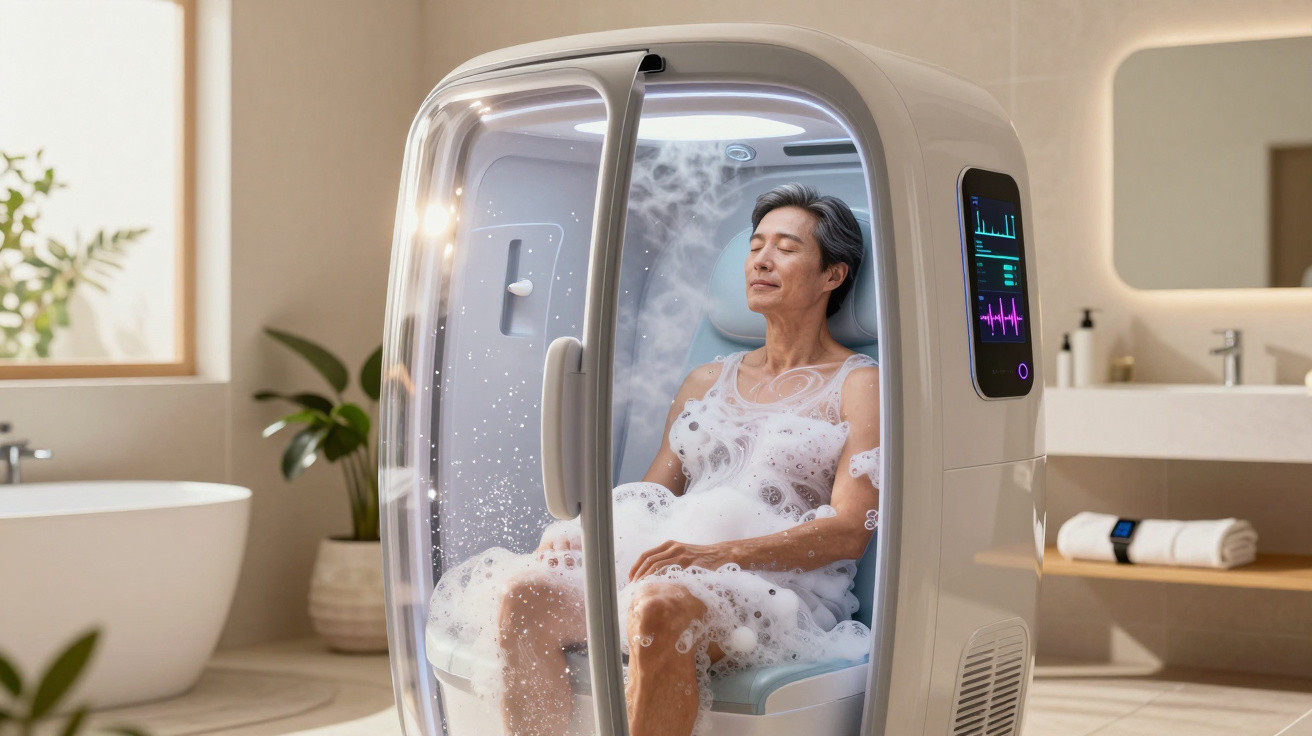
In Japan, an innovative high-tech capsule is attracting attention: instead of using a conventional shower, it envelops the entire body in foam, water and warm air in roughly 15 minutes – all controlled by artificial intelligence. It sounds like science fiction, yet it could fundamentally reshape everyday bathroom routines.
What is behind the “washing machine for people”?
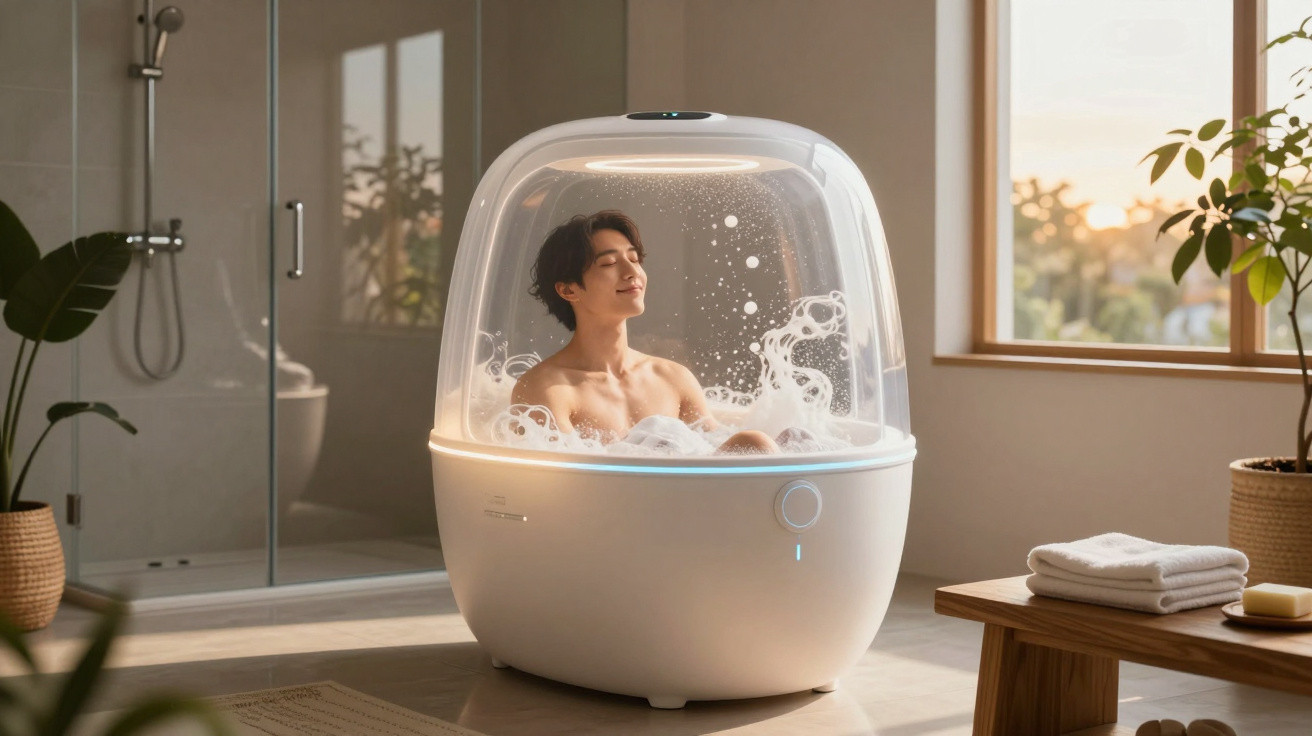
In Osaka, the company Science Co. has unveiled a device designed to wash the body in the way a washing machine cleans clothes – but far more gently. The capsule is called the “Mirai Ningen Sentakuki”, which translates loosely as “washing machine for the human of the future”.
The process appears straightforward: you sit down inside the enclosed capsule, recline, the door closes, and the machine takes over. Water, microbubbles, temperature, sound and lighting are all managed automatically and adjusted to the user’s condition.
“In around 15 minutes, the body is meant to be fully cleansed, dried and relaxed at the same time – with no scrubbing, no towel and no hairdryer.”
How the high-tech capsule works in detail
Microbubbles instead of flannels and shower gel
At the heart of the technology is a system that uses exceptionally fine microbubbles. These tiny air bubbles combine with water and are intended to penetrate deep into the surface of the skin. According to the manufacturer, they loosen dirt, sweat and sebum without requiring rubbing or brushing.
- Water partially fills the capsule
- Microbubbles cover the body evenly
- Impurities are gently released from the skin
- Friction is greatly reduced, helping to protect the skin
Comparable microbubble systems are already used in wellness baths and spa treatments, often described as microbubble baths or oxygen spas. What is new here is the consistent, fully automated approach within an enclosed cabin.
Sensors monitor body data in real time
During the washing cycle, biometric sensors continuously collect physical data. Typical readings include:
- Pulse or heart rate
- Breathing and breathing rhythm
- Body temperature
- Indirect indicators of stress
This information is sent to an AI system for immediate analysis. The software identifies whether a person is tense, tired or already deeply relaxed, then adapts the treatment within fractions of a second.
AI turns the shower into a mini spa
Using this data, the machine continually modifies several settings:
- Water temperature – slightly warmer for relaxation and cooler for stimulation
- Water-jet pressure – ranging from a gentle trickle to a more powerful spray
- Interior lighting – calming colours or brighter tones according to mood
- Soundscape – rainfall, waves or music to create a greater sense of calm
This brings hygiene and wellness together: anyone entering the capsule is intended to emerge not only clean, but more relaxed than before.
Three functions in one device: washing, relaxation and health data collection
Automated full-body washing alone would be unusual. The system becomes particularly interesting because it combines several areas that have traditionally been separate.
| Area | Role of the capsule |
|---|---|
| Body care | Cleanses the body with water and microbubbles, including drying |
| Relaxation | Heat, lighting, sounds and massage effects from water jets |
| Health check | Records pulse, stress level and other vital indicators |
Once washing is complete, an integrated drying system begins. Warm air flows through the capsule, much like in a tumble dryer, although delivered far more delicately. This removes the need for a towel and hairdryer, leaving the body dry when the door opens.
An old idea with new technology: a concept with a history
The vision of a human “washing machine” is not entirely new. An early prototype appeared at the Osaka World Expo in the 1970s. At that time, however, sufficiently capable sensors and artificial intelligence were not available to make the idea practical for everyday use.
Today, much better cameras, microphones, temperature sensors and AI algorithms are available. This allows the capsule to be tailored far more accurately to the individual, from people with sensitive skin to those seeking stress management after a long working day.
“The current version combines the nostalgia of an old dream of the future with modern sensors and AI – creating a new bathroom product category.”
Who could the body washing machine particularly appeal to?
It remains unclear whether such capsules will eventually be installed in ordinary homes or mainly find a place in hotels, care homes and luxury spas. What is clear is that several groups could benefit.
Older people and people with physical limitations
Anyone who can no longer bend, turn or stand for long periods easily often struggles with daily showering. A fully automated washing capsule could remove much of that pressure. Step into the capsule, sit down, press start – and everything else happens automatically.
Care settings in particular regularly look for solutions that ease the burden on both residents and care staff. A device that combines washing, vital-sign monitoring and an element of wellness could quickly attract interest there.
People under time pressure and technology enthusiasts
The concept may also appeal to busy city dwellers for whom every minute matters in the morning: clean, dry and given a brief wellness boost in 15 minutes. Its blend of gadget, bathroom upgrade and health feature also fits the trend for smart homes and “smart living”.
Showering less often – but more purposefully and efficiently?
The development of systems like this comes at a time when more people are questioning their showering habits. Many are cutting back on the number of daily showers for reasons including:
- Skin tolerance and protecting the skin’s natural barrier
- Water and energy use
- Rising hot-water costs
- Concerns about dry or irritated skin caused by washing too often
A precisely controlled capsule could help resolve this balance: fewer conventional showers, but targeted and especially thorough yet gentle cleansing sessions, in which water and energy use are carefully regulated.
Opportunities and unanswered questions around this new hygiene technology
Alongside enthusiasm, the combination of body cleansing, health data and artificial intelligence raises questions. Data protection and data security are central concerns: where does the collected health information go? Who is allowed to access it? Is it stored locally or sent to the cloud?
There is also a psychological dimension. Not everyone will feel comfortable in an enclosed capsule, even if the stay lasts only 15 minutes. People with claustrophobia may prefer to continue showering conventionally, even if the technology itself is persuasive.
In addition, dermatologists will look closely at how effectively microbubbles clean over the long term without excessively disrupting the skin’s natural protective barrier. Manufacturers will need to demonstrate that the combination of water, air and any additives is mild enough, including for sensitive or already damaged skin.
How such a machine could change daily life in the bathroom
If the washing capsule becomes established, it could transform not only daily hygiene but bathroom design as a whole. Rather than a large shower enclosure and several shelves full of shampoo and shower gel, the room could contain a single, technically complex unit.
Subscription models similar to those used for smartphones are conceivable: the capsule could be supplied with a maintenance package, software updates and regularly added programmes, ranging from “quick clean after sport” to “sleep relaxation mode in the evening”.
The technology could also be combined with other monitoring systems: blood-pressure sensors, scales and perhaps even skin scanners to check suspicious areas. The bathroom would then become a small health hub extending far beyond normal showering.
The trend indicates where things may be heading: away from simple body washing and towards a brief, data-driven health and wellbeing ritual. Whether conventional showering will be displaced entirely remains open – but the “washing machine for people” is likely to accelerate the debate about our everyday washing habits considerably.
Comments
No comments yet. Be the first to comment!
Leave a Comment