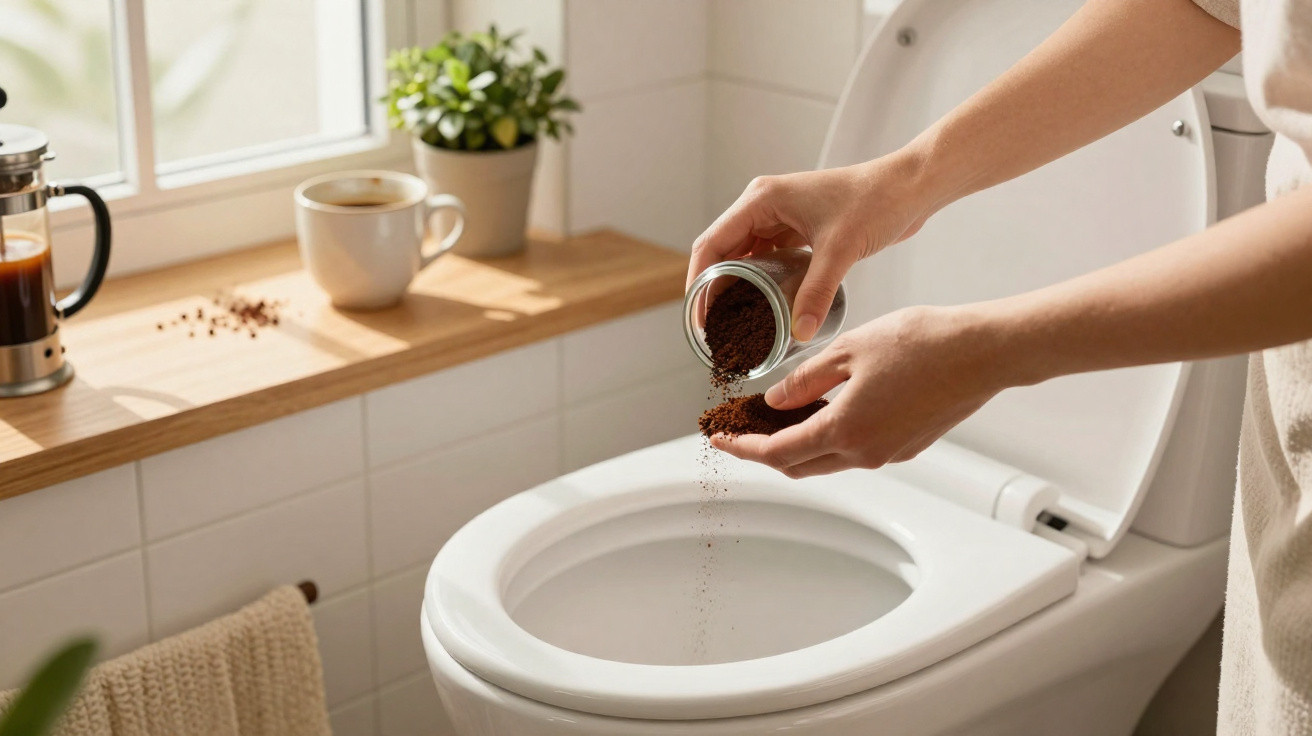
Breakfast is over and the coffee grounds go straight into the bin. Yet this seemingly useless waste has a quality few people know about: it is one of the most effective natural deodorisers available for the bathroom. Putting coffee grounds in the toilet before bed or before leaving home is a straightforward, no-cost trick that uses no chemicals. It neutralises smells, helps prevent build-up and keeps the room fresher.
Why do coffee grounds work as a natural bathroom deodoriser?
Coffee grounds have a porous internal structure that works as a natural odour filter. The material absorbs gases rising through drainage pipes, particularly when the toilet has not been used for several hours. This is why the method is especially useful before travelling or spending a weekend away, when the bathroom remains closed and smells can become stronger without flushing to disperse the built-up gases.
Unlike manufactured toilet blocks, which merely cover odours with artificial fragrances, grounds act on the compounds behind the unpleasant smell, trapping them in their porous structure. Unlike chemical cleaners, they are fully biodegradable: they do not harm pipework, pollute water or pose a risk to households with children, older people or pets.
- Genuinely neutralises odours: it acts directly on gases coming up through the pipes, absorbing the compounds that cause bad smells rather than covering them with an artificial fragrance.
- Helps prevent build-up: the lightly granular texture of the grounds dislodges small residues on the inside walls of the toilet while it remains in contact with the surface.
- 100% biodegradable and safe: it does not damage pipes or contaminate water, and is safer than industrial chemical products in homes with children and pets.
- No cost: it makes use of a waste product that would usually be discarded, replacing toilet blocks and cleaning products that need to be bought regularly.
- Ideal before travelling: adding grounds to the toilet before leaving home for several days helps avoid the stale smell that often develops when the bathroom is left unused for a long period.
How to use coffee grounds in the toilet correctly
The process is easy, but contact time makes all the difference. After making coffee as usual, keep the grounds rather than throwing them away. Allow them to cool and drain off excess liquid, so you are not adding too much water to the toilet. Tip the grounds directly into the bowl, spreading them across the sides. The crucial step is not to flush straight away: leave them to work for a few hours or, preferably, overnight.
The right amount is one to two tablespoons per use. More than this is not needed to achieve the intended effect. Frequent use of large quantities may contribute to residue build-up in older plumbing systems with low water pressure. With the correct amount and a good flush, the grounds pass through the pipework without difficulty.
Can coffee damage plumbing or block the drain?
This is the most common question from people hearing about the method for the first time. When used sparingly and properly, coffee grounds present no genuine risk to household plumbing. They are an organic, finely granulated material that disperses easily in flush water when used in normal amounts. The material is far lighter and more soluble than, for example, kitchen roll, which is often flushed without attracting the same concern.
Other worthwhile household uses for coffee grounds
Coffee grounds are among the most versatile household waste products.
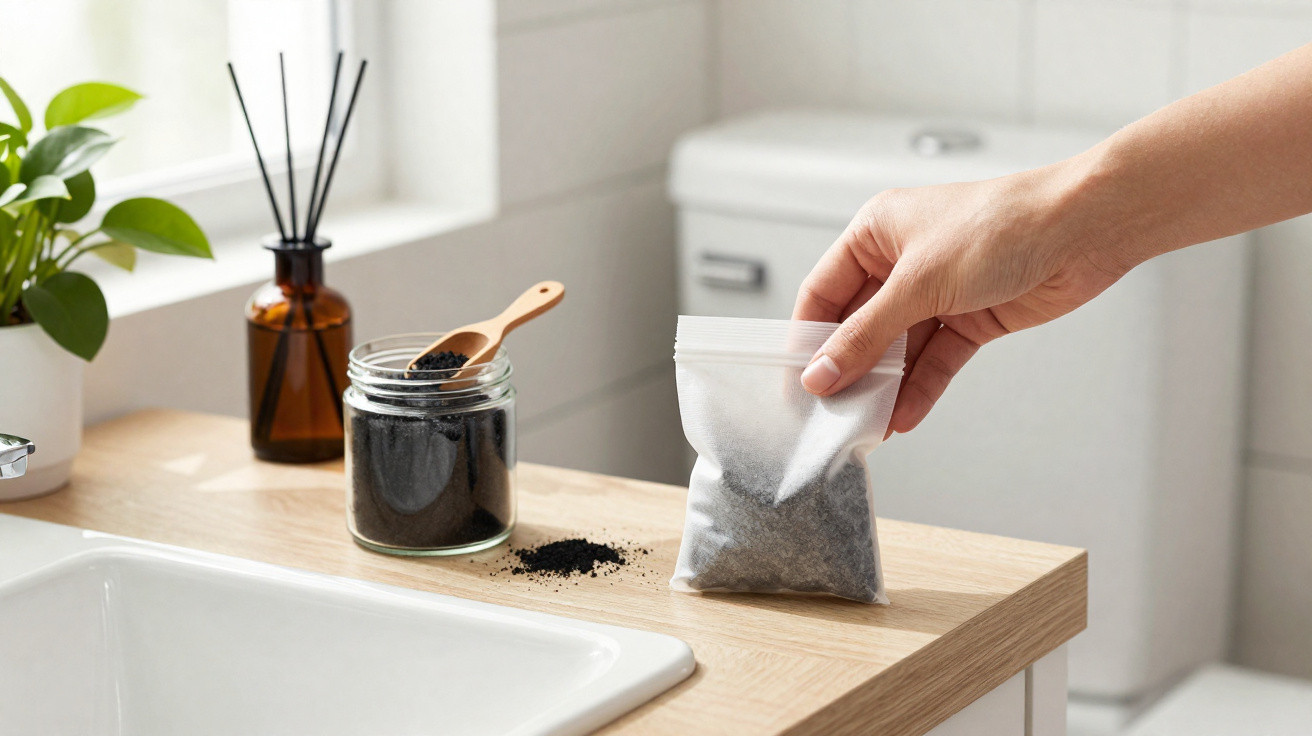
In the fridge, a cup of dry grounds absorbs strong food odours from items such as cheese, fish and leftovers as effectively as bicarbonate of soda. Rubbing the grounds between your palms removes lingering smells of garlic, onion and fish far more effectively than ordinary soap. In bins and shoe cupboards, a small bag of dry grounds neutralises trapped odours without the need for a spray deodoriser.
In the garden, mixing grounds into the soil of plants that prefer acidic conditions, such as hydrangeas, roses and blueberries, provides a nitrogen-rich natural fertiliser. In the kitchen, their abrasive texture helps scrub pans and frying pans with stubborn grease deposits. In short, before putting coffee grounds in the bin, consider which of these uses they could serve first.
Anyone who drinks coffee every day has daily access to this resource without buying anything extra. The key is to give a different purpose to a waste product that most homes generate automatically and usually discard without using it for anything else first.
When the trick works best - and when it does not solve the problem
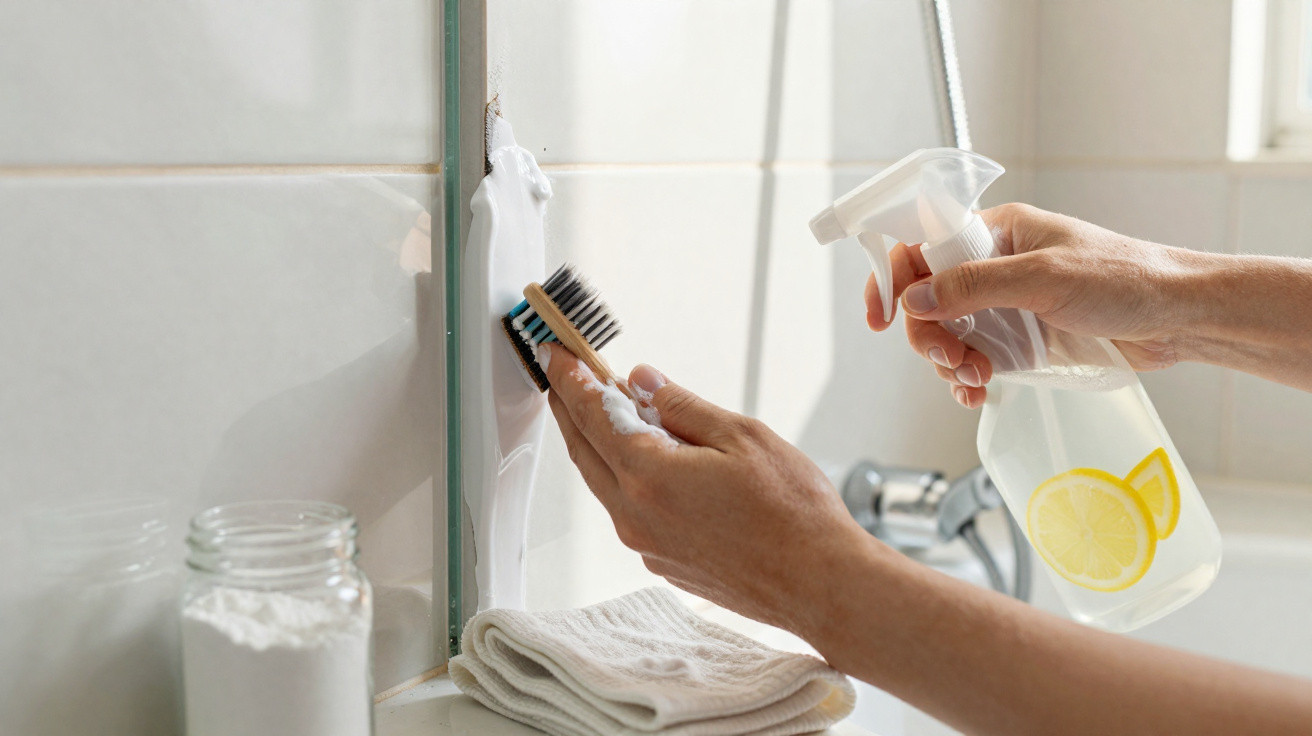
Coffee grounds work very well for neutralising sewer smells rising through pipes and for keeping the bathroom fresh during periods of infrequent use. They also help prevent the early build-up of deposits on the toilet bowl walls. What they do not solve is deep cleaning when the bowl already has established dark stains, hardened limescale or old deposits. In these cases, acidic products such as concentrated white vinegar or dedicated limescale removers are more suitable.
The grounds are a preventive maintenance and odour-control solution, rather than a complete replacement for conventional cleaning with a brush and an appropriate product. Used as part of a bathroom-care routine, they complement conventional products well and reduce how often you need to rely on them.
How long do coffee grounds need to stay in the toilet to work?
The recommended minimum is two to three hours, but the most effective result comes when the grounds stay in contact with the toilet bowl walls all night. For this reason, the best time to apply them is before bed: the grounds work for the following six to eight hours without any intervention, and you simply flush as normal in the morning. One application per week, carried out consistently, is enough to notice a difference in bathroom freshness compared with the period before using this method.
This is the kind of small tip that changes a daily habit for good. Share it with anyone who drinks coffee every day and still does not know what to do with the leftover grounds.




Comments
No comments yet. Be the first to comment!
Leave a Comment