On a still Tuesday evening, as the sun disappears beyond the roofs and traffic sounds soften, certain gardens appear to breathe out. The flamboyant tulips have shed their petals, gaudy annuals are beginning to fade, and the slower plants, almost invisible, are simply… keeping everything together.
I noticed this in a neighbour’s compact urban garden. While spring’s speedy stars arrived and disappeared, a cluster of ferns, a dwarf pine and a low cushion of thyme remained in place. Bees continued to call. The ground stayed cool. Nothing seemed under pressure.
It seemed less like garden decoration than a small world capable of governing itself.
A subtle shift is taking place in how gardeners select their plants.
Why slow-growing plants are suddenly back in fashion
For years, garden centres promoted rapid transformation: immediate colour, instant privacy screens and dramatic “before and after” images for social media. Fast growth sells. But increasing numbers of gardeners are bypassing displays of turbocharged annuals and stopping instead at modest slow-growing plants, with plain labels and tiny leaves.
They have recognised something that fast plants cannot imitate: stability.
Think of shrubs that grow only a few centimetres annually, perennials requiring two seasons before they make much impact, and dwarf conifers that appear identical from one month to the next. They make no promise of spectacle. Instead, they create a sense of calm - precisely what many exhausted gardens lack.
Consider Laura, who took on an unruly suburban plot near the edge of town. Its previous owner had favoured quick-growing “fillers”: bamboo spreading everywhere, invasive groundcovers and trays of inexpensive bedding plants. Each season brought a frantic cycle of planting, cutting back and pulling things out. Beneath all that activity, the soil had become compacted, dry and nearly devoid of life.
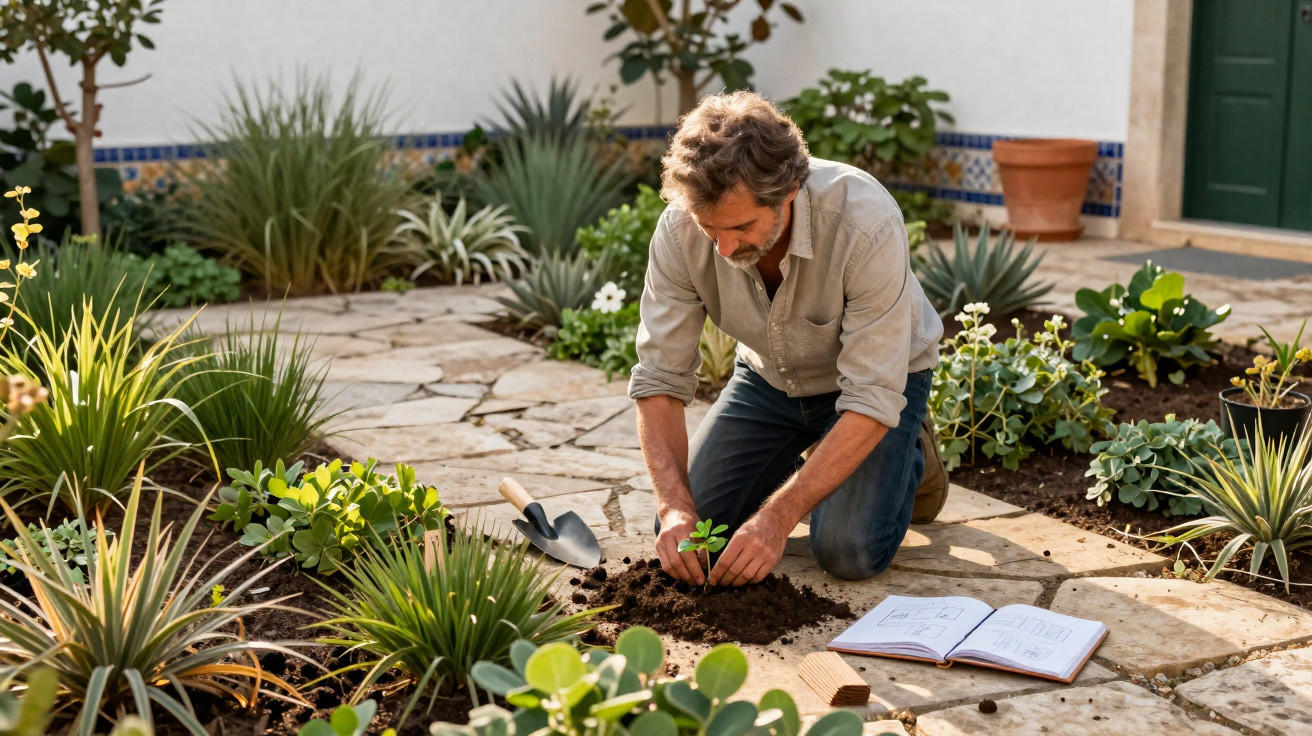
Two years ago, she took a different approach. The instant jungle went, replaced by slow-growing plants: a Japanese maple, clump-forming sedges, hellebores, several dwarf yews, thyme and creeping thyme planted between the paving stones.
The first year was rather disappointing. In the second, pollinators lingered for longer, weed growth declined and the watering can was needed less often. Rather than acting like a rollercoaster, the garden began to resemble a woodland edge.
This is simply small-scale ecology at work. Fast-growing plants commonly take up nutrients rapidly, produce heavy shade and die back dramatically, leaving exposed, disrupted ground. That repeated boom-and-bust pattern puts strain on the miniature community of fungi, insects and microbes that keeps a garden functioning.
Slow growers act in another way. Their roots establish deeply and gradually, they secure the soil, add organic matter bit by bit and avoid extreme swings between “overgrown” and “bare”. Their consistent growth allows mycorrhizal fungi to link roots, beneficial insects to establish permanent shelter, and mosses and lichens to gradually appear.
Even the smallest garden ecosystems depend on patience rather than speed.
How to actually use slow-growing plants to stabilize your garden
Begin by viewing slow-growing plants as the framework of your garden rather than its finishing touches. Walk around the space and picture it without all the quick-growing additions: annual geraniums, salvias grown for one summer and towering sunflowers. The plants that remain year after year should form your slow, dependable core.
Select 5–10 slow growers that can remain where they are for a minimum of a decade. Consider dwarf conifers, compact native shrubs and durable perennials such as peonies, hostas, hellebores or ornamental grasses that form clumps rather than spread. Create an evergreen backbone with low box, or a blight-resistant substitute, alongside small hollies, heaths and heathers.
Position them in places where disorder tends to begin: along bed edges, on eroding slopes and in spaces that weeds reclaim every spring. The aim is straightforward: reduce bare ground and introduce more reliable, quiet anchors.
A common assumption is that slow-growing means “boring”, or that nothing will happen. Usually, this comes from expecting every part of a garden to perform like an Instagram reel: instant colour, continuous flowering and no quiet periods.
Plants do not operate that way, and neither does soil.
A well-balanced garden relies on layers: fast annuals for flashes of colour, medium-growing perennials for rhythm, and slow growers as the deep bass line beneath them. Many new gardeners reverse this balance, filling the garden with dramatic plants before wondering why it all feels delicate and demanding.
In truth, no one deadheads, feeds and replants every day. A garden dominated by high-energy plants quietly penalises you for having a life beyond it. Slow-growing anchors are more forgiving of a busy week, a summer break or a missed watering day.
To understand the change properly, it helps to hear from gardeners who have made it.
“Once I stopped chasing the ‘plant of the year’ and started planting things that barely moved, the whole mood of my garden changed,” says Marc, a self-taught gardener from Brighton. “My dwarf pines and slow azaleas just sit there, doing their thing. Birds nest in them. Spiders weave between the branches. I realized I didn’t want a plant show. I wanted a place that could hold itself together without me.”
Some slow-growing choices also offer more than expected when they are layered carefully:
- Low, creeping thyme between paving stones: slow-growing, fragrant, pollinator-friendly and protective of the soil.
- Dwarf conifers or pines: lasting structure, bird shelter and winter interest.
- Long-lived perennials such as peonies, hostas and hellebores: deep roots, dependable reappearance and little disturbance.
- Clumping grasses, including fescues or hakonechloa: help hold slopes together and provide wildlife cover.
- Modestly growing native shrubs: serviceberries, viburnums and small dogwoods that feed birds without becoming overwhelming.
Rethinking what a “successful” garden looks like
A change occurs when the question becomes not, “How quickly will this fill the gap?”, but “Will this still belong here in ten years?” It alters the feel of the garden, as well as the gardener’s outlook.
Most of us know the point at which a garden becomes another never-ending list of jobs: prune this, remove that, replant those. Slow-growing plants quietly let you step away from that routine. They will not fix every issue, but they remove the feeling that your garden will unravel if you ignore it for a week.
A garden centred on slower plants does not burst into one season of drama. It develops depth. You start to notice moss across the bark, a bird returning to the same thick shrub, and the way the soil beneath an unchanging fern remains cool during August heat.
| Key point | Detail | Value for the reader |
|---|---|---|
| Use slow-growers as structure | Choose long-lived shrubs, dwarf conifers and perennial clumps as the garden’s permanent “bones” | Less redesigning, fewer empty spaces and a garden that feels stable from year to year |
| Reduce soil disturbance | Carry out fewer major dig-and-replace jobs, using more plants that remain in place for years | Healthier microbes, improved moisture retention and simpler maintenance |
| Blend slow and fast plants | Pair slow anchors with areas of seasonal colour from annuals and bulbs | Beauty now and resilience later, without continual reworking |















Comments
No comments yet. Be the first to comment!
Leave a Comment