The solution that many people overlook is directly beneath the tap.
In homes across the UK, a less aggressive approach is gradually replacing harsh cleaning products. Rather than relying on bleach or vigorous scrubbing, it uses heat and dwell time to do the work.
The quiet solution: dry steam rather than detergents
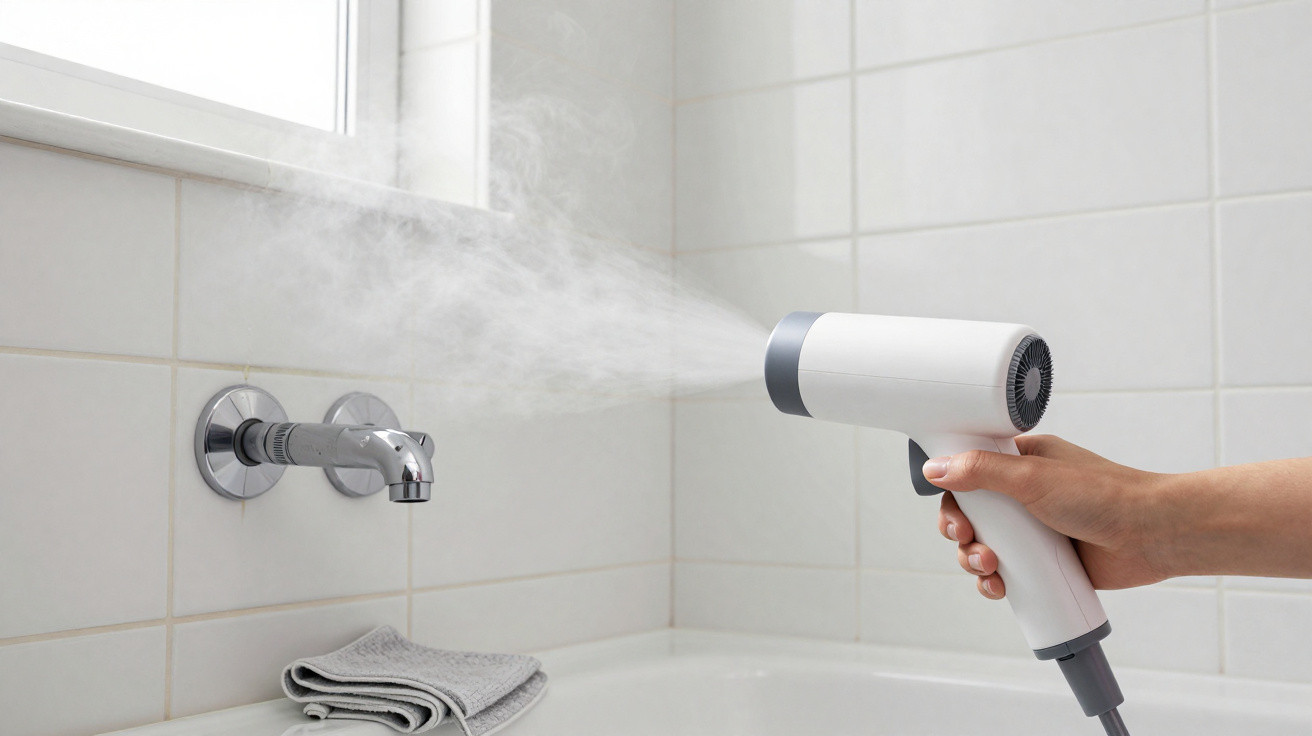
A household steam cleaner forces superheated vapour, at around 100–120 °C, into the tiny gaps in cement grout and along silicone seals. This heat disrupts the slimy biofilm that supports mould while loosening ingrained dirt. A microfibre cloth can then remove the residue. There is no sharp chemical smell, crumbling grout or collection of bottles lining the bathroom ledge.
Heat at 100–120 °C penetrates grout pores, collapses biofilms and lifts stains without chlorine fumes or abrasive wear.
The process is simple. Open a window or switch on the extractor fan. Attach a narrow nozzle, then clean gradually in sections of 10–15 cm, holding it several centimetres from the surface. Allow five to ten seconds on each area to loosen the deposits. Immediately wipe away both moisture and debris using a dry microfibre cloth. Go over especially stubborn lines once more. Move the nozzle continuously over silicone so that no single point becomes too hot.
Why it tackles biology rather than simply improving colour
What looks black is seldom just “dirt”. It is usually a combination of mould colonies, mineral build-up and soap residue. Chlorine bleach can rapidly fade the pigment, but many spores remain lodged inside the pores. Steam instead targets the underlying structure. Heat denatures proteins, while short bursts of pressurised moisture break apart the protective film. Mould is slower to return because its environment has been disrupted rather than merely concealed.
Why bathrooms encourage persistent mould
A shower can push humidity far above 70%. Warm air then reaches cold corners and turns to condensation. Ageing grout can form micro-cracks that retain water, while silicone gathers oils and dust until it becomes sticky. In many flats and houses built after the 1970s, noisy or ineffective extractor fans are used less often, leaving damp air hanging around even when a window is slightly open. When ventilation is effective and surfaces dry quickly, mould has less material to feed on and fewer places to establish itself.
The real enemy is trapped humidity after bathing, not a moral failing or a lack of elbow grease.
Bleach, vinegar and elbow grease: the benefits and limitations
Chemical shortcuts can seem gratifying. They create a “clean” smell and deliver an immediate visual result. However, the effect does not last if the bathroom remains humid. Mild cupboard acids can be useful for limescale, although they have limited impact on established biofilms unless paired with substantial scrubbing. Dry steam cleaning replaces chemistry with heat, physics and contact time. Here is a straightforward comparison.
| Method | How it works | Upside | Downside | Typical cost |
|---|---|---|---|---|
| Bleach/oxidisers | Oxidises surface pigments | Fast whitening | Fumes, material fatigue, quick return if damp | £2–£5 per bottle |
| Vinegar/bicarbonate | Breaks down scale, provides mild abrasion | Inexpensive, convenient | Ineffective on biofilms without considerable effort | £1–£3 |
| Abrasive scrubbing | Removes material mechanically | Instant visual improvement | May damage grout, physically tiring | £3–£10 for pads/brushes |
| Dry steam cleaning | Heat breaks down biofilm and loosens residue | Deep clean, low odour, reusable tool | Initial purchase cost, silicone needs care | £50–£120 one-off |
Health and cost considerations
Indoor mould can worsen asthma, rhinitis and skin irritation. Regular use of chlorine in a compact shower room can also increase respiratory strain. Steam lowers the fungal load without filling the air with irritating vapours. It is easier to breathe while cleaning, and the room clears more quickly afterwards.
Cost is relevant as well. A basic steam cleaner is typically priced at £50–£120, while many libraries and tool banks now offer them on loan. Electricity consumption is relatively low: a 1,500 W machine used for 10 minutes consumes around 0.25 kWh. At 28p/kWh, this works out at approximately 7p per session. It also means throwing away fewer empty containers and avoiding specialist gels, pastes and cleaning wands.
How to dry steam clean grout step by step
- Begin by ventilating the room. Open the window or run the fan at full power for several minutes.
- Attach a precision nozzle. Do not use stiff nylon brushes on older grout.
- Keep the nozzle 2–4 cm from the joint, moving slowly for 5–10 seconds over each 10 cm section.
- Wipe straight away with a dry microfibre cloth to lift off loosened material.
- After a short pause, make one further pass over the darkest areas.
- Dry horizontal grout lines with a towel to prevent water from pooling.
When a concealed problem may be the cause
Certain marks will return faster than any cleaning method can handle. A lingering musty odour, patches spreading beyond the grout, or bubbling paint may indicate a leak, damaged sealant or a cracked shower tray. In those cases, assess wall moisture, inspect traps and waste pipes, and examine the seals. Addressing the underlying cause is more effective than repeatedly performing cosmetic cleaning.
Preventing its return: controlling moisture is key
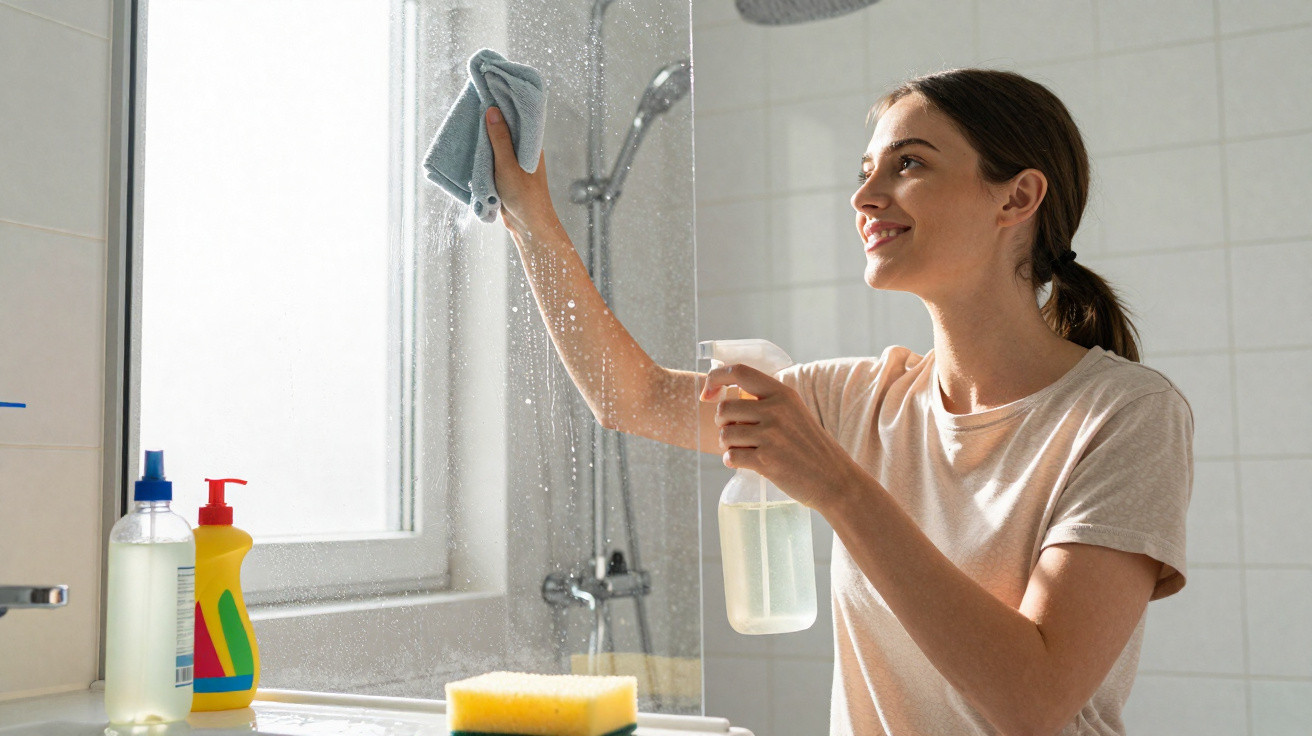
The period immediately after showering determines what happens to the grout. The aim is to bring humidity back down to normal as soon as possible. Leave the extractor running for 20–30 minutes and keep the door slightly open. Use a squeegee on glass and tiles to push water towards the drain, then wipe joints where water collects along horizontal surfaces. During winter, lightly warming the room beforehand can reduce condensation on cold corners. If the extractor fan is weak or there is no fan, using a small plug-in dehumidifier for an hour can make a substantial difference.
The condition of the surfaces also matters. Worn cement grout readily absorbs water, so remove a few millimetres and re-grout it to restore its density. Replace silicone that has become porous or deeply stained. This is equally relevant to walk-in showers and traditional shower trays. New joints dry more rapidly and are easier to clean.
Quick routine for crisp grout throughout winter
- Ventilate the bathroom and warm it slightly when the room is cold.
- Use dry steam cleaning in brief, slow passes, wiping immediately with a microfibre cloth.
- After a short pause, repeat the treatment once on problem areas.
- Following every shower, use a squeegee and keep the fan running for 20–30 minutes.
- When dark lines reappear quickly, look for trapped moisture and consider re-grouting.
Extra advice and minor precautions
Try steam first on an inconspicuous section of silicone or natural stone. Certain marbles and limestones do not respond well to heat and rapid moisture changes. Do not steam cracked grout for extended periods; seal or re-grout it beforehand to prevent water travelling behind the tiles. Keep your hands away from the steam jet, and work in short intervals to avoid drips caused by condensation.
For an uncomplicated maintenance plan, dry steam clean grout once a month and spend two minutes using a squeegee after showers. Add a weekly microfibre wipe along low, horizontal joints. If you look after a rental property or a family bathroom, install a humidity-sensing fan and set it to continue running until humidity falls below 60%. The initial outlay is repaid through fewer call-outs, fewer cleaning products and a bathroom that genuinely smells of nothing at all.









Comments
No comments yet. Be the first to comment!
Leave a Comment