You may imagine a bathtub clean involving a sponge or rigid brush and enough scrubbing to make your shoulders burn. It is an easy picture to believe, but it is not how the professionals do it. People who clean baths all day seldom rely on either tool. Instead, they work more quickly, achieve a cleaner result and treat the tub’s surface more gently. Their real method comes from an entirely different set of tools.
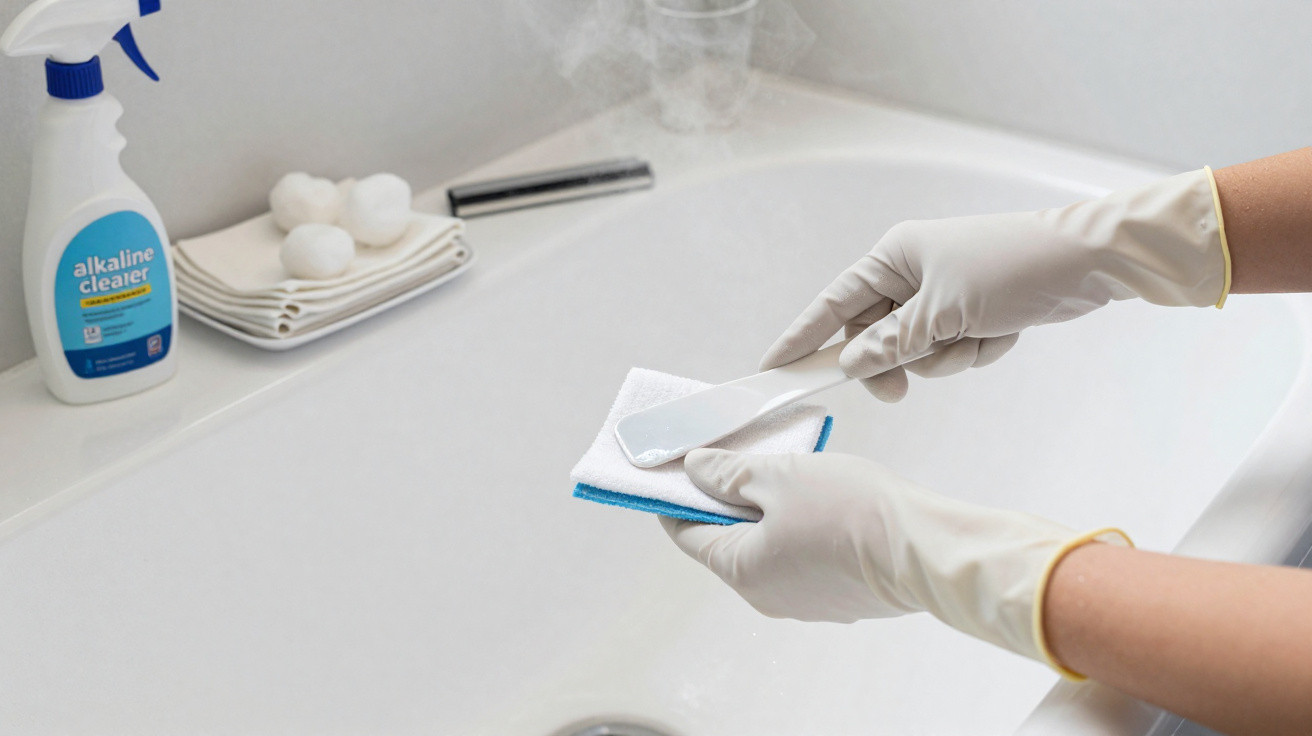
The flat was silent apart from the rush of the extractor fan and the faint hiss of hot water heating the porcelain. The cleaner worked with the assurance of somebody who had tackled the same problem countless times. There was no sponge hanging from the cleaning caddy and no brush ready to batter her knuckles. She sprayed an alkaline cleaner in a slow, consistent sweep, then started a timer with her thumb. As the product sat, she cleaned the mirrors and folded the towels. When she returned, she used a flat microfibre pad on a short handle and a plastic scraper no bigger than a bank card. Within minutes, the bathtub changed from dull to glossy. No fuss, no noise, no struggle-only a steady routine that seemed almost physical. No sponge. No brush.
Why cleaning pros abandon the sponge and brush
Professional cleaners do not get results through force. Their advantage comes from contact time, gentle equipment and efficient rinsing. The point is not vigorous scrubbing; it is allowing the cleaning product to loosen grime until it can slide away. Their movements can look calm, even unhurried, yet they leave the bathtub spotless.
They make the cleaner handle the difficult work. Soap scum contains soap, body oils and minerals. That combination clings tightly to enamel and acrylic surfaces. A powerful but tub-safe alkaline cleaner releases that bond far more effectively than elbow grease. Once the residue has softened, a microfibre pad touches more of the surface than brush bristles can, allowing it to lift more grime in one simple pass.
There is a hygiene benefit too. Sponges can retain bacteria and start smelling like a wet dog by Thursday. Brushes can spray water and grit across grout lines and onto your clothes. Microfibre cloths and pads can be hot-washed and reused hundreds of times. A plastic razor or paint scraper can remove a stubborn bathtub ring without scratching the finish, before slipping into a pocket until the next task. The approach is faster, quieter and far less punishing on your shoulders.
What cleaning pros use for bathtubs and how they use it
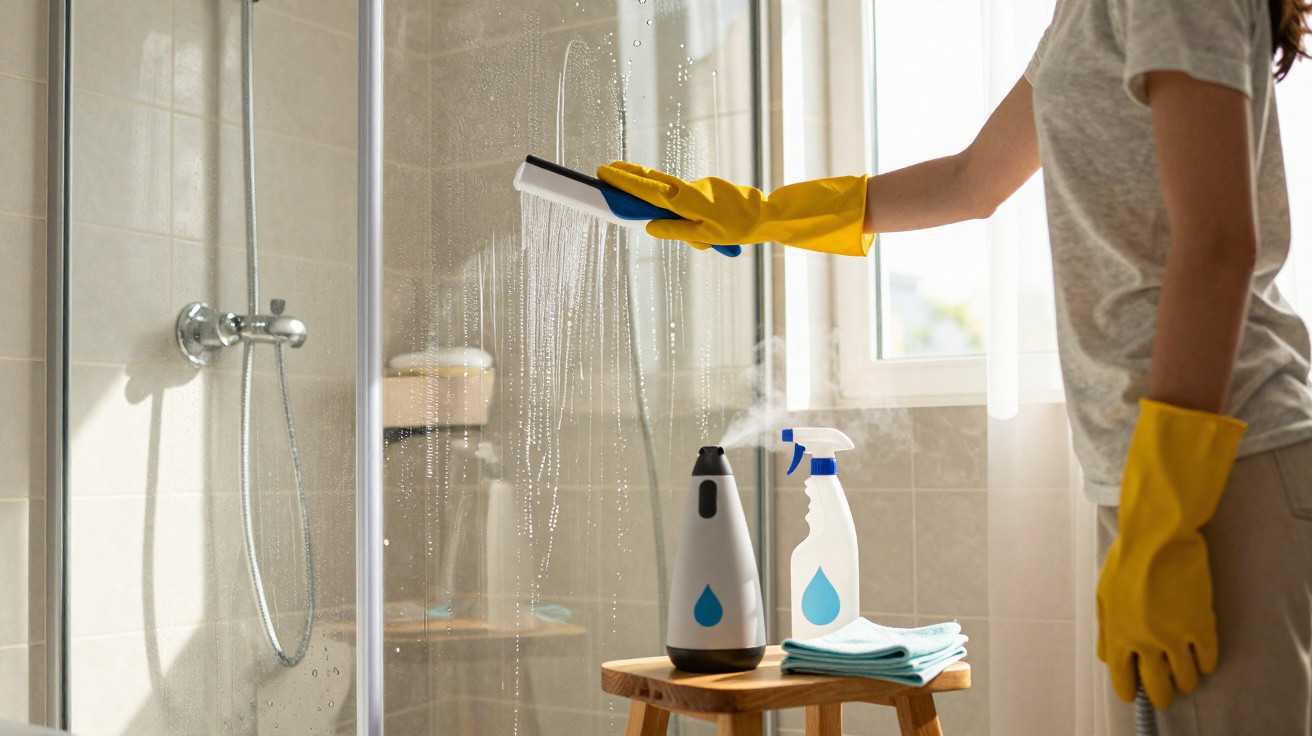
Begin with warmth. Run the shower on hot for one minute to heat the bathtub and loosen the surface film. Apply an even mist of alkaline bathroom cleaner, aiming for a thin, glossy layer rather than pools of product. Set a timer for 5–7 minutes. While it works, clean the vanity or empty the bin. Then use a flat microfibre pad, either handheld or attached to a short handle, in long overlapping strokes from top to bottom. Run a plastic scraper around the bathtub ring and drain, where deposits tend to cling. Rinse thoroughly with a handheld shower or jug of warm water, then use a squeegee and polish with a dry towel.
Everyone knows the feeling when a bathtub ring refuses to shift and irritation starts building. Stop for a moment. Apply another light spray and leave it for one more minute. For mould-stained sealant, place cotton wool balls or folded kitchen paper soaked in hydrogen peroxide or diluted bleach gel along the affected line. Leave this for 10–15 minutes, then rinse. Keep the room ventilated and wear gloves. Realistically, nobody does this daily. Even professional cleaners focus on the worst areas first before continuing with the rest of the job.
Small mistakes can have expensive consequences. Scrubbing before the product has had time to work merely buffs the top layer of residue. Vinegar is often treated as a universal solution, but it can damage natural stone and does little against waxy soap binders. Dry scouring powders may dull acrylic surfaces. Bleach can make a surface appear whiter, but it does not remove dirt on its own; never combine it with acidic or ammonia-based products. Use mild chemistry, brief contact times and smooth tools, and the bathtub will release its grime without a battle.
“I stopped carrying scrub brushes years ago,” says Keisha, a residential pro who cleans 30 bathrooms a week. “I spray, I wait, I glide a microfiber pad, then I rinse hot and squeegee. My back is happier, my tubs are shinier, and I don’t go through a pack of smelly sponges every job.”
- Microfibre flat pad or cloth: maximum contact with minimal effort.
- Alkaline bathroom cleaner, or washing-up liquid mixed with warm water for everyday film.
- Plastic razor or paint scraper for bathtub rings and mineral specks.
- Cotton wool balls with hydrogen peroxide or bleach gel for mouldy sealant stains.
- Handheld shower or jug for a complete rinse, followed by a squeegee.
- Optional: a small steam cleaner for grout and awkward corners, used on a low setting and kept moving.
- Essential safety: wear gloves, open a window or run the fan, never mix bleach with acids or ammonia, and test a small area first.
The reasoning behind “no sponge, no brush”
Soap scum is difficult to remove because it is a mixed type of dirt: minerals that resist alkaline conditions combined with oily residue. Warm water and alkaline cleaners loosen the oils, while dwell time breaks the bond so a flat pad can carry the grime away. Brush bristles only make contact with high and low points. Microfibre pads capture the entire surface in a single pass. The bathtub does not need greater force; it needs more patience.
The material of the tub is important. Acrylic can scratch when sand or abrasive powders meet stiff bristles. Enamel-coated steel is more robust, but it still looks best after gentle cleaning and a proper rinse. Stainless-steel fittings do not tolerate harsh acids, while natural stone should never be cleaned with vinegar. A plastic scraper lifts residue without cutting into the finish, and a squeegee prevents fresh water marks from forming. Fewer tools produce a better result.
The speed lies in the order: heat, spray, wait, glide, rinse, squeegee, buff. This sequence frees up both your hands and your attention. You are mainly moving water rather than fighting dirt. Your shoulders remain relaxed, while the timer keeps track of the waiting. Once finished, the bathroom will not smell like a public swimming pool.
Professional bathtub cleaning moves to use at home
Use a two-pass routine. On the first pass, warm the bathtub, apply a light coat of cleaner and leave it while you tidy the counter. On the second, glide a microfibre pad across the tub walls and base, lightly scrape the ring, then rinse and squeegee. For metal marks or grey streaks, apply a small amount of an oxalic-acid cleaner such as Bar Keepers Friend to a damp cloth for spot treatment, then rinse. Keep the pad flat against the surface; imagine skating rather than scrubbing.
For the stubborn line where water regularly sits, treat only that area. Spray the ring again, cover it with strips of damp kitchen paper like a compress and leave it for five minutes. Return with the plastic scraper held at a shallow angle and watch the residue lift away. If the sealant looks shadowed, press peroxide-soaked cotton wool along the line, wait, then rinse and dry. Work in small areas instead of applying more force. Your hands-and the finish-will benefit.
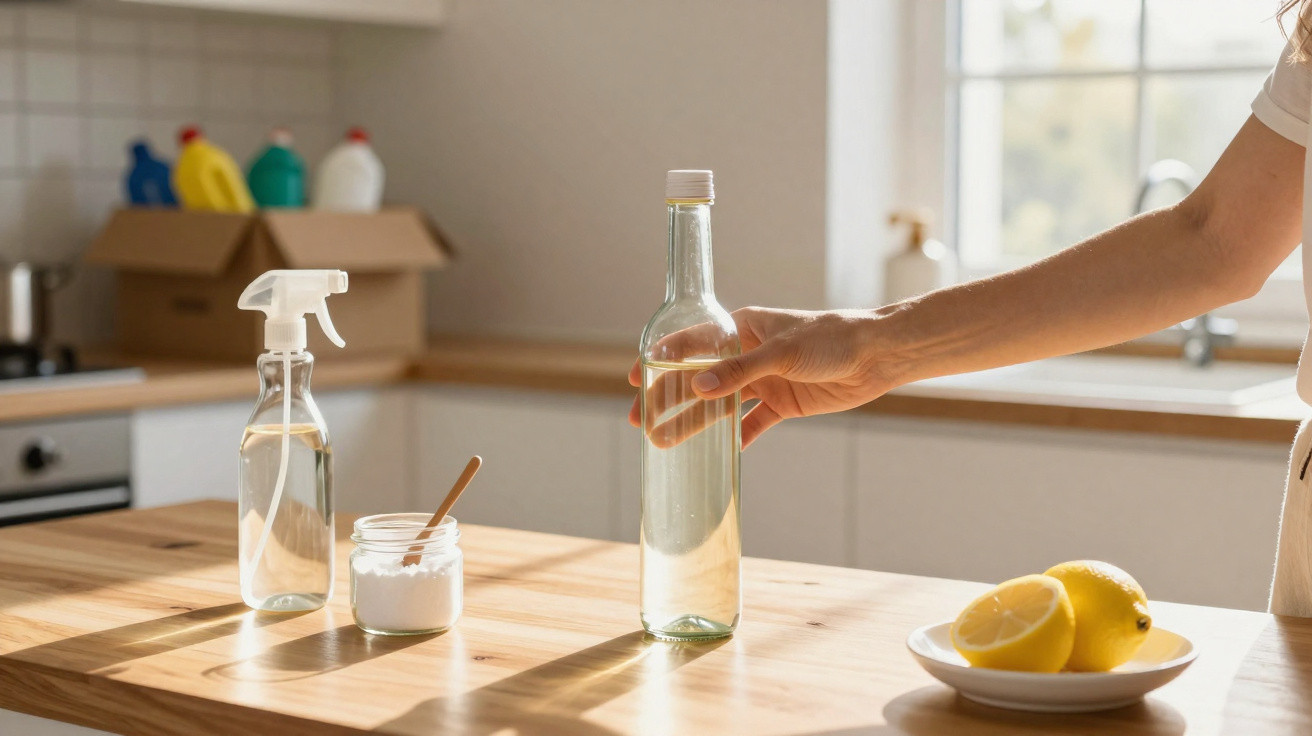
Conserve your energy by avoiding the usual traps. Leaving a cleaner to work for ten minutes is more effective than scrubbing for ten minutes. Hot water before spraying accelerates the process. If you prefer DIY mixtures, one teaspoon of washing-up liquid in warm water creates a quick everyday cleaner. Do not use vinegar on stone or damaged seals. Never allow products to dry on the surface, and always maintain ventilation. The aim is not punishment. It is glide.
“I clean like a chef cooks,” says Marco, a former hotel housekeeper. “Prep, heat, timers. When the timer dings, the mess is tender. Then it’s just wipe and rinse.”
- Warm the surface beforehand to release grime faster.
- Apply a light, even spray: a shiny mist rather than puddles.
- Leave it for 5–7 minutes and use a phone timer rather than estimating.
- Clean from top to bottom so you are not chasing drips.
- Finish with a squeegee and dry towel for a crisp hotel-style appearance.
- Put on gloves, open the window and never mix cleaning products.
A bathtub clean is a sequence, not a gym workout
The real secret is neither a miracle bottle nor a new gadget. It is the way professionals combine a series of small advantages. Warmth softens the bond, alkaline cleaner breaks down the film, and a flat pad collects more in one sweep than a brush can manage in three. A plastic scraper handles the ring, then water and gravity finish the work. The process feels almost effortless, which is precisely why it is effective.
Replace the struggle with a smoother routine and the bathtub begins to cooperate. You may still keep a favourite sponge for sentimental reasons, and a brush may remain useful for the patio. In the bathroom, however, the method is glide, rinse and a quiet shine that feels like getting away with something. Clean less, sequence better, and the bathtub stops being a chore and starts being a little victory you can pocket for later. Share it with somebody who scrubs too hard.
| Key point | Detail | Benefit for the reader |
|---|---|---|
| Dwell time beats scrubbing | 5–7 minutes with a tub-safe alkaline cleaner loosens film | Less effort, faster results, fewer sore shoulders |
| Flat microfibre tools | More surface contact than bristles, washable and gentle | A shinier finish in fewer passes, with less money spent on disposables |
| Targeted extras | Plastic scraper for the ring; cotton-and-peroxide compress for sealant | Removes the “last 10%” without damaging surfaces |




Comments
No comments yet. Be the first to comment!
Leave a Comment