You spot it at exactly the wrong time: visitors are due any minute, you reach for a dishcloth to clean the worktop… and it looks as though it has been through a kitchen battle. The edges are yellowed, there are old tomato marks, and it carries a faint scent of “wet dog plus casserole.” You have washed it countless times, run hot washes, used fragranced detergent and even selected a “deep clean” setting. Yet it remains stained and dispirited.
So you quickly fold it up, tuck it behind a bowl and act as if it were not there.
The following day, it ends up in your hand once more: faded, blotchy and seemingly determined to mock your washing skills.
Between embarrassment and acceptance, one question remains. Could something as simple as baking soda really revive it?
Why dishcloths become grimy so quickly
A dishcloth has a hard-working existence. It clears coffee spills, soaks up pasta water, collects grease and can stay wet for hours. More often than not, it is left in a pile beside the sink or draped mournfully over the tap, partly drying and partly fermenting. Then it goes into the washing machine with everything else, while you hope the appliance will simply “deal with it.”
Spoiler: it often will not.
What remains is a combination of old food colourings, dried-on grease, tap-water minerals and an odour that gradually takes hold. You may not notice the shift from one day to the next. Then, one morning, you hold the cloth up to the light and think: “Wow. When did it get this bad?”
Imagine a busy weekday evening in a household of four, with one dishcloth working overtime. It wipes the chopping board after onions, then deals with a splash of red sauce, followed by the milk ring beneath a cereal bowl. Nobody rinses it properly. Nobody leaves it fully spread out to dry. By bedtime, it is heavy, warm and a little sour.
Laundry day arrives. The cloth is washed with towels and T-shirts at 40°C using scented detergent. It emerges smelling “clean”, but still patchy, slightly grey and marked with pale orange rings. After several months, a drawer fills with cloths that never again look genuinely fresh. They are then demoted to “spare rags” for dirtier tasks. Quietly, the pattern continues.
Dishcloth stains are not simply unfortunate: they are chemistry. Food proteins, pan oils and colour compounds from tomatoes, berries or tea can bind directly to the fibres. If the wash is too brief or too cool, detergent does not have enough time to break those bonds. Hard water also leaves mineral residue, which can set dirt further into the fabric.
Odours have a different cause: bacteria thrive in warm, damp fibres containing tiny traces of food. Detergent fragrance can disguise the smell temporarily without actually addressing it. The cloth therefore appears almost clean and smells almost fresh - and that “almost” gradually becomes standard in the kitchen.
The baking soda soak that makes the difference
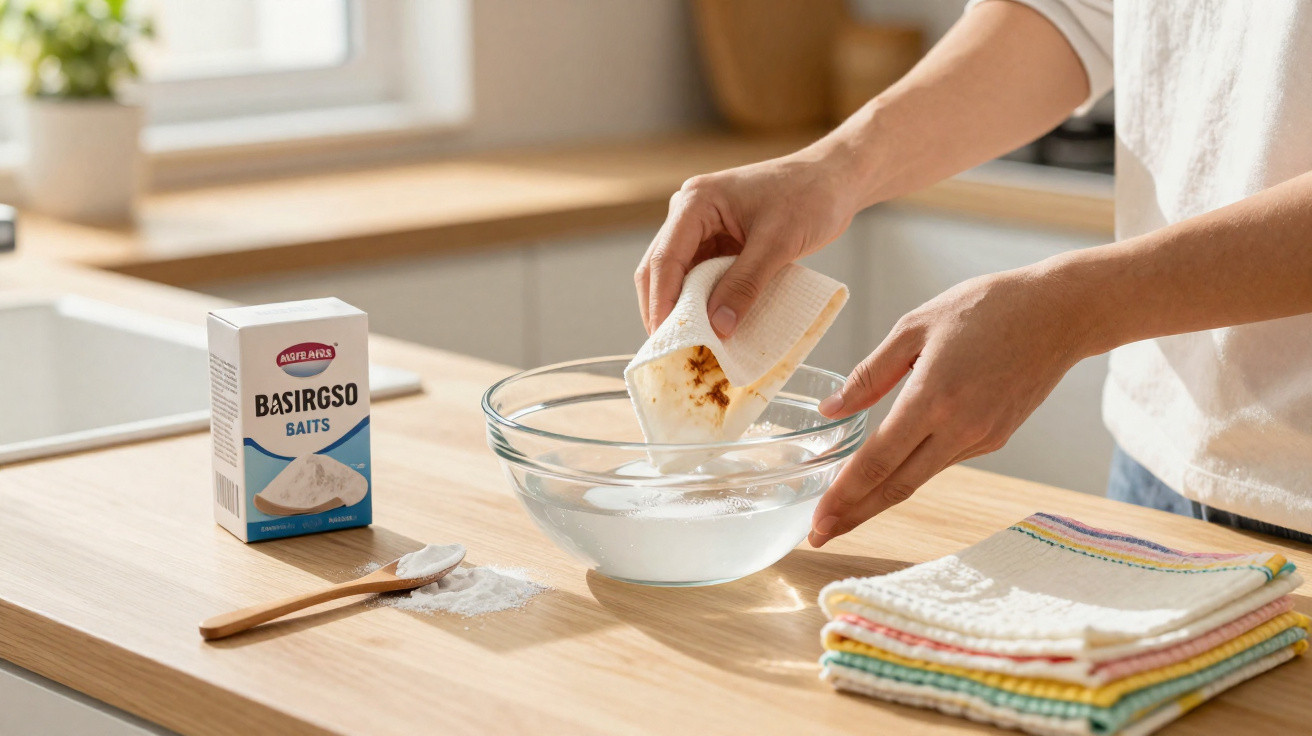
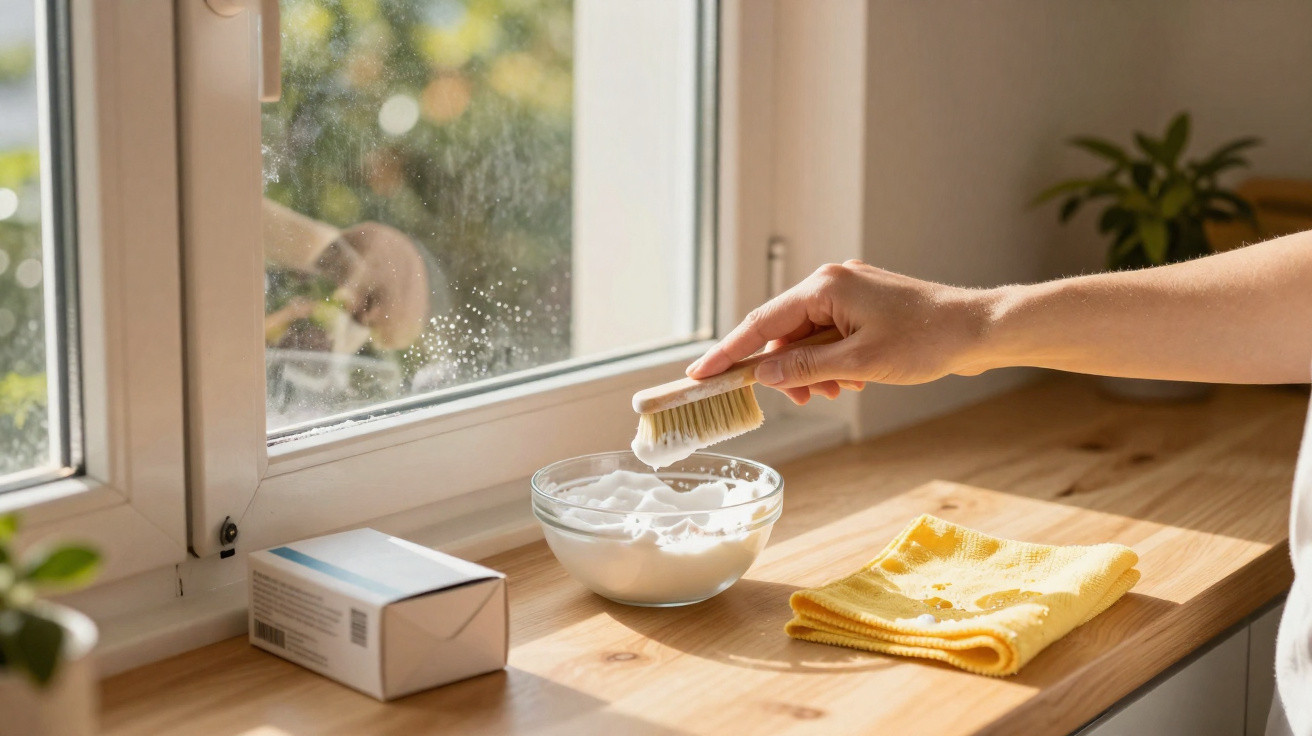
This straightforward approach was quietly used by many grandmothers before shelves filled with “miracle” products. Fill a large bowl, sink or bucket with very hot water. Add 3–4 tablespoons of baking soda, stirring until it has dissolved. Put the stained dishcloths into the water and press them beneath the surface.
Leave them to soak for a minimum of 4 hours; overnight is better still.
Baking soda softens the water, helps release grease and gently draws out old stains. Once they have soaked, lightly wring out the cloths and place them directly in the washing machine with your normal detergent, choosing a 60°C wash if the fabric permits it. When the cycle ends, hang them fully open in the fresh air. This is when the change becomes visible.
This is also where many people lose momentum: regularity. You try the baking soda method once, it works impressively, and then everyday life intervenes. The dishcloths soon return to their familiar chaotic routine. Realistically, nobody does this every day.
The aim is not to become a laundry monk. Instead, give your most-used cloths a baking soda soak every couple of weeks. Avoid two familiar errors: leaving them immersed for days, when they will begin to smell again, and cramming too many cloths into the bowl so that the water cannot circulate. If there is a thick layer of fabric sitting above the water, it is not a spa - it is a swamp.
“Baking soda doesn’t shout, doesn’t smell like a chemical factory, and doesn’t claim miracles on TV. It just quietly does the job your detergent can’t finish,” laughs Claire, a 39‑year‑old home cook who switched to this method after giving up on ‘super degreasing’ detergents.
- Pre-soak ratio: roughly 1 tablespoon of baking soda for each litre of hot water.
- For especially greasy cloths, add a small squirt of washing-up liquid to the soak for extra cleaning power.
- Rinse after soaking if your washing machine is prone to producing lots of foam.
- Wash pale cloths separately from very dark ones to prevent whites becoming dull.
- Always dry completely: hang cloths spread out rather than bunched up, helping to prevent odours from returning.
Baking soda dishcloth care as a small everyday ritual
There is something surprisingly rewarding about seeing a pile of gloomy, greyish dishcloths return almost to their original shades. The red stripe becomes brighter, the yellow trim looks clearer and the material feels less rigid in your hands. It is not perfection, but it is a noticeable refresh.
That modest success can alter how you treat them. You begin rinsing a cloth after wiping up grease. You hang it open instead of leaving it crumpled next to the sink. You rotate dishcloths more frequently. These are small, nearly automatic habits that stop the fibres slipping back into their dull, stale condition.
At some stage, you notice that the kitchen feels subtly fresher.
| Key point | Detail | Value for the reader |
|---|---|---|
| Gentle deep cleaning | During a hot pre-soak, baking soda helps loosen grease, stains and odours | Dishcloths look and smell fresher without harsh chemicals |
| Simple routine | Soak every couple of weeks, then use a normal 60°C wash where possible | Simple to fit into everyday life, with no complicated routine |
| Healthier kitchen | Cleaner cloths that are dried more thoroughly reduce bacteria and lingering food smells | A more pleasant, hygienic cooking area for daily use |
FAQ:
- Question 1: Can I use baking soda on coloured dishcloths without fading them? Yes. Baking soda is gentle and is usually safe for coloured fabrics. It does not work like bleach. If the fabric is particularly delicate or the dye may run, test a small corner first.
- Question 2: How often should I change my dishcloth during the day? In a busy kitchen, once daily is a sensible minimum. If it has cleaned up raw meat juices or a large greasy spill, replace it straight away rather than waiting until the evening.
- Question 3: What if the odour remains after soaking and washing? Try soaking it for longer in fresh hot water with a little more baking soda, then wash it at a higher temperature. If the smell persists, the fibres may simply be worn out and the cloth is probably ready to be retired.
- Question 4: Can I mix baking soda and white vinegar in the same soak? It is better not to. They react with one another and neutralise each other. Use baking soda for the soak, then add vinegar separately to your washing machine’s rinse compartment if you would like softer cloths.
- Question 5: Is baking soda suitable for sensitive skin? For most people, yes: it rinses away easily and does not leave a strong fragrance behind. If your skin is very reactive, rinse the cloths thoroughly after soaking and do not make the solution too concentrated.







Comments
No comments yet. Be the first to comment!
Leave a Comment