Cleaning videos make it look effortless: sprinkle a little powder over the shower screen, give it a quick scrub and everything sparkles. Anyone trying this at home soon discovers that the reality of a damp bathroom with large glass panels is rather different. A cleaning specialist explains why bicarbonate of soda can tackle limescale effectively yet proves awkward in everyday use – and which alternative makes the task far less demanding.
Why so many people use bicarbonate of soda on the shower screen
Bicarbonate of soda is widely seen as a household all-rounder. It is inexpensive, considered environmentally friendly and appears in countless cleaning guides. On a dull glass shower screen, it works as a mild abrasive: its fine particles lift soap residue and limescale film without scratching the glass.
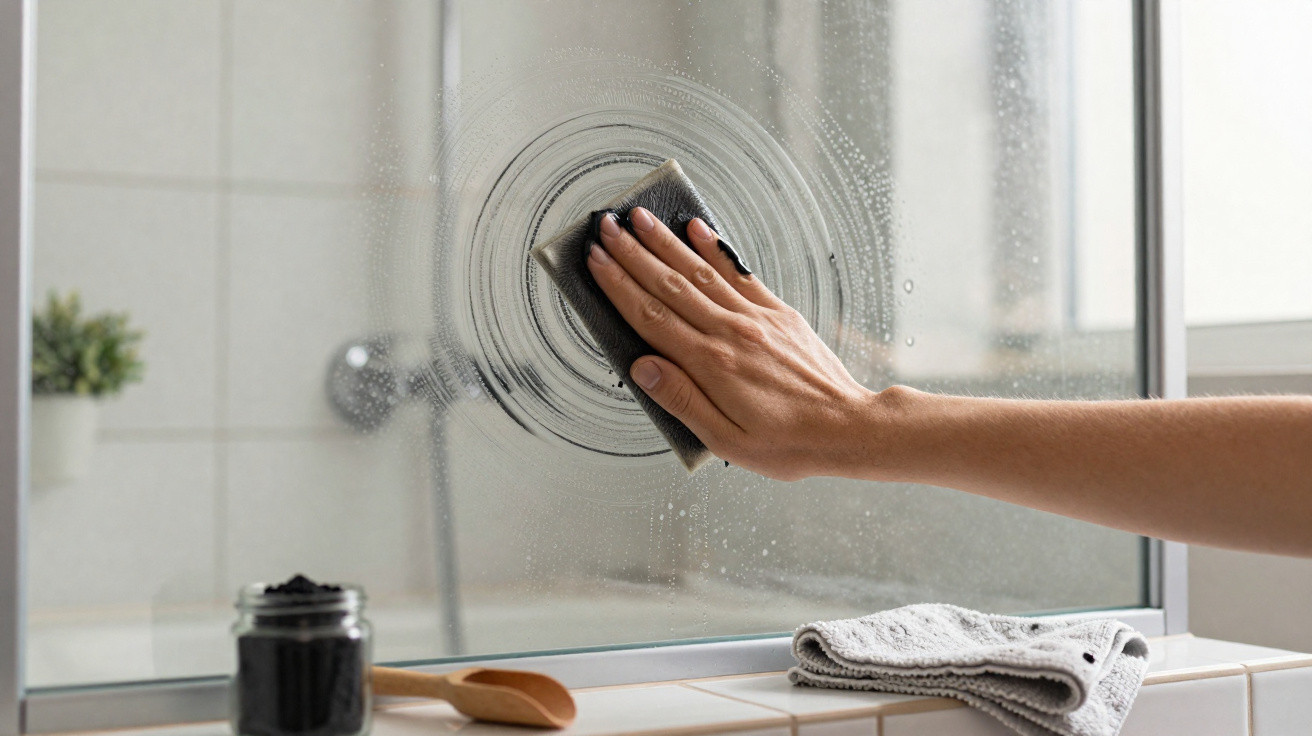
The usual advice is to combine the powder with a little water to make a paste, spread it across the glass with a sponge, leave it to work, then rinse thoroughly. For heavily soiled grout, people may use a stronger mix or combine it with vinegar. Online, the common message is: “Put bicarbonate of soda on it, wipe briefly, done.”
Bicarbonate of soda takes on even stubborn limescale – but getting there is laborious, wet and irritating.
In theory, it sounds like a minor miracle product. There is no harsh chemical smell, no expensive specialist cleaner and everything feels suitably “natural”. Many households already have a packet in the cupboard, so using it on the entire glass screen is an obvious temptation.
The drawback of bicarbonate of soda: effective but impractical every day
This is precisely where the cleaning expert’s criticism begins. Its effectiveness is not the issue; the effort involved is. Applying a thick paste to a tall, smooth glass surface takes both time and patience. While you are still spreading it at the bottom, some is already sliding down from the top.
There are also several drawbacks that cleaning tutorials often overlook:
- The paste does not cling well to vertical surfaces and slips down.
- Covering the whole area evenly requires vigorous, wide-ranging scrubbing.
- Plenty of water is needed afterwards to prevent a whitish film from remaining.
- The process is not particularly suitable for a quick clean in between.
In day-to-day life, this means bicarbonate of soda is more suited to a major clean when a shower screen has been neglected for months. After one or two attempts, many people find weekly maintenance frustrating and return to a spray bottle and kitchen roll.
The issue with mixtures of bicarbonate of soda and vinegar
Combinations of bicarbonate of soda and household vinegar are popular. They fizz dramatically, create the impression that “something is happening” and look effective in cleaning reels. Chemically, however, something else is taking place: the acid and base neutralise one another. Although the bubbling effect looks active, it reduces the actual cleaning power of both ingredients.
The expert therefore advises using bicarbonate of soda selectively – for example, on greyed grout, forgotten corners or very old deposits. For the glass itself, a different approach is worthwhile, requiring less bending and less physical effort.
Vinegar gel for shower screens: the simple alternative with longer contact time
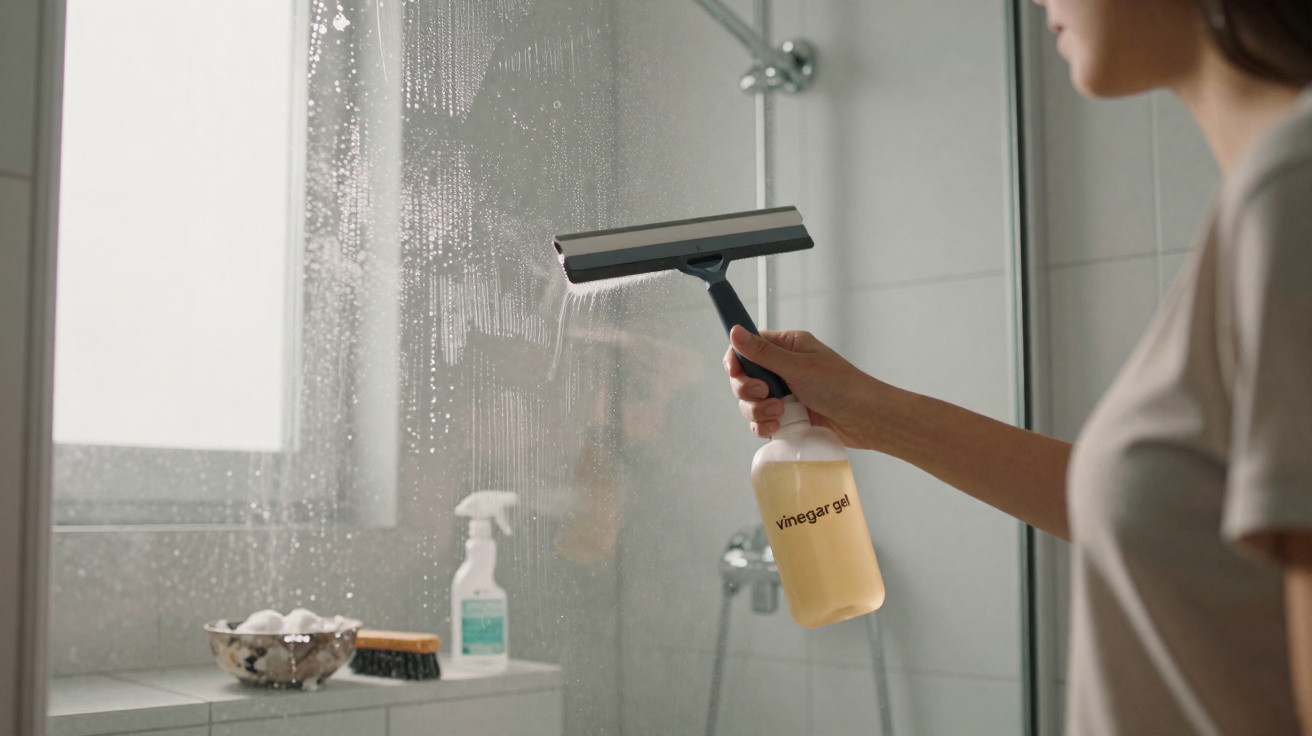
For regular use, clear household vinegar is a clear recommendation – but in a form that stays on the wall. Pure vinegar runs down within seconds. As a result, it has very little time to work on vertical surfaces and barely dissolves the limescale. The clever answer is to turn vinegar into a gel.
This uses a plant-based setting agent familiar from the kitchen: agar-agar. With only a few ingredients, it creates a cleaning gel that coats glass and grout like a mask.
Vinegar as a gel stays where the limescale is – instead of disappearing down the drain after three seconds.
How the vinegar gel method works
The principle is straightforward: liquid vinegar becomes a soft gel that adheres to glass. This considerably extends the contact time without the need to chase it down with a cloth.
A typical ratio is:
- 500 millilitres of clear household vinegar
- 2 grams of agar-agar powder
Heat the two ingredients briefly until the powder has dissolved, then allow the mixture to cool and set. The finished gel can be applied easily using a sponge or brush; it hardly runs, while still covering edges and grout lines.
The recommended contact time is around 15 to 20 minutes. During this period, the vinegar breaks down the limescale deposits. Because of the gel, all that is needed afterwards is a firm rinse with warm water, followed by a squeegee or a wipe with a microfibre cloth.
Fine-tuning for particular situations
The basic recipe can be adjusted slightly if desired:
- For greasy residue (shower oils, conditioner): add a dash of washing-up liquid to the warm vinegar mixture.
- For extra shine: a few drops of lemon juice provide a mild “brightening effect” on the glass.
- For grout and corners: work the gel into the joins using an old toothbrush.
It is important to note that natural stone, such as marble or limestone, reacts sensitively to acids. Anyone with these materials in their bathroom should apply vinegar gel only to glass, ceramic and chrome fittings, avoiding edges next to stone surfaces.
Bicarbonate of soda, vinegar gel or ready-made limescale spray – which suits whom?
Whether bicarbonate of soda, vinegar gel or a conventional anti-limescale spray makes most sense depends largely on available time, the level of soiling and personal preference. Here is an overview:
| Method | Strength | Suitable for |
|---|---|---|
| Bicarbonate of soda paste | high scrubbing power, effective on heavy dirt | shower screens neglected for a long time, greyed grout |
| Vinegar gel | powerful against limescale, with little scrubbing required | regular maintenance, visibly hard water |
| Ready-made anti-limescale spray | quick, convenient, measured chemicals | households with very limited time |
Anyone who dries the panels with a squeegee shortly after showering each day will keep limescale under better control anyway. In many households, though, reality gets in the way: children, rushing about or simply not feeling like it. In that case, a method is needed that still works once a visible film has already developed.
Routines that protect the shower screen over time
Alongside the choice of cleaner, habits matter greatly. Glass that is never dried will develop problems more quickly, especially in areas with very hard tap water. A few simple routines can significantly extend the time between major cleaning sessions:
- Use a rubber squeegee to remove water from the glass and tiles after showering.
- Schedule a quick vinegar gel or spray routine at least once a week.
- Do not let shower gel and shampoo residue run down the wall; rinse it off immediately instead.
- Air the shower enclosure briefly so moisture can escape.
This reduces the amount of limescale that can settle in the first place. In turn, that saves cleaning products, time and effort.
Why “natural” does not automatically mean easier
Many people instinctively reach for household remedies because they want fewer chemicals in the bathroom. Bicarbonate of soda and vinegar both have their place – just not always where social media trends like to put them. The expert makes one point clear: a product can make environmental sense while still being impractical.
For example, anyone who makes a bicarbonate of soda paste for every clean, spreads it over a large area and then needs several buckets of water to rinse afterwards may soon wonder whether targeted use of a vinegar gel is not more economical and realistic overall. “Natural” does not automatically mean less effort.
The bathroom in particular benefits from considering the combination: bicarbonate of soda for the occasional difficult cases, and vinegar gel or mild specialist cleaners for everyday cleaning. Those who clearly separate these roles protect not only the glass but also their own back.









Comments
No comments yet. Be the first to comment!
Leave a Comment