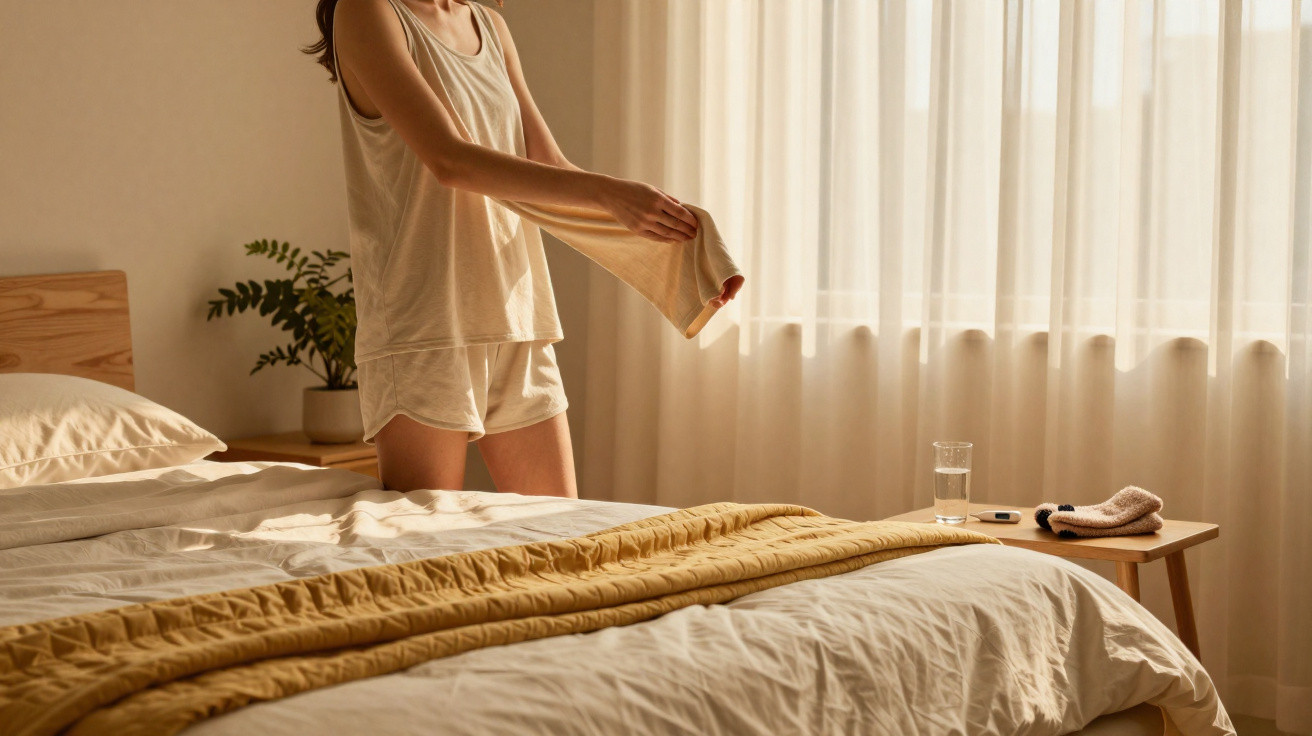
Again. You wake up warm and sticky, fling the duvet away in irritation, then find yourself shivering ten minutes afterwards. Your T-shirt has twisted around you, one leg is outside the covers, and your mind is already running through tomorrow’s to-do list.
By morning, you tell yourself you got eight hours, but your body tells a different story. Your shoulders feel leaden, your eyes burn, and you have almost no patience left. Stress, your phone and perhaps coffee get the blame. Hardly ever the heap of clothes you slept in.
But, night after night, your body is quietly battling the thermostat, the duvet and that overly snug long-sleeved top. What you choose to wear in bed can often be the unnoticed culprit.
Why your sleep layers matter more than you think
Imagine your body as a slow-burning campfire trying to keep its flame even while the weather shifts around it. That is what happens to your temperature overnight. You begin a little warm, become cooler at around 3–4 a.m., then warm up again as waking approaches. When your pyjamas and bedding do not match that pattern, your body reaches for its emergency responses: sweating, shivering and brief awakenings.
The right layers give that campfire some room to stay stable. Try a lightweight base layer, a soft top and perhaps thin socks that you can remove with your toes. Rather than making one big decision that you will either be “cold” or “hot”, you create a flexible setup that can be adjusted while half asleep. It may sound ordinary, even dull, but this is often where sleep quality quietly improves.
Enter almost any bedroom at 2 a.m. and the same scene plays out. One partner is bundled up like a burrito while the other lies spread-eagled above the covers. A 2022 Sleep Foundation survey found that more than 50% of adults wake at least once during the night because they feel too hot or too cold. This is more than simple discomfort. Every small temperature jolt can pull you out of the deep sleep stages your brain badly needs.
Recall the last time you woke soaked in sweat, took off your top and then lay awake trying to cool down. Your heart rate rises, cortisol increases, and your body starts treating the moment more like morning than midnight. One overheated hour can spoil an entire night’s rest. Layering is not merely a charming Pinterest concept; it is damage limitation for your nervous system.
There is practical science behind it. As you drift off, your core temperature falls by roughly 1 °C. Your body directs heat towards the skin so it can escape, as though tiny radiators along your arms and legs have been opened. If your clothes hold that heat in with nowhere for it to go, your body begins sweating to compensate. When layers are too light, however, your skin loses heat too rapidly and you may shiver or curl tightly into yourself, tensing your muscles and interrupting deeper sleep cycles.
Clever sleep layers follow this natural temperature curve. Breathable materials next to the skin wick away sweat without making you feel as though you are in a sauna. A middle layer supplies mild warmth that can be partly removed by rolling up sleeves, undoing a button or moving the blanket. Rather than resisting your body’s overnight temperature changes, let your clothing adapt with them.
How to build the perfect sleep-layer “uniform”
Begin with your base layer: the item against your skin that handles most of the temperature control. Choose soft cotton, bamboo or lightweight merino instead of heavy fleece or rigid synthetics. That could be a loose T-shirt, vest top or a breathable long-sleeved top. The aim is not to feel especially warm when you first get into bed, but to feel comfortable at 3 a.m.
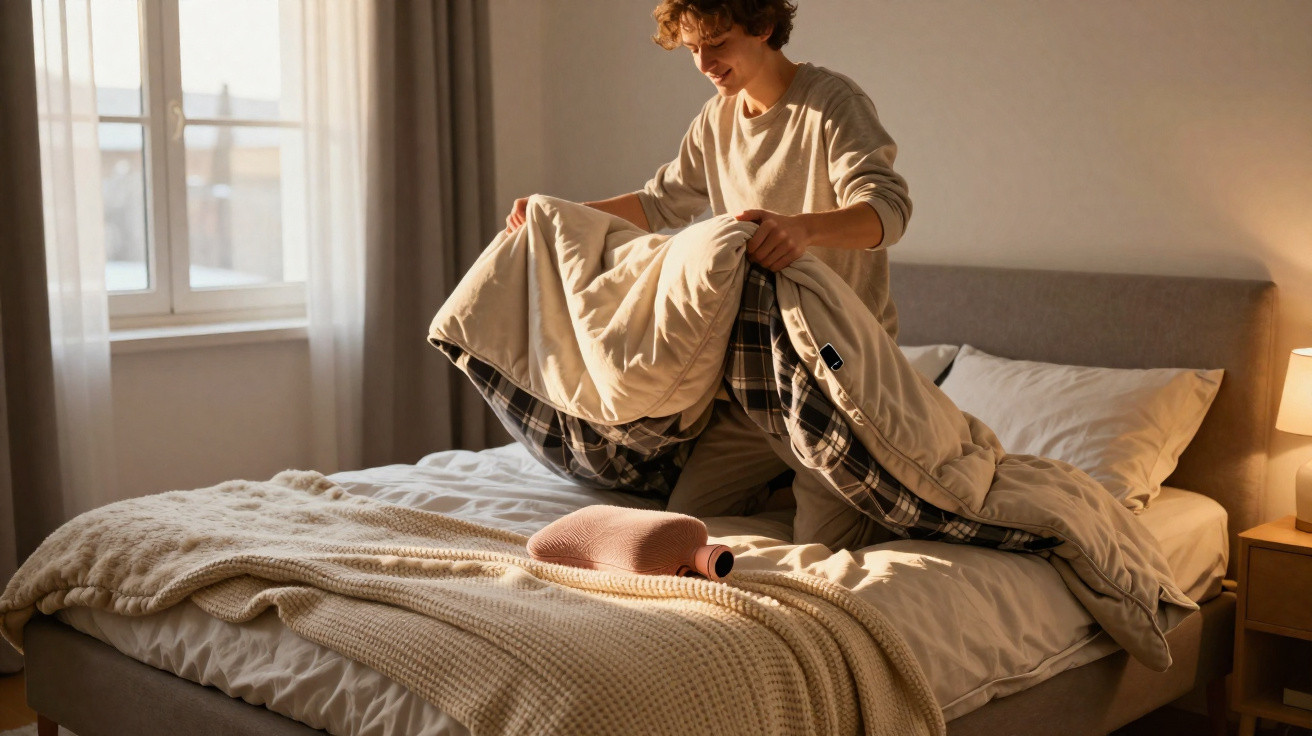
Next, add one adjustable layer. It might be a thin open cardigan that comes off in seconds, or a lightweight long-sleeved top over a vest that can be pushed up or removed without properly waking up. For your lower half, opt for straightforward shorts in summer, then thin joggers or leggings in colder weather. The priority is effortless adjustment: clothing you can roll, gather up or slip off while half asleep, without struggling with tight cuffs or clingy fabric.
This is where many people slip up: they dress for the first five minutes under the covers. Feeling slightly cold, they put on thick pyjamas, heavy socks and use an enormous duvet. They look at their phone, their body temperature rises, and by 2 a.m. they are far too hot. The reverse happens in winter, when some people attempt to appear “tough” by sleeping in shorts under a thin blanket, only to wake with freezing feet and tight shoulders.
There is also the very human trap of “best pyjamas”. You buy an elegant satin set that looks brilliant but clings, slips about or does not breathe. It is enjoyable once, then frustrating on every other night. Let’s be honest: nobody really does that every day. Real sleep wardrobes tend to consist of old T-shirts, soft trousers and that one ideal long-sleeved top you protect like a secret treasure.
One sleep specialist I interviewed described it in a way I have remembered:
“Your sleep layers should feel like a conversation with your body, not an argument you’re trying to win.”
This is why small personal adjustments matter more than any one-size-fits-all rule. Some people sleep best wearing thin socks for the first few hours, then unconsciously kick them off. Others prefer a fitted vest with a loose long-sleeved top, allowing them to expose only their forearms when they need to cool down. Tiny moves can prevent big awakenings.
- Try only one change at a time for three nights, such as a new top, different socks or lighter bottoms.
- Pay attention to when you wake: are you mainly hot at 2–3 a.m. or cold at 4–5 a.m.?
- Create a “sleep shelf” with 2–3 reliable layering combinations.
Rethinking comfort, night after night
There is something unexpectedly tender about recognising that your sleepwear may be working against you. On a quiet Tuesday evening, you stand in front of the wardrobe and choose not the most attractive pyjamas, but the ones that allow you to breathe, stretch and leave one leg uncovered. It is a small, private decision, yet it can gently influence your mood, patience and appetite the following day, even how kind you feel towards the people around you.
During a difficult week, when the world seems noisy and your mind keeps turning worries over, comfortable layers can become a gentle promise to yourself: “I’ll at least make it easier to rest.” You might still wake once or twice, and you might still overthink. But when you are wearing clothes that support your biology instead of disregarding it, your body has one less fight to deal with in the dark.
We do not often discuss these everyday details: how an old, thin T-shirt can outperform an expensive pyjama set, or how giving your ankles some air can soothe you more effectively than another hour of binge-watching. In a busy feed packed with miracle sleep tips and lemon water, the understated benefit of layered comfort can seem distinctly unglamorous. Yet, night after night, it often determines whether you wake feeling refreshed or spend the day counting down until you can climb back into bed.
| Key point | Detail | Benefit for the reader |
|---|---|---|
| Breathable base layer | Cotton, bamboo or lightweight merino next to the skin | Reduces overnight sweating and clammy awakenings |
| Adjustable layers | An extra top, sleeves that can be pushed up and socks that are easy to remove | Allows you to alter warmth without properly waking up |
| Tracking your awakenings | Note whether you tend to wake too hot or too cold | Helps create a genuinely personalised night-time “uniform” |






Comments
No comments yet. Be the first to comment!
Leave a Comment