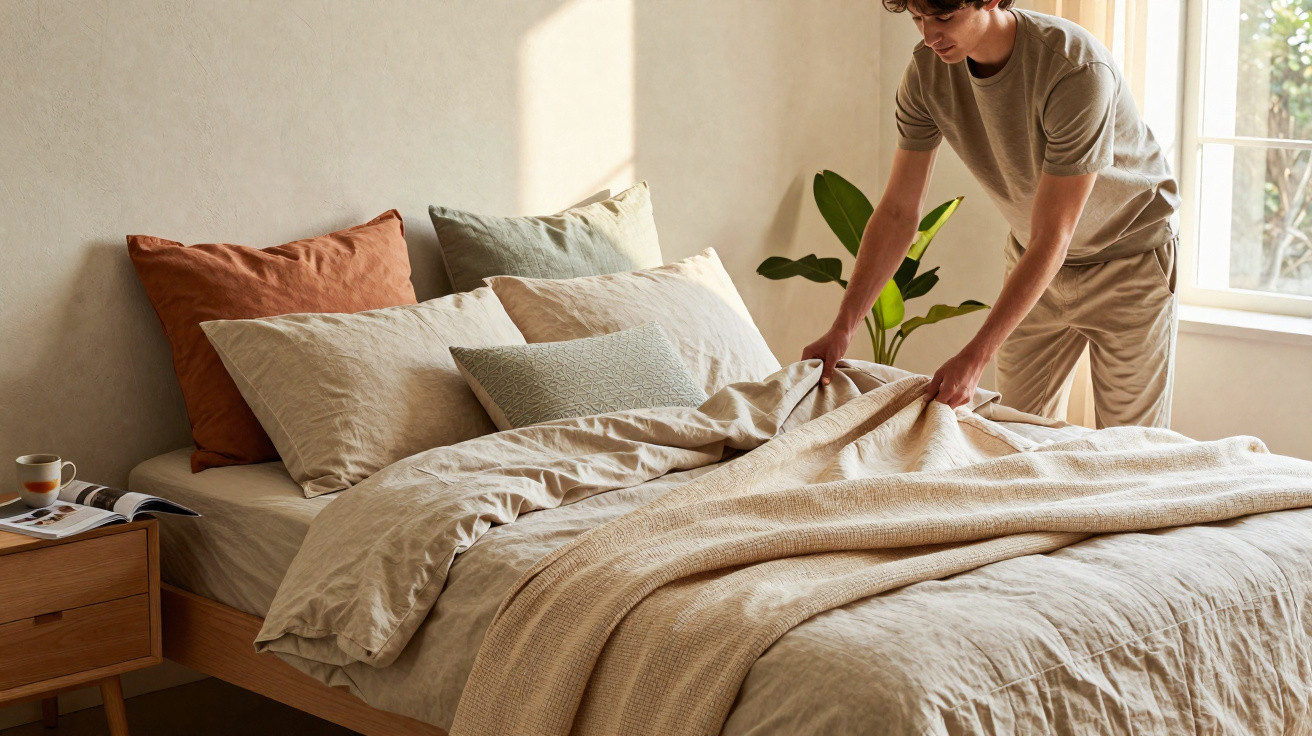
The designer steps into the show flat and makes for the bedroom immediately. There is no weighty duvet and no sharply pressed, hotel-style bedding. Instead, a low platform bed is dressed with woven blankets, a narrow quilt folded like a jacket and a soft wool throw with an almost effortless look. She smiles, films a short Instagram clip and whispers: “This is what 2026 will actually look like.”
Most of us still think of a “proper” bed as one topped with a large, fluffy duvet. Yet decorators are discreetly moving away from it. In its place comes something lighter, more adaptable and, frankly, more intelligent.
Once you have spent a week sleeping without a duvet, returning to one can be difficult.
No more duvets: what designers say is coming instead
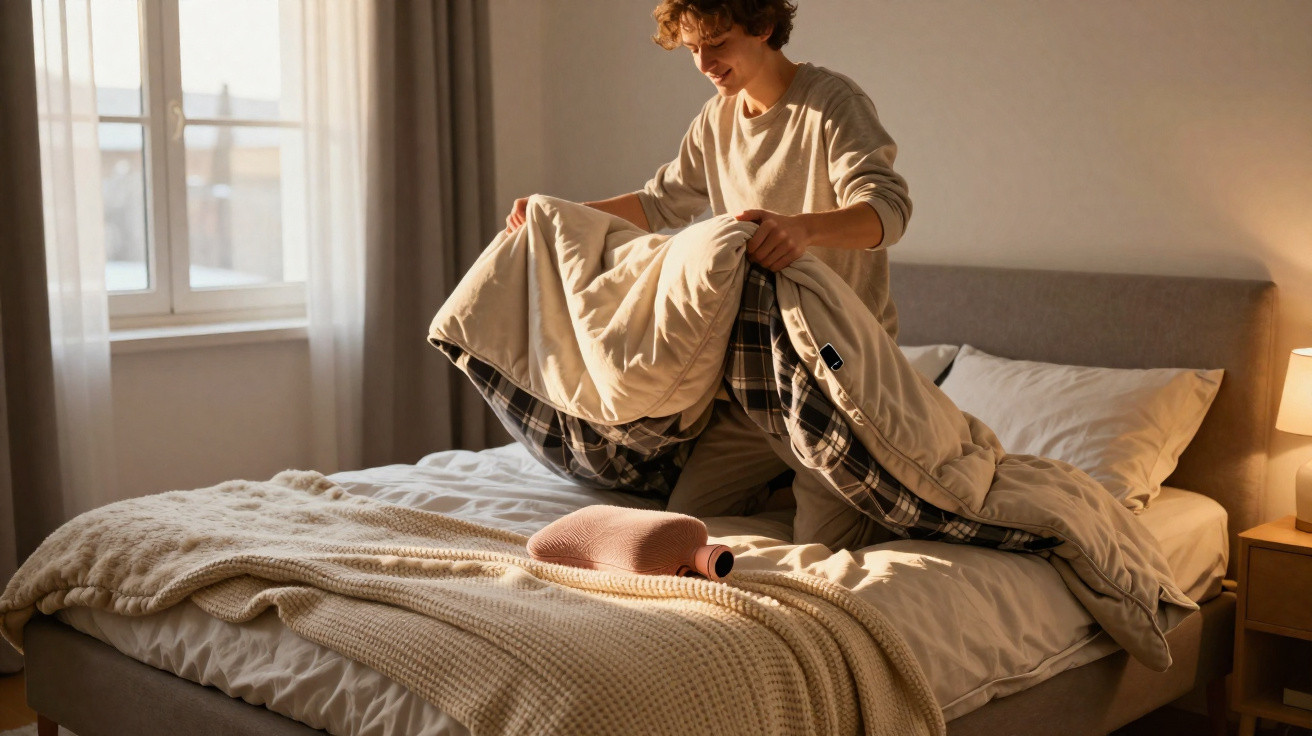
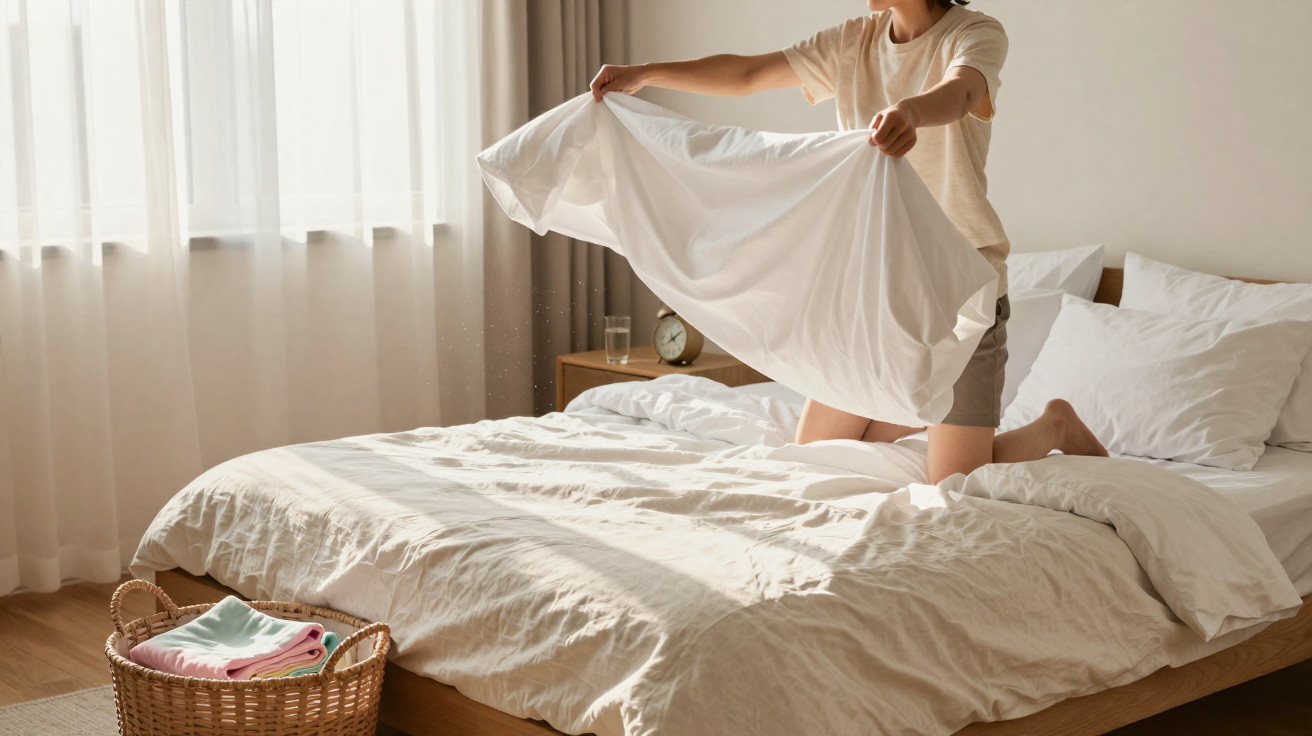
Visit a recently built show home or an upmarket Airbnb and the change is already noticeable. The familiar puffed-up duvet is becoming smaller, or vanishing entirely. In its place are layered blankets, lightweight quilts, textured coverlets and, sometimes, a top sheet worthy of an old film.
Designers now speak about “bedscapes”, rather than simply bedding. A bed becomes its own landscape, formed from visible layers that invite you to look and touch. The result feels more deliberate and less as though a large bag of feathers has simply been shaken across the mattress.
The message is straightforward: 2026 will belong to the layered bed, rather than the oversized duvet lump.
This move is not limited to glossy interiors magazines. A London retailer told me that heavy-duvet sales have been quietly falling year after year, while quilts and breathable blankets are selling more strongly. A Scandinavian brand reported that, in some markets, more than 60% of new customers now buy a light quilt instead of a traditional duvet.
There is an energy consideration, too. With heating bills remaining unpredictable, people appreciate being able to tailor their warmth rather than being stuck beneath a single thick layer. Add a blanket on a cold night; remove one during a heatwave.
The same change is visible in real homes across social media: fewer “cloud beds” and more thoughtfully layered textiles that appear lived-in while still feeling considered.
Designers frame the change in practical terms. The traditional duvet suited draughty homes, colder winters and limited wardrobe space perfectly: one substantial item and the job was done. Life has changed, however. Bedrooms have become smaller, mattresses deeper and summers warmer. A vast all-season duvet can suddenly feel… wrong.
Layered bedding offers greater flexibility and improved temperature control. Does your partner sleep hot while you feel cold? You can each use a blanket with a different weight. Do you hate waking at 3 a.m. drenched in sweat? Change only the top quilt instead of replacing the entire setup.
There is a stylistic evolution as well. Minimalism is beginning to fade, while texture is taking its place. Few things display texture more effectively than several visible layers.
How to create a “post-duvet” bed that still feels wonderful
Designers tend to recommend the same starting point: choose one genuinely good base layer. This is your lightweight quilt or slim comforter, the piece that remains on the bed for most of the year. Think of it as your new “default duvet”, only thinner and simpler to live with.
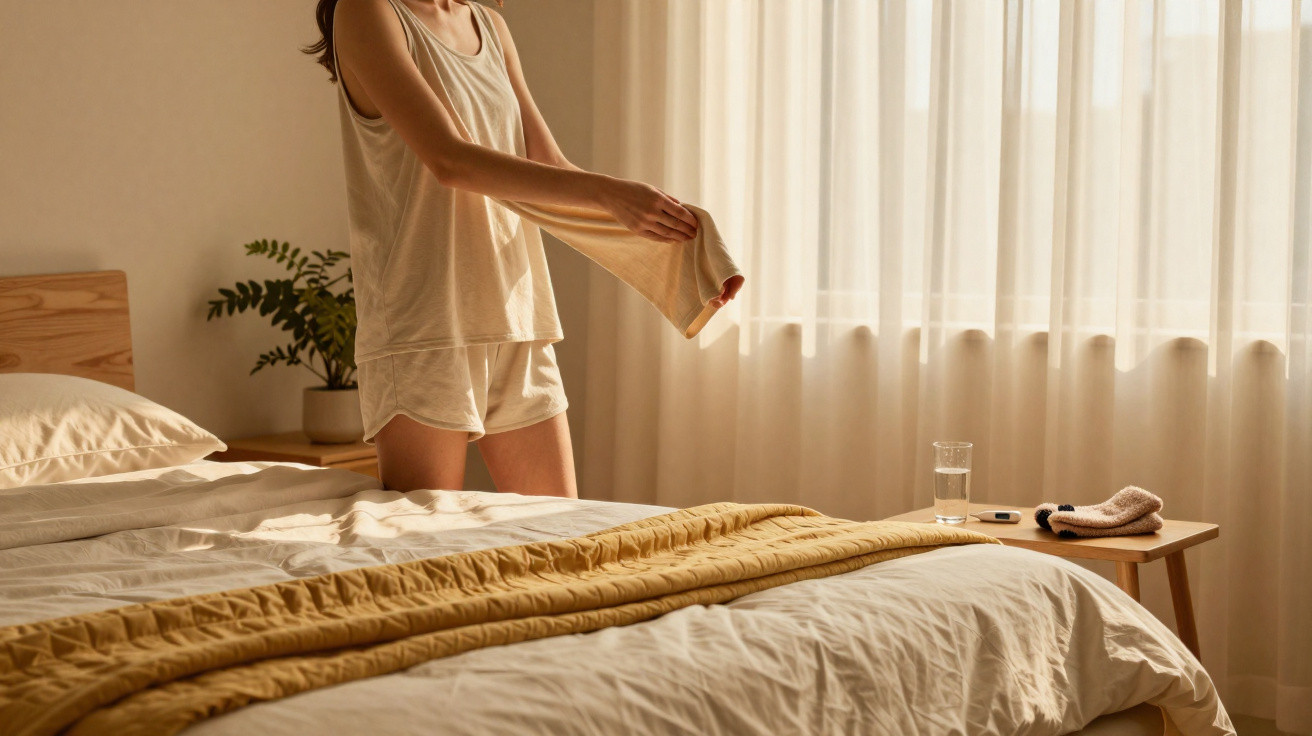
Place a medium-weight blanket in a natural fibre, such as cotton, linen or wool, over it. This will be the layer you rely on for nine months of the year. For an easy, magazine-style finish, fold it at the foot of the bed or halfway up.
Then keep a heavier throw or chunky knit close by. It is your winter reserve, or the “I’ve got the chills” layer for a late-night Netflix binge.
The most common mistake when abandoning a duvet is replacing “one big thing” with “one thin thing”. People then wake up freezing at 3 a.m. and reject layered beds altogether.
Begin by following the logic used by hotels. Good hotels seldom depend on one exceptionally heavy duvet; they discreetly combine a light quilt with a coverlet, perhaps keeping an extra blanket in the wardrobe. You can adopt the same approach at home while keeping the bed straightforward to make.
And, honestly, no one creates perfect hospital corners every morning. Choose textiles that still look attractive when slightly rumpled. Stonewashed linen, matelassé quilts and cotton waffle blankets all wear well between wash days and do not punish you for being human.
One stylist I spoke to put it bluntly:
“A duvet is like wearing a ski jacket to the office every day. It works, but it’s not exactly nuanced.”
If you are worried about making a mistake, use this straightforward checklist decorators follow when creating a “2026 bed” for clients:
- One light quilt as a base (washable, neutral colour)
- One medium blanket for everyday warmth
- One heavy throw reserved for cold snaps
- Two sets of pillowcases: one for sleeping, one decorative
- One texture that makes you smile when you touch it
That final point may seem silly, but it is what separates a bed that merely looks styled from one that truly feels like your own.
What this quiet bedding revolution reveals about how we live now
There is a subtle psychological reason designers believe duvets are fading away. The huge, overfilled duvet belongs to a “more is more” era of comfort: large fridges, large cars and large corner sofas. It may be a reassuring cloud, but it can also feel a little anonymous.
Layered bedding feels more individual. You choose the level of warmth, the textures and the colours. Rather than being one factory-sealed response to the question of sleep, it is more like a mood you dress your bed in.
During a difficult week, you may pull up every layer you own. On a summer Sunday, you might reduce it to only the thin quilt and a sheet. Your bed reflects the season you are in, rather than merely your shopping list.
There is also the climate reality to which we are all gradually adapting. Summers are increasingly unpredictable and heatwaves increasingly intense. A heavy all-season duvet that felt luxurious ten years ago can now feel punishing in July. Many people already push it into a cupboard for half the year.
Layered beds are better suited to this new normal. One reader told me that she now alternates two lightweight quilts - one on the bed and one in the wash - while leaving a wool blanket folded nearby. Her bedroom immediately feels calmer because nothing is too warm or too precious to use.
This is another point designers repeatedly make: a modern bed in 2026 should be used and enjoyed, rather than arranged like a showroom every day.
On an emotional level, altering the way we sleep is often the simplest way to alter the way home feels. We all recognise the moment of entering the bedroom after a long day, when the bed either relaxes your shoulders… or makes you sigh.
Moving beyond duvets is not simply about following a trend. It is about gaining more control over your rest. You can make small choices each night: add a blanket for comfort, or remove one when your thoughts are racing and you want cool sheets.
The designers are right about one thing: the bedroom is becoming less concerned with “picture-perfect decor” and more like a personal ritual that you adjust as you would a playlist.
So, when forecasts say “no more duvets in 2026”, it is not a rigid rule being imposed from above. Plenty of people will gladly keep theirs, and that is perfectly fine. Trends do not operate like a light switch; they gradually spread through Pinterest saves, hotel stays and the weekend you slept at a friend’s flat better than you had in months.
Layered beds will become more widespread for a simpler reason: their adaptability. They work for renters dealing with awkward radiators and homeowners with underfloor heating. They suit hot sleepers and cold sleepers alike. They also bring visual softness to small flats, where an enormous puffy duvet can often take it away.
And perhaps, the next time you scroll past a glossy bedroom on your phone, you will spot what is absent… and find your own duvet suddenly looking a little old-fashioned.
| Key point | Detail | Why it matters to the reader |
|---|---|---|
| Duvets in decline | Designers are replacing thick duvets with beds made up of multiple layers | Understand why your “classic” bed can seem dated in 2026 |
| Layered bedding | A combination of a light quilt, a medium blanket and a warmer throw | Easily recreate the look of magazine bedrooms at home |
| Adaptable comfort | Temperature, textures and style can be adjusted day by day | Sleep better without replacing everything, while reducing nights that are too hot or too cold |









Comments
No comments yet. Be the first to comment!
Leave a Comment