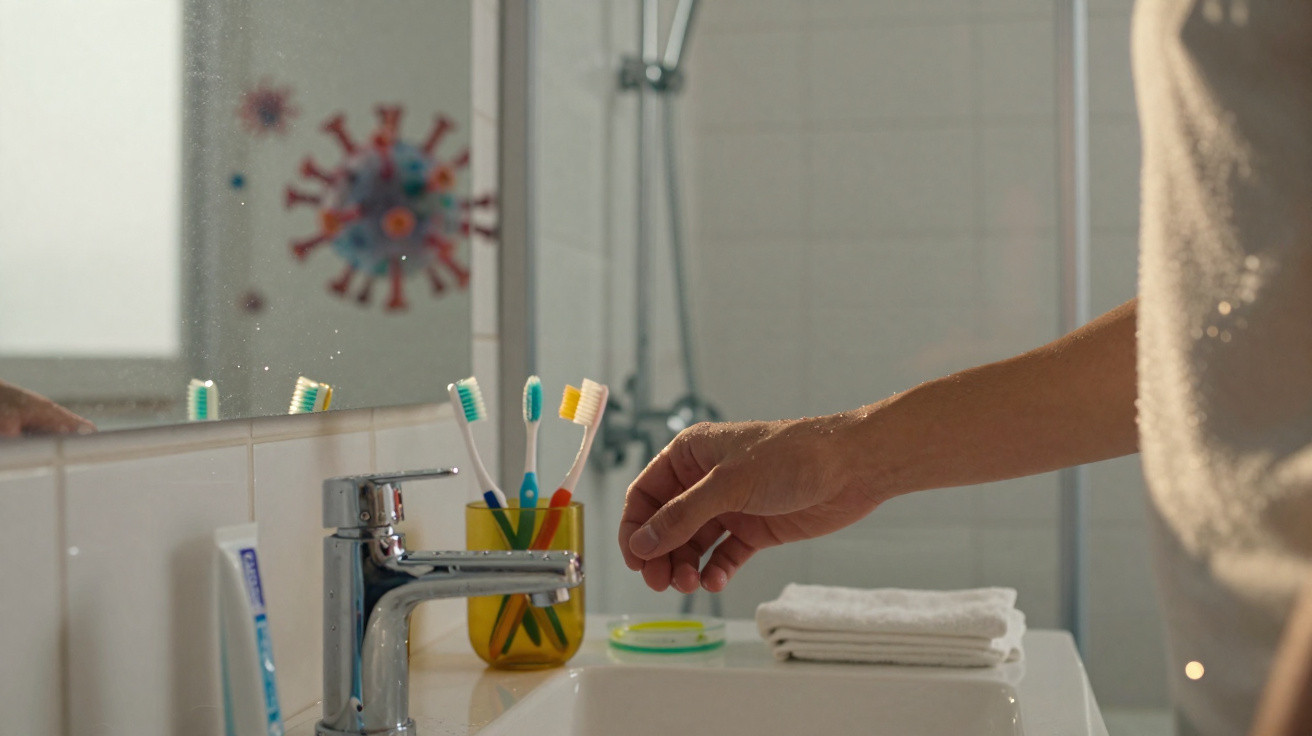
You are not the only one using your toothbrush…
Viruses on toothbrushes and shower heads
Scientists at Northwestern University in the US have discovered an “absolutely wild” quantity of viruses inhabiting shower heads and the bristles of the toothbrushes we put in our mouths.
Some of the microorganisms they found are entirely unknown to science.
That may make you want to dash to the bathroom, bin your toothbrush and thoroughly scour the shower, but viruses on our belongings are neither unexpected nor automatically harmful to health.
Bacteria, fungi and viruses are among the microbes that inhabit many environments made by humans. By now, they almost seem to have squatters’ rights: however often surfaces are cleaned, they inevitably return.
This is why dentists and doctors recommend replacing your toothbrush regularly and cleaning the bathroom, preventing microbial communities from expanding unchecked.
Still, some exposure cannot be avoided, making it important to understand which particular microbes people encounter most often.
Most people realise that bacteria inhabit virtually every visible surface, but considerably less is known - including by scientists - about the viruses attached to those surfaces.
Indeed, researchers in the US first examined bacteria on shower heads and toothbrushes. A second group, involving several of the same authors, then extended that work by investigating viruses.
“We found many viruses that we know very little about and many others that we have never seen before. It's amazing how much untapped biodiversity is all around us,” says microbiologist Erica Hartmann from Northwestern.
“And you don't even have to go far to find it; it's right under our noses.”
Why researchers examined bathroom microbes
Hartmann and her colleagues initially conceived the toothbrush-microbe research while she was at the University of Colorado, Boulder. They had heard worries that flushing toilets could disperse dangerous pathogens throughout bathrooms.
Their small study suggested that bacteria on an average toothbrush generally mirror microbes from our mouths rather than those from toilets - phew! - but the question remained: what about viruses?
“This project started as a curiosity,” explains Hartmann.
“We wanted to know what microbes are living in our homes. If you think about indoor environments, surfaces like tables and walls are really difficult for microbes to live on. Microbes prefer environments with water. And where is there water? Inside our shower heads and on our toothbrushes.”
Northwestern study of viruses on toothbrushes
To better understand how bacteria and viruses interact in bathrooms, Hartmann and her Northwestern colleagues examined the genomes of microbial communities from 96 shower heads and 34 toothbrushes.
The researchers detected many bacteriophages - viruses that infect bacterial cells and reproduce inside them.
More specifically, they identified viral communities, also known as viromes, on toothbrushes and shower heads that bore no resemblance to one another. Toothbrushes contained a wider variety of viruses than shower heads did.
Because certain viruses favour eating particular bacteria, differences between viromes in these two bathroom settings are logical.
Bacteria on toothbrushes usually originate in human mouths, whereas those detected on shower heads come from the surrounding environment; some are recognised pathogens in municipal water.
Although the present research represents only a small snapshot, it found that some of these viruses and their bacteria could pose a threat to human health if they multiply.
“Whether interactions between phages and their host have noteworthy implications on human health risks such as antimicrobial resistance dissemination in the built environments requires further investigation,” the authors conclude.
Hartmann, however, warns against an excessive reaction to these largely harmless microbes.
“Microbes are everywhere, and the vast majority of them will not make us sick,” she says.
“The more you attack them with disinfectants, the more they are likely to develop resistance or become more difficult to treat.”
The study was published in Frontiers in Microbiomes.








Comments
No comments yet. Be the first to comment!
Leave a Comment