
This winter, your bed is capable of far more than you might expect.
As the weather turns colder and energy tariffs rise, countless households look at the thermostat and ask how far it can be lowered without a sleepless, shivering night. Our grandparents, however, understood something that is easily overlooked today: warmth begins around the body rather than at the radiator. If you make the bed a compact, properly insulated microclimate, you can stay snug while keeping the heating low - or switched off - for hours at a time.
Reconsider winter warmth: warm the person, not the room
For the relatively brief period a bedroom is in use, it is often heated more than necessary. You go in, sleep, and leave again. Raising the temperature of the entire room for those few hours can be an expensive waste. A more effective approach is to create a “thermal bubble” around the person sleeping.
Adapt the climate of the bed, not the entire bedroom, and you cut energy use while keeping real comfort.
This means concentrating on three things: reducing heat loss from your body, holding on to the air warmed by your skin, and preventing cold draughts from entering the bed. Fabrics, bedroom arrangement and a handful of practical accessories can achieve far more than turning the radiator up another notch.
The understated winter essential: the hot water bottle
In a world of smart thermostats and app-connected radiators, a hot water bottle may seem decidedly traditional. Even so, it is still among the most efficient ways to make freezing sheets feel warm and inviting.
Using a hot water bottle safely and comfortably
- Use hot water from the tap rather than boiling water, which can damage the rubber and burn your skin.
- Put it beneath the duvet 10 to 15 minutes before getting into bed, preferably near the bottom of the mattress.
- Use a soft cover or wrap it in a small towel to prevent burns caused by direct contact.
- Inspect the manufacturing mark inside the neck, and replace any bottle more than 2–3 years old.
This brief warming period transforms the bed into a gently heated, dry space. When you climb in, the unpleasant initial chill from the sheets has disappeared, making it less tempting to increase the heating.
Used correctly, a hot water bottle delivers hours of targeted warmth for pennies, with zero impact on your thermostat setting.
People managing limited budgets, students living in shared homes and tenants in poorly insulated properties are increasingly returning to this simple, low-tech solution. Doctors also frequently note that warm feet can help the body unwind and fall asleep more quickly - particularly useful during winter nights that can already seem long and unsettled.
Duvets that perform: tog ratings, heated throws and weighted blankets
A duvet is the principal barrier between your body and the air around it. When it allows warmth to escape, adding more pyjama layers is unlikely to make up for it.
Tog ratings and effective insulation
A tog rating indicates how efficiently a duvet holds in heat. During colder months, many sleep specialists recommend choosing one between 12.0 and 15.0 tog. Choose too low a rating and you may constantly search for warmer spots; go too high in a mild climate and you could wake feeling overheated and sweaty.
| Season | Recommended tog range | Typical use |
|---|---|---|
| Summer | 3.0 – 4.5 | Very light, warm nights, heated homes |
| Mid-season | 7.5 – 10.5 | Spring, autumn, well-insulated flats |
| Winter | 12.0 – 15.0 | Cold rooms, low thermostat settings |
Synthetic fillings are usually less expensive and may suit people with allergies, whereas good-quality down offers strong insulation for very little weight. In either case, the purpose is identical: retain a layer of warm air close to the body.
Electric blankets and heated throws: affordable targeted warmth
An electric blanket or heated throw can warm the surface of the bed while using relatively little electricity. Many versions use roughly 40–80 watts, substantially less than a standard electric heater or fan heater.
Heating directly under or over the sleeper wastes less energy than trying to lift the temperature of the whole room.
Some people turn on their electric blanket 20 minutes before bed, switching it off once they are under the covers and allowing the insulated duvet to retain the warmth. Others leave it running on a low setting overnight, particularly in unheated loft conversions or older homes with single glazing.
Weighted blankets: added warmth and calmer sleep
Weighted blankets, commonly filled with glass beads or comparable materials, initially became popular as an aid for anxiety. Their extra weight applies a gentle, embracing pressure that may make it easier for some people to fall asleep. Thermally, that weight also limits air movement around the body, helping warmth remain where it is needed.
Combined with a suitable tog rating, a weighted blanket can make a cool bedroom feel like a cocoon adjusted to you. Selecting the appropriate weight is important: many manufacturers recommend around 8–12% of your body weight, while ensuring you can still move easily and comfortably.
Create a cocoon bedroom: curtains, rugs and concealed draughts
Even an excellent duvet has limits in a cold, draughty bedroom. Straightforward changes to the room can greatly cut heat loss without altering the boiler controls.
Use textiles and timing to tackle draughts
Shut shutters or blinds as soon as daylight starts to fade. The added pocket of air between the window glass and its covering slows the loss of heat through windows, which are a significant source of cold in many UK homes.
Heavy curtains - ideally with a lining - work as soft insulating walls. If they reach the floor, they help block both the radiant cold from the glass and unwanted airflow. Placing a thick rug beside the bed keeps bare feet off freezing floors and makes the room feel less cold when you get up.
Curtains, carpets and soft furnishings work like a second skin for the room, cutting down on cold surfaces and draughty corners.
Surprisingly cold air can enter through gaps around window frames, sockets on external walls and beneath doors. Self-adhesive foam strips, draught excluders and basic door snakes can often provide a fast improvement for only a few pounds.
Dress intelligently for bed: layers on the mattress and your body
Nightwear remains one of the most adaptable ways to stay comfortable in winter. Several thin, carefully selected layers retain more warm air than one bulky item, while making it easy to adjust if you become too warm at 3 a.m.
Fabrics that support your body
During cold weather, ordinary cotton sheets may feel unpleasantly cool and take time to warm up. Slightly brushed fabrics such as flannel form tiny air pockets, which your body can warm and retain nearby. Fleece mattress toppers or underblankets can also take away the mattress’s initial coldness.
For nightwear, soft wool or merino pyjamas provide warmth, breathability and moisture control. Thick socks keep the extremities warm, supporting a steadier body temperature and reducing the need to add extra blankets. Even people who dislike heavy sleepwear can benefit considerably from wearing a light base layer beneath their normal pyjamas.
How to layer a bed effectively
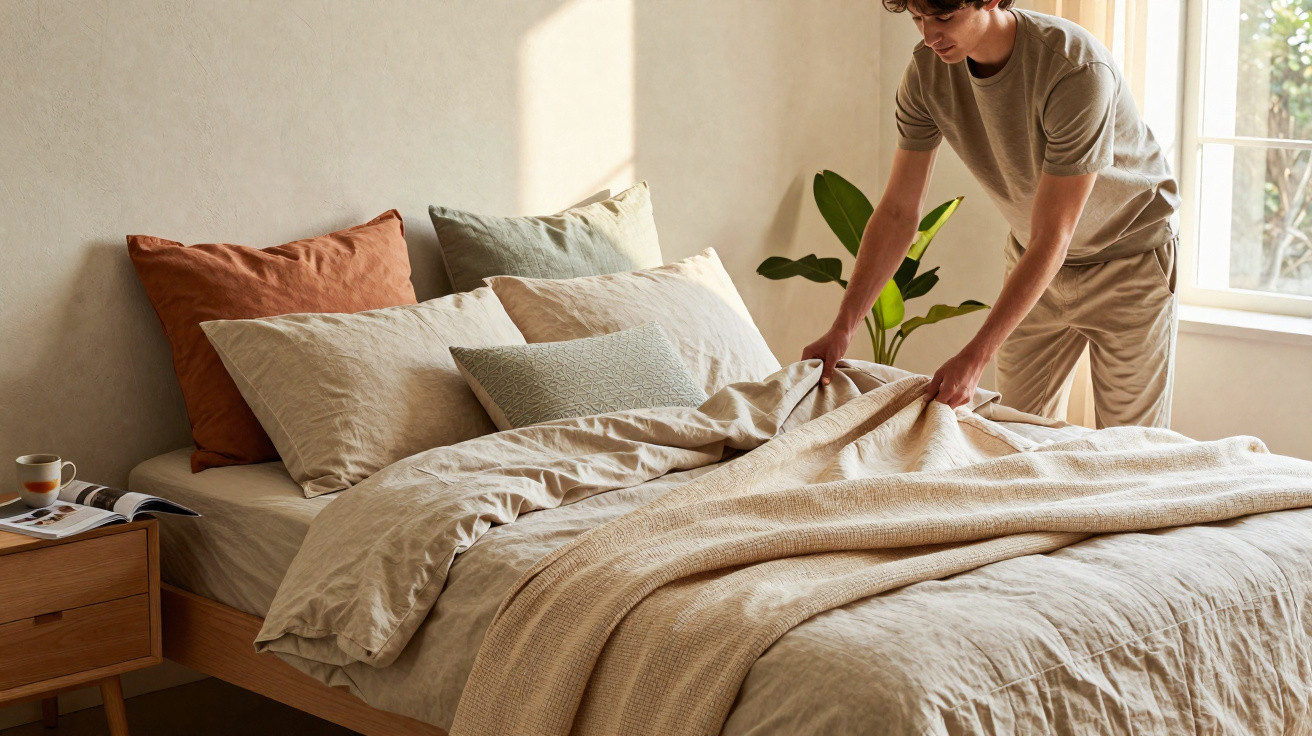
Rather than depending on one exceptionally thick duvet, try combining lighter layers: a sheet, a thin blanket and then a winter duvet. This arrangement holds several layers of air and allows you to regulate warmth by folding back or removing a layer during the night.
Layers give you control: you respond to real sensations, instead of locking yourself into one fixed temperature all night.
The method follows long-established practices in colder areas, where winter beds were built up layer by layer. It now offers a useful way for households to manage changing temperatures caused by poorly timed heating cycles or unpredictable weather.
Energy, health and budget: the benefits of using the radiator less
Reducing bedroom heating by even one degree can make a noticeable difference to yearly energy bills. In many households, a bedroom does not need to be as warm as a living room: sleep experts commonly advise an ambient temperature of around 16–19°C for improved rest.
Using less hot, dry air can also be better for the skin and respiratory system. Continuously running radiators can dry the air, irritate mucous membranes and worsen certain respiratory conditions. A cooler bedroom with a warm bed helps maintain humidity at a more comfortable level.
There is also a less obvious benefit: resilience. Knowing how to manage winter nights through effective bedding and considered room adjustments gives households greater control if energy costs rise again, supplies become uncertain or landlords limit thermostat settings in shared accommodation.
For anyone who prefers figures, a basic experiment at home can reveal the difference. For one week, record your thermostat setting, overnight heating schedule and smart-meter reading or daily energy use. During the following week, reduce the bedroom temperature by 1–2°C and add a higher-tog duvet, hot water bottle and thicker curtains. Record usage again. Many families see a clear reduction in consumption without any loss of comfort once their bed arrangement is properly adjusted.
These modest but practical changes make the winter bed a discreet part of your energy strategy. Rather than battling the season with additional watts, you use the principles of insulation, air and fabric, allowing a carefully created cocoon to do the hard work while you sleep.














Comments
No comments yet. Be the first to comment!
Leave a Comment