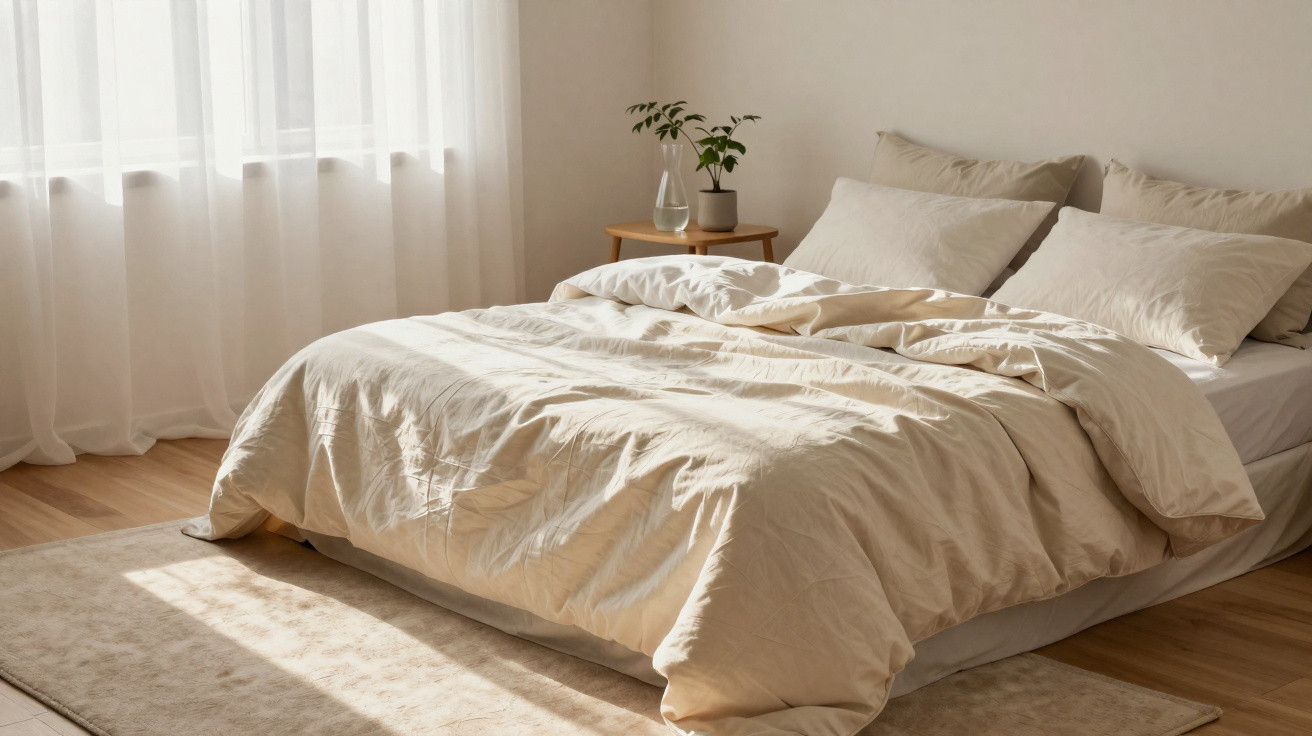
A woman had almost given up on her tiny bedroom nook. Rearranging furniture made no difference, nor did a new wardrobe or any decorating idea. Something unexpected happened only when she stopped focusing on the floor plan and changed the textiles instead: the cramped room appeared brighter, lighter and noticeably larger. All it took was a new colour for the bed linen.
Why small bedrooms can feel oppressive so quickly
Compact rooms can test anyone’s patience. The bed occupies half the floor space, furniture lines the walls, and there still needs to be room for a cosy atmosphere. Anyone who lies down at night feeling as though they are literally “looking straight at the walls” will struggle to unwind.
Yet the real space-stealer is often not the layout itself, but what the eye perceives: colours, contrasts and light-absorbing materials.
Dark textiles visually shrink the room
Many people choose dark, rich shades precisely for the bedroom: burgundy covers, grey throws and boldly coloured patterned cushions. They may look cosy in photographs, but in a tiny room they can quickly become a dark block in the centre of the space.
Strong contrasts and dark bed linen “swallow” daylight, making the walls seem closer together.
The sharper the contrast between the bed, floor and walls, the more the room is divided into weighty “blocks”. Your gaze stops at the bed rather than moving freely around the room. That is exactly what creates the claustrophobic feeling so familiar in small bedrooms.
The bed as the room’s largest “light reflector”
In most bedrooms, the bed accounts for the biggest share of the visible surface. The duvet, pillows and sheets together act like one vast display area. If that area is dark, it absorbs light; if it is pale, it reflects light back into the room.
Changing this central surface affects the entire mood of the space. Put simply, bed linen has a greater influence on how large a room appears than many wall colours or small decorative details.
The game-changer: light bed linen that diffuses light
The turning point came with a decisive change: the old dark set was removed and replaced with softly coloured, pale bedding. Nothing else was altered at first, yet the bedroom looked completely transformed.
White and very pale beige open up the space
The effect is most noticeable with a restrained colour palette. It is not enough for the shade to be merely “fairly light”; it needs to be genuinely clear and light-friendly:
- pure or softly off-white
- very pale beige or greige
- creamy natural shades without a pronounced yellow or grey cast
These colours bounce every ray of light back into the room. Even on overcast days, the space appears more evenly lit because the bed no longer forms a black hole, instead working like an additional reflector.
Light bed linen works like an in-built light booster – with no new lamp, no drill holes and no redecorating.
Why fabric quality enhances the result
Interestingly, the colour alone is not what matters; the feel of the fabric also plays a part. Smoothly woven, slightly denser cottons, such as fine percale, reflect light particularly evenly. They usually have a subtly matt, calm finish that does not shine cheaply, while still taking in light and returning it softly.
Very heavy or fluffy fabrics in dark colours do the opposite: they absorb brightness and make the bed feel fuller and more substantial.
How to use this light bed linen trick in your bedroom
The beauty of this update is that it is far less stressful than a full renovation and can be done in an afternoon. Just a few considered steps are enough.
Three steps to an airy sleeping nook
Take stock
How many dark surfaces can you see at a glance: the bed, curtains, rug or chest of drawers? The bed should be your first priority.Switch decisively to a light set
Choose plain bed linen in white or very pale beige, ideally without large patterns and preferably in smooth cotton.Keep the surrounding elements calm
Accessories such as cushions, throws and the rug should stay in related soft shades, so that no harsh visual break is created.
If you wish, add only a few accents, such as a single muted terracotta cushion or a subtle wood tone in the bedside table. The bed should remain the light focal point.
Combining light bed linen without making the room feel sterile
Many people worry that an entirely pale bed will look like a hotel room, or even a hospital ward. This tends to happen when every material is smooth and “cool”. Warmth comes from texture and subtle variations in colour:
- a knitted bedspread in sand or taupe, loosely draped over the foot of the bed
- cushions with a fine texture, such as linen or waffle weave, in cream or natural white
- wooden furniture in warm shades rather than cold, high-gloss white
- understated wall art with plenty of white space and only a few calm colours
The combination of pale colours and tactile textures makes a small bedroom feel welcoming rather than clinical.
When light and colour work together
The benefits of light bed linen become even stronger depending on the daylight. Particularly in spring and summer, when sunlight enters the room at a lower angle, pale textiles scatter it far into every corner. It can feel as though the window has become larger.
Even a north-facing window can benefit: cool daylight becomes softer when it falls on gentle beige or cream surfaces rather than being absorbed by dark fabrics.
Mistakes best avoided
To prevent your mini bedroom from visually shrinking again, it is worth watching out for these common pitfalls:
| Mistake | Effect |
|---|---|
| bold patterns on bed linen and curtains | the eye cannot rest, and the room appears cluttered |
| too many contrasting colours, such as black and white or navy and white | a strong division into blocks makes the room look fragmented and smaller |
| heavy, dark throws at the foot of the bed | the bed becomes a visually solid block |
| a very dark feature wall directly behind the headboard | the bed projects like a lump in front of a stage instead of blending in |
More impact with small, affordable changes
If you need new bed linen anyway, you can factor in this room-enhancing effect at the same time. A high-quality, light-coloured set will last for several years, works neutrally with a wide range of styles and may even improve how you feel about sleeping there, as the room seems more open.
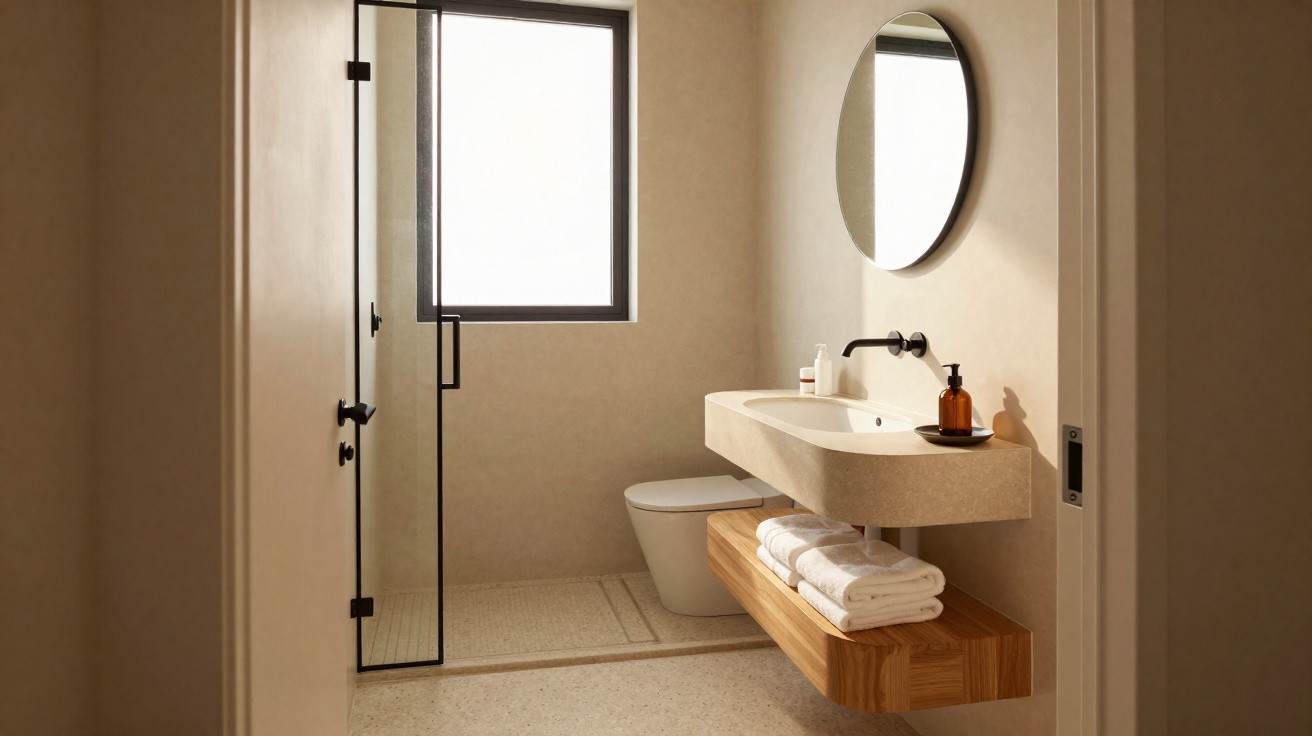
It becomes particularly interesting when you apply the same trick elsewhere: a pale shower curtain in a tiny bathroom, a natural-coloured rug in a narrow hallway or light tablecloths in a small kitchen. Our eyes react similarly in every case. Large, light surfaces make walls appear to recede.
Especially in cities with high rents, where every square metre matters, this kind of visual “trickery” is a practical tool. You do not need to knock anything down, move a wall or plan expensive fitted units. A thoughtfully chosen fabric on the room’s largest piece of furniture is often enough to bring back air, light and a sense of freedom.















Comments
No comments yet. Be the first to comment!
Leave a Comment