For millions of pet owners, dealing with shed fur is part of everyday life. Wardrobes become covered in fluffy jumpers, black jeans take on a grey cast, and visitors often leave with a small memento from your tabby. However, one remarkably easy method, paired with a handful of sensible routines, can make this recurring annoyance something you sort out in just minutes.
Why cat hair sticks so firmly to fabrics
Cat hair does not cling to materials randomly. It is usually caused by three factors working together: static electricity, fabric construction and the climate inside your home. When the air is dry, fibres become charged and attract fur like a magnet. This can increase considerably during colder weather, when central heating is on and humidity falls, explaining why winter clothes can look particularly bad.
The material itself is as important as the frequency of cleaning. Open-weave fabrics, including fleece and wool, hold fur deep within their fibres. Tightly woven cotton and denim generally release hair more readily because of their denser construction. Textile laboratories regularly note that the density of a fabric's fibres, rather than its fibre type alone, determines how difficult trapped hair is to remove.
Dense, smooth fabrics will always collect less pet hair than fluffy, textured ones, even if you clean both in the same way.
Moisture levels indoors also have an understated but important effect. Homes with consistently balanced humidity often have noticeably less fur settling on surfaces, even when pets shed a great deal. A reliable humidifier, for example, can alter how much hair drifts through the room and lands on a favourite blazer.
The remarkably easy trick: rubber gloves and a little water
Of all the products and clever devices available, one solution repeatedly appears in consumer tests and online discussions: an ordinary pair of rubber gloves, like those already used for washing up.
Using the rubber glove method
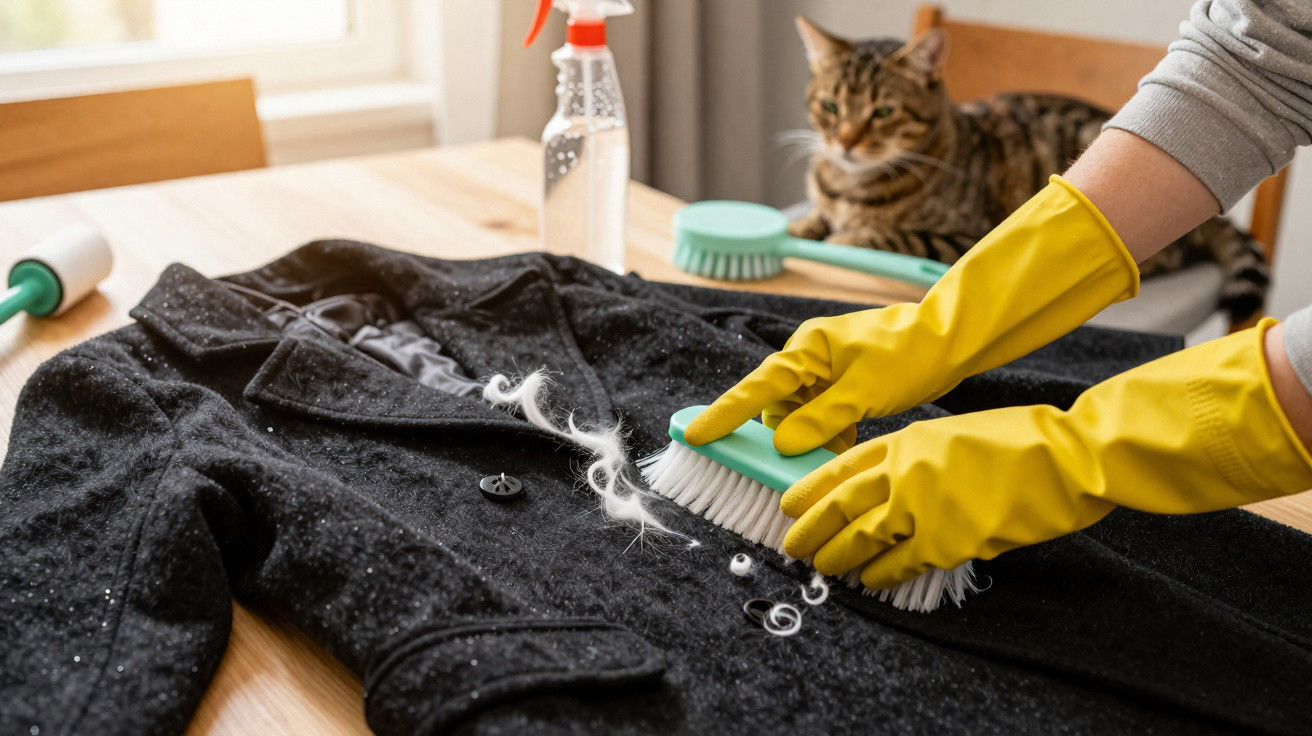
The approach could not be simpler. Mildly damp rubber produces friction and a gentle static charge, lifting fur from the material and rolling it into easy-to-see clumps.
- Put on clean rubber or latex washing-up gloves.
- Dampen the gloves lightly with water; they should be slightly tacky rather than dripping wet.
- Move your hands across the fabric in short, sweeping strokes, working in one direction.
- Pick up the small bundles of fur that gather and put them in the bin.
- Rinse the gloves once they become dirty, then repeat where necessary.
It is particularly effective on:
- Clothing spread flat over a table or bed
- Sofa cushions and armrests
- Car seats and upholstered headrests
- Curtains and fabric headboards
A £2 pair of gloves can rival expensive gadgets when used regularly on the worst “hair traps” in your home.
For anyone short of time, this can become a handy pre-commute habit: leave the coat on its hanger, give it a quick pass with damp gloves, then head out without obvious grey marks across the shoulders.
Smart tools to use alongside the rubber glove trick
Soft silicone brushes for fragile materials
Velvet, microfibre and suede-effect materials may become marked or lose their pile if scrubbed too firmly. A soft silicone brush offers greater precision. Its bendable bristles catch fine, short hairs without pulling or scratching the surface. Simply rinse it beneath the tap, leave it to dry and use it again, making it ideal for those who dislike continually buying replacement sticky rollers.
Scrapers and abrasive sponges for tougher cleaning
Carpets, textured blankets and cat trees may require a more robust option. Certain professional cleaners use flat glass scrapers or stiff sponges on hard-wearing fabrics, applying gentle, careful strokes in one direction. Fur then gathers together and can be vacuumed up. Although this technique requires a light touch, particularly with older textiles, it can freshen items that a vacuum cleaner alone never properly clears.
Lint rollers and tape for urgent fixes
It is useful for every pet owner to keep a lint roller near the door or inside the car. In a hurry, ordinary tape wrapped around your hand with the sticky surface facing outwards can be almost as effective. Press it down, lift it away and continue. While it is not a thorough clean, it prevents many people from arriving at meetings covered in half their cat.
Reducing static with sprays and laundry adjustments
Static builds up when fibres are dry. A light antistatic spray lowers the charge on a surface, allowing fur to slip away more easily rather than attaching itself. In the wash, adding a small quantity of fabric conditioner or plain white vinegar during the rinse cycle can noticeably reduce this charge on synthetic garments.
Reducing static does not remove the hair by itself, but it gives every brush, glove or roller you use a real head start.
Controlling humidity to reduce airborne hair
A humidity level of about 45% to 55% indoors will generally keep the air comfortable for people while making fabrics less electrically charged. Sensor-equipped modern humidifiers can maintain this range automatically. Families who add one often say they see less dust, fewer hairs floating around and better results when vacuuming.
Everyday habits that reduce fur on clothes
Cleaning tools are more effective when backed up by a few small habits. A cat's behaviour, your choice of fabrics and regular cleaning routines all influence the amount of fur that reaches your clothes.
- Replace fluffy throws and synthetic sofa covers with tighter fabrics, such as linen or denim, on beds and sofas.
- Groom cats every day during their main shedding periods, catching loose fur before it gets onto furnishings.
- Keep flannel, terry cloth and very loose knits away from your cat's preferred resting places, as they grip fur like Velcro.
- Pour a half cup of white vinegar into the final rinse for synthetic clothes to control static without strong fragrances.
- Keep wardrobes and drawers closed in rooms where your cat sleeps, reducing the drifting hair that settles on garments.
These actions may not seem dramatic individually, but together they can substantially lower the quantity of fur on visible surfaces. As a result, you will need less time with gloves and lint rollers later.
Which areas to tackle first
Certain parts of the home gather cat hair rapidly and then distribute it elsewhere. Addressing these hotspots can make the whole house appear cleaner without requiring as much effort.
| Surface | Best technique | How often |
|---|---|---|
| Living room sofas and armchairs | Damp rubber gloves or a silicone brush | Twice a week, more if pets sleep there |
| Short-pile rugs and mats | Gentle scraper or firm sponge, followed by vacuuming | Every 7–10 days |
| Dark synthetic clothing | Light antistatic spray, then lint roller or tape | Before wearing outside |
| Bedding and pillowcases | Vinegar or mild softener in the wash | Every wash cycle |
Creating a straightforward routine around these important areas helps pet owners avoid an intimidating major clean, replacing it with brief and focused maintenance sessions.
What not to do if you want to stop hair spreading
A number of common cleaning methods can inadvertently worsen the situation. Dry microfibre cloths, for example, can increase the electrical charge on a surface, making cushions and armrests even more attractive to fur. Using the cloth slightly damp can help minimise this effect.
Highly scented cleaning products can irritate many cats, potentially encouraging them to scratch or lick surfaces more frequently and spread both saliva and loose fur. For bedding and sofas, fragrance-free or lightly scented products are less likely to cause this issue.
Inexpensive metal brushes, commonly marketed for deep-cleaning furniture, may snag contemporary upholstery, particularly the recycled polyester blends found in many newer sofas. Damaged fibres trap fur and dust more easily, meaning a cheap tool can create a lasting cleaning problem.
Cat hair, health, comfort and seasonal routines
Fur on clothing is not only a style problem. For people with allergies, these hairs can carry dander, saliva proteins and dust that lead to itchy eyes or sneezing. A regular fur-removal routine, combined with good airflow and frequent washing of pet bedding, reduces the amount of allergens in the home.
Shedding patterns also vary throughout the year. Artificial lighting and heating mean many indoor cats now moult in lighter cycles year-round, although most still shed heavily in spring and autumn. In these periods, one additional grooming session each day and more frequent washing of throws and covers can prevent fur from taking over your wardrobe.
Thinking seasonally about pet care and fabric care keeps cat hair from turning into a twice-yearly crisis.
In busy households, it may be helpful to regard fur management as another simple routine: spend five minutes each evening using rubber gloves on the main sofa, groom your cat briefly before feeding time and leave a lint roller by the front door. None of this takes away the pleasure of living with a cat. It simply lets you leave the house looking like yourself rather than a walking scratching post.






Comments
No comments yet. Be the first to comment!
Leave a Comment