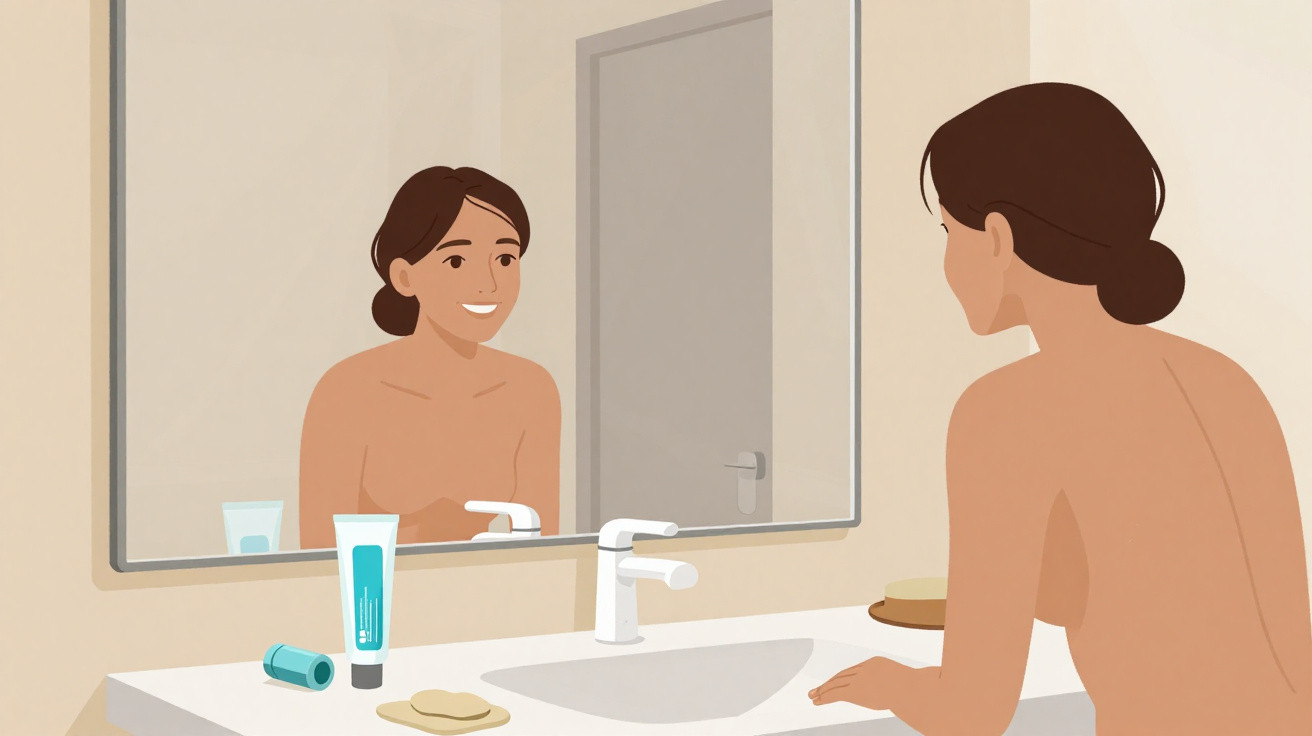
The hot water cuts out, the bathroom extractor fan drones without achieving anything, and you grab for your towel while shampoo is still drying on your shoulders.
You bend towards the mirror to shave or put on make-up… but there is only a grey, cloudy blur. A swipe of your hand merely smudges it. Wipe again and you create streaks. Your face emerges in fragments, like a wet jigsaw that will not fit back together.
You open the door slightly to release the steam. Now you are partly freezing and partly sweating, with one eye searching for a razor and the other looking for a clear patch of glass. You check the time on your phone. Naturally, you are late. Again. It is one of those minor, irritating everyday obstacles that quietly steals time from your morning.
Some people buy devices to tackle it. Others alter nothing and simply grumble. Then there is the curious group of people cleaning their teeth who have quietly discovered that toothpaste has another use besides freshening breath.
Why your bathroom mirror fogs up at the most inconvenient time
Try standing in front of the bathroom mirror before taking a hot shower. At first, everything is normal. You can still see your reflection, perhaps looking slightly washed out beneath the ceiling light. Then steam fills the room, the air grows heavy, and countless invisible droplets begin settling on the glass. In moments, the entire surface turns misty.
The mirror is not really to blame. Warm, moisture-filled air from the shower reaches the cool glass surface. Water vapour condenses, clings to the smooth material and creates the familiar pearly coating. It is only a fine layer, yet dense enough to conceal everything behind it. At 7:18 a.m., physics is probably not on your mind. You simply think, “Why now?”
On a busy weekday morning, this small fog display becomes a family performance. Somebody calls from the hall, another person thumps on the door, and the person inside draws vague circles through the moisture, breathing warm air onto the glass in an attempt to find an eye, a nose or anything useful. One small clear square appears, then fogs over again.
In compact flats, this routine is almost unavoidable. A quick shower becomes a battle against condensation. You rub the mirror with your hand or towel, leaving marks behind. You consider using the hairdryer, which seems absurd. Some people even open the window fully in winter, losing all the warmth just to regain a little of their reflection.
The science behind this frustration is straightforward. Glass is smooth and hydrophilic, meaning it attracts water and allows droplets to spread. When numerous tiny droplets gather together, they scatter light in every direction. Your reflection becomes distorted, rather like a television channel with no signal. Stopping this pattern requires either changing the temperature or altering the surface so that water acts differently.
That is where toothpaste comes in, almost accidentally. The minty paste contains gentle abrasives, detergents and surfactants – ingredients from the same family as those in anti-fog products for car windscreens and diving masks. There is no magic involved: it is simply chemistry already sitting beside your sink.
The easy toothpaste trick for clear bathroom mirrors
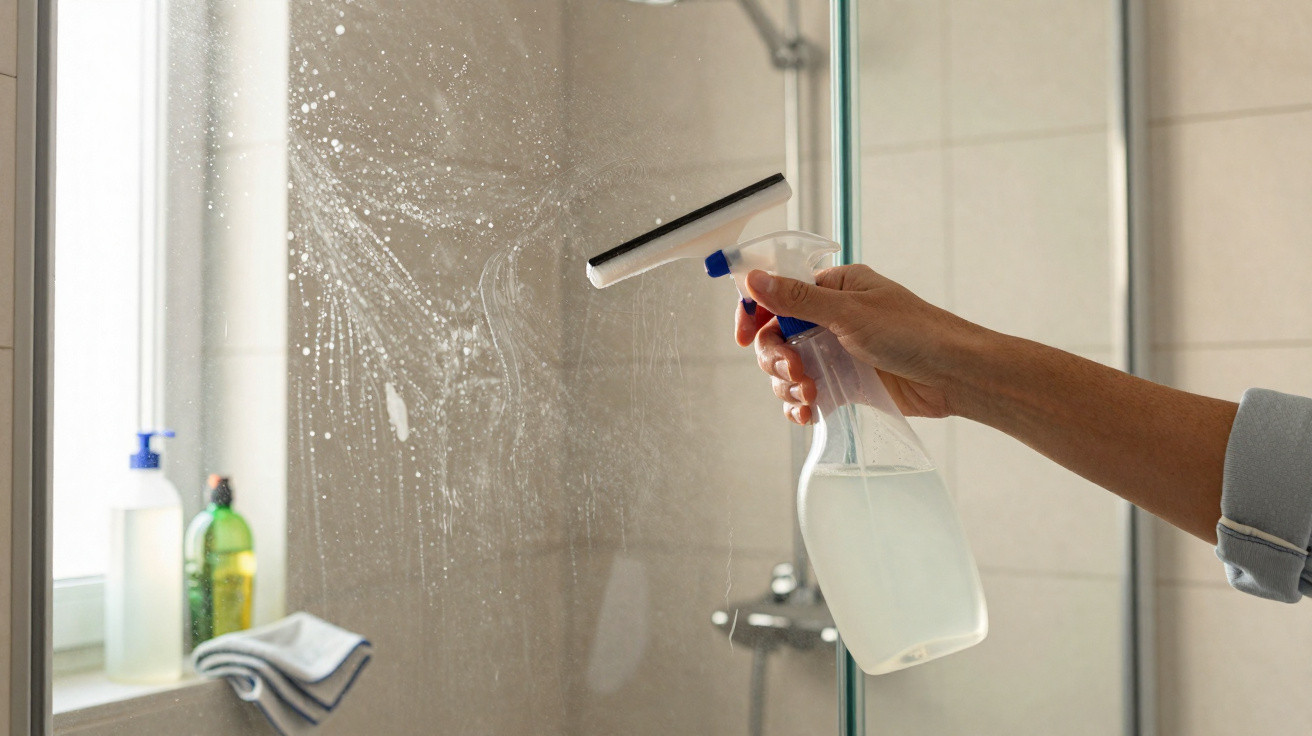
The technique is almost implausibly easy. Use a pea-sized amount of ordinary white toothpaste – not gel, not a whitening version containing fancy blue crystals, but a basic paste. Place small dots on a clean, dry mirror, then use a soft cloth to spread them in light, circular movements. You are not covering a wall. The aim is an extremely thin, barely noticeable coating.
After distributing the toothpaste evenly over the section you want to protect, polish the glass until it is clear once more. There should be no large white patches or hazy film. Instead, the surface should have a subtly smoother, almost waxed feel. This invisible layer changes the way droplets react when the bathroom becomes steamy.
During your next shower, notice what happens. The glass still comes into contact with warm, humid air, but the water droplets distribute themselves differently. Rather than creating a thick mist, they spread into a more even layer. More light can pass through it, keeping your reflection visible for far longer. It follows the same principle that helps certain swimming goggles remain clear in warm pools.
Those who have tested it often report a small, pleasant surprise. You leave the shower expecting the usual wall of fog, only to find that you can see yourself. You can shave without guessing blindly or apply eyeliner without appealing to the bathroom gods. Nothing about the routine has changed, but the experience has.
A few sensible precautions apply. Never rub toothpaste directly onto a dusty or dirty mirror, as you could work tiny particles into the glass. Clean it beforehand. Also avoid highly abrasive “extra whitening” formulas that claim to polish teeth like porcelain; over time, they may cause micro-scratches on a delicate mirror. Choose classic, inexpensive brands instead. They are generally gentler and, strangely enough, often work better for this purpose.
One practical point: this is not a permanent miracle coating. Its effect wears off after a week or two, depending on the number of showers taken and the amount of steam in the bathroom. Some people include it in their normal cleaning routine when they already have a cloth out. Others reapply it only when the fog starts returning. Let’s be honest: nobody really does this every day.
Even so, the small task can save minutes in the morning. One young father I interviewed laughed: “I don’t get more sleep, but I lose less time yelling at the mirror.” Another reader living in a tiny city flat said she no longer needed to put on make-up beside the kitchen window. These are minor improvements, but at 7 a.m. they can feel significant.
“You don’t realise how much mental space small annoyances take, until one of them disappears,” says Anna, 29, who discovered the toothpaste trick on a travel forum and now swears by it every winter.
Many people use far too much product on their first attempt, creating a sticky mess. Others choose coloured or striped toothpaste, then find themselves trying to remove faint blue lines from the glass in certain lighting. A light touch is best. Use less toothpaste and spend longer polishing. If visible residue remains, wipe the mirror again with a clean, slightly damp cloth before drying it fully.
- Choose plain white toothpaste, without micro-beads or strong whitening claims.
- Apply it to a clean, dry mirror and buff until the surface is completely transparent.
- Try it first on a small corner before treating the whole mirror.
- Reapply every 1–2 weeks, or once fogging gradually returns.
- Do not use this method on antique mirrors or mirrors with specialist coatings.
How a clear mirror can improve your daily routine
Everyone has experienced a small problem that throws an entire morning off course. The bus pulls away as you reach the stop. Your keys have vanished. The mirror refuses to clear when you are already running late. Each issue alone seems insignificant. Together, across months and years, they quietly affect your mood, patience and even the way you speak to the people you live with.
Bathroom condensation may sound silly in theory. In practice, it is one of those everyday irritations that arrives exactly when your mental capacity is lowest. You have only just woken up, your list of tasks already feels long, and now you are peering through mist to shape a beard line or cover a blemish. The less energy you spend on that, the more you retain for things that genuinely matter.
A mirror that does not fog means less rushing between the shower and the hallway, less opening and shutting the door to “let the steam out”, and fewer arguments with teenagers who spend ten minutes wiping swirls through the condensation. It is almost symbolic: beginning the day with a clear reflection, both literally and mentally.
There is also something especially satisfying about resolving a daily nuisance with something already in the house. No new gadget, no plastic adhesive film and no costly anti-fog spray. Just the unremarkable tube bought on offer, taking on a second job. It restores a little control in a room that can often feel chaotic.
People who take up this small hack often pass it on casually: over coffee, in group chats, or in lengthy discussions about “oddly useful things I wish I’d known sooner”. It travels more like folklore than a technology launch. An older neighbour tells a younger flatmate; a parent shares it with a child moving into student accommodation. It is a modest, home-grown form of collective knowledge.
Perhaps that is why it is unexpectedly appealing. You are not transforming the world; you are simply helping one square metre of glass behave better when hot water is running. Yet that clear square appears when you are at your most vulnerable and unprepared: bare-faced, hair dripping, with the day ahead uncertain. You look up, and this time the mirror looks back without concealing itself behind fog.
| Key point | Detail | Benefit for the reader |
|---|---|---|
| Toothpaste as an anti-fog solution | A fine layer of basic white toothpaste changes how water droplets form on glass. | It provides an affordable, accessible way to keep bathroom mirrors clearer after hot showers. |
| Application method | Spread a pea-sized amount, polish until invisible, then repeat every 1–2 weeks. | It offers a straightforward, step-by-step habit that can fit into existing cleaning routines. |
| Effect on everyday life | It reduces morning frustration, saves a few minutes and creates a calmer start. | It removes a familiar annoyance with almost no extra expense or effort. |











Comments
No comments yet. Be the first to comment!
Leave a Comment