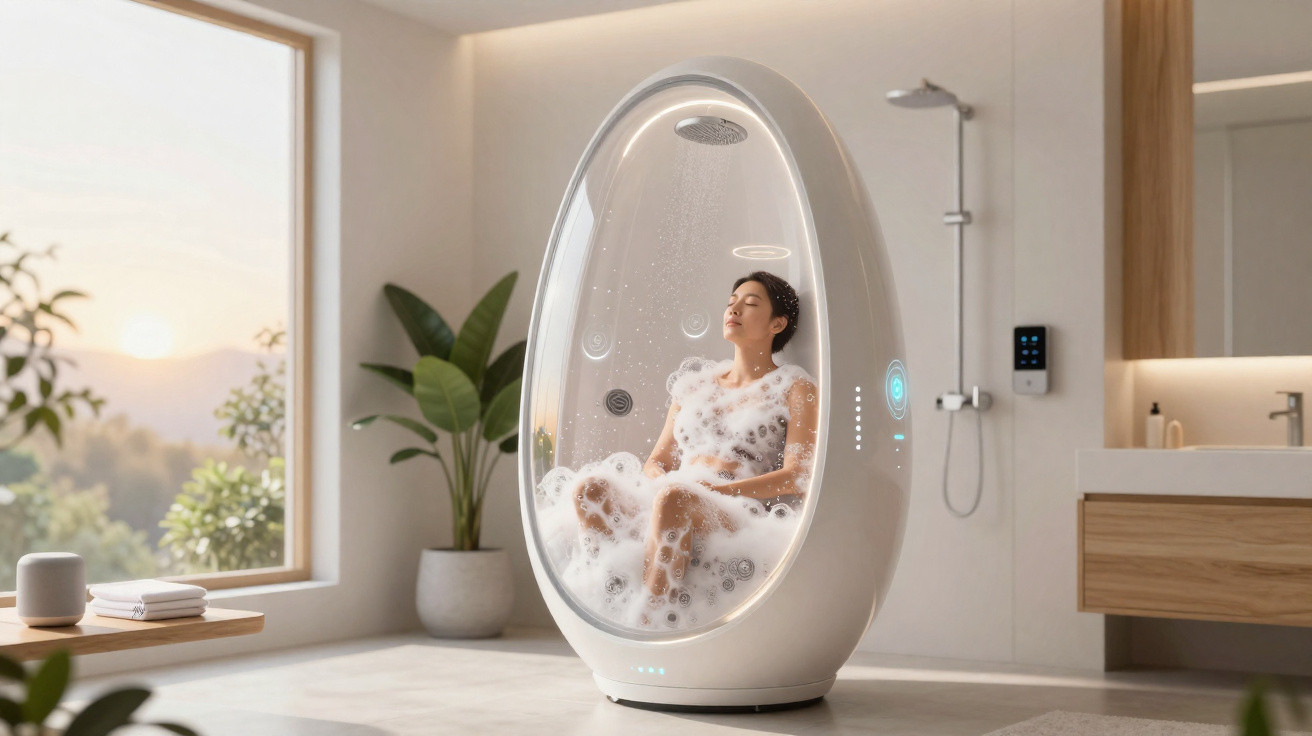
In Japan, a new development is attracting attention: a high-tech capsule aims to make the conventional shower cubicle redundant in the long term. Rather than washing themselves, users enter a kind of “human washing machine”, take a seat and leave the rest to sensors, microbubbles and artificial intelligence. The device remains a niche product for now, but it offers a glimpse of the direction bathrooms of the future could take.
From shower cubicle to body capsule
The devices are made by Osaka-based company Science Co. The project name hints at the scale of its ambition: a capsule designed to handle the entire washing process, from cleaning through to drying. The user sits comfortably inside, the cabin closes, and the system begins automatically.
The concept itself is not entirely new. At the Osaka Expo in the 1970s, Japan unveiled an early prototype of an automated human washing system. At that point, however, the technology was not advanced enough to turn it into a practical everyday product. Far more capable sensors, precise controls and artificial intelligence are now available. What once seemed like futuristic fantasy is therefore becoming a serious proposal for tomorrow’s bathroom.
How the “human washing machine” works
At the centre of the system is an enclosed capsule. The user steps inside and sits down, while software manages the remaining stages. Water fills the interior and is enriched with tiny air bubbles known as microbubbles.
“Ultra-fine air bubbles are intended to loosen dirt and skin deposits without the need for vigorous rubbing or brushing.”
This technology is already familiar from wellness treatments and therapeutic baths. The microscopic particles can reach the skin’s surface more effectively, gently lifting grease, dirt and dead skin cells. Instead of being treated with rough mechanical action, the skin is effectively rinsed around.
Meanwhile, sensors inside the unit monitor the user’s physical condition. They record information such as heart rate and other biometric readings. An AI evaluates this data and automatically adjusts several settings during the process:
- Water temperature
- Pressure and intensity of the water and air flows
- The capsule’s internal lighting
- Background sounds and sound effects
As a result, the device resembles a personalised spa experience more than an ordinary shower. Depending on stress levels, circulatory condition or personal preference, the machine could provide either a more invigorating or a more calming wash cycle.
Cleaning, relaxation and monitoring in one device
The developers are pursuing a clear principle: cleaning, wellness and health monitoring should merge into a single process. While the body is being washed, the system continuously collects information about the person’s condition.
This creates several potential uses:
- Everyday stress check: Heart-rate patterns and other indicators could reveal how tense a person is.
- Long-term monitoring: People who use the capsule regularly may be able to identify trends in vital signs early, such as increasing strain or fatigue.
- Support for people requiring care: In care homes or hospitals, the system could ease the workload of care staff while also displaying warning signs if readings fall outside the normal range.
Once washing is complete, a drying system begins within the same capsule. Streams of warm air remove moisture from the skin, with their timing adjusted to the measured body readings. After around 15 minutes, the person should be able to step out clean, dry and, ideally, significantly more relaxed.
What this could mean for modern bathrooms
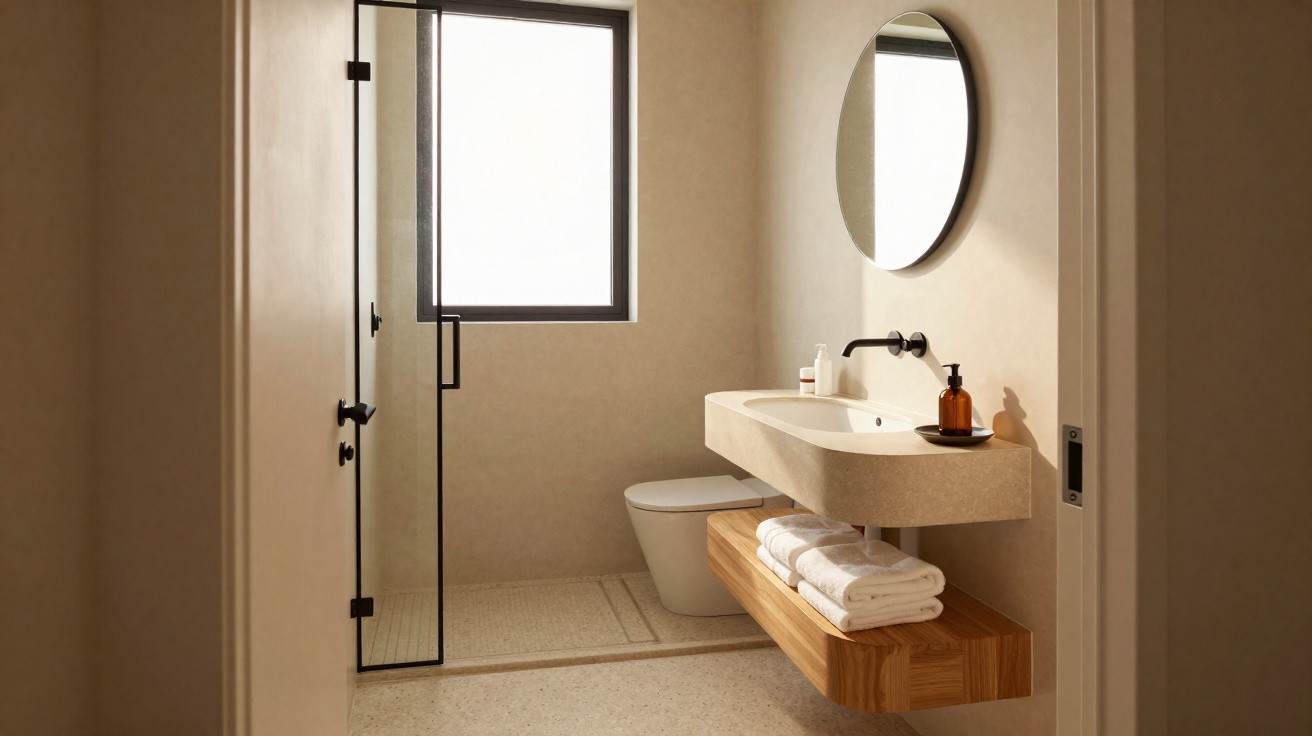
If capsules of this kind become established, the traditional bathroom combination of shower, bath and separate wellness area could be reconsidered. Instead of tiles, shower curtains and squeegees, the room could contain a technical module connected to electricity and water.
Possible implications for bathroom design include:
- Less space required for shower cubicles and baths
- Greater emphasis on technical connections and maintenance access
- Integration with smart-home systems, for example through app or voice control
- The option to transfer health data to other devices, such as smartwatches
At the same time, a debate around convenience and privacy is likely to emerge. Who wants a machine to assess detailed body data while they are sitting naked inside it? Some people may see this as practical, while others may find it unsettling.
Where a “washing machine for humans” could make sense
In certain settings, the potential benefits are particularly obvious. Especially interesting locations include the following.
Care homes and hospitals
Washing people who need care is physically demanding and time-consuming. An automated capsule could reduce the burden on care teams and give patients a greater sense of independence if they can start the wash cycle themselves, with support where needed.
Data analysis could also allow closer monitoring of a person’s health without medical staff needing to be present all the time. Noticeable changes might be detected sooner.
Luxury hotels and wellness spas
High-end hotels are constantly looking for new attractions for affluent guests. A personalised body capsule featuring controlled lighting, fragrance and sound fits this model perfectly. In such venues, it would be marketed primarily as a premium spa experience rather than as a practical everyday appliance.
Technology-oriented private households
In the average bathroom, the capsule is likely to remain unusual for the foreseeable future. Nevertheless, well-off technology enthusiasts may buy one as a status symbol and comfort solution, much like smart refrigerators or fully automated massage chairs.
Opportunities, risks and unanswered questions
The benefits are clear: time savings, convenience, a gentle method of cleaning, and a closer link between hygiene and health monitoring. People with sensitive skin or reduced mobility in particular could benefit, as they would no longer need to stand, turn and scrub with difficulty.
However, several critical issues also arise:
- Data protection: Where will the collected health data go, and who will be allowed to analyse it?
- Dependence on technology: If the system fails, users will need to rely on conventional washing facilities.
- Cost: Such complex technology will initially be expensive and is unlikely to appear in typical rented flats.
- Acceptance: Not everyone will want to sit in a sealed capsule and surrender control.
There are environmental questions too. How much water would the capsule use compared with an efficient shower? How much energy would its heating and drying processes actually require? Only when specific consumption data is available will it be possible to determine whether its everyday environmental balance is convincing.
What terms such as microbubbles and biometric sensors mean
Microbubbles are extremely small air bubbles in water, generally measured in micrometres. Their size increases the contact area between the water and the skin. This may improve cleaning performance without aggressive shampoo or harsh brushes. Spa facilities in the cosmetics industry have already used such systems for several years.
Biometric sensors record physical information, ranging from heart rate and breathing activity to skin temperature and circulation. Inside the capsule, these measurements can provide indications of stress, fatigue or circulatory strain. Someone entering with an elevated pulse, for example, could automatically receive a programme with a gentler water jet, warmer lighting and calming sounds.
How these capsules could be combined with other technologies
The body capsule becomes particularly interesting when linked with systems that are already widely used. Smartwatches, fitness trackers and sleep sensors already provide data about activity and recovery. A washing capsule could use this information to select a suitable programme: stimulating after a long working day, restorative after exercise, or especially calming before bedtime.
Additional scenarios emerge for people with chronic illnesses. Someone with heart problems, for instance, could be monitored during the washing process. The system could raise an alarm if certain readings move substantially outside the normal range and send notifications to relatives or care services. In this way, a simple hygiene routine becomes part of personal health management.










Comments
No comments yet. Be the first to comment!
Leave a Comment