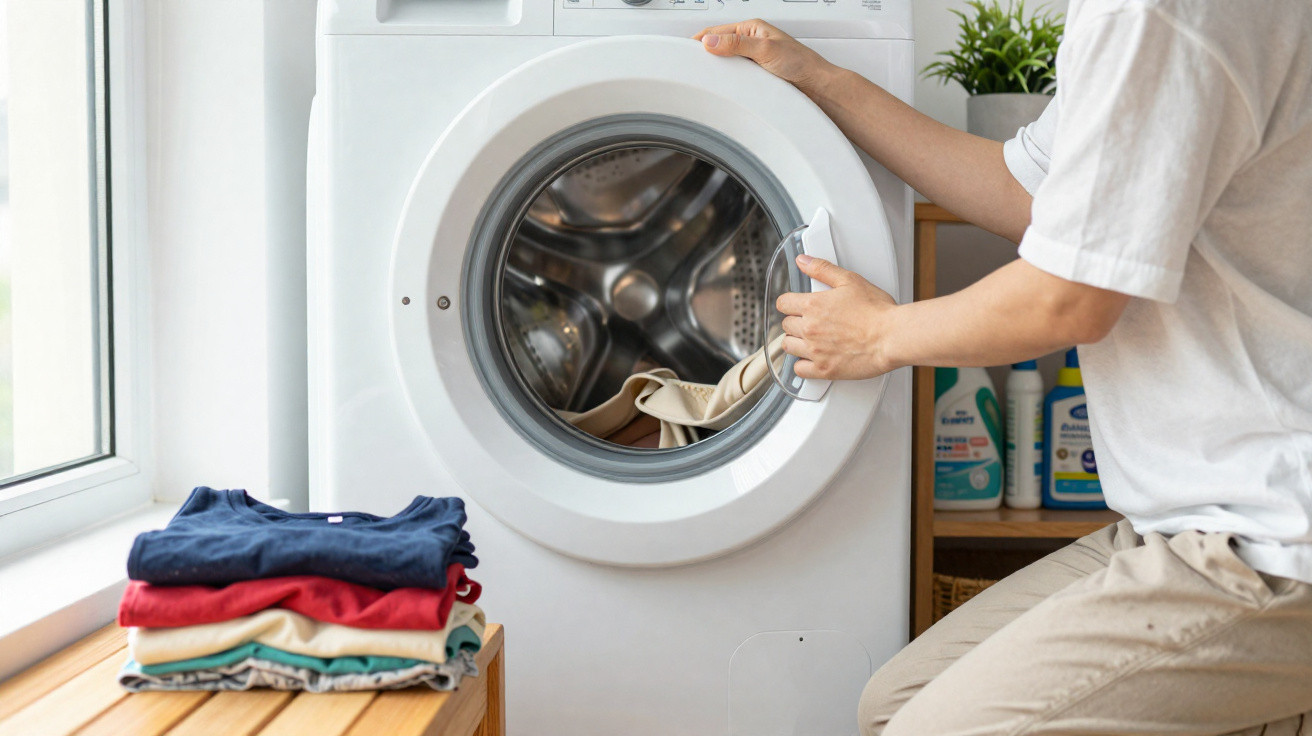
The washing machine droned quietly in the background as Emma took out her favourite black jeans and frowned.
They were barely six months old, yet the knees had already turned grey, the material felt worn thin and the seams looked exhausted. At first, she blamed the label, then the washing powder, then the tumble dryer. Eventually, she faced an awkward possibility: her washing routine, rather than the jeans, was the problem.
Once you notice the signs, they are impossible to miss. The fluff in the filter resembles fibres from your jumpers. Tiny holes appear in T-shirts with no obvious cause. Towels that were once soft become rough as sandpaper. Most of us treat this as “normal wear”, almost as though it is the unavoidable price of keeping clothes clean.
But inside that metal drum is a straightforward inspection, a small routine that can determine whether clothing lasts for years or is ruined within a season. Almost nobody mentions it.
The unseen damage inside your washing machine drum
Open your washing machine door and inspect the drum carefully. Really inspect it. The small perforations, metal lip, rubber seal and laundry lifters are all places where clothes can gradually be damaged. A rough patch, a coin lodged in a gap or a trace of rust can act like sandpaper against fabric, rubbing and scratching it with every spin.
We usually assume clothes deteriorate because of the outside world: urban grime, coffee stains and hectic daily life. However, much of the harm happens in that confined metal chamber. Each cycle involves friction, twisting, tumbling and scraping. With a new drum, this friction remains manageable. In a neglected machine, it can become harsh.
A single, regular inspection can completely alter that outcome.
Any appliance repair technician will tell you that the trouble often begins with something very small. A bra wire can slip through a hole and bend the metal. A forgotten coin can whirl around like a blade. A zip can catch the drum and leave a fine scratch. You may not spot the effects immediately. Instead, you notice them when your favourite T-shirt unexpectedly develops a group of small holes near its hem.
There is evidence behind this subtle form of damage. Textile specialists estimate that mechanical stress - the actual rubbing and stretching inside the machine - accounts for a substantial share of premature wear, rather than detergent or water temperature alone. It is rather like putting clothes through a miniature storm each week. Add sharp edges or jagged areas to that storm, and the fibres fail more quickly.
During a hectic week, it is easy to blame poor-quality fast fashion. On a quieter day, though, feeling around the drum with your fingers rather than simply examining it with your eyes can make the real cause surprisingly clear.
The reasoning is simple. Fabric consists of threads woven repeatedly together. Every thread can withstand only so many bends and points of friction before it breaks. A smooth, undamaged drum distributes that pressure across a broad surface. A bent perforation or scratched edge, however slight, focuses the pressure along a narrow strip of material. That is how those puzzling cuts, seemingly made by invisible scissors, occur.
Whenever the drum rotates, speed and gravity push clothing against the same areas. T-shirts, bedding and underwear all travel repeatedly over damaged metal. The damage may appear random when you look in your wardrobe, but inside the drum it follows a relentlessly predictable pattern.
The essential check is almost absurdly easy: slowly run your bare hand around the drum interior and its edges, feeling for anything that catches your skin. If it snags your hand, it will snag your clothes. This is the step most people overlook.
The simple drum check that protects your clothes
The routine works like this: once a week, before starting a wash, open the machine, make sure it is entirely empty and pass your fingertips over every area where clothes touch metal or rubber. Do not rush. Keep your palm flat, curve your fingers slightly and move carefully. Feel the holes, welds, lifters, drum rim and rubber door seal. The aim is not to look; it is to feel.
If your skin or nail catches at all, stop and investigate. That minor snag is the problem. You may find a small object caught there, such as a staple, pin or fragment of plastic from an old button. In other cases, it may be limescale or a slight metal burr. Wipe it away, remove the item, carefully smooth it using very fine sandpaper if appropriate, or contact a repair technician if the damage is significant. Do not simply leave it alone.
This 60-second habit can be the difference between clothing that remains soft and clothing relegated to “house clothes” after three washes.
One dull Tuesday morning, Marta found bobbles across her favourite hoodie. She sighed and blamed the inexpensive material. A month later, a second hoodie had the same issue in the same place. This time, she investigated properly. Passing her hand around the inside of the drum, she discovered a small sharp area near one of the perforations. A metal hair clip had been left inside and trapped there, scratching every item that passed over it.
After taking out the clip and gently smoothing the edge with a nail file, the unexplained damage ended. There were no more holes and no new bobbling in the same pattern. “It felt silly,” she admitted later. “One tiny clip, ruining half my wardrobe.” With washing machines, the culprits are seldom dramatic: they are coins, screws, zip teeth and underwire ends.
Let us be honest: nobody really does this every day. We put washing in, press a button and get on with our lives. Still, a quick feel around the drum before a large mixed load - children’s clothes, gym kit and delicate favourites - can quietly save hundreds of pounds over a year.
Why is the inspection so important? Mechanical wear builds up gradually and goes unnoticed. Clothes rarely fail because of one disastrous wash. They fail after 30 cycles that were almost fine. A scratch in the drum removes fibres bit by bit. You see the consequences as colour loss, thinning fabric and weakened seams. It may seem like “bad quality”, but the conditions have partly caused it.
There is a psychological change, too, once this becomes routine. Rather than using the machine passively, you begin to “read” it. Odd noises, small metal pieces in the filter and unfamiliar vibrations start to stand out. These are early warnings. Deal with them promptly and you help protect your clothing as well as the washing machine.
Textile experts often make the same point: the gentlest wash is always the one that never happens. Since avoiding laundry is not really practical, the best alternative is to reduce needless rough treatment. Keeping the drum smooth and free from hard objects and minute scratches is the simplest part of doing so.
“Most people only look inside their drum when something is already broken,” says a London appliance engineer. “If they ran their hand around it once a week, they’d stop half the problems before they started – the torn clothes, the leaks, even some of the loud banging noises.”
Putting this advice into practice is simple. Begin with regular brief checks and a few protective measures:
- Empty pockets every time: coins, keys, screws and hairpins can damage the drum.
- Fasten zips, hooks and bras: during a spin cycle, they behave like tiny blades.
- Put delicate pieces in laundry bags: this includes lace, fine knitwear and wired bras.
- Avoid overfilling the drum: fabrics need space to move rather than rub together.
- Clean the drum and seal monthly: clear away grit, limescale and loose threads.
None of these actions requires specialist products or costly equipment. They only take a few additional seconds and a decision to view your washing machine less as a mysterious black box and more as a tool you know how to use properly.
What happens when you look after the washing machine drum
Once you make this simple inspection part of your routine, you may see your wardrobe differently. The T-shirt you assumed was “just cheap” lasts through the season. Black jeans retain their colour for longer. Towels remain thicker. There is a quiet sense of satisfaction when laundry comes out looking much as it did before it went in.
Your washing rhythm also changes. The cycle is no longer an unseen, magical process; it becomes something you take part in. In practical terms, this means fewer unpleasant surprises: less fluff everywhere, fewer holes and less unexpected bobbling. More subtly, taking a minute to pay attention can feel surprisingly satisfying because it interrupts autopilot.
More broadly, extending the life of your clothing becomes a modest statement in itself. If a shirt lasts 3 years rather than 1, or jeans last 4 years rather than 18 months, you are doing more than saving money. You are also purchasing less and discarding less. It is not a grand or heroic act, only a calm and almost invisible decision repeated on each laundry day.
Sustainability is rarely discussed in such a hands-on domestic sense. Yet running a hand over the drum, removing a coin from the seal or fastening a zip before washing are all small daily actions that alter the lifespan of clothing. Those lifespans eventually shape habits, budgets and even the stories we tell ourselves about the belongings we own.
The next time you are about to start a cycle, stop briefly. Open the door and slowly move your hand across the metal. Check whether anything catches. Nobody will see this little routine, applaud it or send an app reminder. Nevertheless, it may make the quiet difference between a wardrobe that repeatedly lets you down and one that ages alongside you.
On a busy day, it may seem insignificant. Over a long enough period, it is anything but.
| Key point | Detail | Benefit for the reader |
|---|---|---|
| Check the drum by touch | Slowly pass your hand over the metal and rubber to find snags or sharp areas | Prevents concealed damage that leads to holes, pulls and thinning fabric |
| Remove foreign objects | Coins, clips, bra wires and grit trapped in holes or seals | Reduces mechanical stress on clothes and extends the lifespan of both fabrics and the machine |
| Build protective habits | Fasten zips, use laundry bags, do not overload the machine and clean it monthly | Helps clothes look new for longer and reduces replacement costs |





Comments
No comments yet. Be the first to comment!
Leave a Comment