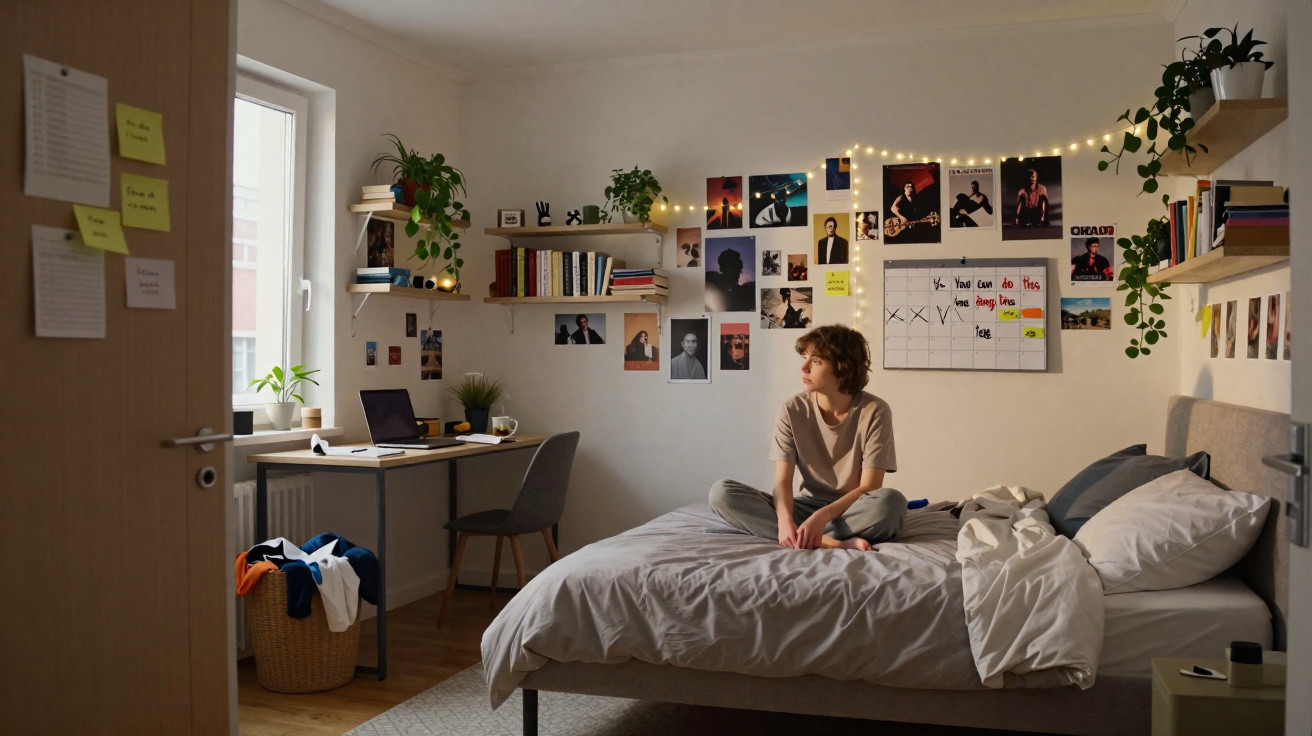
As nights draw out and the weather turns colder, your bedroom can reveal things about you that you would never say aloud.
The room you hurry into at day’s end, leave clothes in, use for phone scrolling and eventually fall into bed in, works as a subtle psychological X-ray. Your bed’s orientation, the clutter underfoot, the gentle glow or unforgiving brightness of the lighting: every feature can outline your need for safety, your personal boundaries and worries you seldom articulate.
How bedrooms quietly broadcast our hidden needs
The position of your bed and your need to feel safe
Therapists frequently begin with a simple detail: the position of the bed. Does it look straight towards the door, as though you are on watch? Is the headboard secured against a wall and set away from the windows? Or is the bed tucked into a corner to create a nest-like feel?
Your bed’s position often mirrors how much of the world you can tolerate before you sleep.
Those who arrange their bed with a firm wall behind it and an unobstructed view of the doorway often seek predictability. This setup allows the mind to settle, as nothing can “surprise” you from behind. A bed pressed into a corner may reflect the desire to feel enclosed, rather like returning to a safe childhood hiding place.
People who move their bed during the year - nearer a radiator in winter and closer to a window in summer - are often strongly motivated to manage their own comfort. They assess the room like a thermostat: adjusting and refining it rather than accepting a layout that no longer works for them. This can indicate adaptability, but may also suggest a nervous system that struggles to fully relax unless its surroundings feel exactly right.
Your nightstand: a mini-museum of your coping mechanisms
Take a look at your bedside table. For many, it is the bedroom’s most revealing feature. There may be books piled into precarious stacks, charging cables tangled like creepers, a childhood soft toy partly concealed beneath hand cream, essential oils or crystals, or a glass of water left there since last Tuesday.
What you keep within arm’s reach at night often reveals what you fear losing control over.
A bedside table crowded with books, notebooks and pens can point to a mind that will not switch off. Perhaps you worry about boredom, opportunities slipping away or unresolved thoughts eventually catching up with you. Someone who keeps a soft toy or meaningful keepsake nearby may rely on emotional anchors. Such objects can ease a low-level anxiety around abandonment or loss, even if they would never describe it in those terms.
Gentle lamps, scented candles and diffusers can indicate a wish to consciously regulate your mood. If you fear being awake with a racing mind, you may create a ritual involving light, fragrance and texture. It acts as a symbolic “gate” separating the outside day from the night within.
Mess, control and what you don’t want to face yet
Most bedrooms sit somewhere between cluttered and minimalist, and that position is seldom accidental. A pristine room with the polished appearance of a hotel may look striking on Instagram, but it may also reflect a powerful fear of disorder. When every cushion is precisely placed, every emotion may be expected to stay neatly contained too.
Conversely, a floor strewn with clothes and bags is not automatically a sign of laziness. It often reflects avoidance. The chair that “wears” three days of outfits may become a physical version of a to-do list you cannot bring yourself to examine. Putting everything away would require you to confront tasks, decisions and a life pace that already feels overwhelming.
A visible pile in a corner often hides an invisible pile in your mind.
Psychologists observe that people who maintain areas of “managed mess” - perhaps a chaotic drawer or a perpetually unruly corner - can use them as pressure-release valves. Rather than breaking under the expectation of perfection, they create one place where rules are allowed to loosen. That small area of disorder may reveal fears of failure, judgement or losing control if even one thing goes wrong.
Your bedroom as a map of your boundaries with others
Open door, closed door: what your layout says about access
Some bedrooms resemble railway stations, with doors left open, children and pets coming and going, and friends settling on the bed for long conversations. Others have the atmosphere of vaults: doors shut, curtains closed and nowhere for visitors to sit.
A room with an extra chair, a bench at the foot of the bed or even a small window table often suggests psychological room for other people. You are prepared to welcome conversation as well as sleep. By contrast, people who intentionally offer no seating - just a tightly made bed - may require firmer boundaries. The message is that this is a room for rest, intimacy or retreat, rather than social obligation.
Bedroom layouts can reveal relationship dynamics too. A couple with mismatched bedside tables, one crowded with personal belongings and the other nearly empty, may be showing an uneven balance of emotional investment or privacy. The person with fewer possessions might be more guarded, or may simply have never felt that the room was genuinely theirs.
Photos, memories and the question of who belongs in your story
Photo-covered walls, travel mementoes and love notes can turn a bedroom into a shared story. Choosing these displays may suggest a strong need to feel connected at both waking and bedtime. It is a way of saying: “These people, these moments, travel with me into my most private space.”
Visible memories at eye level often soothe fears of disconnection, loneliness or being forgotten.
A bedroom without photographs may convey something entirely different. For a person recently through a break-up, it can represent an emotional detox period. For others, bare walls express a strong preference for self-containment: no outside gaze and no earlier version of themselves observing their changes.
In rented bedrooms, shared flats or corporate accommodation, some therapists consider a complete lack of personal possessions to be a subtle marker of uncertainty. If you never emotionally settle into a space, you may fear instability, fresh attachments or the hurt of needing to leave once more.
Colour, light and fabric as emotional barometers
There is a reason muted shades - gentle beige, sage green, misty blue and pale terracotta - have taken over design feeds. People often choose them when everyday life feels noisy. These colours turn down sensory intensity and comfort a nervous system that spends the day leaping from one notification to the next.
People who favour weighty fabrics, luxurious throws, blackout curtains and layered bedding often want the physical feeling of being held. Thick duvets and several cushions create a padded boundary between you and the world outside. This may stem from ongoing stress, anxiety or work that demands unrelenting performance. The bedroom then becomes the sole place where it feels safe to “switch off the mask”.
In contrast, a stark and brightly lit room with bare floors and few textiles may suit people who connect softness with vulnerability. They may be wary of slipping into emotional haze, so they favour hard surfaces, powerful lighting and crisp lines. In this view, rest must appear efficient, almost professional.
| Bedroom detail | Possible hidden fear |
|---|---|
| Bed pushed into a tight corner | Need for protection, fear of being too exposed |
| Overloaded nightstand | Fear of empty time, racing thoughts at night |
| No personal photos or mementos | Fear of attachment, or phase of emotional reset |
| Harsh overhead lighting only | Discomfort with softness or emotional intimacy |
Shifting your bedroom to calm your fears, not feed them
Letting in a little mess without losing yourself
A bedroom that resembles a design showroom may seem impressive yet feel oddly unwelcoming. If every crease is pressed and every book spine lines up, the message beneath it can become: mistakes are not permitted. That can keep fears of failure, judgement and not being “enough” permanently stirred up.
Allowing a controlled amount of mess can act like exposure therapy for perfectionism.
Leaving a book open on the bed, draping a soft throw casually instead of folding it perfectly, or allowing a small “dumping basket” for miscellaneous belongings can alter the way your mind interprets the room. It tells you that this is somewhere to live, rather than merely display. Though slight, this adjustment can reduce pressure and gradually weaken the fear that one error will make everything collapse.
Micro-adjustments that soften silent anxieties
Changing your bedroom does not require a renovation-sized budget. A few small, intentional changes may relieve stress patterns that surface each evening:
- Replace one harsh ceiling fitting with two or three softer lamps positioned at eye level.
- Introduce one personally meaningful item, such as a framed postcard or a small inherited object, to help ground you.
- Adjust the bed’s angle so that you can see the door without lying directly in its line.
- Leave one drawer intentionally untidy while keeping the rest reasonably organised, helping to challenge all-or-nothing thinking.
- Pick a single colour that soothes you and repeat it in your bedding, a cushion or a small rug.
These adjustments have value because the brain learns through repetition. When, each night, you see evidence that your room supports rather than judges you, fears linked to safety, failure and rejection can loosen their hold.
Turning your night routine into an emotional safety drill
Bedroom psychology extends beyond furnishings. Your pre-sleep habits within this room may reveal your fears even more plainly. Doomscrolling until your eyes hurt can reflect a fear of being left alone with your thoughts. Sleeping with the television on may serve as protection from a silence that feels overwhelming.
Exchanging ten minutes of scrolling for a simple ritual - stretching, writing three sentences in a journal or rearranging cushions while naming one thing you are proud of - creates a new association with the room. Rather than being the “place where I finally crash”, it becomes the “place where I slowly land”. This quiet reframing can steady emotions that previously emerged only after the lights went out.
Bedroom décor fashions may change every season, yet the unspoken signals beneath them remain remarkably consistent. Underneath the paint and cushions is a straightforward question: how safe do you feel when nobody is watching? When you approach your room as a conversation with that question, even a minor change to the layout or lighting becomes more than a styling decision. It becomes a means of responding to fears you may rarely name, but experience every night.











Comments
No comments yet. Be the first to comment!
Leave a Comment