A slight ammonia tang in the morning, a trace of sourness by evening, lingering in the hallway like a guest who refuses to leave. When you share a small UK flat with a cat, the litter tray is more than a box: it affects the entire atmosphere. You can spend a fortune on premium pellets, essential oils and spaceship-like carbon pods. You can burn a candle and cross your fingers. But then a friend says, “Try the bicarb sandwich and do a proper reset every week.” The space feels different. Your cat settles. You breathe more easily. The answer is already in the cupboard.
Why litter trays smell - and what your nose won’t forgive
Cat urine begins as urea, which then breaks down into ammonia. This is the harsh smell that catches at your throat and settles into rugs and fabrics. Solid waste brings fatty acids and sulphur compounds into the mix, making an otherwise clean room smell stale before lunchtime.
In a compact London studio, two trays were placed beneath a window that could never open properly. Everything was fine on the first day after fresh litter went in. By the third day, though, the air seemed heavy and sticky, like a bus on a hot afternoon. By day five, the entire flat smelled of “cat”, even with the window slightly open.
Your own brain adjusts to the smell; visitors do not. Ammonia spreads quickly because it becomes airborne fast and grips porous materials. Without both a barrier and a regular routine, scooping merely catches up with odours as they seep into the plastic, skirting boards and your cat’s paws.
The baking soda sandwich + the weekly full tray reset
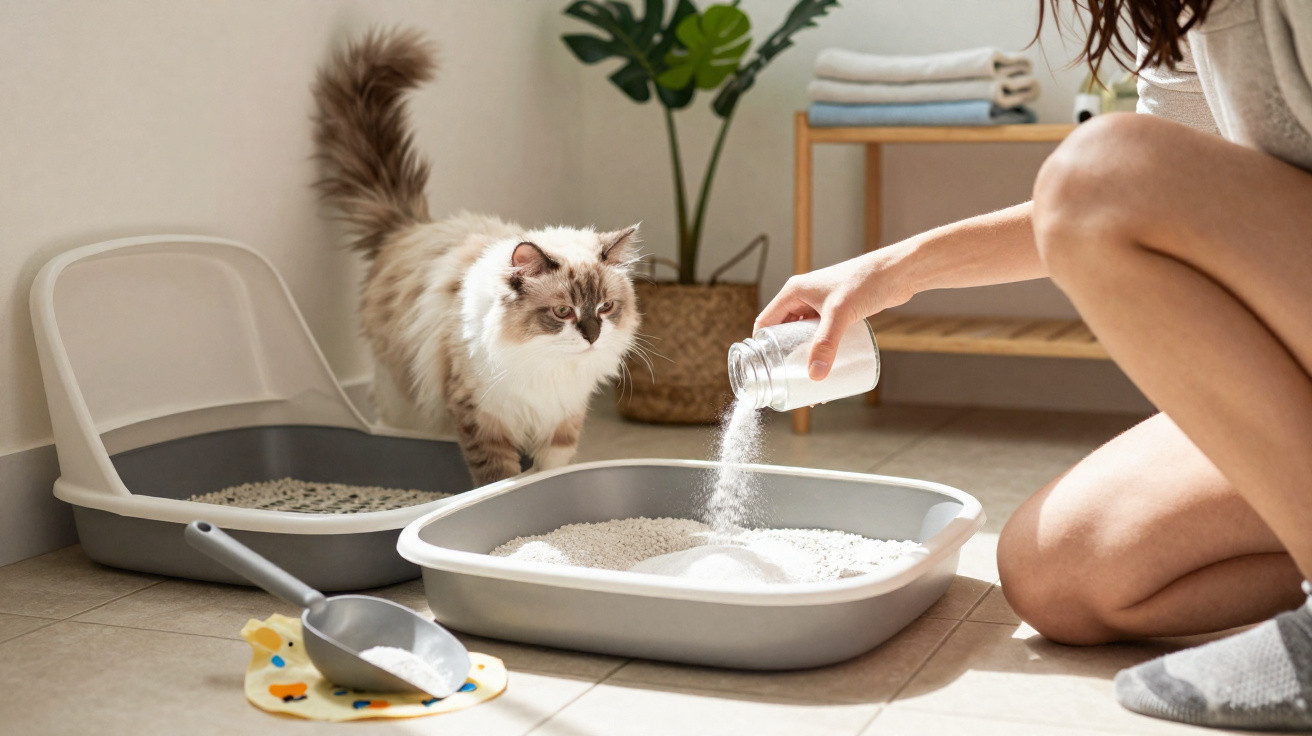
This technique is simply a layered arrangement. Scatter an extremely thin coating of bicarbonate of soda over the clean, empty tray - a light dusting rather than a layer of snow. Add 6–8 cm of unscented clumping litter. Cover this with a gentle veil of bicarb, then add a final 1–2 cm layer of litter to “seal” it in. This is your baking soda sandwich.
We have all experienced the moment a visitor messages, “I’m downstairs,” and immediate panic takes over. Realistically, no one manages an intensive clean every day. Instead, scoop at least once a day, or twice where possible, and lightly fluff the surface with a fork-like motion to loosen clumps and let air circulate. The sandwich layer helps the base stay fresh between scoops.
Carry out a weekly full tray reset to interrupt the odour cycle. Empty the whole tray into a bin liner. Wash it with warm water and a small amount of unscented washing-up liquid, then rinse it briefly with a 1:10 white-vinegar solution to tackle lingering smells. Rinse once more, dry it thoroughly - dampness turns litter into cement - and create the sandwich again.
How the baking soda sandwich changes litter tray odour control
Bicarbonate works as a mild odour sponge. It balances pH, captures some airborne compounds and prevents liquid from reaching the plastic base, where smells tend to settle. The light upper layer catches fresh whiffs before they can escape into the room.
In a Leeds home with two cats, complaints about odour fell after one week of using the sandwich method alongside Sunday resets. The litter brand and room remained unchanged. The sole difference was a barrier at the bottom and a weekly fresh start rather than endlessly adding more litter.
The principle is straightforward: prevent smells from building up at the base and you avoid the “old tray” scent that no candle can hide. Odour control is not about a spray; it is a repeatable sequence you can manage half-asleep.
How to get it right without overthinking it
Use your judgement rather than scales. Around 1–2 tablespoons of bicarb for every kilogram of litter is enough. Using too much creates dust. Keep litter sufficiently deep for clumps to form quickly - 6–8 cm is ideal - so urine never reaches the tray’s plastic bottom.
Typical mistakes include layering perfumed litter on top of other fragrances. Cats often dislike powerful scents, and all this does is put mint over ammonia. Another is scooping so deeply that you scrape the plastic base. Finally, adding bicarb only to the surface misses the point: the crucial layer is hidden underneath. Go easy on yourself; consistency matters more than perfection.
One owner said the difference was like opening a window that had never existed.
“The bicarb sandwich stopped the ‘oh no’ smell when I woke up. My cat stopped hovering at the edges and started using the middle again.” - Mia, Bristol
- Quick checklist: thin bicarb base, 6–8 cm litter, light bicarb veil, 1–2 cm seal, scoop daily, full reset weekly.
- For multiple cats: provide one tray per cat, plus one extra. Small homes need strong routines.
- Replace the whole batch instead of topping it up indefinitely - this is how odour layers take over.
Care, safety, and small upgrades that make a big difference
Choose plain bicarbonate of soda, with no perfume or unidentified additives. If your cat digs and chews, use an even lighter top layer so there is little to nibble. Keep trays away from radiators, as warmth intensifies smells.
Select a tray with a sturdy base and smooth corners. Smells cling to scratches, making sleek plastic a better choice. If you use liners, choose close-fitting versions so liquid cannot collect and stew beneath them. Small habits, repeated consistently, transform the air in your home.
“Clean plastic, dry plastic, then rebuild. It’s boring. It works.” - a vet nurse who has cleaned more trays than you and I combined
- Clean weekly using warm water and mild detergent, followed by a vinegar rinse, then dry thoroughly.
- Never combine bleach with cat urine. Ammonia + bleach equals nasty fumes.
- If odours continue, replace the tray. Plastic retains memories. It is an inexpensive change with a significant effect.
A fresher home, a calmer cat
When the tray is free of smells, the whole home feels different. Cats stop lingering around the rim and enter confidently, resulting in fewer accidents on the mat. Visitors stop sniffing and stay for another cuppa.
The sandwich method makes a daily task feel like a routine. A weekly reset draws a line beneath the stale air and gives you a fresh beginning. You begin to trust the smell of your home again - which really means trusting your own habits.
The best part is that it does not require another gadget. It is cupboard science, paired with a date at the sink every seven days. Try it for two weeks and notice the silence left behind when the smell disappears.
| Key point | Detail | Benefit for the reader |
|---|---|---|
| Bicarb sandwich layering | Thin base dusting, deep litter, light top veil, final seal | Stops odour at the source and prevents plastic from absorbing smells |
| Weekly full tray reset | Empty, wash, vinegar rinse, dry, rebuild | Breaks the “old tray” cycle and freshens the entire room |
| Correct depth and routine | 6–8 cm litter, scoop once or twice daily, avoid layering fragrances | Improved clumps, fewer odours, a happier cat and a cleaner floor |


Comments
No comments yet. Be the first to comment!
Leave a Comment