Many bags contain overlooked features, and social media feeds continue to bring them to light at unexpected times.
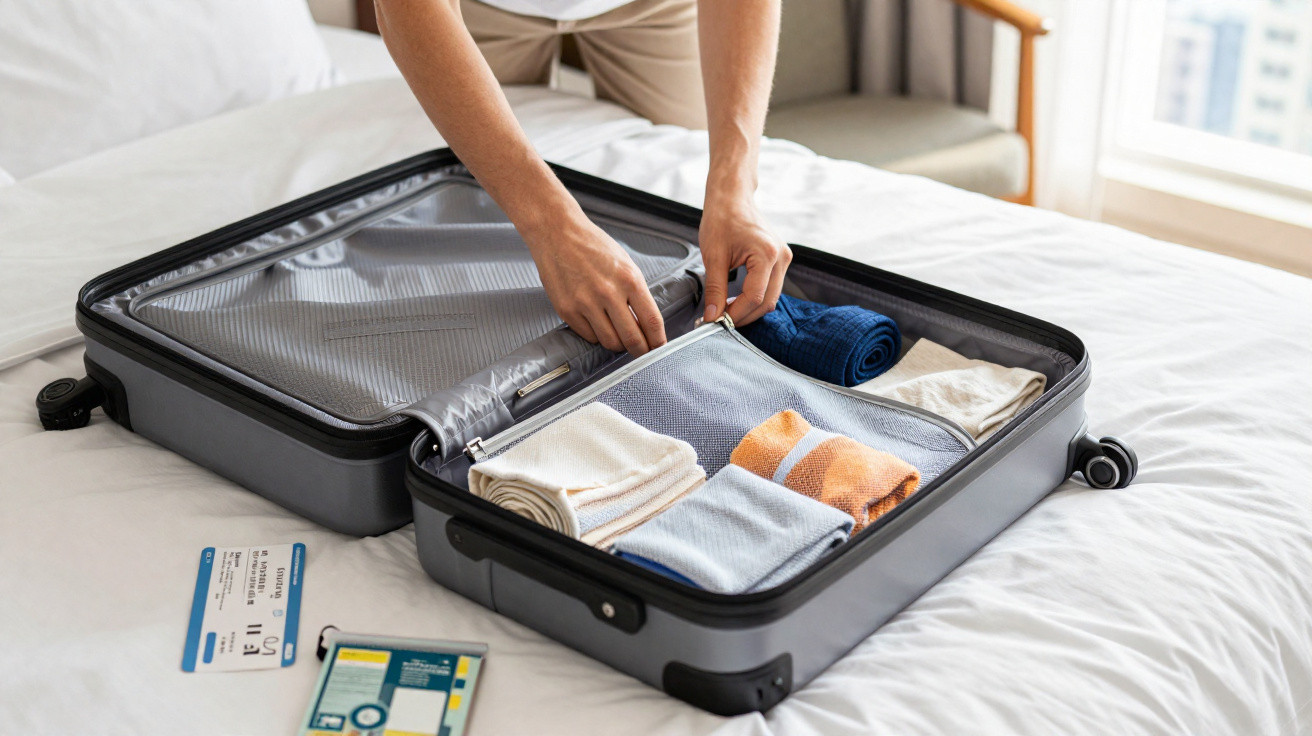
Travellers are increasingly discussing a discreet zip concealed within the lining of modern suitcases. Opening it reveals a narrow compartment designed to separate worn clothing from fresh outfits. Lying flat and adding virtually no weight, it can alter the way people organise a journey.
A subtle suitcase upgrade in plain sight
A growing number of mid-range and premium suitcases conceal a laundry sleeve behind their interior fabric panel. Its zip commonly follows the edge of the lining, while some cases position it in the base near the wheels, where the weight remains low down.
The compartment can appear to be simply another part of the lining. A flexible, moisture-resistant coated divider forms the barrier. As it takes up very little room when unused, no packing capacity is lost when leaving home.
A thin, zip-access pocket behind the lining quarantines used garments and trims odors, without stealing usable packing room.
What the hidden pocket is designed to do
The divider helps prevent odours from sweaty shirts and socks spreading to other items. It lessens contact between damp garments and clean fabrics, while also reducing cross-contamination from beachwear and gym kit. Hotel unpacking becomes quicker too, as all laundry can be removed in one go.
This sleeve is not a substitute for a proper wet bag. It is suitable for slight dampness from swimsuits or recently rinsed clothes, but cannot contain pooled water. Consider it a protective barrier rather than a container.
Why travellers are talking about it
Short-form videos often show travellers opening the lining zip and placing a pile of worn T-shirts inside. The simple trick is pleasing to watch and addresses an everyday travel issue without requiring extra packing organisers. It is especially appealing during busy travel periods, when cabins are cramped and laundry quickly builds up.
One small zipper turns a jumbled suitcase into a two‑zone system: clean on one side, used items sealed away.
Odours, moisture and cross-contamination
Odours arise when bacteria break down perspiration. Keeping those clothes inside a coated sleeve restricts airflow, which in turn slows the spread of smells through the main compartment. The divider also stops sunscreen marks and urban dirt rubbing against smarter clothing. Your blazer can arrive ready to wear rather than smelling of perfume and the gym.
How to use the hidden suitcase pocket without losing space
Treat the sleeve as the final area to fill each evening. Reserve the main compartment for larger items and a stable packing arrangement. Keep heavy belongings at the wheel end to maintain balance, and use the pocket for softer clothing that compresses easily.
- Create a base layer with shoes by the wheels, followed by a toiletry bag placed flat in the centre.
- Pack rolled clothing in rows to form a compact grid without empty spaces.
- Tuck socks and underwear into corners and around the edges.
- Keep the lining sleeve for worn T-shirts, gym shorts and swimwear stored in a slim waterproof pouch.
- Place a small deodorising sachet or baking-soda card in the sleeve to reduce smells.
A packing sequence for a stable case
When setting off, keep the sleeve vacant so there is capacity for souvenirs. Move worn garments into it as the trip progresses. Should the suitcase begin to topple when standing upright, return a pair of shoes to the bottom by the wheels. This stability is useful on pavements and trains.
Does your suitcase include one?
Many travellers already have this feature without knowing it, since the lining conceals it so effectively. Checking takes under a minute.
Unzip the interior fabric panel. Look for a second zipper that reveals a flat cavity. Check the base panel and the lid panel as well.
Certain soft-sided cases house the sleeve in the lid. Hard-shell suitcases more commonly place it behind a full-height fabric panel. On spinner cases with expansion zips, the sleeve may sit beneath the gusset. Coated material and taped seams are signs that you have found the laundry compartment.
Materials and hygiene essentials
Manufacturers commonly choose nylon or polyester finished with a polyurethane coating. Such coatings withstand light moisture, protect the foam beneath and are easy to wipe clean.
| Feature | What it means | Care tip |
|---|---|---|
| PU-coated divider | Helps slow odour spread and moisture seepage | Clean with mild soap and avoid strong solvents |
| Taped seams | Reduces leakage from damp clothing | Let it air-dry completely before storage |
| Mesh vent panel | Allows some airflow to lower mildew risk | Never pack items that are dripping wet |
| Removable laundry bag | Can be lifted out and washed in a sink | Rinse in cold water and line-dry |
Unusual situations and minor risks
Damp swimsuits may allow water to collect at the base of the sleeve, potentially causing mildew and a sour odour. First blot them with a hotel towel, then place them in a dedicated wet pouch. During security checks, you may be asked to open the lining briefly, so leave the zip readily accessible. Filling the sleeve too much can distort the lining and crease pressed garments, so keep its contents thin and flat.
Useful additions that work well
Silica gel sachets absorb moisture from the air inside the sleeve, with two or three small packs being enough for hand luggage. Charcoal odour cards help control smells from gym kit. A 2-litre roll-top dry bag can hold swimsuits after a late check-out. It fits neatly into the sleeve and prevents drips during the journey to the airport.
Who gains the most
Weekend travellers benefit from a quicker changeover between outfits. Parents can streamline hotel routines by separating children’s clothes. Business travellers can keep formal clothing crisp for meetings. Long-haul backpackers gain a reliable system that is consistently better than using plastic carrier bags.
How to adapt an older suitcase
A flat, sealable laundry pouch can replicate this function. Attach two strips of hook-and-loop tape along the lining to secure the pouch, choosing removable tape that will not damage the fabric. Position it in the lid, where gravity helps it remain flat. Wipe it down after every trip to stop residue building up.
Care once the journey is over
At home, open the sleeve and allow it to air for a day. Clean the divider using a damp cloth and a small amount of neutral soap. A weak vinegar-and-water mixture can freshen it without damaging the coating. Let it dry fully before fastening it again, and store the suitcase with the lining slightly open to discourage odours.
A short checklist before your next flight
- Find the lining zip and identify where the sleeve sits in your suitcase.
- Pack one slim wet pouch for swimsuits along with a small odour card.
- Arrange to transfer worn clothing each night to make the routine straightforward.
- Keep heavy belongings near the wheels for a balanced roll.
This modest compartment makes daily packing faster, shields clothes from stale smells and brings order to a cramped week in a cabin. Once it becomes routine, clean garments remain crisp, laundry stays separate and the entire trip can feel slightly calmer from departure to arrival.









Comments
No comments yet. Be the first to comment!
Leave a Comment