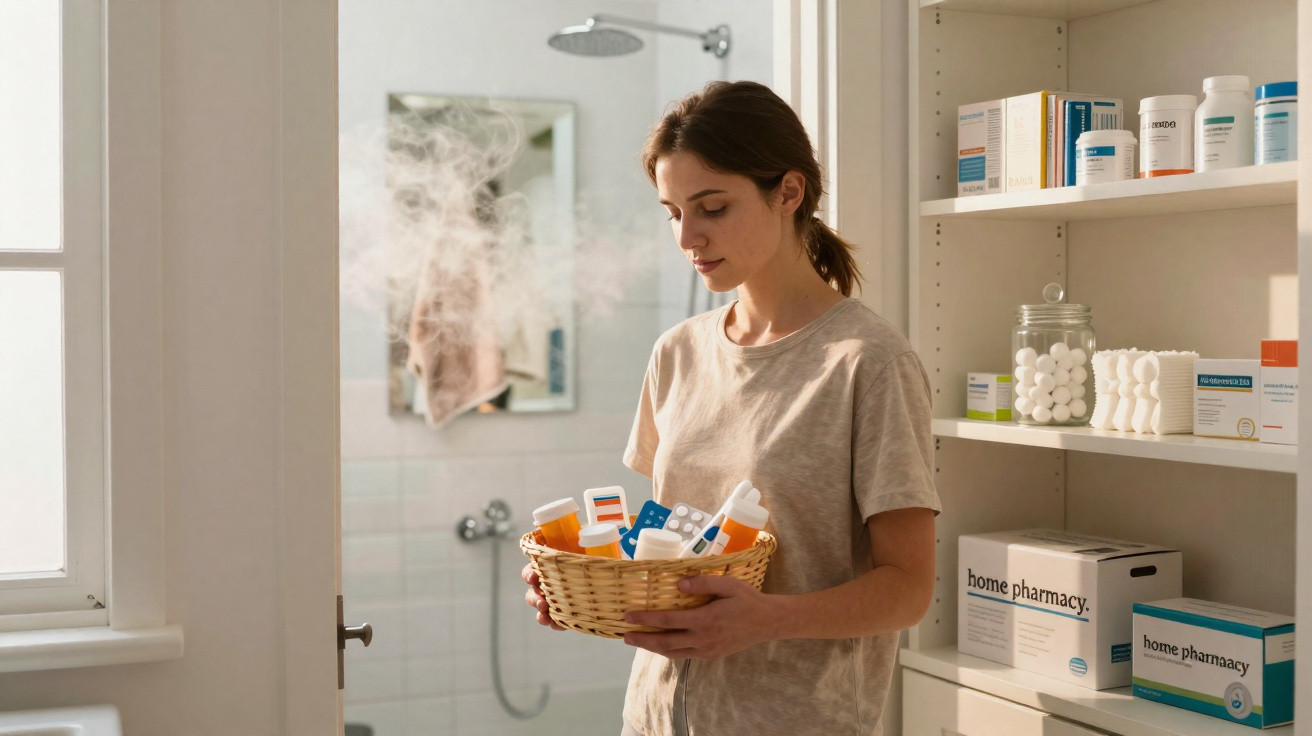
Steam has clouded the mirror so completely that your reflection is almost invisible. Still groggy, you clear a patch with your palm, open the bathroom cabinet and automatically take out a blister strip. Two paracetamol, a glass of water, a quick swallow. It is a small daily habit, made reassuring by familiarity.
But there is something behind that misted-up mirror that rarely gets discussed. The hot shower you find comforting may be slowly damaging the tablets, creams and drops you depend on to keep well.
There is no dramatic alert, no warning noise and, usually, no obvious change in flavour.
Only chemistry: gradual, unseen and persistent.
Why your bathroom is the worst “pharmacy” in the house
Many of us use the bathroom cabinet as a miniature home pharmacy. It seems sensible: toothbrushes, toothpaste, plasters, painkillers and leftover antibiotics are all kept together. They are easy to find and difficult to forget.
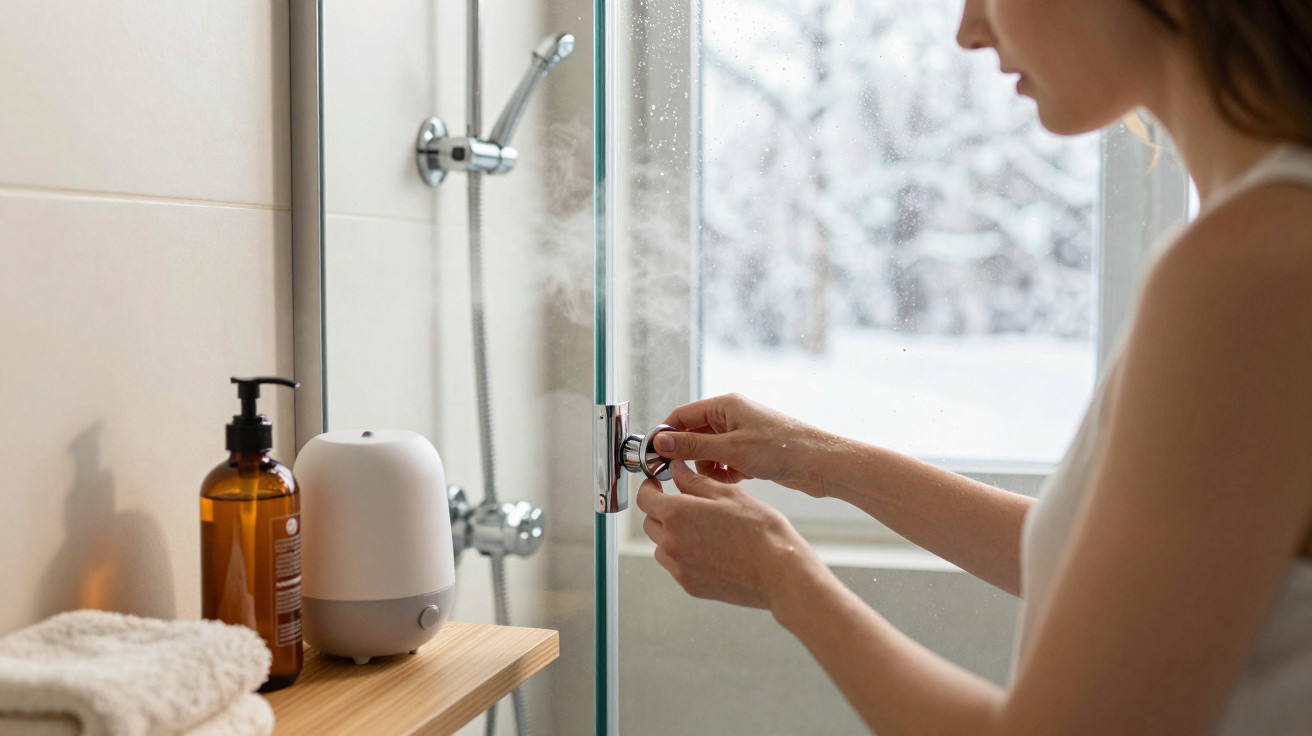
However, that handy little cupboard sits in the least stable room in the home. Hot showers cause sudden rises in temperature, steam settles over every surface, and damp air remains long after you have gone to work. Your tablets and syrups sit there like silent sponges, absorbing it all.
Everything may appear normal from the outside. Inside the packaging, however, the situation can be very different.
Imagine an ordinary winter evening. You run a hot bath with the door closed and the windows shut. Within ten minutes, the bathroom has turned into a sauna. Water runs down the mirror, condensation covers the walls and the air feels heavy. Meanwhile, in the cabinet above, twenty blister packs, three boxes of antibiotics and a tube of anti-fungal cream are repeatedly heating up and cooling down.
Some pharmacists estimate that, during a single shower, a bathroom can shift from 18°C to 30°C, while humidity can exceed 80%. Many medicines are tested for “room temperature” conditions - roughly 20–25°C in a dry setting. That bears little resemblance to your bathroom during a rushed Monday morning.
The expiry date may still appear comforting on the packet. Yet the active molecules may be ageing more quickly than you realise.
Heat accelerates chemical reactions. Humidity allows water molecules to enter tablets and capsules, disrupting bonds and making formulations unstable. Protective coatings may split. Tablets can soften or crumble. Certain syrups may ferment sooner.
This will not always create an immediate danger, but it can often make a medicine less effective. Has a painkiller stopped seeming to work? Does an asthma inhaler feel less powerful? It may not be your body that has changed - the medicine may have been stored incorrectly.
The simple reality is that medicine does not cope well with hot, damp and unstable conditions. Your bathroom combines all three.
How to store medication so it actually works when you need it
For most medicines, the best storage location is rather unexciting: somewhere cool, dry and dark, with no major temperature fluctuations. Consider a bedroom wardrobe, a hallway cupboard or a high shelf in a living-room cabinet. Choose a place that is not filled with steam twice each day.
Keep medicines away from radiators, ovens and direct sunlight. A closed drawer or box is a good option, particularly when children or pets are present and the items need to be kept out of reach.
Retain the original boxes and patient information leaflets too. They are more than unnecessary cardboard: they contain essential storage guidance that manufacturers have included for a reason.
Everyone knows the experience: you become ill at 2 a.m. and start searching through half-open blister strips in an untidy cabinet. You promise yourself that you will organise it “one day”, then add another box. That disorder can conceal a more serious issue: expired medicines, spoiled creams and incorrectly labelled bottles.
Create a straightforward routine once or twice a year. Empty everything out, lay it across a table, discard anything past its date, and sort items into those for children, adults and prescription-only use. You’ll probably be shocked by how many half-used boxes you’ve been hoarding.
In truth, no one carries this out every day. Still, doing it occasionally can make a significant difference.
“People think the bathroom cabinet is practical, but from a pharmacist’s point of view, it’s almost the worst place,” says a community pharmacist in Lyon. “Most of the complaints we hear - ‘this doesn’t work anymore’ - start with poor storage. Heat and moisture are the silent enemies of good treatment.”
- Keep medicines in their original packaging, with the leaflets enclosed.
- Store them in a cool, dry room, ideally between 15–25°C.
- Put them in a closed box or drawer that children cannot reach.
- Check expiry dates twice yearly and return old medicines to a pharmacy.
- Carefully read labels stating “do not store above X°C” or “keep in the refrigerator”.
Rethinking your home “pharmacy” before the next headache hits
Once you recognise the bathroom for what it is - a miniature tropical climate several times a day - it becomes difficult to ignore. A fogged-up mirror is no longer just background detail; it is a sign. The steam that eases your muscles could be gradually damaging the medicines you rely on when those muscles ache.
Rearranging your medicines is not about becoming obsessed with health or living anxiously. It simply means adapting your habits to a basic fact of chemistry. Heat plus humidity creates instability. Stability is what you need when taking a tablet or giving a child a syrup.
Transferring your tablets from the bathroom to a bedroom drawer is a small action with a disproportionate benefit. It costs nothing, takes around half an hour, and may prevent those “why isn’t this working?” moments when you are in pain, worried or exhausted.
You could even raise the subject with family, flatmates or parents. Ask where they store their medicines. You will probably hear the same reply you once gave: “In the bathroom cabinet, of course.”
That is precisely where the discussion - and the change - can begin.
| Key point | Detail | Value for the reader |
|---|---|---|
| Bathroom is unstable | Heat and humidity vary greatly during showers and baths | Understands why everyday storage habits can quietly damage medicines |
| Proper storage spots | Cool, dry, dark rooms, such as bedroom or hallway cupboards | Knows exactly where to move medicines to maintain better effectiveness |
| Simple routine | Annual or twice-yearly sorting, date checks and returning old medicines | Reduces health risks and waste through an easy, realistic habit |


Comments
No comments yet. Be the first to comment!
Leave a Comment