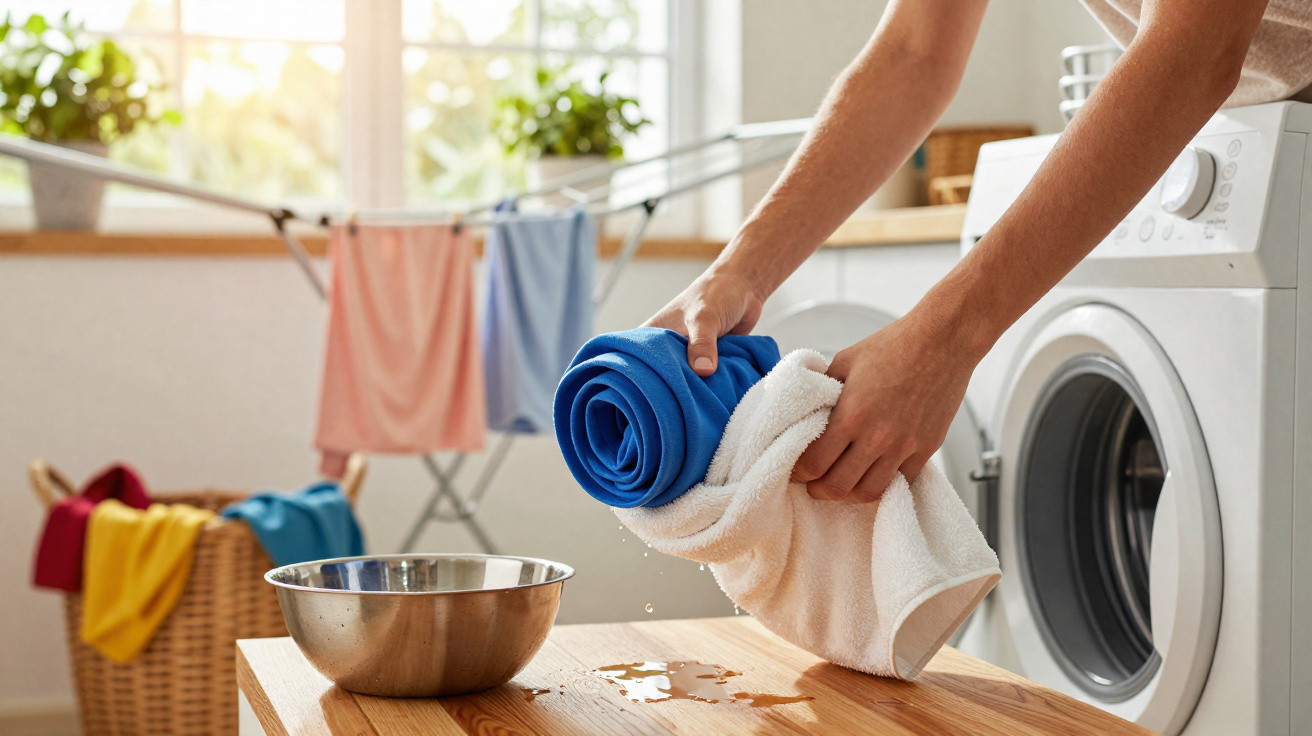
The dry towel technique helps remove some of the water trapped in freshly washed clothes before they are put on the washing line. This method is particularly useful for jeans, sweatshirts, bath towels and other thick garments, which can stay damp for many hours when dried indoors.
Why does a dry towel speed up clothes drying?
The towel’s fibres make contact with the wet fabric and absorb some of the water left behind after the spin cycle. When the two items are pressed together or rolled up, moisture transfers to the drier material, reducing the amount of water that will need to evaporate on the washing line.
Following this initial removal, the remaining water must evaporate: its liquid molecules gain energy and change into a gaseous state. With less water in the fabric, the air has a smaller amount of moisture to remove while the garment dries.
- Reduces water retained in thick fabrics;
- Stops garments from reaching the washing line soaking wet;
- Shortens the time that fabric remains damp;
- Helps reduce odours caused by excessively slow drying;
- Requires neither a tumble dryer nor electricity.
How do you use the dry towel technique step by step?
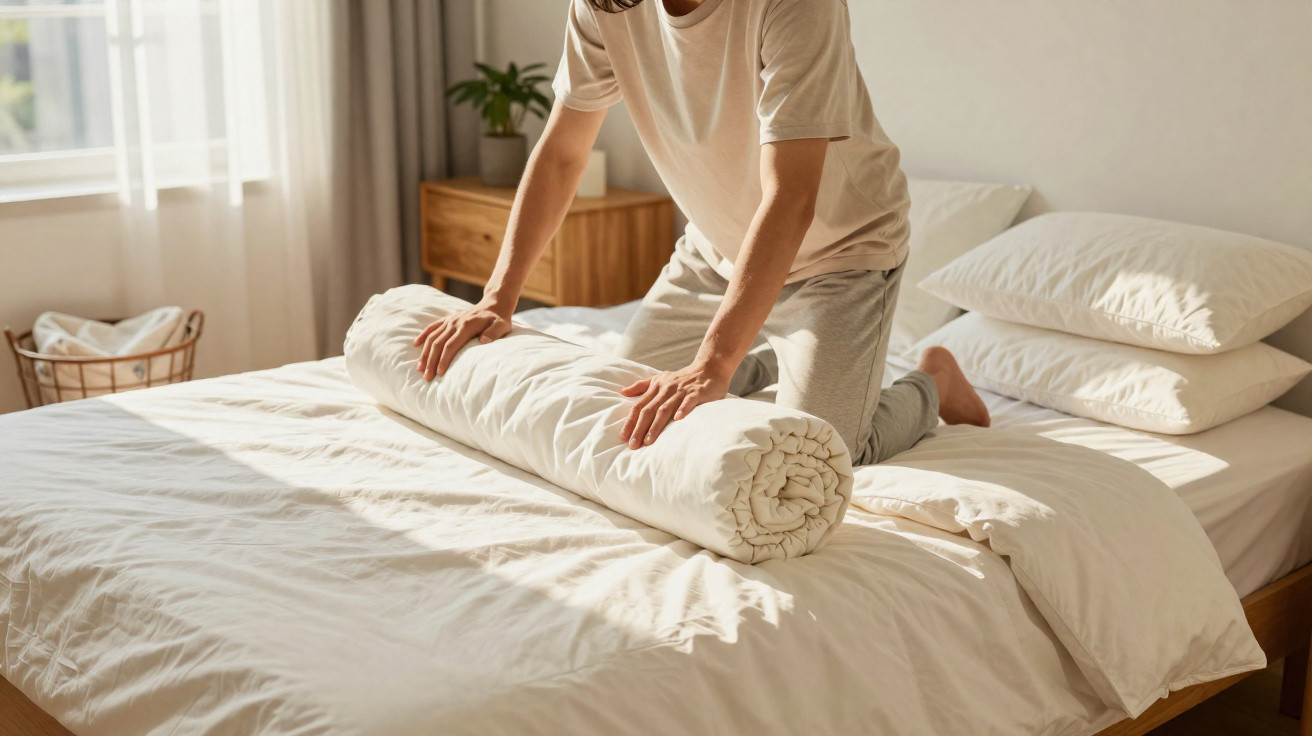
Lay a clean, completely dry towel on a flat surface. Place the damp garment on top, smooth out the fabric and roll both items together into a firm bundle. Apply pressure with your hands or body weight for a few seconds, unroll it, then hang the garment up straight away.
When is it better to press the garment only?
Delicate items, clothes with sensitive prints and fabrics that lose their shape easily should not be twisted forcefully. Instead, place the garment between two sections of the towel and press the surface with your hands, without rubbing or wringing the fibres.
The method can be adjusted to suit each fabric type:
- Roll jeans and sweatshirts with moderate pressure;
- Press delicate knitwear on a flat surface;
- Use a large towel to cover the entire garment;
- Replace the towel if it becomes very wet during the process;
- Avoid towels that shed lint onto dark clothes.
Why does the technique work best after a spin cycle?
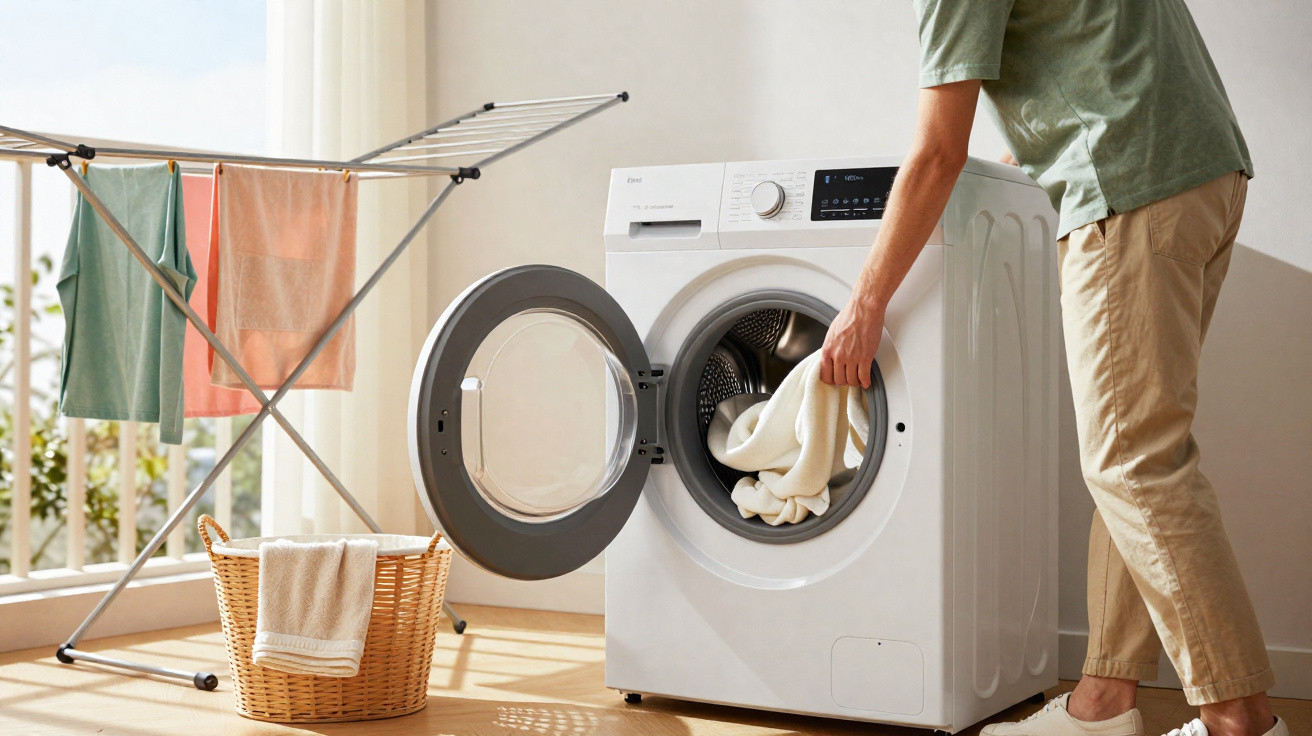
The spin cycle has already removed much of the free water held between the fibres. The dry towel works as a second stage, drawing out moisture that can still be transferred through contact. If hand-washed garments are still dripping, the towel quickly becomes saturated and loses effectiveness before the whole surface has dried.
Ventilation and space complete drying on the washing line
The towel provides extra help, but it does not replace the washing line and air circulation. After pressing the garment, shake it to separate the fibres and hang it without folds, leaving space between it and other clothes. Combining a dry towel, a spin cycle and ventilation encourages air to move across the wet surface.
An open window or a fan directed into the room helps remove the vapour released by the garments. With the dry towel technique, clothes reach the washing line with less water in them, but they must still remain hanging until seams, pockets, waistbands and overlapping sections are fully dry.








Comments
No comments yet. Be the first to comment!
Leave a Comment