
For years, a neatly made bed was seen as a sign of discipline, good upbringing and success. New psychological research is now challenging that assumption. People who regularly leave their bed unmade often display traits that are highly valued in modern working life and everyday routines – while potentially doing something positive for their health as well.
Why we learned to make the bed in the first place
Most of us know the routine from childhood: get out of bed, straighten the duvet, arrange the pillows, and the job is done. Parents, teachers and self-help guides have turned it into a ritual. A tidy bed was meant to equal a tidy life.
Historically, this habit dates back to a time when outward appearances mattered more than genuine hygiene. A perfectly made bed conveyed decency, respectability and control, even if the mattress was old and the room had barely been aired. What mattered was how it looked, not necessarily the quality of the air.
Daily life has changed dramatically since then: packed schedules, constant availability, greater stress and a stronger focus on mental health. Many people now deliberately abandon the rigid ritual and leave the bed as it was when they got up. For a long time, that was dismissed as laziness. Psychologists now take a considerably more nuanced view.
What research reveals about unmade beds
Psychologist Kathleen Vohs of the University of Minnesota has examined how tidy and untidy surroundings affect our thinking. Her findings have since become something of a classic in environmental psychology.
Order encourages conventional, conformist thinking – a degree of “creative chaos” sparks fresh ideas.
In strictly tidy rooms, test participants were more likely to make safe, predictable choices. They followed rules and selected the “right” options, but ones that were rarely surprising. In messier settings – with papers scattered around, objects left out or an unmade bed in view – something different happened: people arrived at more unusual and original solutions.
Vohs describes this as a catalyst for creativity. Disorder is not merely a distraction, but a stimulus. The brain has to filter, organise and prioritise more intensely, making it more likely to enter a mode in which established ideas are questioned.
“Constructive chaos” rather than laziness
People who leave their bed unmade in the morning often express a particular attitude, even unconsciously: not every task deserves the same level of attention. Their energy and concentration are directed instead towards what truly matters – work, family or personal projects – rather than the purely visual correctness of their sleeping space.
Psychologists refer to this as “constructive chaos”. It means:
- accepting that not everything has to be perfect;
- being able to set priorities and becoming less caught up in trivial details;
- allowing more room for spontaneity and new ideas;
- often being more receptive to unconventional solutions.
Jobs that depend on ideas and problem-solving – from advertising to product development – can particularly benefit from people who can live with a certain amount of disorder without feeling compelled to clear it away immediately.
What an unmade bed can reveal about personality
An unmade bed is not, of course, a fully fledged personality test. However, it may offer clues about how someone thinks and interacts with their surroundings.
The people who do not make their beds
Those who simply leave their bed as it is in the morning often show the following tendencies:
- greater tolerance of imperfection and minor untidiness;
- a focus on substance rather than outward form;
- more pronounced creativity, or at least enjoyment of experimentation;
- a less rigid need for control in everyday life.
This does not automatically mean they are disorganised. Many work in a structured way, plan appointments and meet deadlines – they simply place different emphasis on what genuinely needs managing and what is more of a decorative routine.
The bed-makers
At the other end of the scale are those who cannot leave the house in the morning until their bed looks perfect. Research more commonly associates the following characteristics with them:
- a stronger tendency towards perfectionism;
- placing high importance on visual order and harmony;
- using tidiness to soothe nervousness or tension;
- controlling the external environment to counterbalance uncertainty in daily life.
For these people, making the bed in the morning acts as a small anchor: a controlled beginning to a day that may otherwise become unpredictable. That can certainly be helpful, provided that the urge for perfection does not become overwhelming.
The important point is that neither approach is fundamentally better than the other. They are simply different ways of dealing with stress, structure and expectations.
Health: why an unmade bed can have benefits
The issue becomes particularly interesting when health is considered alongside psychology. Researchers at Kingston University in the UK have explored how made and unmade beds affect house dust mites.
A bed made immediately traps warmth and moisture – a paradise for mites and allergens.
The body sweats during sleep. Moisture builds up in sheets, the mattress and pillows. If the bed is smoothed over as soon as you get up, that residual moisture remains trapped inside. Mites then find ideal conditions: warm, slightly damp and protected.
If the bed is left open for a while, air can circulate more effectively. The mattress dries more quickly and the fabric can “breathe”. Mites do not like these conditions at all; many simply die or reproduce less readily.
| Habit | Possible result |
|---|---|
| Making the bed immediately after getting up | More trapped moisture and better conditions for mites |
| Leaving the bed open for several hours | Less moisture, lower mite levels and often better conditions for allergy sufferers |
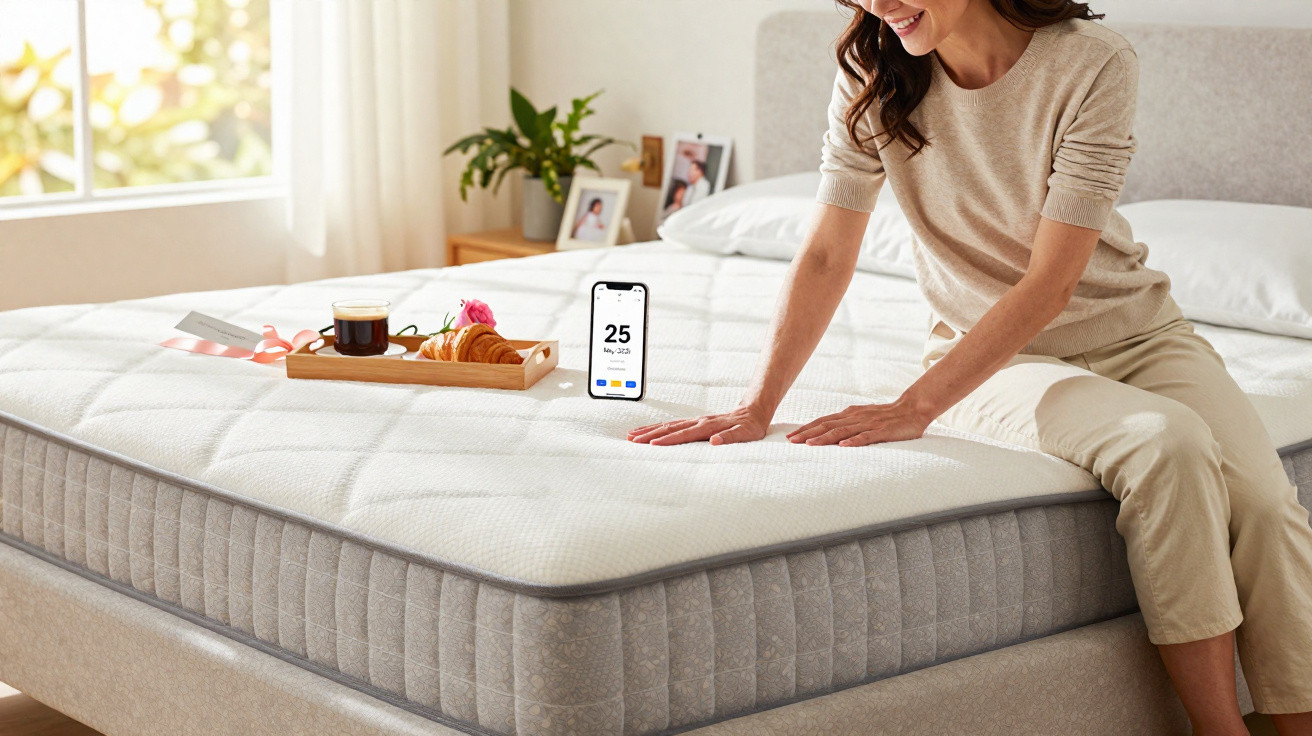
Anyone affected by allergies, sensitive airways or asthma may benefit from this straightforward change: air the room in the morning, fold back the duvet, stand up the pillows, and only make the bed later in the day once everything is dry.
How to combine chaos and structure wisely
The key question is not so much, “Should I make the bed or not?” A more useful question is: how can I create an environment that suits the way I think and live?
A few suggestions from psychological practice:
- Create zones: keep the work area relatively tidy and the sleeping area more relaxed – or do the reverse, depending on your personality.
- Leave things out deliberately: drop certain routines and use that time for creative or restorative activities instead.
- Protect morning energy: do not overload the start of the day with tiny tasks; begin with a clear focus.
- A small ritual is enough: for perfectionists, roughly smoothing the duvet may be sufficient, without having to eliminate every crease.
Anyone prone to constant self-criticism because the bed does not look perfect can consciously remember this: a little disorder is not a failure, but simply another way of handling everyday life. And those who keep everything meticulously in order may ask themselves where a little more ease could be beneficial.
Practical bedroom tips for everyday life
A few simple habits can prevent creative disorder from becoming stressful chaos:
- Air the room briefly every morning for at least five to ten minutes.
- Fold the duvet all the way back rather than opening it only halfway.
- Change the sheets regularly, roughly every one to two weeks.
- Vacuum the mattress from time to time, especially if you have allergies.
- In the evening, follow your instincts: if order is reassuring, make the bed calmly then.
This makes it possible to combine the psychological benefits of an unmade bed – greater creative freedom and less rigid perfectionism – with a healthy sleep environment. It is not a military-smooth duvet cover that determines how successful or organised someone is in life, but their conscious approach to energy, priorities and their own mind.













Comments
No comments yet. Be the first to comment!
Leave a Comment