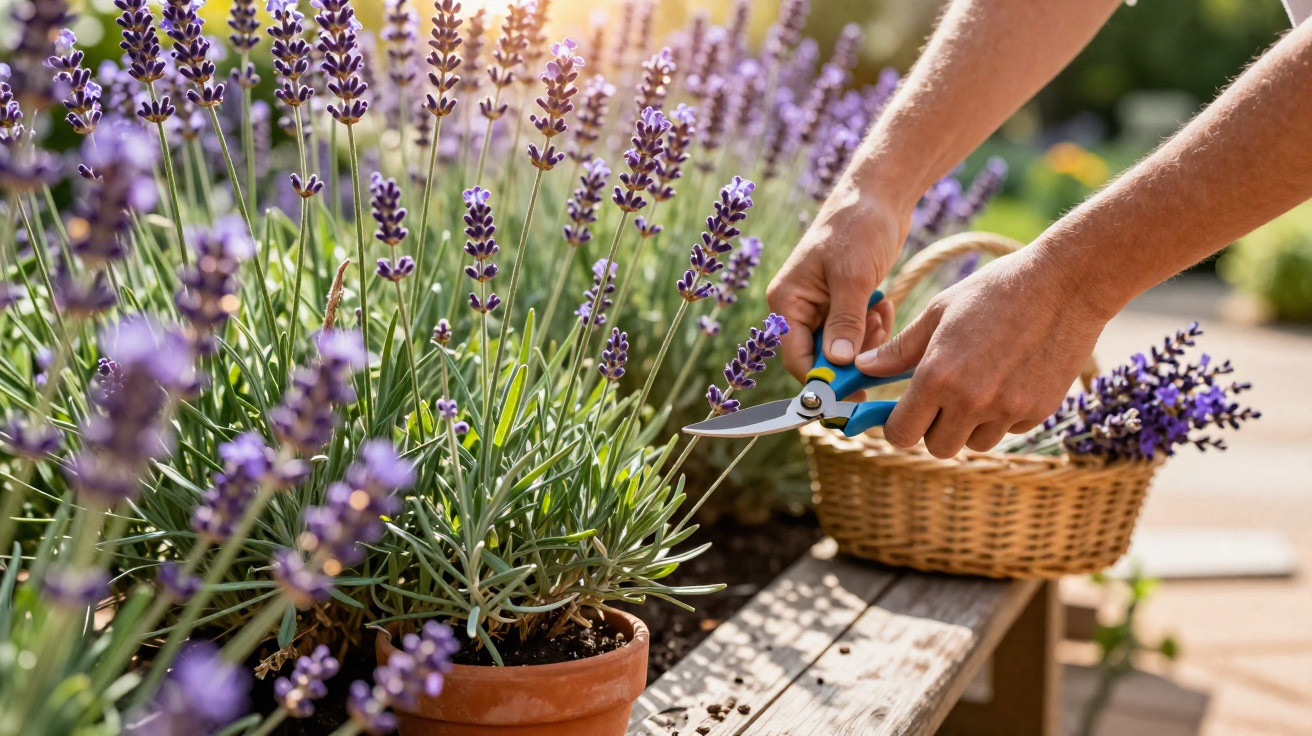
Anyone who grows lavender in the garden will recognise the pattern: at first it is a dense violet dream, then it becomes a scruffy mass of wood with a few meagre flowers perched on top. People are quick to say, “It is simply old” or “The soil probably does not suit it.” Yet, in reality, the correct pruning often determines whether lavender dies after eight years or remains a fragrant garden highlight for two decades.
Why lavender ages far too quickly without pruning
Botanically, lavender is a subshrub. In other words, its lower growth becomes heavily woody, while the upper parts remain green and soft. This so-called old wood rarely produces new buds. Without regular use of the secateurs, the plant gradually opens up, its centre becomes bare, and the attractive cushion turns into a misshapen broom.
Regular pruning only within the green growth determines whether lavender lasts 7 or 20 years.
Gardeners who leave it unpruned for years, or prune it “somehow”, usually face the same problem: before ten years have passed, the bush splits apart, branches die back, and cutting into the brown wood will not restore it. It either remains bare or dries out completely.
Lavender that is carefully shortened within its green growth every year develops very differently. Such plants stay compact, continually produce young shoots and can flower for up to twenty years. Regular pruning rejuvenates the plant, keeps its foliage exposed to sunlight and encourages a constant supply of new flower spikes.
The ideal timing: when lavender should be pruned
Many amateur gardeners hesitate with secateurs in hand: “Should I prune it now? Or would it be better to wait?” In fact, there are two particularly useful times of year for the job.
- Main maintenance prune after the peak flowering period: from late August to late September.
- Check or shaping prune at the end of winter: between February and March, before sap flow becomes too vigorous.
Because of climate change, summer and flowering begin earlier in some areas. Anyone wishing to be safe should watch the plant rather than follow the calendar rigidly.
Differences between mild and cold regions
The best timing depends greatly on the location. The following provides a broad guide:
- Mild regions: In wine-growing areas or western regions, the maintenance prune can be carried out immediately after flowering. A light follow-up trim is often possible from late February, provided the buds are still tight and have not fully swollen.
- Colder regions: In northern and eastern areas, or at higher elevations, a basic tidy-up in autumn is sufficient. The proper shaping prune should be delayed until March, and carried out only on frost-free days.
It is better to prune a little later in reliably frost-free weather than leave a freshly cut plant exposed to bitter cold.
The golden rule: prune only into green wood
The key to keeping lavender vigorous for the long term sounds straightforward, but is often overlooked: cut only within the green growth. This is where the buds that produce fresh shoots are found.
A practical rule is to cut above the final layer of leaves - never below it.
- Leave the woody, brown growth untouched.
- Always finish cuts just above green leaves.
- Even if a plant has become too tall or lost its shape, do not cut deeper at all costs.
Many gardeners mentally identify a kind of “safety line”: the last visible row of green leaves. Below this line, the risk begins, and secateurs should not be used there.
Anyone who cuts into the brown, old wood risks dead branches that will never shoot again.
The most common mistake when pruning lavender
Out of impatience, lavender is often cut back hard to the base in an attempt to make it small again. This may work for roses, but it usually does not work for lavender. The plant responds with shoots that dry out, while entire sections remain bare. A severe cut is especially risky when sap is already rising strongly - in spring, shortly before new growth begins.
The safer approach is to prune moderately but consistently every year, rather than making one drastic intervention after years of neglect.
Step by step: keeping lavender young for up to twenty years
Anyone who follows a simple routine each time they prune need not worry about making mistakes.
- Prepare the tools: Sharpen the secateurs and disinfect them briefly. This significantly reduces the risk of fungal infections.
- Remove old flowers: Cut off dried flower stems just above the first pair of leaves. This creates space for new side shoots.
- Shorten the green growth: Reduce the entire green section by around one third. This keeps the bush compact and helps it branch more effectively.
- Create the shape: Trim the lavender into a gently rounded cushion. This allows air and light to reach every part of the plant.
Young plants can tolerate a slightly stronger trim - up to half of their green height. This encourages vigorous branching and helps them quickly form a dense mound.
With older plants, whether classic lavender, lavandin or butterfly lavender, a more cautious approach is needed: always leave three to five centimetres of leafy shoots. This ensures there are enough buds available for new growth.
Gently rejuvenating very old lavender plants
If an ageing lavender plant in a border is heavily woody at the base, proceed carefully. Rather than cutting everything at once, remove only individual old branches each year. The shrub will renew itself gradually, without obvious bald patches.
If no fresh growth appears at the base at all, only a decisive fresh start will help. In late summer, take cuttings from the most vigorous shoots and root them anew. This at least preserves the favourite variety in the garden.
Professional tips for even more resilient lavender bushes
Alongside proper pruning, a few further factors can help lavender remain healthy for considerably longer.
- Position: Full sun, warmth and relatively dry conditions - waterlogging is harmful.
- Soil: Poor and free-draining, ideally improved with a little sand or grit.
- Watering: Water infrequently but thoroughly. Keep it as dry as possible in winter.
- Feeding: Use fertiliser very sparingly. Too many nutrients produce lots of leaves but few flowers.
Those growing lavender in containers should choose sufficiently large pots and a growing medium with good drainage. Keep drainage holes clear so that water cannot collect.
Why correct pruning can almost double the flowering years
From a gardening perspective, the effect is logical: only young, well-lit shoots form abundant flower buds. Regular pruning keeps the plant precisely in this productive zone. Its energy is directed into fresh, productive shoots rather than old, “tired” wood.
Young shoots, plenty of light, little old wood - that is the simple formula for long-lived lavender.
In addition, a dense, well-structured bush dries more quickly after rain. Fungal diseases and rot have fewer opportunities to take hold. This reduces the need for plant protection and indirectly increases the plant’s lifespan too.
By deliberately cutting lavender bushes back only within the green growth every year, shortly after flowering and again before new growth starts, gardeners create the basis for many years of scent, colour and buzzing insects - without constantly having to replace plants.










Comments
No comments yet. Be the first to comment!
Leave a Comment