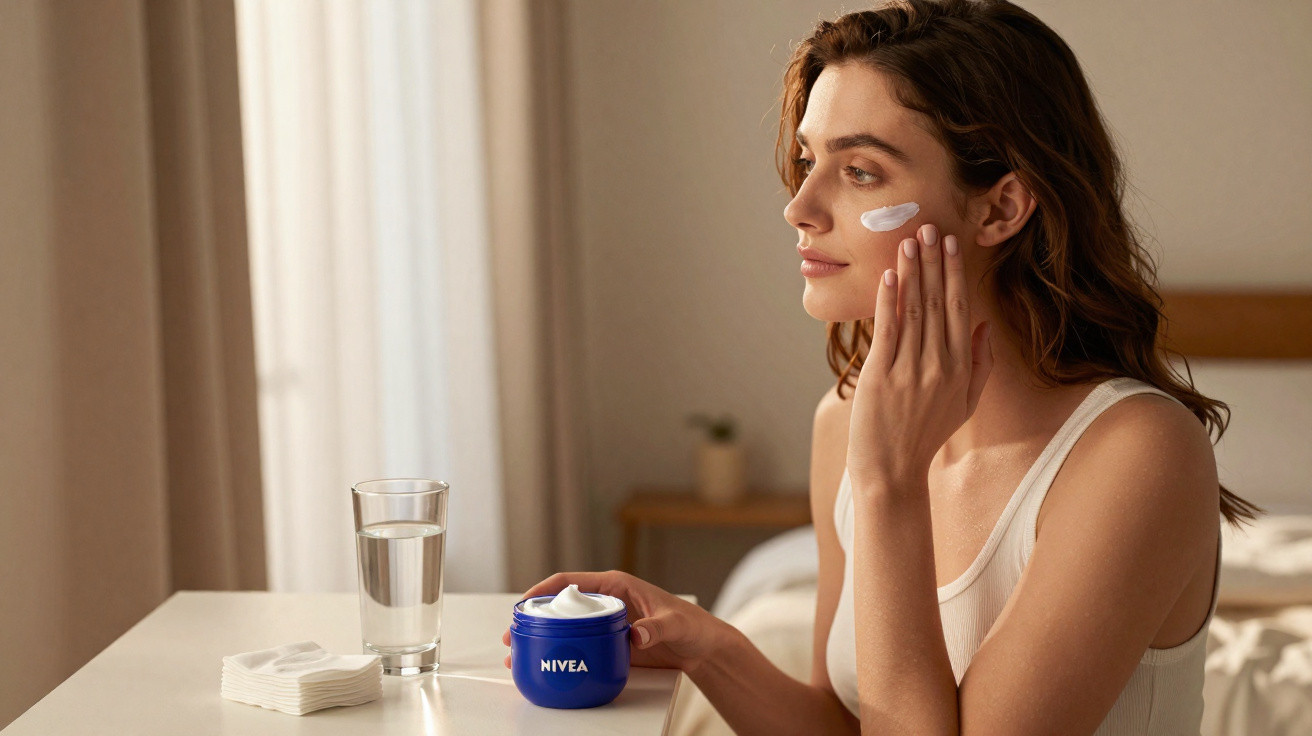
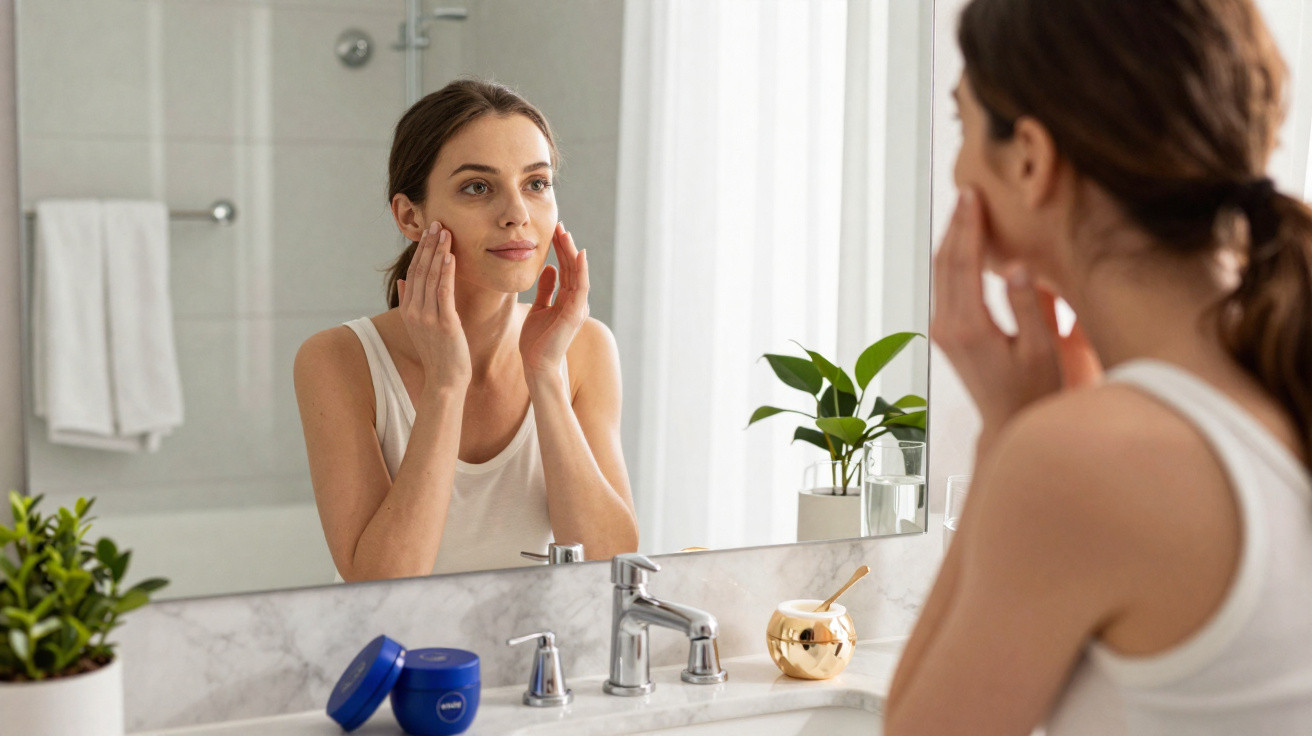
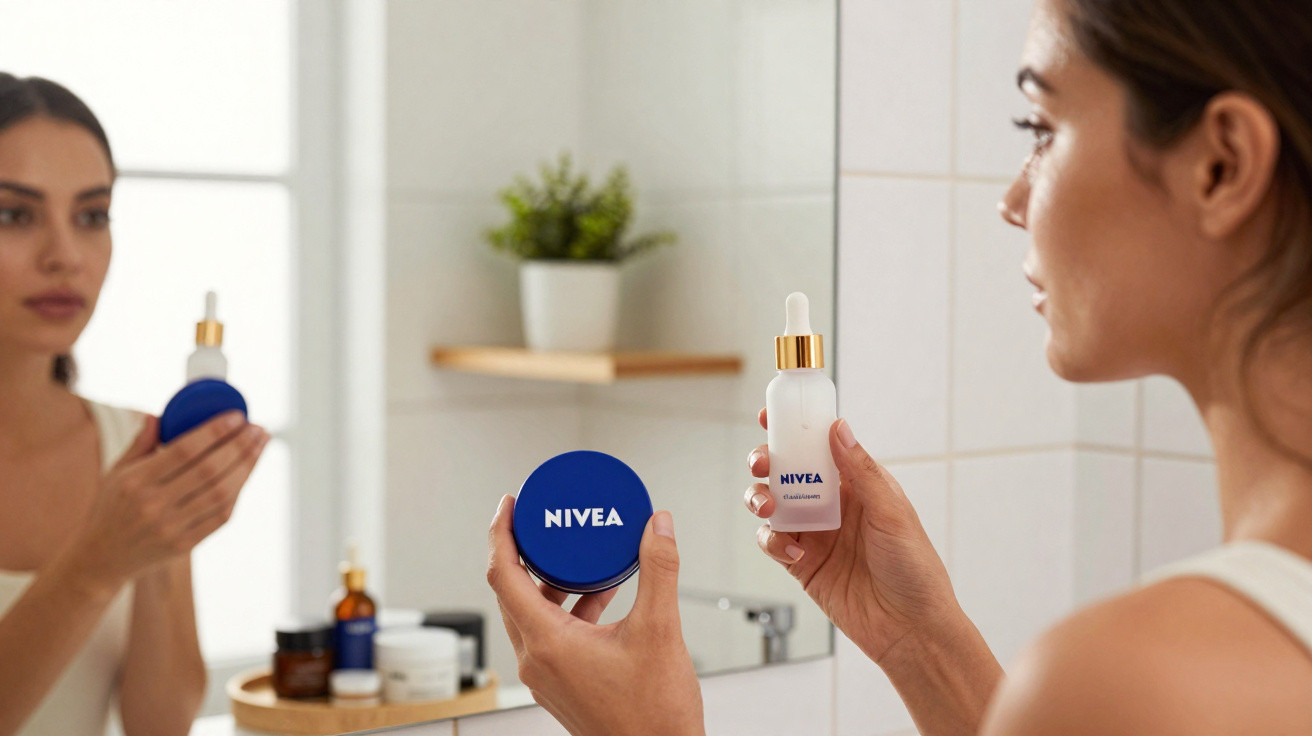
The classic NIVEA Creme is a longstanding bathroom staple. But can a product that has remained almost unchanged on shelves for more than 100 years compete with modern high-tech serums? A one-week test set out to find out – under rather unequal conditions: every evening, one half of the face received a thick layer of the cream, while the other did not.
The cult cream in the blue tin – more than nostalgia?
Few skincare products are as recognisable as NIVEA Creme in its blue tin. Many people have known it since childhood, using it as an all-rounder for dry arms, cracked hands or tight-feeling cheeks in winter. Its reputation is down-to-earth, familiar and uncomplicated.
What is often overlooked is just how rich the formula is. It contains, among other things:
- occlusive oils that form a light protective film over the skin
- glycerine, which helps retain water in the skin
- waxes that “lock in” moisture
That means the cream works not only as an ordinary moisturiser, but also as a protective barrier that helps prevent water loss. This was precisely the principle behind the one-sided facial test.
How the one-week test was carried out
The test was straightforward but followed consistently. Every evening before bed, the same routine was used:
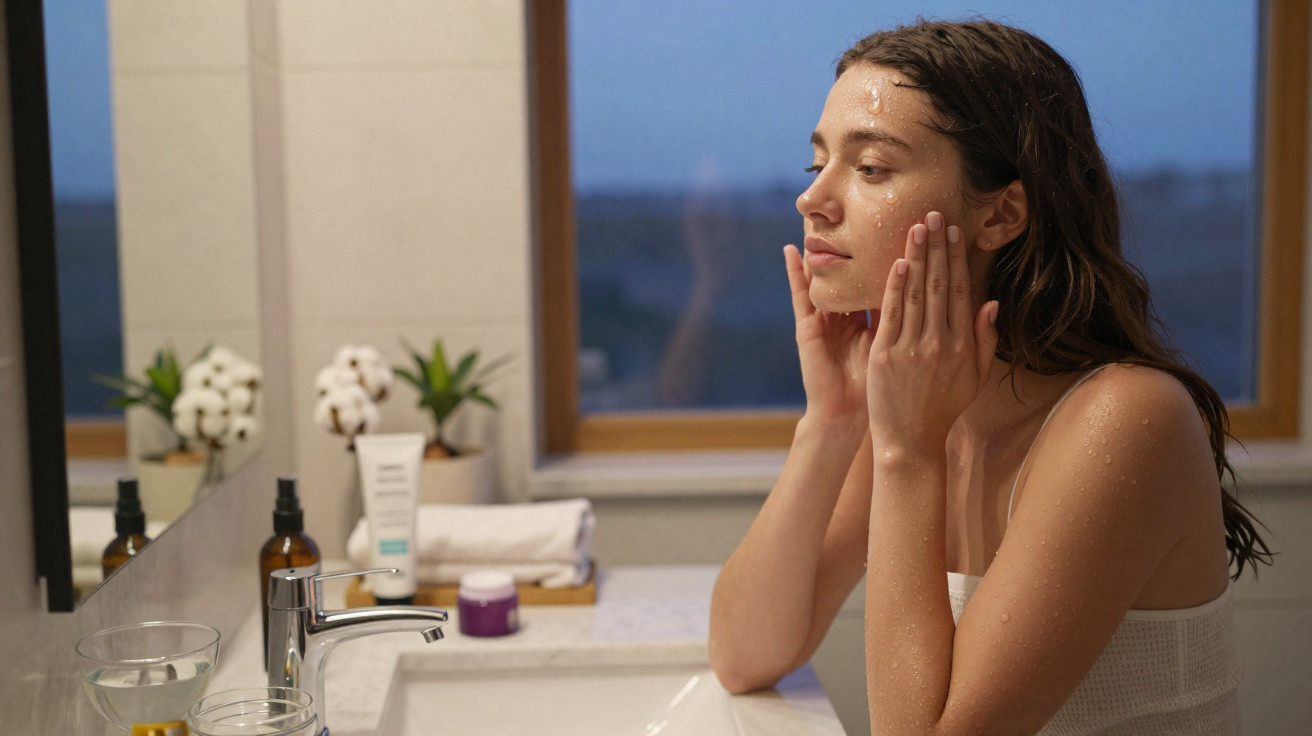
- cleanse the face thoroughly with a double cleanse: an oil-based cleanser followed by a water-based cleanser
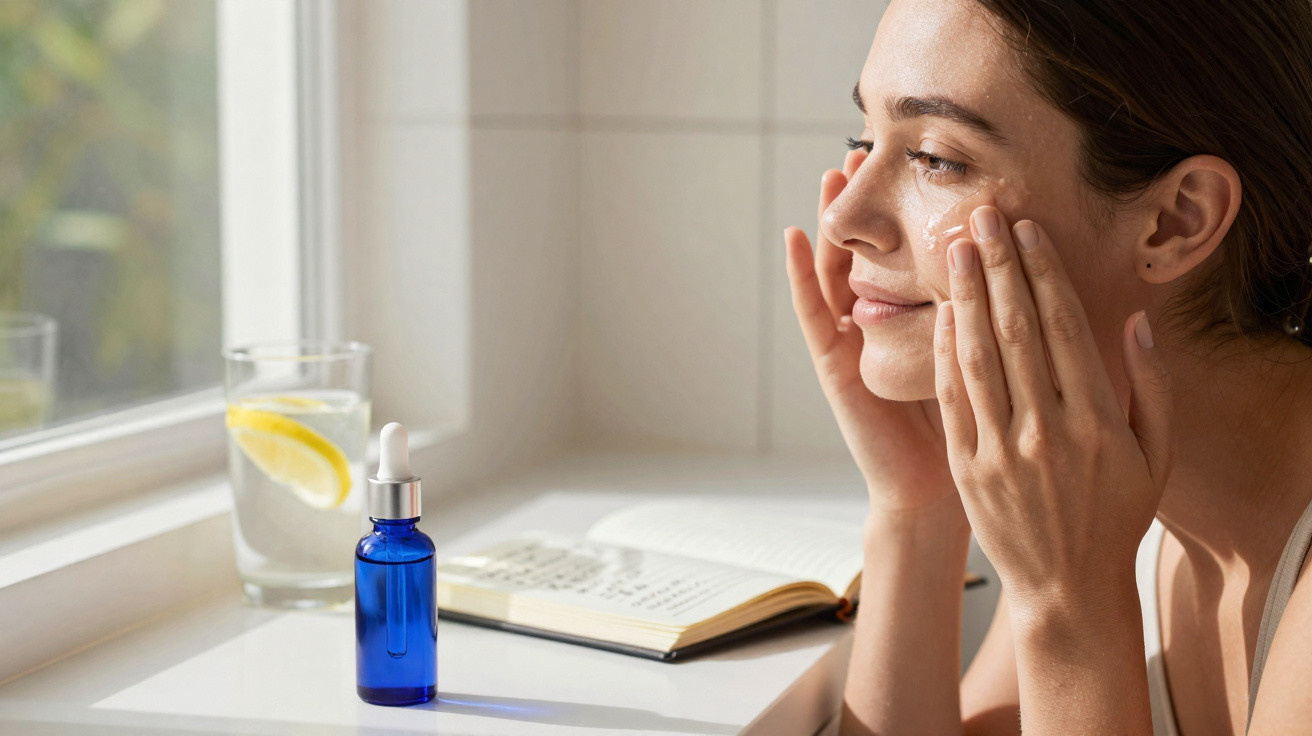
- apply a serum, such as one containing hyaluronic acid or niacinamide
- work in eye care
- apply a light, standard moisturiser across the whole face
- finally, apply a thick layer of NIVEA Creme as a “mask” to just one half of the face
The other side received no NIVEA layer and was left as it was after the usual skincare steps. This made it reasonably easy to compare what the additional layer actually achieved.
“After just a few nights, the treated half of the face looked smoother, plumper and noticeably more deeply moisturised.”
The first few days: an overnight hydration boost
After only two or three nights, there was a clear difference. In the mirror each morning, the side covered with NIVEA Creme appeared:
- more refined in texture
- less creased, particularly on the cheeks and beneath the eyes
- calmer overall and less red
There is a logical explanation for this result: skin regeneration is in full swing overnight, but the skin also loses a considerable amount of water during those hours. The cream’s rich texture slows this moisture loss and supports the skin barrier. The active ingredients already applied in the serum are better “sealed” into the skin rather than evaporating too quickly.
By morning, the NIVEA-treated side felt softer, more supple and simply more cushioned. The untreated half was not poorly moisturised, but the contrast was striking when comparing the two directly.
NIVEA slugging: a trend method with side effects
This approach has a name: on social media, it is widely known as “slugging”. A very rich cream or ointment is applied as the final layer of an evening skincare routine, creating a type of seal.
Why the method works
The principle is simple:
- The skin is treated in the evening with lightweight products rich in active ingredients.
- An occlusive layer – NIVEA Creme in this case – sits over the top like a lid.
- Trans-epidermal water loss is reduced, helping the skin remain hydrated for longer.
People with dry, dehydrated or stressed skin often see a more noticeable glow within a short time. Fine dehydration lines can look less pronounced, while the skin feels plumper.
Why using it every evening may be too much
However, the test also revealed a downside. After several days of daily use, minor blemishes began to appear in the T-zone on the treated side: small spots on the forehead and nose. Nothing dramatic, but a clear indication nonetheless.
“The method works – but when used every day, the skin can become ‘blocked’ and react with blemishes.”
Anyone prone to combination skin, oily skin or congested pores should be cautious with such a rich layer. If the protective film is applied too frequently, sebum may not release as effectively, which can encourage blackheads and spots.
How often makes sense? Realistic recommendations
The self-test suggests a clear recommendation: rather than “sealing” the skin every evening, use the method selectively. For most skin types, a routine such as the following is suitable:
- once a week as an intensive skincare boost
- for very dry, non-sensitive skin: every 3–4 evenings
- for oily or acne-prone skin: no more than every 10–14 days, and only on dry areas
If small under-skin bumps or shine across the T-zone become more frequent, increase the interval considerably or use the product only on specific areas, such as the cheeks.
Who is this method actually suitable for?
Not all skin responds in the same way. Broadly, three groups can be identified:
| Skin type | Suitability | Tip |
|---|---|---|
| dry, sensitive skin | very suitable | apply a thin layer 1–2 times a week, with a non-irritating routine underneath |
| normal or combination skin | suitable to a limited extent | use only on dry areas, avoid the T-zone and apply less frequently |
| oily, acne-prone skin | use with caution | if used at all, apply only to targeted areas and very rarely |
It is also important to consider what is applied beneath the cream. Acids, retinol or particularly potent active ingredients can work more intensely than intended under an occlusive layer. Sensitive skin may then react with redness or irritation.
Tips to stop the NIVEA overnight-mask trick backfiring
1. Do not apply it too thickly
A visible but not excessively heavy layer is entirely sufficient. The skin does not need to be “cemented over” to retain moisture more effectively.
2. Use it only on clean skin
Make-up residue or sunscreen that has not been properly washed away can become an ideal breeding ground for blemishes when trapped beneath an occlusive film. A double cleanse before bed is therefore almost essential.
3. Adjust the routine
On an evening when NIVEA Creme is being used as an overnight mask, it is better to choose mild, hydrating products underneath. One gentle combination could be:
- a mild cleanser
- a hydrating serum with hyaluronic acid or panthenol
- a lightweight cream
- a thin layer of NIVEA Creme on dry areas
Why classic products are far from “old”
The test highlights a frequently underestimated truth: older, simple formulas can be highly effective when used correctly. NIVEA Creme is not a high-tech serum with a list of exotic ingredients, but its combination of oily components and humectants serves a clear purpose – and does so very reliably.
Particularly at a time when many bathroom shelves are crowded with countless products, such a classic can make a useful addition to a basic routine. However, the cream is not suitable as a universal everyday product for every skin type. Anyone prone to blemishes or with highly sensitive skin is better served by more targeted, lighter skincare, using the blue tin sparingly.
Ultimately, the psychological effect is also interesting: comparing both halves of the face directly shows how dramatically moisture retention alone can change the appearance of the skin – often more than another trend serum in the cupboard. That is exactly what the one-week self-test is useful for: it puts expectations into perspective, reveals limitations and also demonstrates the surprising potential of a familiar old product.




Comments
No comments yet. Be the first to comment!
Leave a Comment