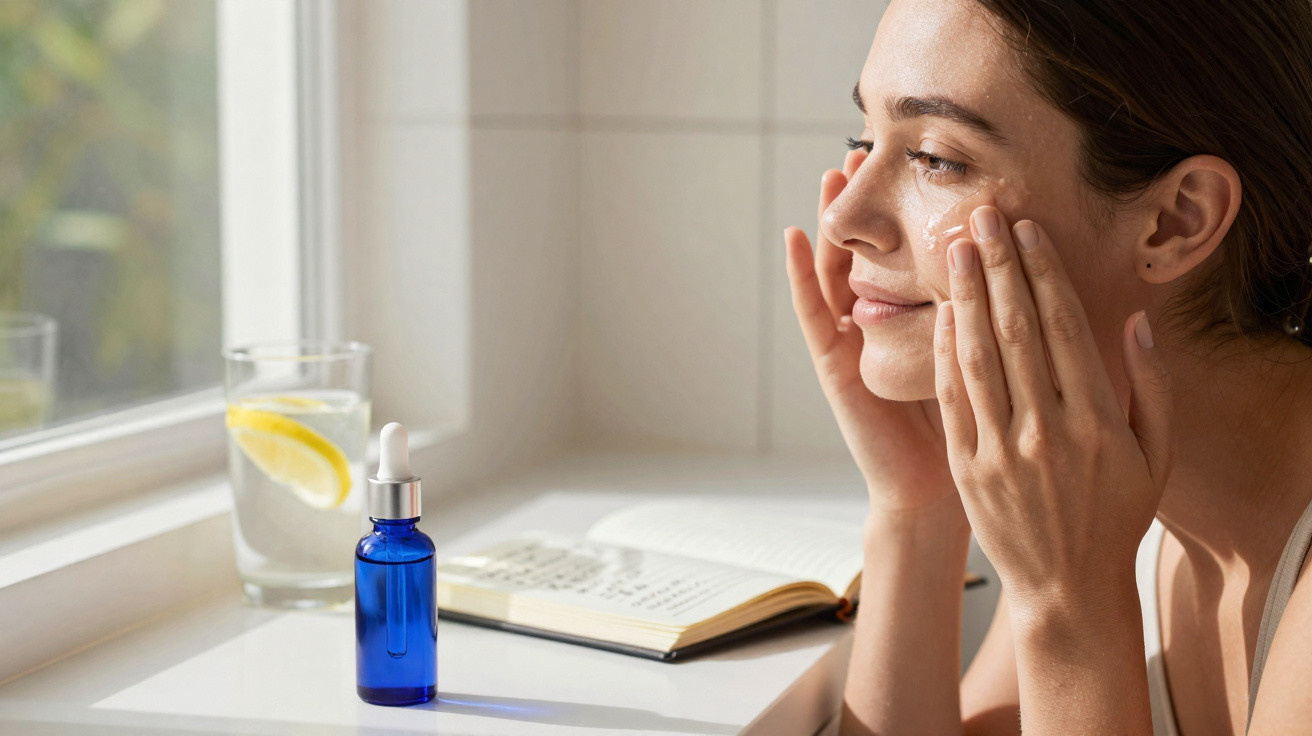
Many people notice a change from the age of 30: their skin looks more tired, fine lines become more noticeable, and the face starts to lose firmness – prompting the search for an effective serum.
Among countless anti-ageing products, one name is appearing increasingly often: La Roche-Posay Hyalu B5 Serum. It has attracted particular attention because users say their fine dehydration lines have visibly diminished. The manufacturer relies on no fewer than four types of hyaluronic acid – a claim that is intriguing, yet also raises questions. What can this serum realistically achieve, who is it worthwhile for, and how does it differ from conventional hyaluronic acid products?
Why fine lines can suddenly look more visible
When looking in the mirror in the morning, people often notice the same areas first: tiny lines around the eyes, dry-looking patches on the cheeks or forehead, and a complexion that appears less fresh than it once did. From the mid-twenties onwards, the skin gradually produces less of its own hyaluronic acid. As a result, moisture levels decline, the skin can appear less full, and its cushioning and firmness begin to diminish.
Many of these early lines are not deep age-related wrinkles, but what are known as dehydration lines. They develop when the upper layers of the skin cannot retain enough water. This is precisely where a hyaluronic acid serum can help – ideally not just on the surface, but across several layers of the skin.
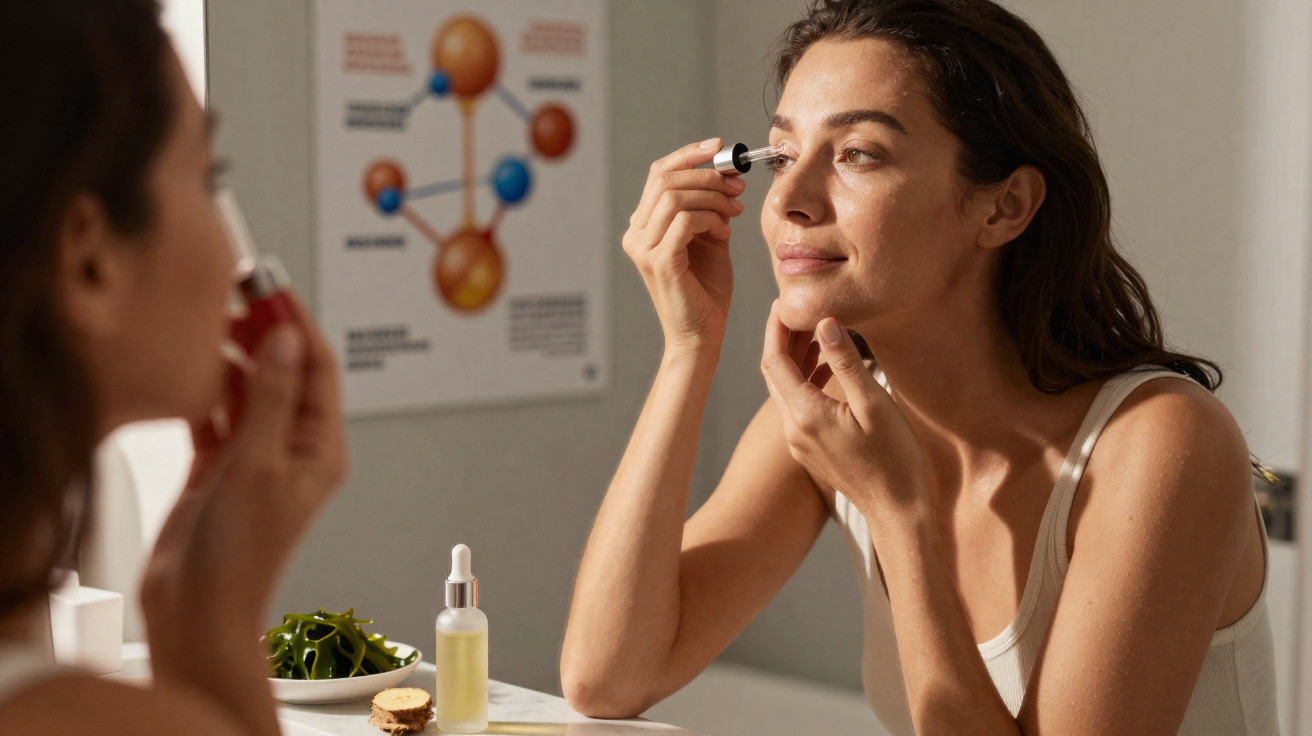
La Roche-Posay promises multi-level moisture and wrinkle care with Hyalu B5 Serum, thanks to four different forms of hyaluronic acid.
What makes La Roche-Posay Hyalu B5 Serum different
Unlike many straightforward hyaluronic acid serums, this product combines four hyaluronic acids with vitamin B5. The principle is that each form has a particular role and works at a different depth within the skin.
Four hyaluronic acid forms – four roles
- High-molecular-weight hyaluronic acid: This remains mainly on the skin’s surface. It forms a moisture-retaining film, supports the natural skin barrier and limits moisture loss.
- Medium-molecular-weight hyaluronic acid: Used alongside vitamin B5, it is formulated in a capsule-like form. Its purpose is to encourage skin regeneration and soothe irritated areas.
- Low-molecular-weight hyaluronic acid: This penetrates more deeply than conventional hyaluronic acid. It is intended to hydrate tissue more effectively from within, helping to restore volume and firmness.
- Micro-hyaluronic acid: Smaller still and designed to work deeper down, this form is primarily intended to smooth visible wrinkles by binding water in the lower layers of the skin.
The formula is also supplemented with a stimulating complex, intended to encourage the skin to produce more of its own hyaluronic acid again while slowing its breakdown. This means the serum goes beyond simply “plumping from the outside” and targets processes within the epidermis.
Vitamin B5 as a skin-repair ally
As well as hyaluronic acid, vitamin B5, or pantothenic acid, plays an important part. It supports the skin’s natural repair processes, has a soothing effect, and can help ease redness or feelings of tightness. Sensitive skin in particular can benefit from this pairing, as it receives intensive hydration without highly irritating active ingredients.
The formula focuses not only on moisture but also on regeneration and protection of the skin barrier – an important consideration for sensitive or mature skin.
What results users can realistically expect
The manufacturer supports its claims with instrumental measurements and clinical studies involving several groups of 24, 40 and 85 participants. The stated timelines sound ambitious, but remain within the scope of what hyaluronic acid can achieve.
Timeline for visible results
- After around 1 hour: Skin appears plumper and more hydrated. This is largely due to the moisturising film on the surface and the rapid binding of water in the upper layers.
- After about 14 days: Initial changes in fine lines can be measured. Dehydration lines look softer, while make-up is less likely to settle into small creases.
- After approximately 1 month: A more noticeable effect can be seen in visible wrinkles and overall skin texture. Skin looks smoother, the complexion more even, and the face slightly more “plumped up”.
Many users particularly report skin that feels noticeably smoother, fewer dehydration lines and a fresher-looking complexion. Deep expression lines will not disappear completely, but they may look less pronounced and sharp.
Who is the serum suitable for – and who may need more?
La Roche-Posay presents Hyalu B5 Serum as suitable for all skin types, including sensitive skin and every phototype. This is an advantage, as many anti-ageing products containing acids or potent retinoids can quickly irritate sensitive skin.
| Skin type / concern | How suitable is the serum? |
|---|---|
| Dry, sensitive skin | Highly suitable: intensive hydration, barrier-friendly and soothing thanks to vitamin B5. |
| Normal to combination skin | Suitable: lightweight texture, absorbs quickly and can be worn beneath make-up. |
| Oily, blemish-prone skin | Suitable in moderation: provides moisture without oil, although an appropriate cleanser remains important. |
| Mature skin with deep wrinkles | Useful as a hydrating and replenishing treatment; combinations with retinoids or peptides are advisable for a stronger anti-ageing effect. |
Anyone mainly concerned with pigmentation marks, significant sun damage or pronounced loss of firmness will usually need additional active ingredients, such as vitamin C, niacinamide or retinol. Hyalu B5 Serum can work well as an addition here, but it does not replace a complete anti-ageing routine.
Price, texture and everyday application
At around €41, depending on the retailer, the serum sits in the mid-range price bracket. For a pharmacy skincare brand with a complex formulation, it is not a bargain, but it is also far removed from luxury labels charging three-figure prices.
Its texture is appreciated by many users: lightly gel-like, non-greasy, quick to absorb and barely sticky. This makes it practical for everyday use, including for those with little time in the morning.
How to add Hyalu B5 Serum to your routine
- Apply it to cleansed, slightly damp skin to enhance the hydration effect.
- Two to three drops are enough for the face and neck; pat them in gently rather than rubbing vigorously.
- Use it in the morning beneath a day cream and sunscreen, and in the evening underneath a richer moisturiser.
- If your skin is very dry, “seal” it in with a hydrating cream to reduce water evaporation.
Anyone using hyaluronic acid consistently, morning and evening, benefits considerably more than from occasional use “when it feels necessary”.
How hyaluronic acid works in detail – and its limits
Hyaluronic acid is a substance naturally found in the body that can bind exceptionally large amounts of water. Within the skin, it contributes to volume, elasticity and a plump appearance. Over time, these reserves decrease, leaving skin looking flatter and more creased.
Topical hyaluronic acid products such as this serum provide the skin with new external “water reservoirs”. The smaller molecules in particular reach deeper layers and give the tissue a modest plumping effect. The result is genuine, but it is not comparable to a medical hyaluronic acid filler. In other words, the face can look fresher and slightly smoother, but it will not gain an entirely new contour.
Understanding this helps prevent disappointment. Hyaluronic acid serums are powerful hydrators, not a miracle solution for every sign of ageing.
Effective combinations and potential pitfalls
Well-tolerated hyaluronic acid serums such as Hyalu B5 can generally be combined with other active ingredients without difficulty:
- With retinol: In the evening, apply the retinol product first, followed by hyaluronic acid for extra hydration and to help reduce possible dryness.
- With vitamin C: In the morning, use a vitamin C serum to protect against free radicals, then apply hyaluronic acid for added moisture.
- With AHA/BHA exfoliants: After using chemical exfoliants, hyaluronic acid can help support the skin barrier as it stabilises again.
One common mistake is not using enough sunscreen. Particularly when investing in anti-ageing products, unprotected UV radiation can significantly undermine any skincare progress. Anyone using Hyalu B5 in the morning should always follow it with a high-factor SPF product.
Patience is another important point. Although the first effects may be visible quickly, changes to skin texture take time. Those who put the serum back on the shelf after three days are missing out on its potential. Allowing at least four to six weeks gives a more realistic picture.
Overall, La Roche-Posay Hyalu B5 Serum appears to be a well-considered option for anyone seeking to target dehydration lines, reduced firmness and a tired-looking complexion without overwhelming the skin with aggressive active ingredients. Its combination of four hyaluronic acid forms and vitamin B5 addresses hydration, volume and regeneration in one step, making it well suited to a modern, uncomplicated skincare routine.







Comments
No comments yet. Be the first to comment!
Leave a Comment