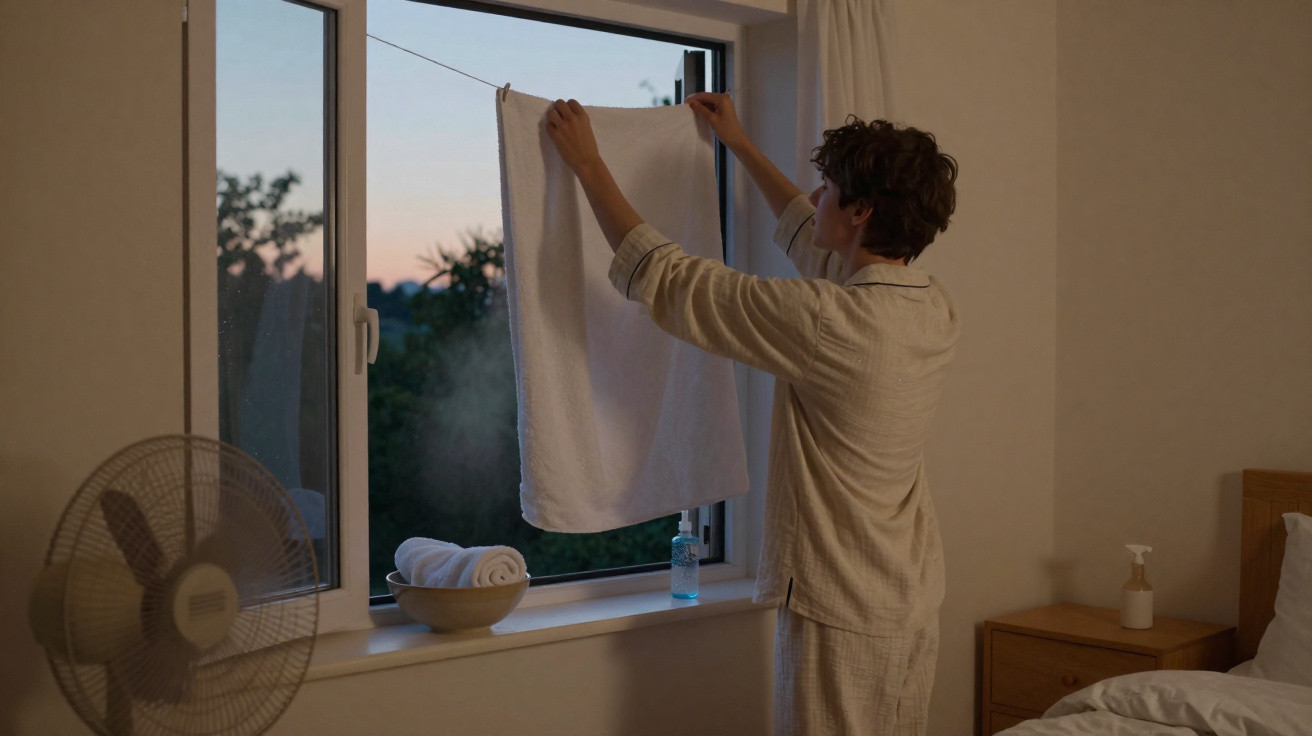
During periods of intense heat, particularly on summer nights, bedrooms can remain stifling even with the windows open. Air conditioning and fans are usually the first solutions considered, but they are not always available or practical for extended use because of energy consumption, continual noise or dry air. As a result, many people look for straightforward household ways to take the edge off the heat.
How does a damp towel cool a bedroom quickly?
The damp towel trick uses air entering through the window, directing it through fabric soaked in cold water. As the warm air moves through the cloth, some of its heat is used to evaporate the water. This can make the airflow entering the bedroom a few degrees cooler, especially in smaller spaces.
The effect is more noticeable at night, when the outside air has become slightly cooler, and in places with good airflow. In hot regions or small flats, this technique can improve the perceived temperature within minutes, particularly in bedrooms where heat tends to build up.
How to use a damp towel at the window: step by step
To get the most from this quick cooling method, it is worth following a few steps to create a type of “cooling curtain” in front of the window. The aim is to use the natural movement of air and, where possible, create a draught between the window and the bedroom door.
- Choose the fabric: Use a medium-sized towel, lightweight sheet or large cotton cloth; thinner fabrics allow air to pass through more easily.
- Dampen it properly: Soak it in cold water, then wring it out well. It should be damp rather than dripping, to prevent puddles on the floor.
- Secure it at the window: Attach it to the curtain pole, track or hooks, in front of the opening where the air enters.
- Create airflow: Leave the door slightly ajar to encourage a draught and distribute the cooler air around the room.
- Wet it again once dry: Restore the moisture whenever the cloth feels dry to keep the effect working.
Some people pair this trick with a fan placed behind the towel, so that the airflow passes through the damp fabric before circulating around the bedroom. In these circumstances, the cooling effect is usually stronger, although care is needed to avoid making the room excessively cold or humid.
Why does cooling with a damp towel work so well?
This approach relies on evaporative cooling: as water evaporates, it “draws” some heat from the surrounding air, which then enters the bedroom at a lower temperature. In enclosed, very dry places, the difference is often easier to notice, while the extra moisture can make breathing feel slightly more comfortable.
In already humid areas, it is important to check that the room does not become overly heavy or muggy. This may cause discomfort and could even encourage mould over time. It is therefore helpful to alternate the damp towel with periods of natural ventilation and, when possible, let sunlight into the room.
What other measures help keep the bedroom cooler?
Alongside the damp towel, a few everyday adjustments can make a bedroom more comfortable during heatwaves. These steps limit heat entering the room, prevent warm air from accumulating and help keep conditions steadier through the day and night.
- Keep windows and curtains shut during the strongest sunshine, opening them once the outdoor temperature drops.
- Remove thick rugs and heavy fabrics, choosing smooth surfaces that are easier to air instead.
- Limit the use of electronics in the bedroom, as they give off heat while switched on.
- Choose lightweight cotton or natural-fibre bedding, which retains less heat.
- Encourage cross-ventilation between rooms by opening doors and windows on opposite sides.
By combining these simple habits with the damp towel trick, it is possible to make a bedroom feel better ventilated even without air conditioning. This can make summer nights slightly more bearable and sleep less interrupted, without relying so heavily on electrical equipment.







Comments
No comments yet. Be the first to comment!
Leave a Comment