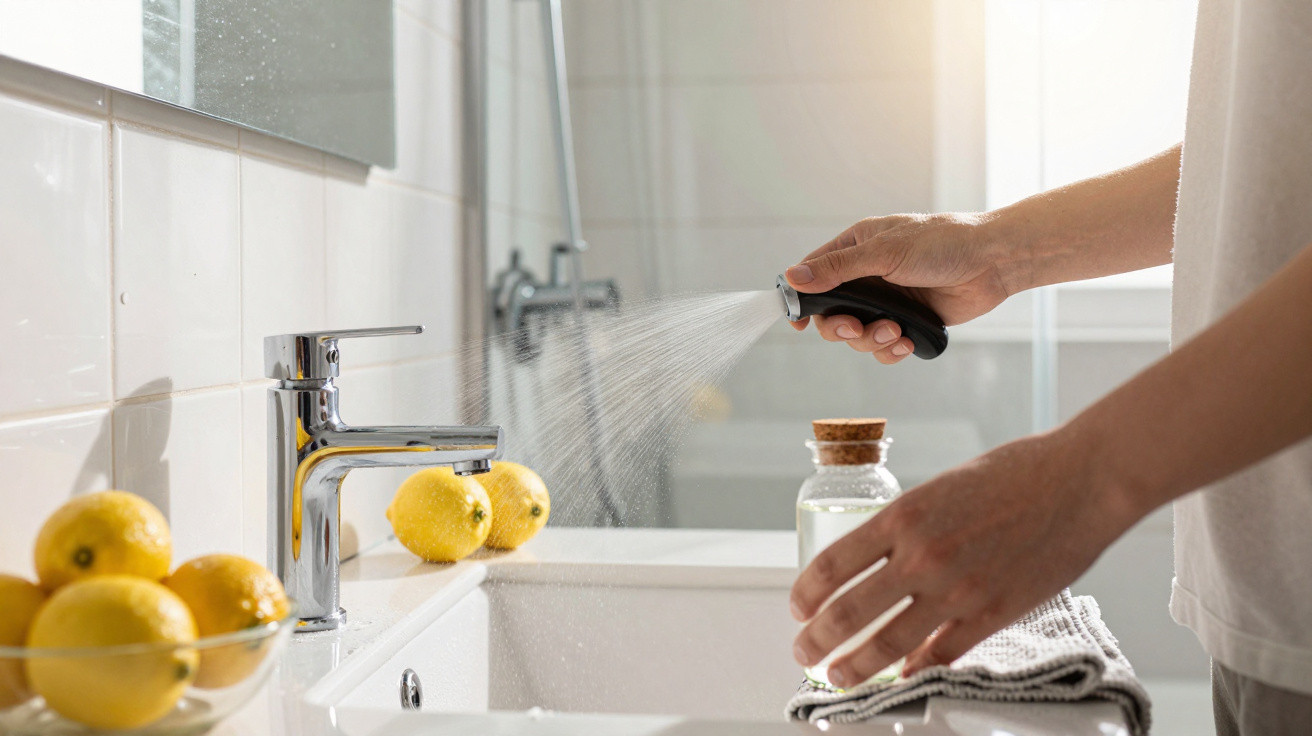
The shower had not even been on for a full minute before the truth emerged through the steam.
The glass screen was coated in sickly white streaks. The chrome tap was speckled with chalky marks that caught the light in all the wrong ways. Wipe it with your hand and it simply smudges; use a cloth and it catches on the uneven surface. It is clean yet grimy, glossy yet lifeless.
The room carries a faint scent of “ocean breeze” cleaner, but the limescale is still mocking you. You scrub until your wrist hurts, the children call from the hall, and a supposedly quick wipe has somehow become a full cleaning marathon. It is the kind of task that makes you reconsider both your choices and the hardness of your local water.
Then somebody says, “You know, there’s a way to get rid of that in seconds.”
Everything falls silent.
The quiet enemy lurking on taps and tiles
Limescale does not make a grand appearance. It quietly takes hold: a faint cloudy ring around a tap base, a pale stripe where water lands on the shower screen, a crust beneath the toilet rim that you choose to ignore.
Then one day, you turn on the bathroom light and realise the scale is everywhere. Glass that used to be clear now appears frosted. Black shower fittings have developed grey borders. The shower head begins firing water sideways, as if it has taken offence at you personally. Hard water has settled in, unpacked its bags and spread itself across the bathroom.
It looks even more unforgiving on a sunny day. The brighter the light, the more obvious every white spot becomes. This is not simply grime; it is mineral residue: hard, persistent and almost smug. It can make a freshly cleaned bathroom look somehow worn out.
Mention it at work or in a WhatsApp group and the familiar stories start. Someone in Kent insists their kettle develops a furred coating within a week. Someone else in Manchester shows pictures of a shower screen that changed from transparent to cloudy over one winter. A London friend jokes that they are practically washing in liquid rock.
One UK water industry report estimates that around 60% of homes live with hard or very hard water. That means millions of bathrooms gradually gathering chalky deposits every day. Each shower, hand wash and flush leaves a tiny trace behind.
With time, those seemingly harmless traces become a crust: around tap bases, across silicone seals, on tiles and glass, and deep within the shower head. You start reaching for stronger sprays, more abrasive sponges and “power” products whose tiny warning labels are difficult to read. The routine becomes more intense, yet the white film inevitably returns.
Its stubbornness has a very straightforward explanation. Limescale consists mostly of calcium carbonate. Think of it as rock rather than everyday dirt. You can rub, swear at and scrub it with an ordinary multi-surface cleaner, and it will scarcely react. It is rather like trying to polish stone using washing-up liquid.
To break it down properly, chemistry works better than force. Weak acids dissolve calcium carbonate as readily as hot gossip disrupts a peaceful Sunday. Vinegar, citric acid and specialist descalers do more than shift deposits about: they break down their structure.
Once that clicks, scrubbing begins to seem like the slow, outdated approach. You are effectively trying to wear down a rock with a tea towel. The real difference comes from allowing the right liquid to sit on the limescale and do the difficult work while you watch.
The 30-second limescale trick using warm vinegar
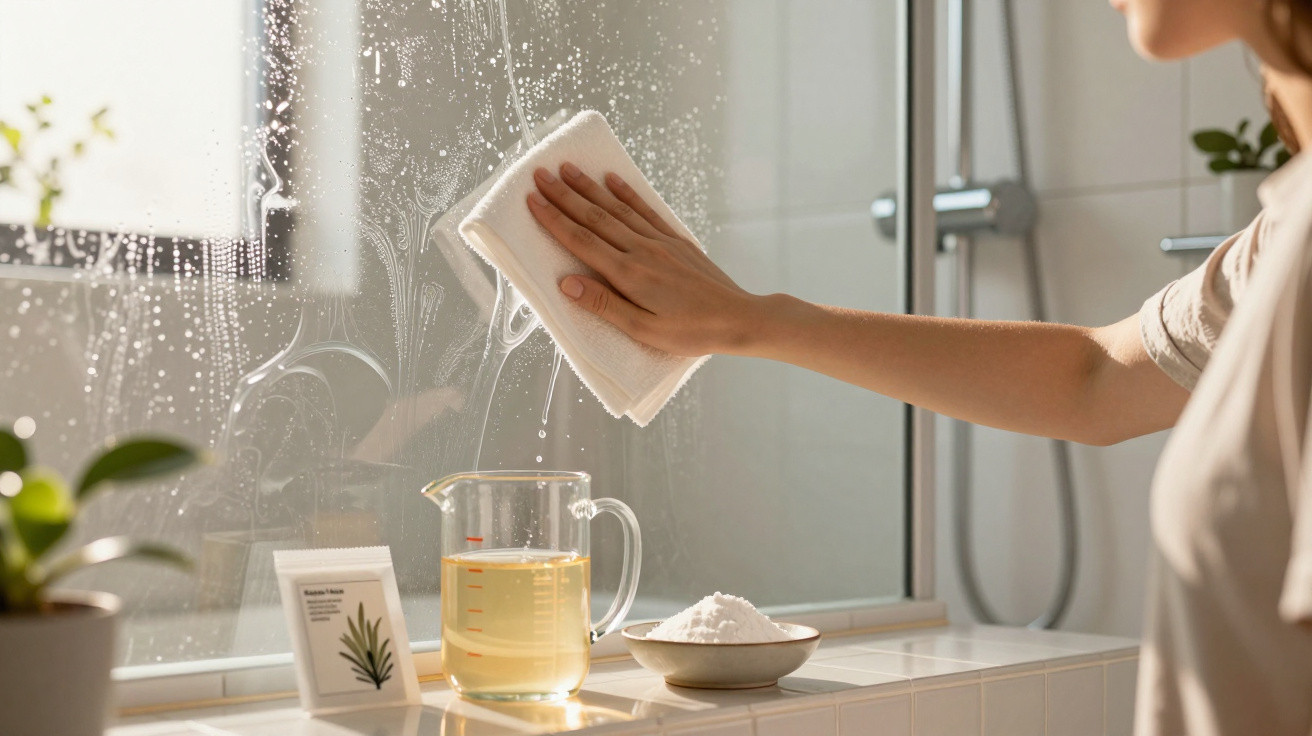
This is the method that makes people look at their taps as though they have witnessed a magic trick. Start with ordinary white vinegar. Gently warm it in the microwave or by placing it in a bowl of hot water, taking only the chill off it. Soak several sheets of kitchen roll or a clean cloth in the vinegar.
Press the vinegar-soaked material firmly onto the limescale: around the tap base, along the bottom edge of the shower screen, over the crusted section of the shower head, or wherever the surface looks chalky and stubborn. Leave it in place and count slowly to thirty. Really.
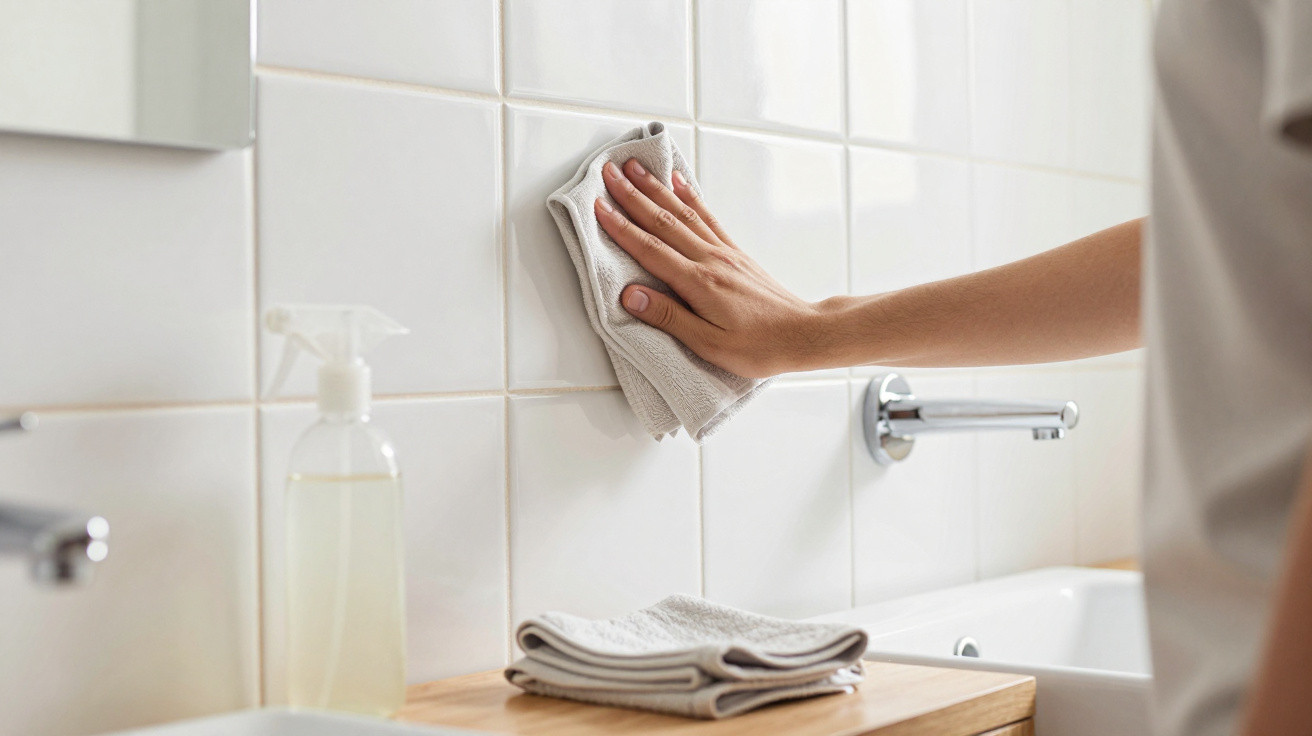
Lift away the paper, then wipe softly with a sponge or cloth. Limescale that has resisted you for months can suddenly come away with ease. The surface feels smooth, chrome regains its shine and cloudy glass becomes unexpectedly clear. The “killer trick” is not elbow grease but contact time: warm vinegar held closely against the scale for a handful of seconds that seem implausibly brief.
The trick is especially useful on awkward forms and hard-to-reach areas: curved taps, shower heads that cannot be removed, or the unattractive section beneath the toilet rim where water lands. Wrap a vinegar-soaked cloth around a tap like a bandage. For a shower head, some people place warm vinegar in a small freezer bag and secure it around the head with an elastic band, ensuring the nozzles remain fully submerged.
Let’s be honest: nobody really does that every day. The key is to deal with the most visible and irritating areas first: the tap base you see each morning, the glass you look through and the shower controls directly in your line of sight.
Once you see how quickly the deposits dissolve, you may feel slightly duped. All those years spent scrubbing with a random cream cleaner, when a soaked piece of paper and a minute of waiting could have achieved the result. One reader said she used it in a flat she lets out, and her tenant asked whether she had fitted a new shower screen.
There are a few easy mistakes, which explain why some people insist, “Vinegar doesn’t work.” They splash it on, wipe it off immediately and wait for a miracle. There is no contact time, no warmth and no pressure: just a fast wipe followed by disappointment.
“The day I stopped scrubbing blindly and started letting the right liquid sit on the limescale, my cleaning time halved,” says Claire, 39, from Birmingham. “I felt a bit ridiculous. All that effort, when the trick was basically patience and kitchen roll.”
A few straightforward steps make the method seem almost unfair:
- Warm the vinegar until it is slightly hot to the touch, but never boiling.
- Use sufficient paper or cloth to keep the area saturated rather than merely damp.
- Push it firmly into corners, along edges and around tap bases.
- Allow particularly stubborn patches 5–10 minutes instead of scrubbing harder.
- Rinse well afterwards, particularly near natural stone or delicate finishes.
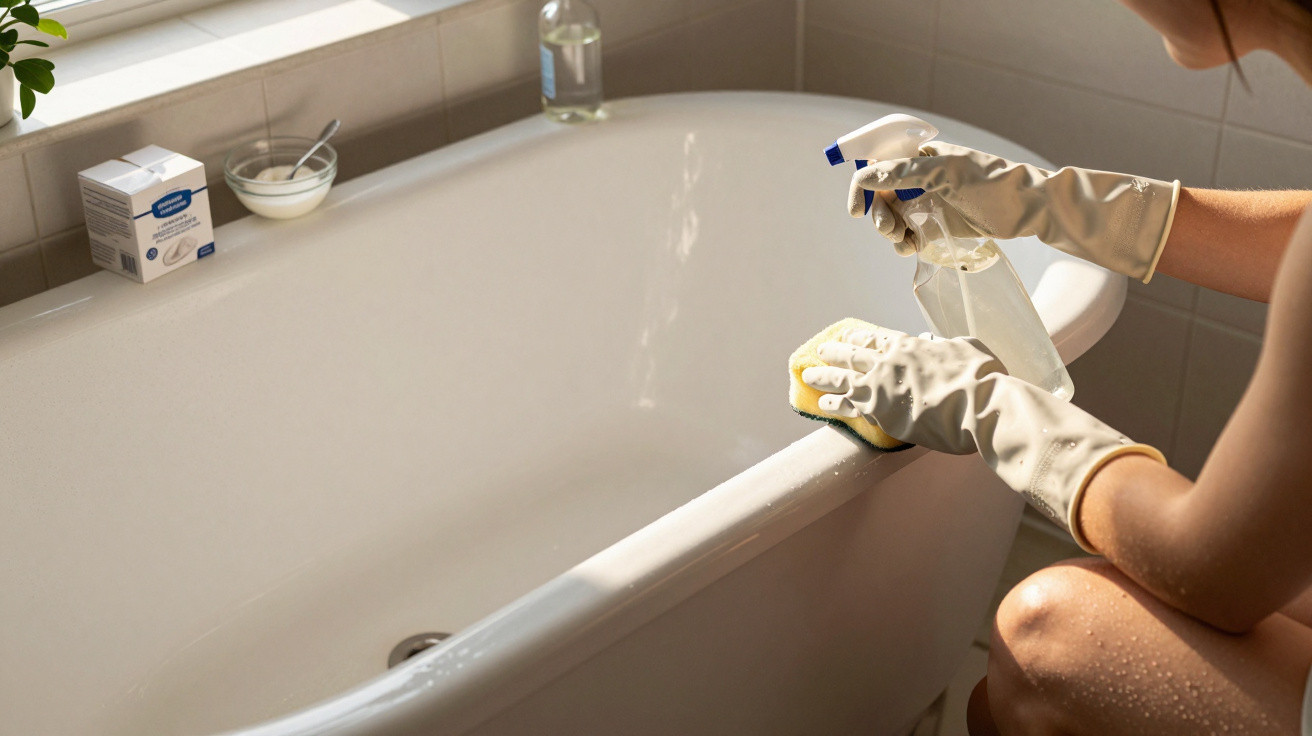
Take care with natural stone, including marble, and with some composite sinks: either proceed gently or choose diluted citric acid products designed for those materials. Always try the product on an inconspicuous spot first. A brief test can prevent plenty of swearing later.
Reducing limescale without becoming a cleaning robot
After watching scale disappear in half a minute, the natural question is how to prevent it returning so quickly. The truthful answer is that hard-water areas do not allow you to stop it completely. You can only tilt the odds in your favour.
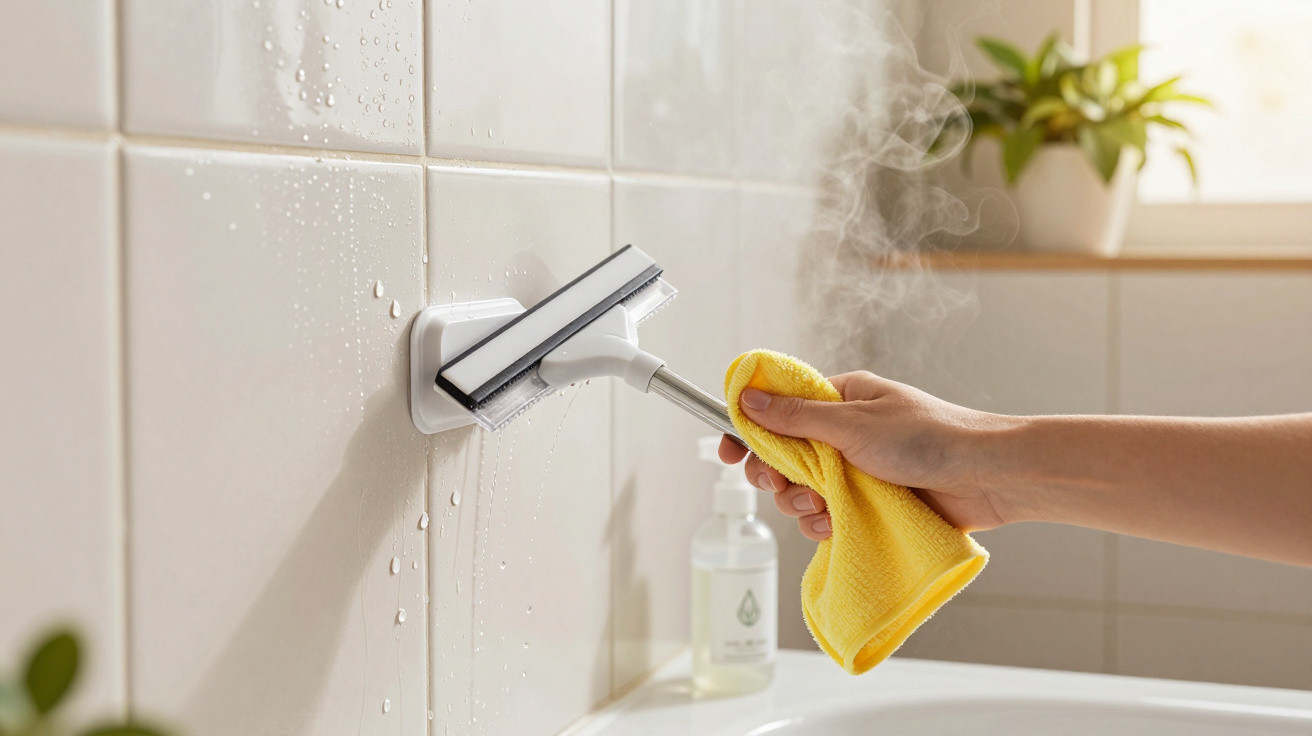
A fast wipe over wet surfaces before they dry makes a remarkable difference. Glass shower screens, metal taps and black fittings all benefit when mineral-rich droplets are not left to air-dry on them. Some people store a small squeegee in the shower and swipe the glass in 20 seconds. Others use a microfibre cloth once after the final shower of the day.
Over the longer term, a limescale filter or water softener fitted near the main water supply can substantially reduce deposits, although that is a larger decision rather than a quick Sunday-afternoon adjustment. For many UK households, a more practical plan is a routine: an occasional thorough descale supported by small everyday habits.
A mental shift can also happen when you stop treating limescale as “dirt” and instead view it as “rock dust”. Rather than attacking it emotionally, you begin to dissolve it with a plan. That may sound a little dramatic, but it changes the experience of cleaning: less like a punishment and more like a series of small experiments.
Another tidy benefit of the vinegar trick is a less crowded cleaning cupboard. Instead of handling five separate heavy-duty sprays, you have a reliable option for the worst marks and a gentle daily cleaner for everything else. It clears mental clutter as effectively as bathroom clutter.
There is also a quiet pleasure in seeing white crust lift away from a tap that had made you feel mildly defeated. It is a small but real boost when the bathroom looks truly clean in harsh daylight, rather than only beneath soft evening lighting. On a difficult day, that kind of win matters more than we tend to admit.
Bathrooms are, after all, where the day begins and ends. They frame the first face you see in the mirror and the final light you switch off. When the glass is clear and the taps gleam, the entire room feels brighter, even when the rest of the home is chaotic.
We have all experienced the moment when a guest asks, “How do you keep your shower screen so clean?” and you feel a small flush of pride. Or the reverse: you notice the white streaks and hope no one else does. That thin chalky layer carries more emotional weight than its grams would suggest.
Perhaps the true “killer trick” is not simply vinegar on paper. It is knowing where a small, clever effort can transform the whole view. A minute here and a square of kitchen roll there, and suddenly the bathroom feels like yours again rather than the water’s.
Once you share it with one person-a friend, a neighbour or your sister on FaceTime as she walks around her grimy rented bathroom-they will often pass it along. When daily routines are already stretched, shortcuts that genuinely work spread quickly.
The next time light hits your shower screen from an unforgiving angle, you may see it differently. Not as a huge scrubbing job, but as a 30-second experiment: warm vinegar, a strip of paper and a short wait. Then comes that strangely satisfying moment when the white rock finally, quietly releases its grip.
| Key point | Detail | Benefit for the reader |
|---|---|---|
| Contact time beats scrubbing | Warm vinegar held on limescale for 30–300 seconds dissolves deposits fast | Less time and effort spent cleaning, with visibly better results |
| Target the worst spots first | Focus on tap bases, shower heads and glass edges where build-up is heaviest | Quick wins that make the whole bathroom look cleaner in minutes |
| Simple habits slow future build-up | Light wiping or squeegeeing after showers, plus occasional deep descale | Bathroom stays clearer longer without becoming a full-time job |




Comments
No comments yet. Be the first to comment!
Leave a Comment