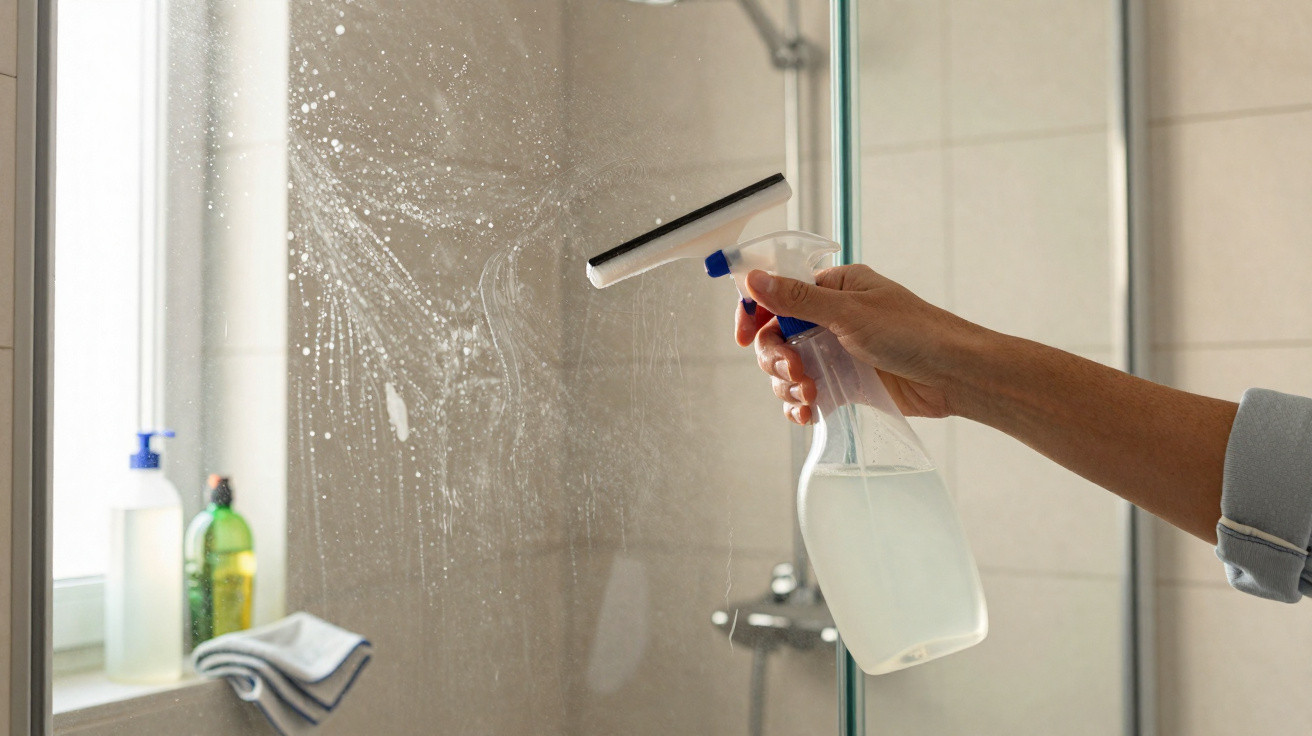
The shower door had become so cloudy that the shampoo bottles behind it were barely visible. In the morning, daylight catches the glass, making every dried drip, streak and white crust stand out like an unforgiving record of all those weekends when cleaning it was put off. Run a finger over the surface and, rather than sliding smoothly, it squeaks and catches on the chalky layer of soap scum. Last month, you tried a supposed “miracle” spray. You even bought one of the squeegees influencers swear by. Yet the residue still hangs on as though it pays rent.
Then someone tells you about a straightforward, inexpensive solution your grandmother probably already knew.
It seems almost too simple.
That is often a promising sign.
The moment your shower door seems to judge you
There is usually one morning when the steam clears and you properly notice the shower door. You see more than the glass: you see the tale it tells, with dried water droplets, milky shampoo arcs and a cloudy coating clinging around every edge. The rest of the bathroom may look acceptable, but the door quietly shouts, “You’ve given up.”
As you slide it open, you can feel resistance in the runners. The shine that used to be there has been replaced by dullness. It is hardly a disaster, but it erodes that small sense that “my place is under control.” It is a minor but persistent bit of disorder directly in your view.
A reader from Ohio told me she had begun showering with the curtain partly closed simply so she would not have to look at the glass. Her once-clear door had become a frosted-looking panel covered in random chalky marks. She tested three cleaning products, all of which promised “hotel shine in seconds.”
The first left behind a tacky coating. The second had an overpowering chemical smell and achieved very little. The third did work, but only when she scrubbed as though she were polishing a boat hull. Eventually, the process took so much time that she stopped bothering and cleaned it only once every few months. Every attempt began with guilt and finished with frustration, while the door never truly looked new.
Soap scum is not simply dirt. It combines soap, hard-water minerals, body oils and the products used every day. In effect, that cloudy coating is a stubborn blend of calcium deposits and old shower gel. Ordinary sprays tend to skim the surface before drying into the existing grime. This is why you can keep rubbing with a sponge yet still notice that rough drag.
The effective answer is something capable of dissolving minerals while loosening grease at the same time. You need a cleaner that breaks down the issue rather than merely covering it with fragrance. That is when the “trick” starts to seem almost unfair.
Shower doors and soap scum: the quick kitchen solution
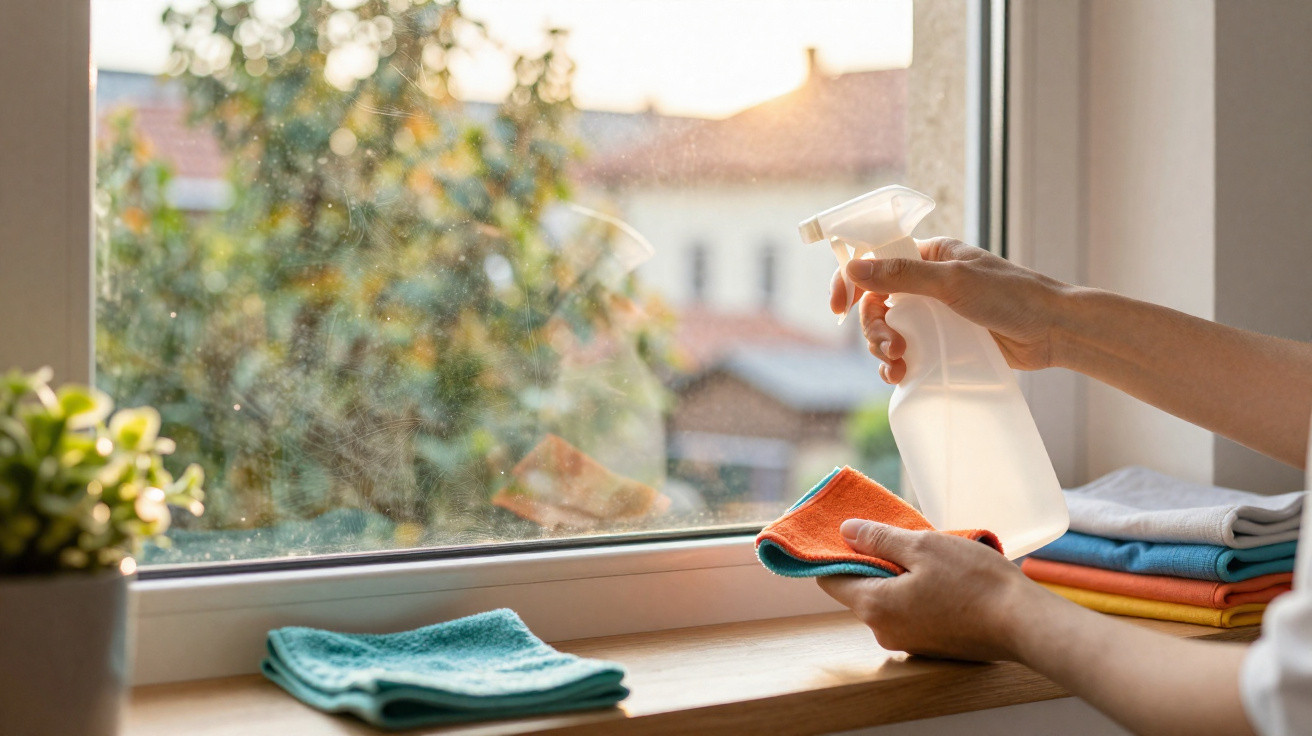
This speedy approach to soap buildup on shower doors begins in the kitchen cupboard rather than the cleaning-products aisle. Put equal amounts of white vinegar and hot water into a clean spray bottle. Next, add a small squirt of ordinary washing-up liquid, like the sort used for greasy pans. Swirl the bottle gently to combine everything, but do not shake it enough to create foam.
Apply the mixture liberally across the glass, working from the top down. Leave it alone for 10–20 minutes. During that time, the vinegar tackles mineral deposits while the washing-up liquid cuts through oils and surfactants left by shower products. Return with a soft sponge or microfibre cloth, wiping in broad, unhurried strokes. Rinse using warm water, then dry with a clean towel or squeegee. The cloudy layer should disappear in remarkably few wipes.
This is the point at which many people go wrong: they shorten the soaking period or scrub far too aggressively. The key is not effort; it is allowing the solution sufficient time to soften the crusty residue. Where buildup is particularly thick, spray the door again and wait once more instead of treating it as though it has personally offended you.
Using abrasive pads or harsh powders is another frequent mistake. They may feel effective, but they can produce tiny scratches that allow soap scum to collect even more quickly afterwards. Initially the glass may appear fine, but within a few weeks it can look dull and uneven. Once the vinegar and washing-up liquid have done their work, a soft sponge, old T-shirt or non-scratch scrub pad will generally be sufficient.
Sometimes the most satisfying cleaning moment isn’t buying a new product; it’s realizing two everyday things you already own just solved a problem that’s been annoying you for years.
- Use warm vinegar
Warm it slightly in the microwave, without boiling it, before mixing to help it work more quickly on mineral deposits. - Choose a mild washing-up liquid
Avoid moisturising or heavily fragranced formulas. A basic degreasing liquid removes buildup more effectively. - Clean in sections
Spray one half of the door, leave it to sit and wipe it down before moving to the other half. This means less dripping and greater control. - Finish with a dry cloth
The final polish creates that clear, almost “invisible” glass appearance. - Repeat weekly for 30 seconds
A brief maintenance spray is simpler than facing another major “battle of the bathroom.”
Keeping a clear shower door without turning it into a full-time job
Seeing a shower door return to being transparent is strangely encouraging. The bathroom lighting seems different, and the tiles behind the glass appear crisper. Instead of catching on unseen grit, the door opens smoothly. There is a modest, private satisfaction in that.
Afterwards, the aim changes from “deep clean every three months” to doing small things that maintain the result. Spend a few seconds after showering pulling water down the glass with an inexpensive squeegee. Use a quick vinegar-and-water spray as soon as faint marks appear. There is nothing dramatic involved, only simple actions that are easy to repeat.
You may find other changes happening too. Once one part of your home looks genuinely clean, your mind no longer files it under “pending tasks.” That mental to-do list becomes shorter. Perhaps you clean the bathroom mirror as you leave, or finally throw away those nearly empty shampoo bottles lined up in the corner like museum exhibits.
Realistically, no one manages this every day. Life intervenes: work finishes late, children need help and things get forgotten. The aim is not perfection. It is knowing that, when the haze returns, you have a quick and straightforward reset. It does not require a two-hour scrubbing marathon that spoils your Saturday.
There is also something quietly reassuring about fixing an everyday issue with basic ingredients. Vinegar, washing-up liquid, hot water and a little patience are all it takes. There is no mysterious gel or 10-step process, just a small but stubborn problem finally meeting its match.
The next time you step into the shower and the door looks slightly dull, you will not have that familiar sigh. You will know what to reach for, what to mix and how fast the cloudy film can disappear. If you live with others, do not be surprised if someone asks, “Wait, what did you use on the glass? It looks brand new.” That is how these small household legends begin.
| Key point | Detail | Value for the reader |
|---|---|---|
| Vinegar + washing-up liquid mix | Half vinegar, half hot water, plus a small squirt of washing-up liquid in a spray bottle | An inexpensive, accessible solution that dissolves soap scum quickly without specialist cleaners |
| Let it sit | Spray generously and leave for 10–20 minutes before wiping | Less scrubbing and more effective cleaning with reduced physical effort |
| Gentle tools only | Use soft sponges or microfibre cloths; avoid abrasives that scratch glass | Maintains the “like new” appearance and slows future buildup on the door |








Comments
No comments yet. Be the first to comment!
Leave a Comment